

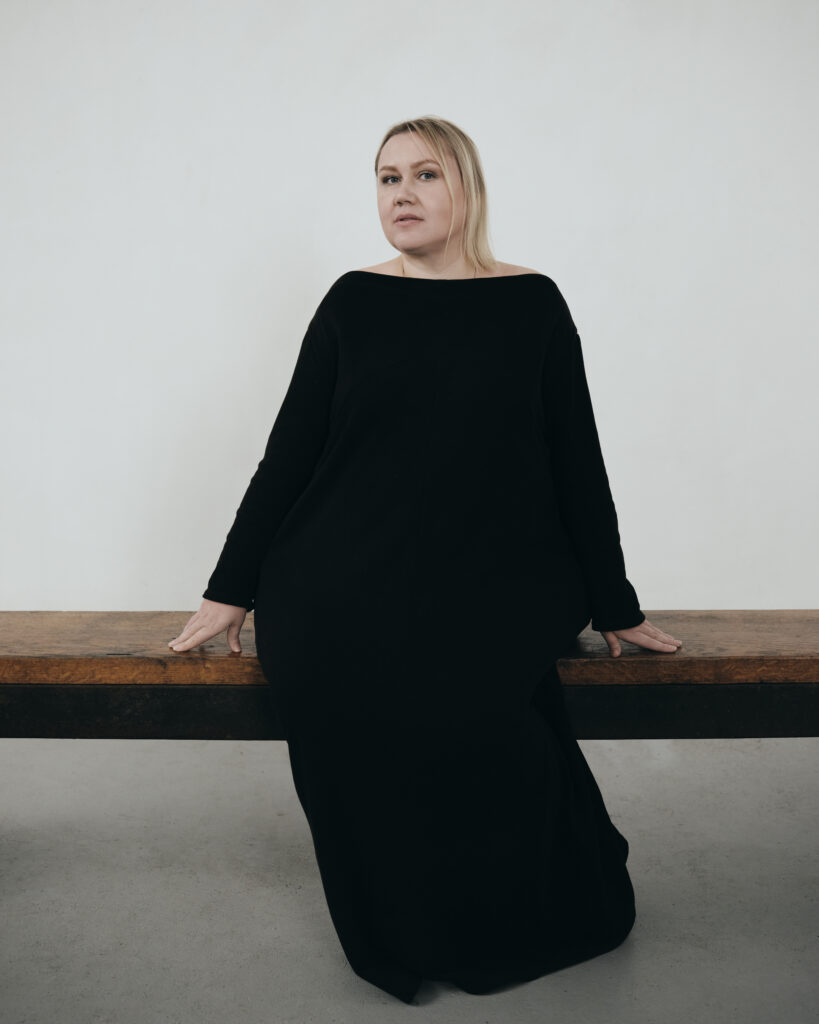
Victoria Yakusha’s vision combines Ukrainian heritage, high end design and mythic sculpture through her multidisciplinary practice and her design studio FANIA. Yakusha was named one of Dezeen’s 50 powerful women in design.
For Culturalee Innovators, the artist and designer reflects on a landmark season in her practice, from opening her new namesake gallery during Design Miami to reviving nearly forgotten Ukrainian mural traditions in her exhibition MALOVANA. In this conversation, she reveals how heritage, mythology, and her philosophy of “live minimalism” continue to guide her work into its next chapter.
Yakusha’s FAINA studio is exhibiting Land of Light II at Design Miami 2025 as part of Design Miami 2.0, a special project curated by Glenn Adamson to celebrating the fair’s 20th anniversary. Find out more here.
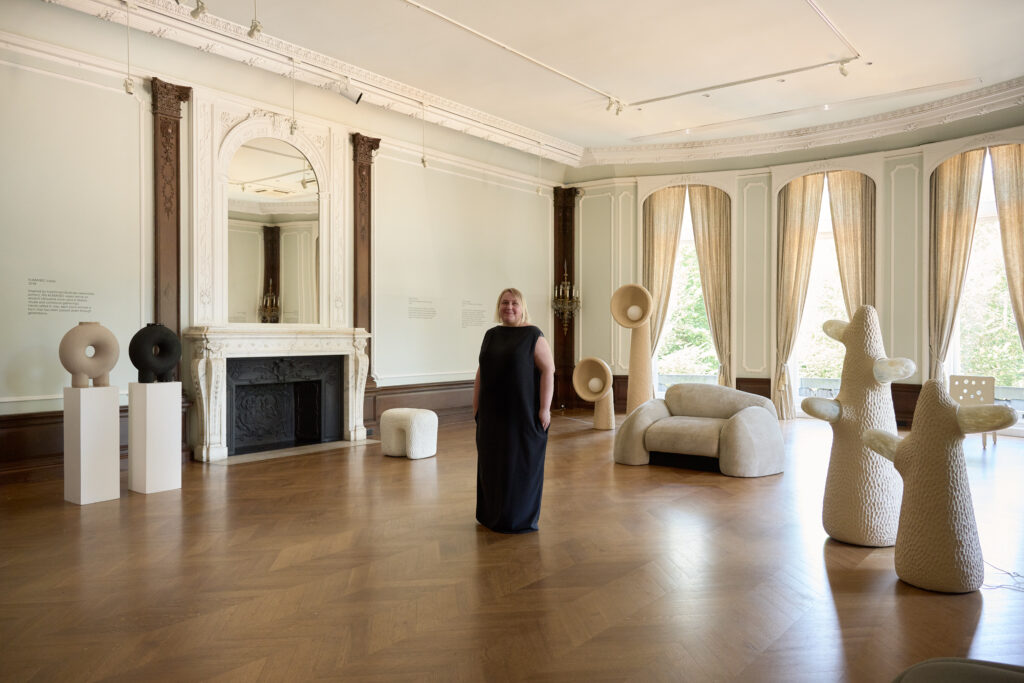
This December is a pivotal moment for you with the opening of the Victoria Yakusha Gallery and its debut during Design Miami. What does it mean for you to create a dedicated home for your work at this moment, and how does the gallery reflect the dialogue between heritage and innovation that runs through your work?
This December is indeed a defining moment for me. Opening a second gallery — this time in a city as vibrant and design-driven as Miami — feels incredibly meaningful. I’m grateful for the opportunity to share my vision with a wider global audience and to create a space that fully reflects my worldview.
The dialogue between heritage and innovation has always been at the core of my practice. Everything I create is rooted in this balance. This new gallery allows me not only to present my pieces, but also to continue telling the story of Ukrainian heritage — how ancestral crafts, materials, and cultural codes can be reinterpreted for today.
At the same time, the space itself carries something almost mythical — a brightness and clarity. It feels both grounded and otherworldly, allowing my works to be seen in a different light, in every sense.
My hope is that the gallery becomes a place where people can experience how the past can be carried into the present in an organic, contemporary way, and how that heritage can continue evolving into the future.
This autumn you curated a major exhibition called ‘Malovana’ at the National Museum of Ukrainian Decorative Art in Kyiv, which revived a nearly forgotten chapter of Ukrainian interior culture – mural traditions created by women in their homes. Can you give a bit of insight into the curation and how the exhibition was received?
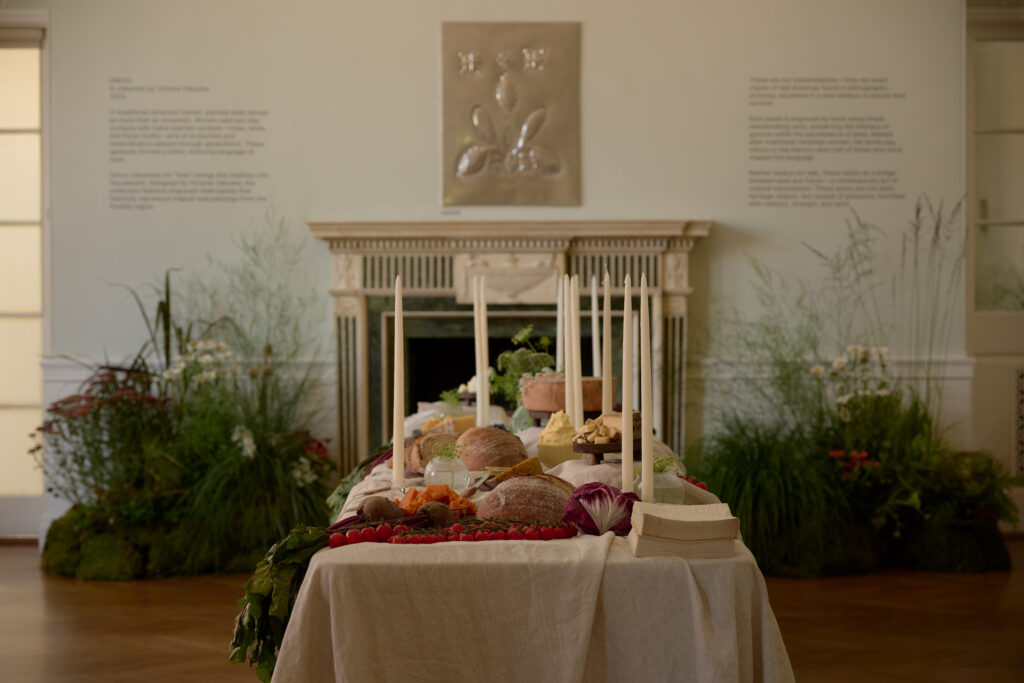
MALOVANA came together in a very organic and almost serendipitous way. After presenting my collection, DREVO in New York, I knew I wanted to bring it home and show it in Ukraine as well. When I approached the National Museum of Ukrainian Decorative Art in Kyiv, our conversation quickly evolved from simply exhibiting my work to creating something much broader — something that could give deeper context to the tradition behind it.
As we explored the museum’s archives, we made an extraordinary discovery: a trove of reproductions of domestic murals created by women in Ukrainian villages. These were documented during ethnographic expeditions in the early 1900s by people determined to preserve these murals before they disappeared. The original murals were painted on clay walls — beautiful but impermanent — and very few survive today. Many of these archival reproductions had never been shown to the public. The moment we found them, it became clear that they had to be seen.
From there, the exhibition took shape. I designed the scenography to lead visitors on a journey from the past to the present — from the archival drawings to my own collection, where these traditional motifs are reimagined on stainless steel panels. Choosing steel was intentional: clay crumbles, paper burns, but steel endures. It felt important to translate this fragile, almost-lost tradition into a material that can carry it forward, ensuring that these visual codes live on into the future.
The response exceeded anything I imagined. People were deeply moved — many wrote to me afterwards to express gratitude for reviving this part of our cultural memory. It reaffirmed for me how powerful and necessary it is to keep bringing Ukrainian heritage into today’s world in ways that feel alive, relevant, and lasting.
Your previous collection DREVO reinterpreted archival Tree of Life motifs in stainless steel. How did you interpret ancestral symbolism in the original collection?
In DREVO, I worked directly with archival drawings from the Podillia region. These motifs were so powerful on their own that I felt no need to reinterpret or alter them — every line and composition is copied exactly as it appeared in the archival books. My role was not to redesign the symbols, but to give them a new material life. That is why I chose stainless steel. The original murals were painted on clay walls, which naturally disappear over time, and most of these images have already been lost. Steel allows this fragile heritage to survive and to move forward into the future.
These drawings represent one of the most delicate and meaningful traditions created by Ukrainian women. They were not merely decorative; they carried protective symbolism, wishes for fertility and continuity, and a deep spiritual connection to home. The motifs — often linked to the Tree of Life — embodied ideas of protection, family, and renewal. Flowers, birds, and branches had different nuances in different regions, but their purpose was always to safeguard the household’s lineage and well-being.
My approach was guided by respect: preserving the ancestral symbols precisely as they were, while placing them within a contemporary material and context. In this way, DREVO becomes both an act of conservation and a gesture toward the future — ensuring that these visual codes remain visible, relevant, and remembered.
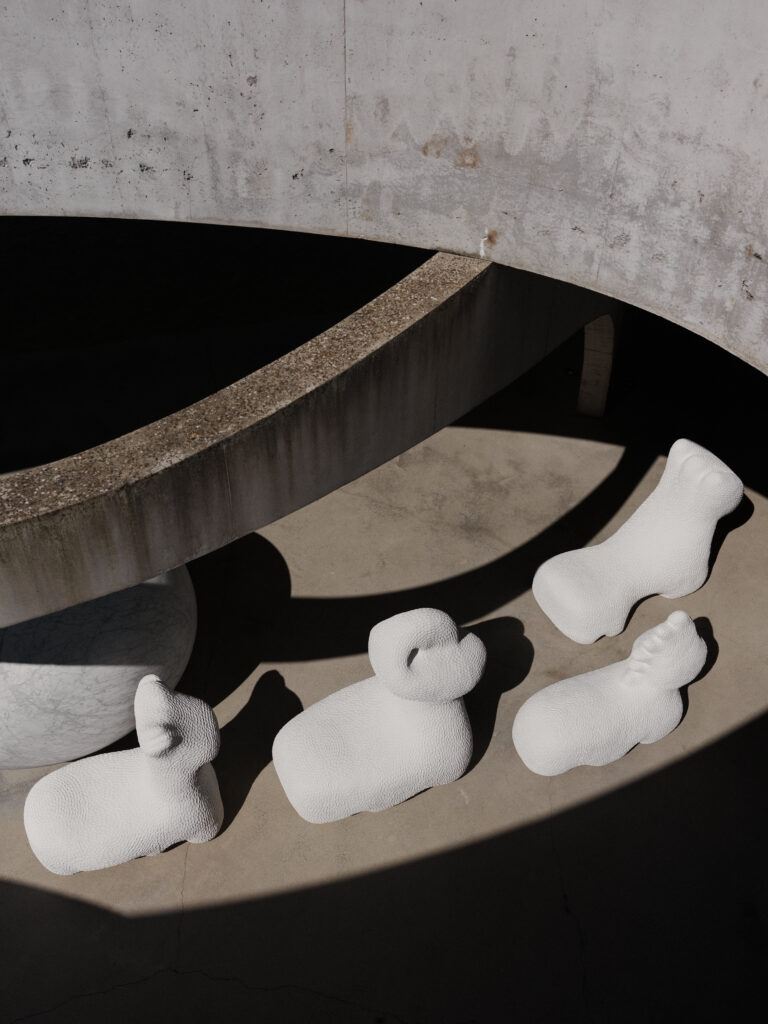
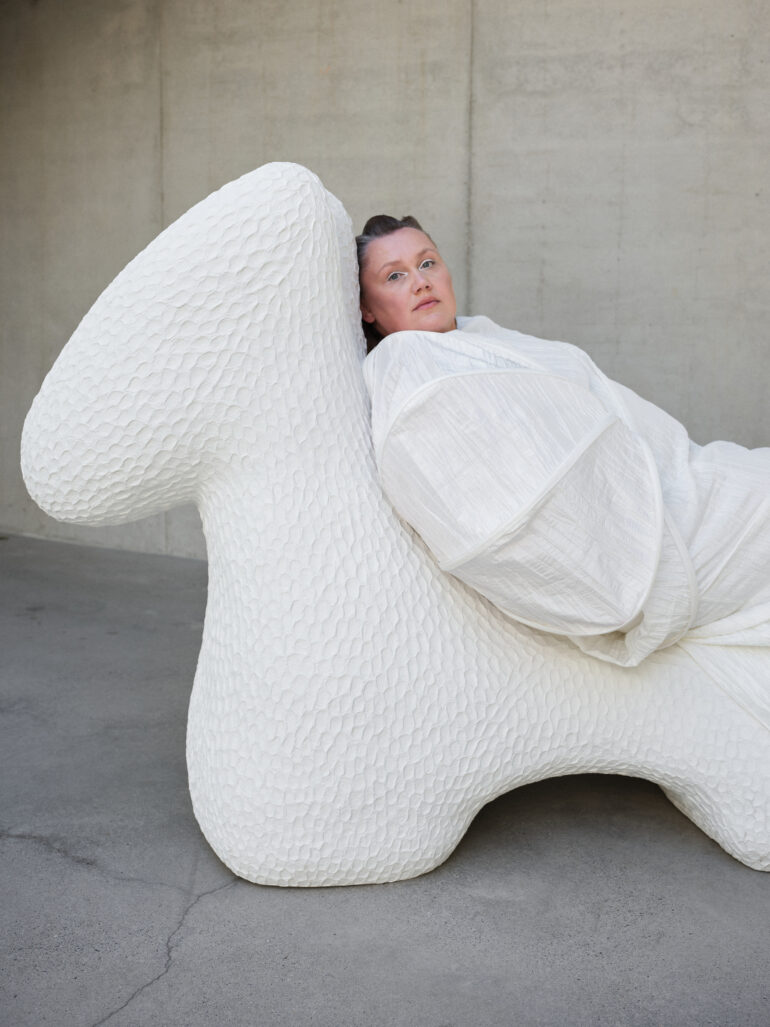
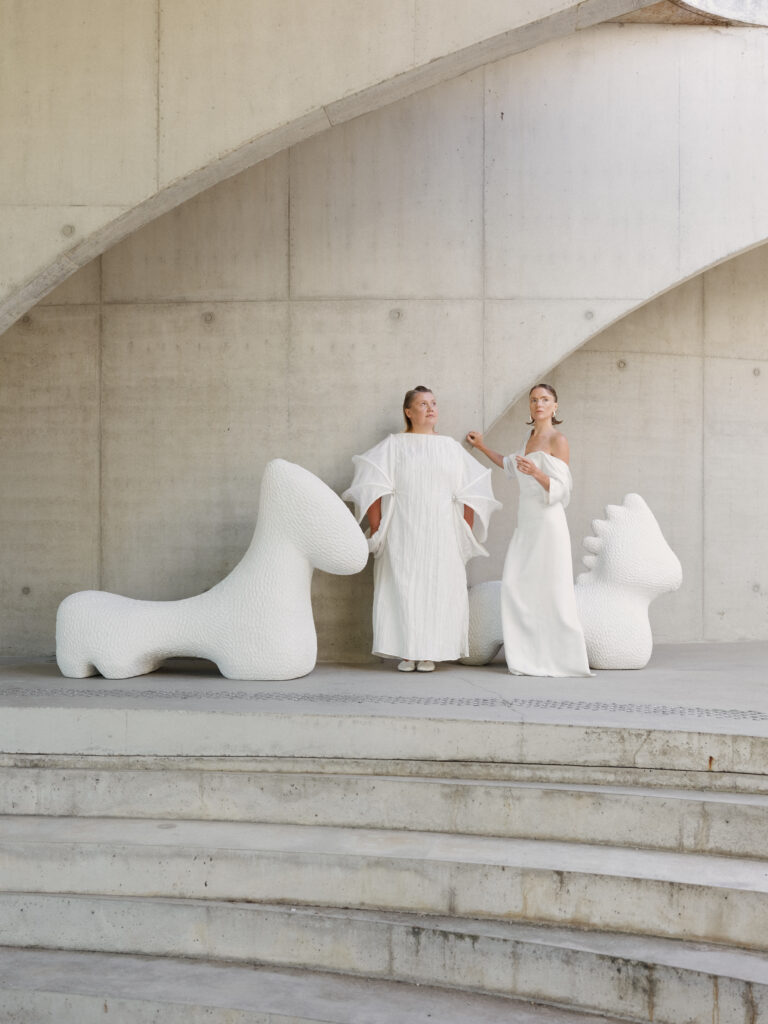
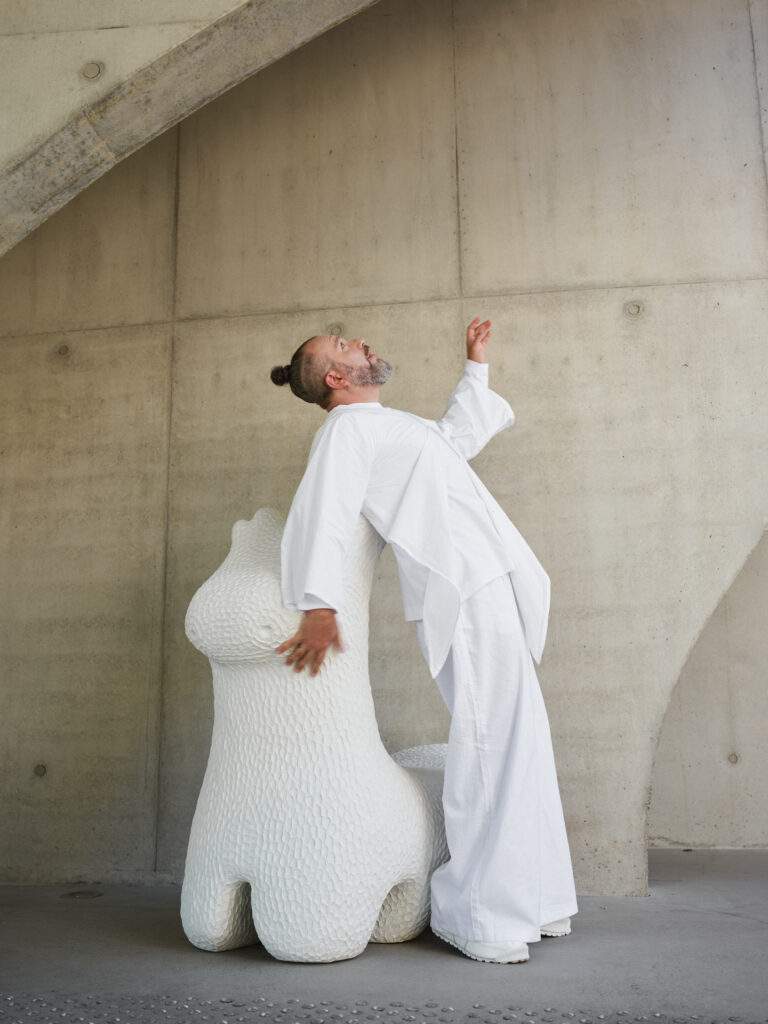
In Land of Light II – which you will reveal during Design Miami – you pair contemporary Ukrainian creatives with mythical creatures sculpted from ZTISTA. How did you select these figures, and what guided the creation of their corresponding mythic counterparts?
The creatures in The Land of Light II continue the mythology I began in the first chapter. I create these beings by looking inward — at the questions I’m asking, the feelings I’m navigating, and what I sense the world needs most at this moment. Each creature embodies a specific force: wonder, tenderness, intuition, inner strength. They are, in a way, guides that help us move through uncertainty.
For this new chapter, it was important for me to show that light exists within people just as much as it does within the mythical figures. The idea was to bring the collection’s mythology into the real world by pairing the creatures with individuals whose work carries light in different forms — whether through design, fashion, science, or art. The people I approached for this project are individuals who radiate something true and luminous, each in their own way.
The pairings emerged from this shared frequency. Every person was matched with a creature whose inner quality resonated with theirs — wisdom with wisdom, curiosity with curiosity, tenderness with tenderness. Through these encounters, The Land of Light II becomes a reflection on how our own light can meet and echo the light of another being, real or imagined. And when those lights meet, something expands. That is the message at the heart of this project.
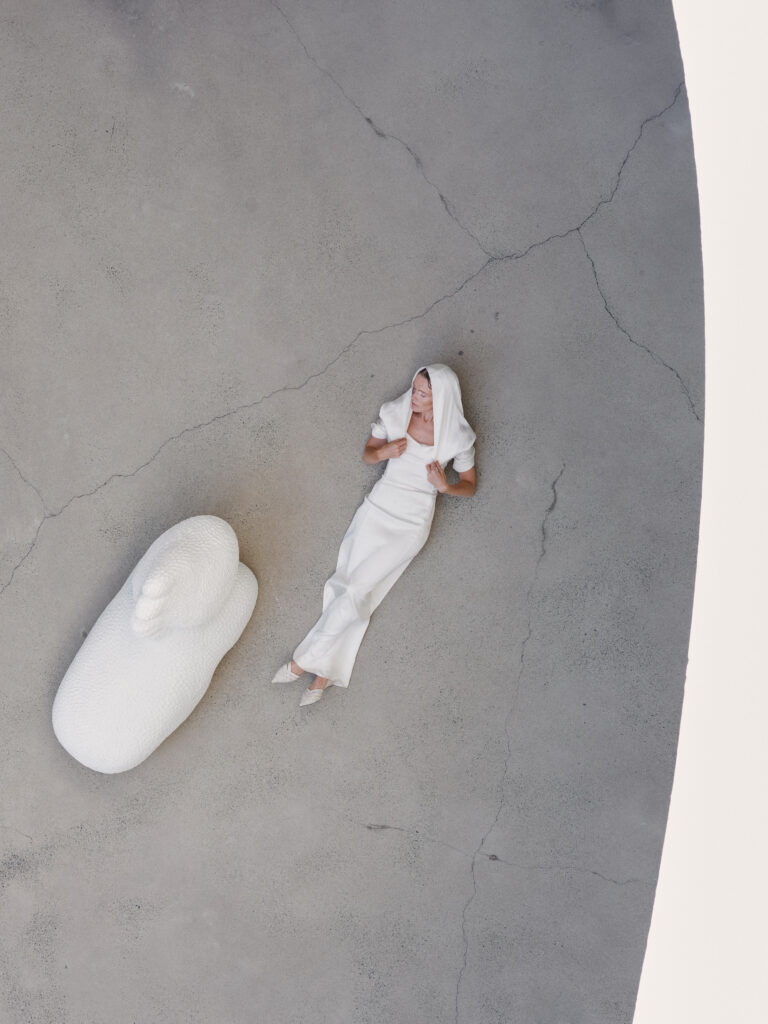
You describe Land of Light II as a constellation of human light, wisdom, individuality, wonder and tenderness. How do your new sculptures continue or expand your philosophy of “live minimalism,” and what role does light play in shaping this next chapter of your practice?
Live Minimalism has always been about presence without noise — objects that speak quietly yet hold a powerful emotional and energetic resonance. The new sculptures in The Land of Light II continue this philosophy simply by being what they are: beings that radiate warmth, gentleness, and a sense of inner life. I deeply believe that objects can carry energy, and observing how people instinctively want to touch these creatures, to stand close to them, to experience them physically, only reinforces that understanding. There is something healing in that exchange.
Although the forms remain minimal, their presence is anything but empty. They pulse with individuality and tenderness. They are silent, but they are not still — people feel their aliveness. And that quiet aliveness is central to my practice. I’m interested in creating works that don’t shout for attention, but instead invite a slower, more intimate connection.
Light plays an essential role in this next chapter. It’s not only the literal light reflected by the surfaces or cast by the forms — it’s the inner light that these beings carry. This ‘constellation of human light’ is a way for me to explore how subtle qualities like warmth, wisdom, and wonder can be embodied in form. Light becomes a guide, a gentle force that shapes both the sculptures and the emotional space around them. In this way, The Land of Light 2 expands my practice into a more spiritual, almost relational territory — one where minimalism holds room for energy, care, and human connection.

What are you working on in 2026, and what do you have planned for the exhibition program at your new gallery?
For 2026, we’re in the process of shaping the programme for the gallery, and this moment of building is very exciting for me. My hope is that the space will grow into more than just a place to show work — I want it to become a point of connection. We’re exploring the idea of hosting conversations, panels, and lectures that bring together voices from design, architecture, craft, and contemporary culture.
My current focus is on understanding how the gallery can contribute meaningfully to the creative landscape in Miami and how it can provide a platform for dialogue around heritage, materiality, and future-forward design. The plans are still evolving, but the intention is clear: to create a living space where ideas, people, and cultures meet.
Opening a second gallery — this time in a city as vibrant and design-driven as Miami — feels incredibly meaningful. I’m grateful for the opportunity to share my vision with a wider global audience and to create a space that fully reflects my worldview.” Victoria Yakusha
All images Courtesy of Victoria Yakusha.
Find out more about Victoria Yakusha here.