

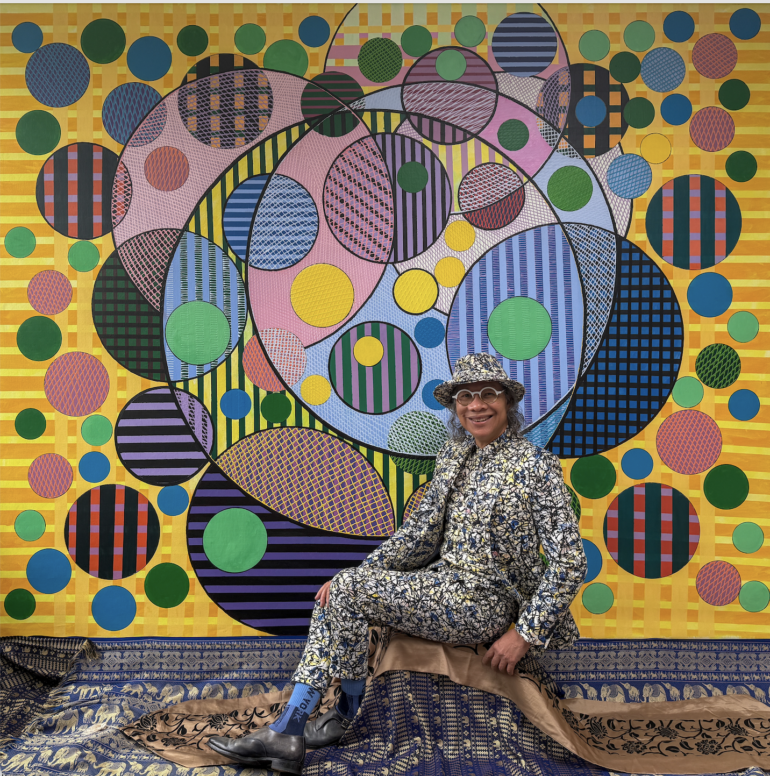
Culturalee in Conversation with Somsak Chaituch offers an intimate look into the life and creative philosophy of one of today’s most distinctive voices in contemporary art and design. Born in the hills of Northern Thailand and trained as a Master of Fine Arts and Design in the Netherlands, Somsak Chaituch blends Eastern spirituality with Western abstraction in a visual language that is bold, rhythmic, and deeply emotive.
In this exclusive interview, Chaituch reflects on the cultural memories that shaped him, the mentors and artists who honed his perception, and the transformative role of Buddhism and meditation in his artistic process. He also discusses his unique fusion of fine art and fashion, his signature three-dimensional lines, and the dual heritage that informs his semi-abstract style. With major exhibitions ahead in Dubai and Taiwan coming up in 2026, Chaituch opens up about his journey, his inspirations, and the evolving vision behind his celebrated body of work.
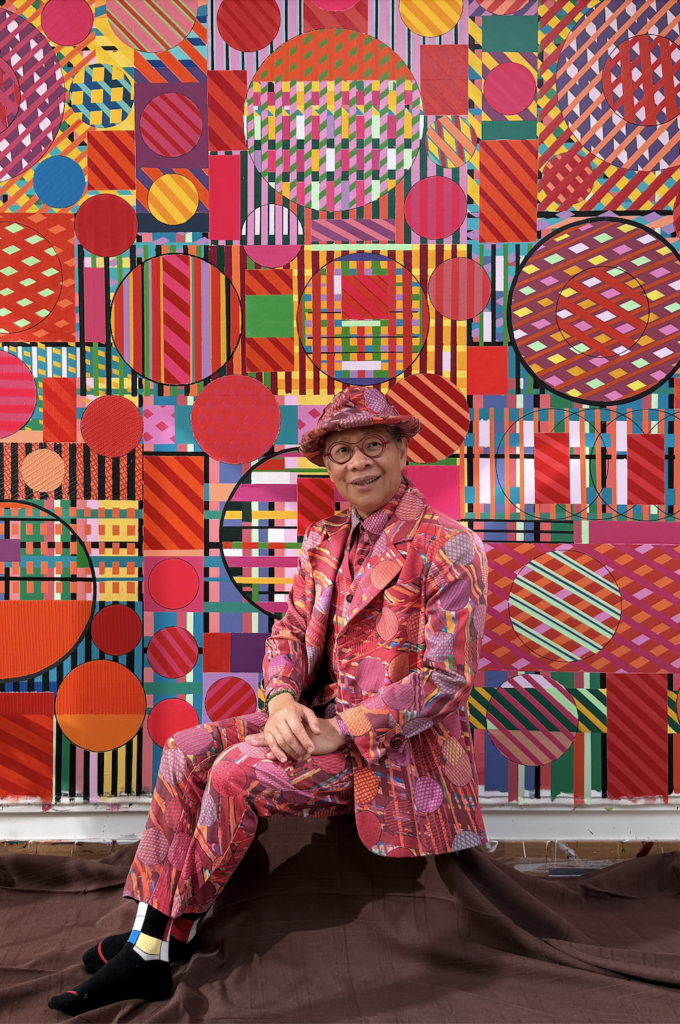
Your upbringing in the hills of Northern Thailand seems to play a powerful role in your work. How do your Thai heritage, rural childhood, and cultural memories continue to influence the colours, rhythms, and imagery in your paintings?
As the fifth of six siblings from a poor family, working the land taught me perseverance. I can go on painting for more than twelve hours a day. Nature’s colors and climate have always influenced my work, and I never forget my roots.
You often speak about painting your feelings for nature rather than nature itself. Which artists, mentors, or personal experiences have most inspired the emotional and dreamlike qualities in your compositions?
My instructors as Peter Struycken at the Dutch Art Institute provided me with comprehensive training in the creation of art. They guided me to observe, listen to, smell, and experience nature in depth, and encouraged me to convey in my work the emotions evoked by these sensory perceptions. Further I am inspired by artists like Henry Matisse and Beatriz Milhazes.
Your time as a Monk and your deep connection to Buddhism and meditation profoundly shaped your life. How have those spiritual practices influenced your artistic process, your sense of rhythm and line, or the themes you explore on the canvas?
After my Master’s, I studied Buddhism in a temple for two years, training my emotions and learning to let go. Returning to art, I began painting as meditation, which has strengthened my work and encouraged abstraction and freedom.
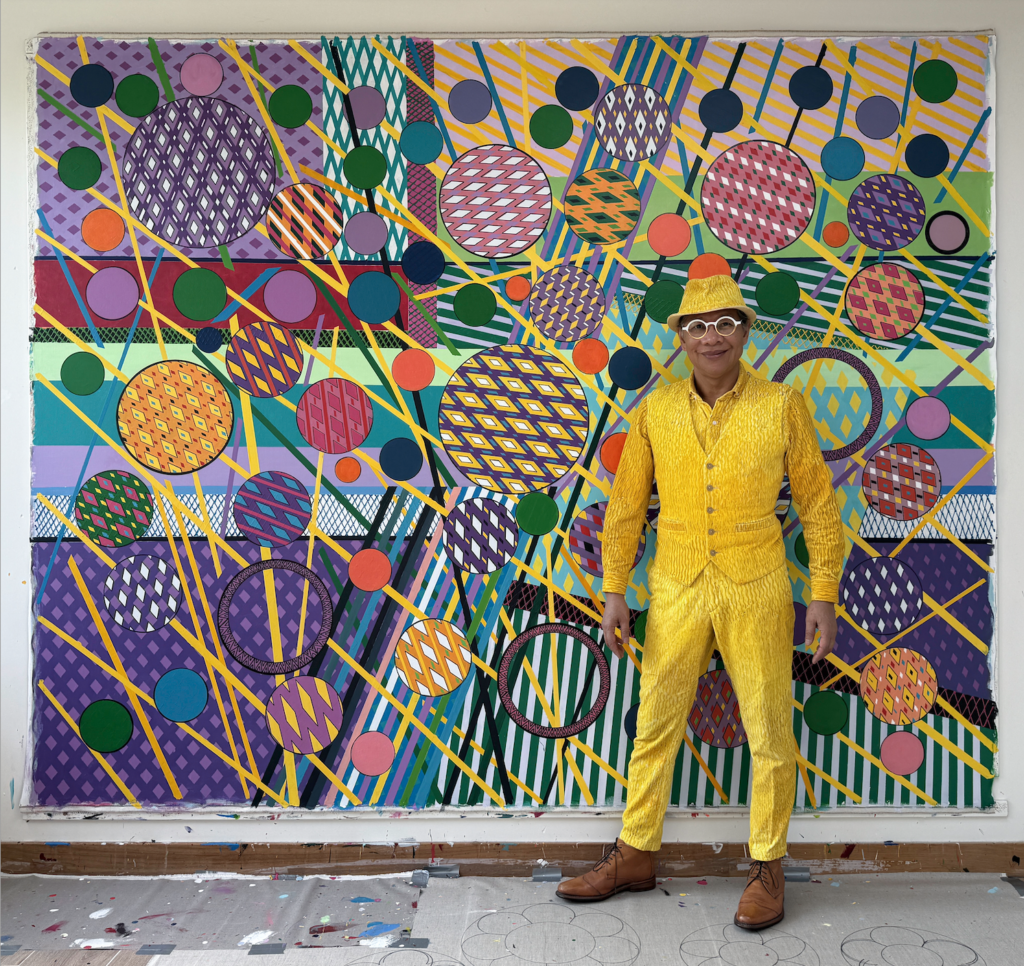
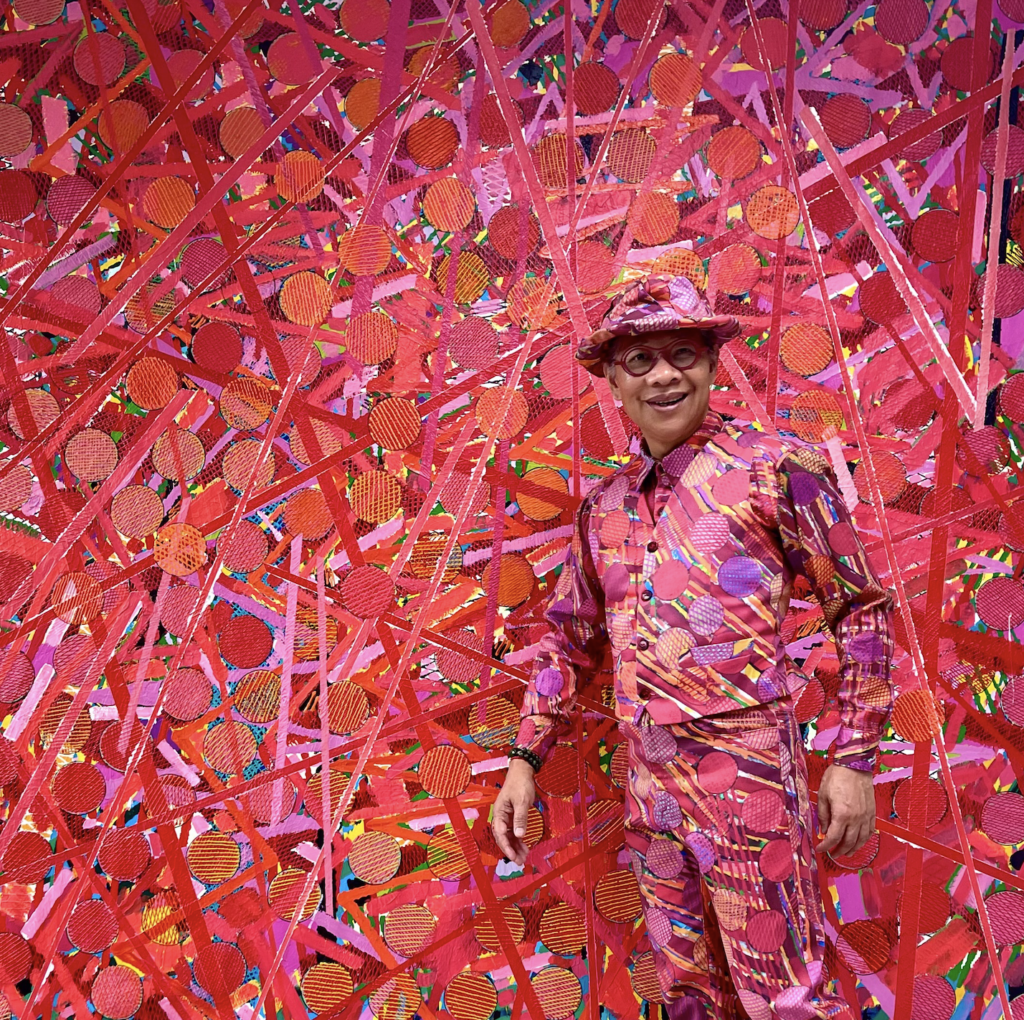
Your work uniquely bridges art and fashion: you often travel wearing suits made from your own paintings, and many of your artworks are specifically designed to be transformed into fabric. What inspires you to bring your paintings into the world as garments, and how does this wearable element influence the way you approach composition, colour, and line in your art?
With a Fine Art and Design background, I’ve learned to express ideas visually and more dimensional. I aim to immerse myself in my work. My fabric designs are inspired by artists like Simon Hantai and Yayoi Kusama, with compositions that tend to be decorative.
Your style – defined by curvaceous lines, thick paint squeezed directly from the can, and vibrant colour compositions – has become very recognizable. How did you develop this signature aesthetic, and what does the act of working with lines mean to you personally?
I was born among the rice fields, where the stems and grasses have made a lasting impression on me. This inspired me to mimic natural forms with thick, three-dimensional lines; a technique I refined over years. My time as a monk helps me focus and maintain precision in every line.
Your work sits between abstract Buddhism and realistic nature, reflecting your life between East and West. How do you navigate this duality in your art, and what does this ‘in-between’ space allow you to express that purely abstract or purely figurative work might not?
My Thai-Dutch heritage influences my art, combining Eastern emotion and color with Western abstraction. I began studying art in the Netherlands at the age of 27, after no formal training in Thailand. My semi-abstract style reflects my mixed background and personal growth, making my work more accessible through recognizable elements within abstraction.
Looking back on your journey – from rural Thailand to your MFA in the Netherlands, from severe illness to artistic rebirth – what projects or exhibitions are you most proud of, and why do they hold such significance for you?
While I value every exhibition, three are particularly significant. In Hanoi, the Vietnamese president attended the opening of my first solo show in Asia. In New York, my work was displayed on the distinguished 10-meter-long wall at the Robert Miller Gallery, where pieces by Pollock and Kusama have previously been exhibited. Most recently, my solo exhibition at the Dan Gerbo Museum in France showcased sixteen large-scale, uniformly sized paintings positioned on two parallel walls, forming a cohesive artistic statement and exemplifying the concept of Gesamtkunstwerk.
You have some exciting projects coming up in 2026 including a month-long exhibition titled ‘Music for the Eyes’ in February at Intent Gallery in Dubai, and an exhibition at the Modern Art Gallery in Taichung, Taiwan next autumn. Can you give us a bit of insight into what you will be exhibiting in Dubai and Taiwan?
At the Intent Gallery in Dubai I will show next February six of my newest paintings in which mathematical and decorative forms compose a kaleidoscope of rhythm, geometry, and colour woven into a vibrating visual symphony. Therefore this show is called ‘Music for the Eyes’. Next summer or autumn, I will showcase a selection of both recent and earlier pieces at the Modern Art Gallery in Taichung, Taiwan. The unifying theme focuses on decorative forms and vibrant colors of nature.
All images Courtesy of Somsak Chaituch.
Follow Somsak here.