

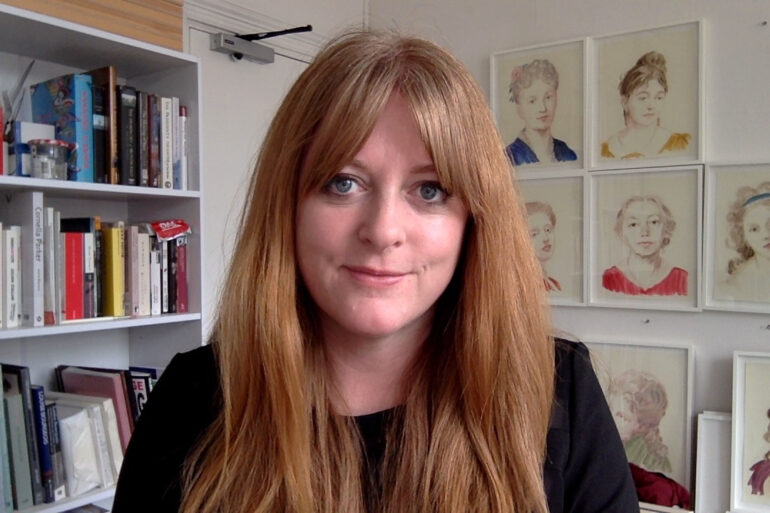
Culturalee talks to artist Annie Kevans about her new solo exhibition Reframing History at Phoenix Art Space in Brighton. In this exclusive Culturalee interview, acclaimed artist Annie Kevans discusses her powerful new solo exhibition Reframing History: Paintings by Annie Kevans at Phoenix Art Space. Bringing together four major series for the first time, Kevans interrogates how history is constructed, who gets remembered, and whose stories are erased. From overlooked women artists to the hidden lives of political figures and Hollywood’s manufactured identities, her work exposes the biases that shape cultural memory.
Here, Kevans reflects on rewriting dominant narratives, the role of research in her practice, and why questioning history has never been more urgent.
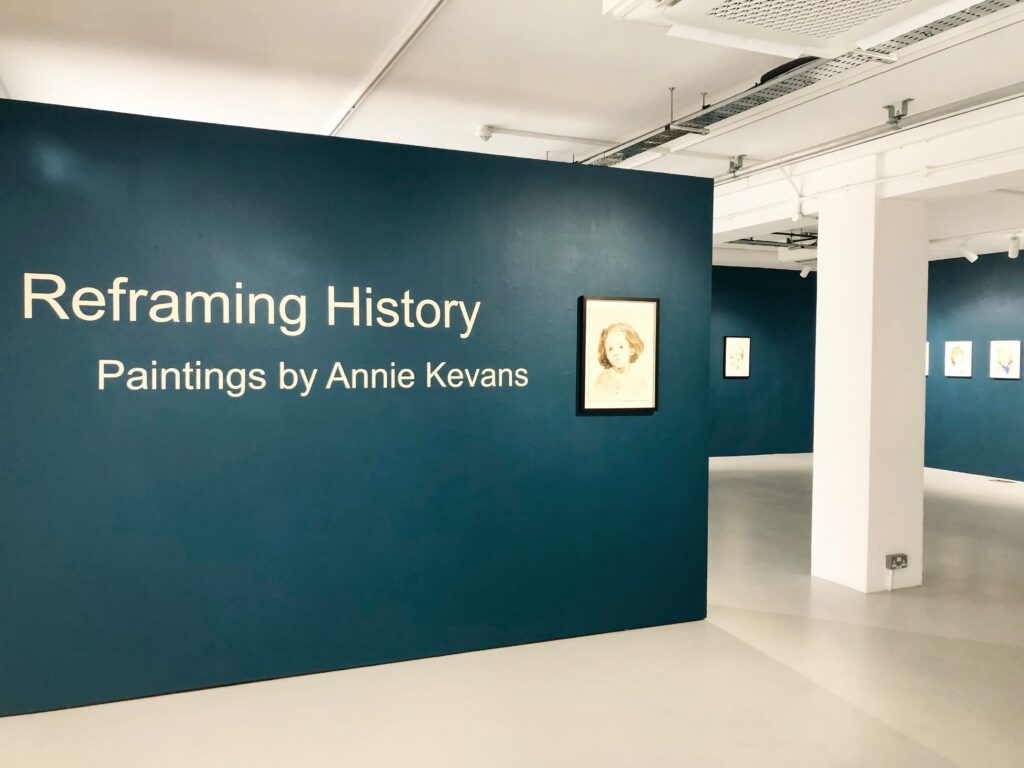
Your new exhibition Reframing History at Phoenix Art Space brings together four distinct series for the first time. What was your intention behind presenting these bodies of work together in this context, and how do they collectively reshape our understanding of historical narratives?
When the curator of Phoenix Art Space, Laurence Hill, visited my studio, he told me that his theme for the year was ‘Future Histories’. I have created several series of paintings that deal with our understanding of historical narratives and it was an opportunity for me to show four of them together in one space for the first time. Together, I hope they will encourage people to question these narratives and how they manipulate our understanding of the world we live in. Aperson’s identity is not preset – rather, it is determined by the interactions of a person with another and is, therefore, a shifting temporary construction. My work looks at ideas of personal responsibility within structures determined by time and place and the role of those who create those structures.
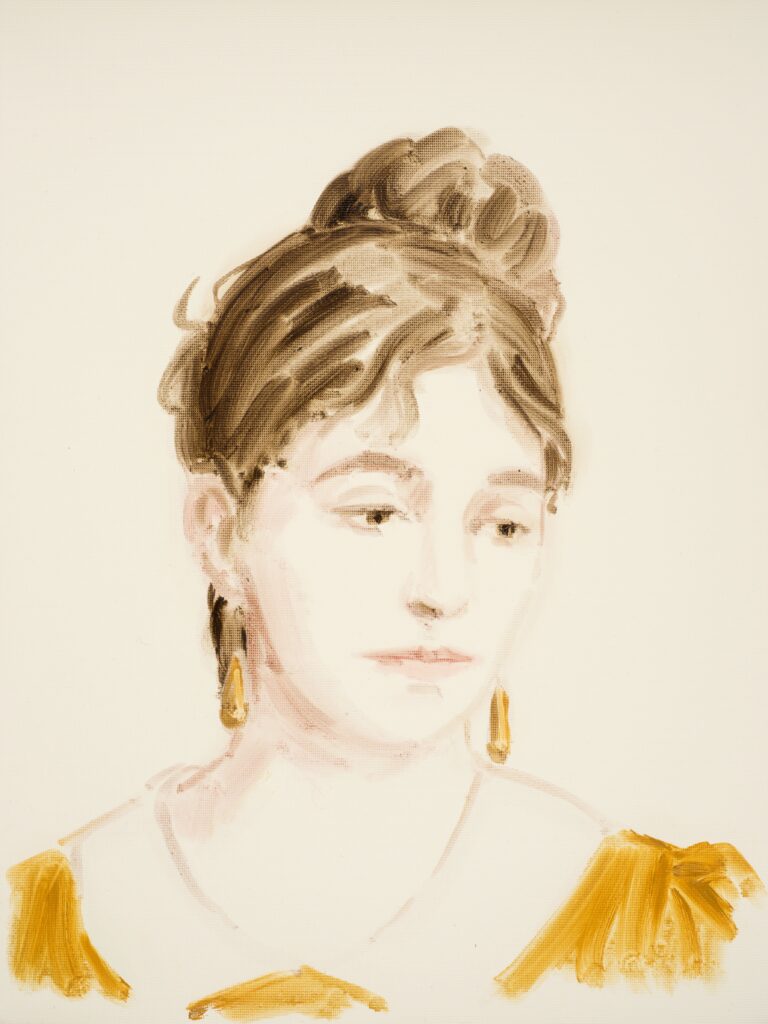
The History of Art series features women who were successful artists in their time but who were gradually left out of subsequent studies, predominantly written by men. Having been rediscovered by later art historians, these women still remain separate from art history, their work consistently left out of exhibitions, museum collections and books, and deemed only worthy of fields of study pertaining to women artists in particular. During a radio interview, I was once asked if the women artists were dressing up as men to infiltrate a world dominated by men. The radio host was genuinely surprised that women artists from the 16th, 17th and 18th centuries were international celebrities, more successful than women today. At the time of my research, the National Gallery website stated that the reason they didn’t have much work by women in their collection was because women were not allowed to be artists in the past. Was this statement written out of ignorance or as an excuse for why the National Gallery fails to purchase work by women, most of it exceptionally cheap compared to their male counterparts?
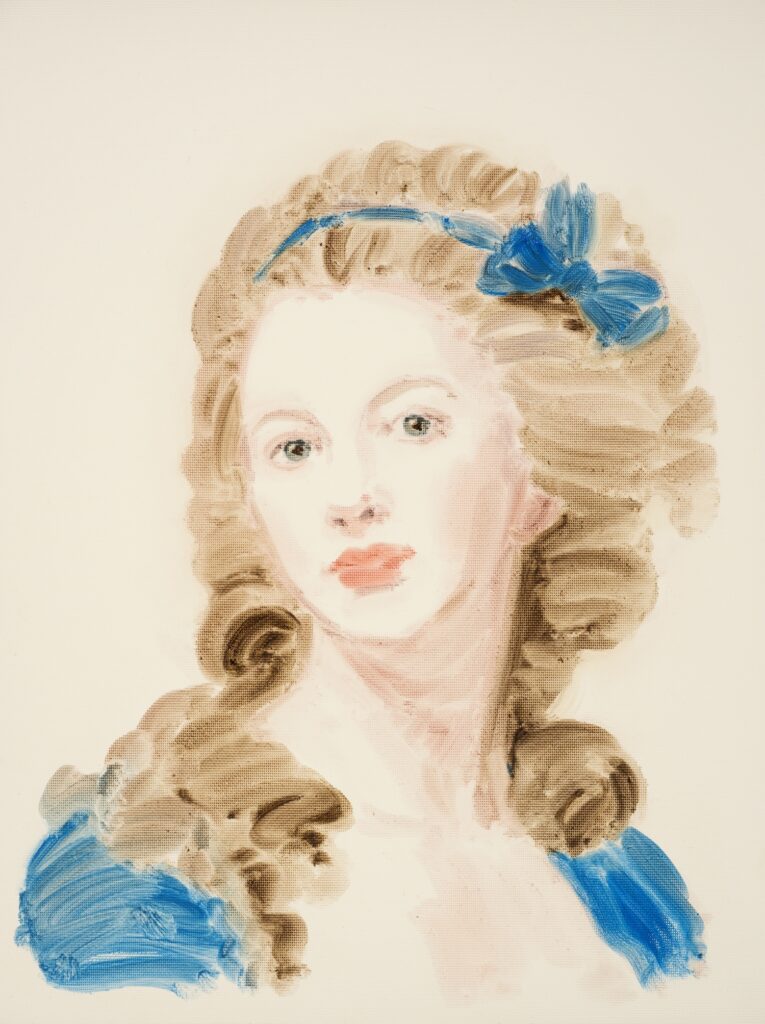
All the Presidents’ Women highlighted the fact that nearly all the US presidents had mistresses and that recent scandals were nothing new. My research revealed that although Thomas Jefferson publicly opposed slavery as a “moral depravity”, he owned over 600 people during his lifetime. Despite calling for gradual emancipation, he rarely freed slaves and maintained his plantation at Monticello using enslaved labour. In fact, the slaves he freed, or allowed to escape, were his own children. He had several with an enslaved woman named Sally Hemings who was his wife’s half-sister. She was just 14 years old when he ‘began a sexual relationship’ with her at 44 years old. In 2010 I visited the Jefferson Plantation, Monticello, in Virginia during Black History Month and went on a tour of the slave quarters there. Most people left the tour in disgust as the tour guide, a middle-aged woman wearing a US flag brooch, tried to convince us that slaves were “better treated than white farmers” and were very happy being held hostage at Monticello. She also denied Thomas Jefferson had children with a slave, shouting “WE are the authority on Thomas Jefferson and IT NEVER HAPPENED!”. This, despite DNA evidence confirming that Sally Hemings’ descendants shared Jefferson’s DNA. Biopics and books have romanticised and sanitised the relationship with grown women playing the role of Sally Hemings. Such is the inability of people to accept Thomas Jefferson as he really was, despite the passing of time.
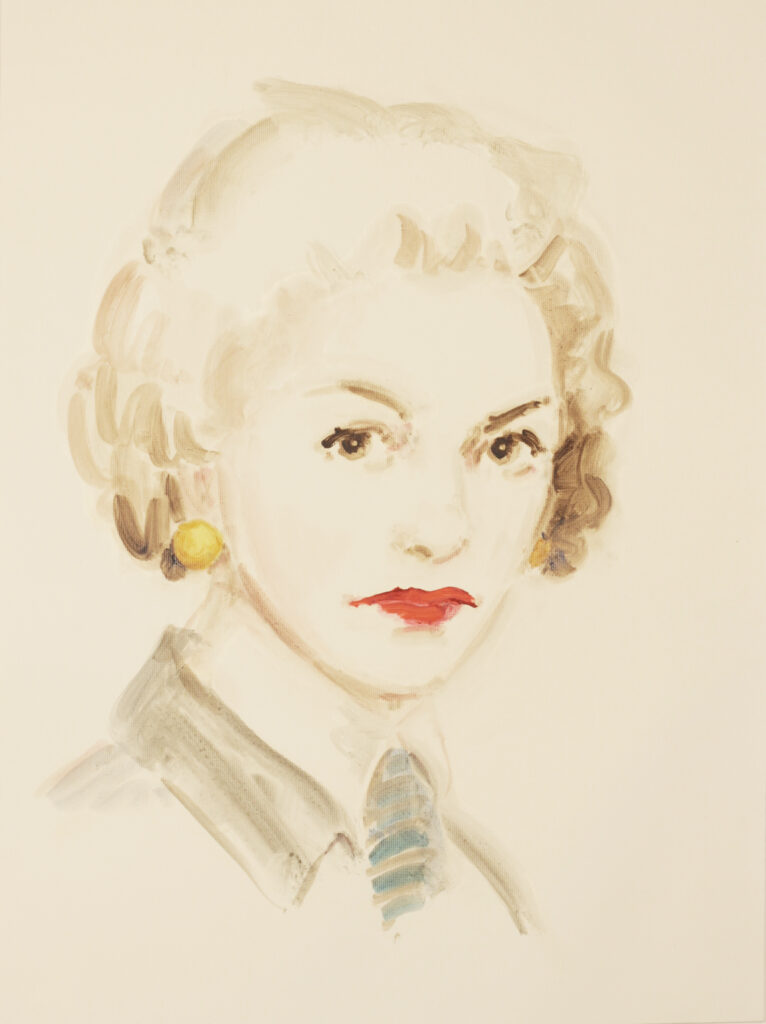
The WAMPAS Baby Stars was a series which looked at starlets who were selected by the Western Association of Motion Picture Advertisers for their future potential. The WAMPAS Constitution affirmed that each WAMPAS member should feel an “ever-present consciousness of his responsibility to the profession he publicizes, the industry he represents and to the public whose tendencies, thoughts and impulses he is such a factor in forming and directing”. With this in mind, the girls were given new identities, then presented to the world at the annual ‘WAMPAS Frolic’, where their all American beauty could be celebrated and idealised. I was interested in the attempt to define what an American looked like at the start of cinema, in the 1920s and 1930s. I was also drawn to the renaming of the girls so that new identities were given to them, like dolls, but by a group of men, not young girls playing with toys.
Across your practice, you focus on figures who have been overlooked or erased. What draws you to these subjects, and which artists, writers, or historical ideas have most influenced your approach to “reframing” history?
I remember an art teacher at art school telling the students “you won’t know what your work’s about until you look back on it after 10 years”. We were encouraged to trust our instincts and create work without thinking too much about the reasons why. At various points in my life I have been drawn to figures who have been dismissed as unimportant, like women artists, or ridiculous like presidents’ mistresses such as Monica Lewinsky. I am not so much drawn to them as individuals but more as part of a group of people whose similar experiences say so much about our culture’s values. My interest lies in how society responds to people at a given time and what that says about us as a group. I am questioning the values, not the person’s actions.
Some of these people’s very existence is problematic to the agreed-upon historical narrative, for example, Sally Hemings and her children. They remain taboo, centuries after they lived. To paint them is to paint that taboo. I was recently diagnosed with ADHD and I’ve been learning about justice sensitivity, which is experienced more commonly with people with ADHD.
“Justice sensitivity is the tendency to notice and identify wrong-doing and injustice and have intense cognitive, emotional, and behavioural reactions to that injustice. People who are justice sensitive tend to notice injustice more often than others, they tend to ruminate longer and more intensely on that injustice, and they feel a stronger need to restore justice.” I think art is an outlet for my justice sensitivity and explains much of my work.
I am inspired by artists like Yinka Shonibare, Paula Rego and Cornelia Parker. Early in my career I was inspired by writers like Michel Foucault. I have great admiration for the people who took time to create the Dictionary of Women Artists (edited by Delia Gaze) which is brilliantly researched and extensive. When I flick through the two enormous volumes of the dictionary, I worry that the limited size of my History of Art series continues to propel the myth that there were hardly any women artists. I wish I could paint the thousands of artists we know about.
Your portraits often reconstruct or imagine likenesses where little or no visual record exists. Can you talk us through your process of researching, interpreting, and ultimately painting these figures back into visibility?
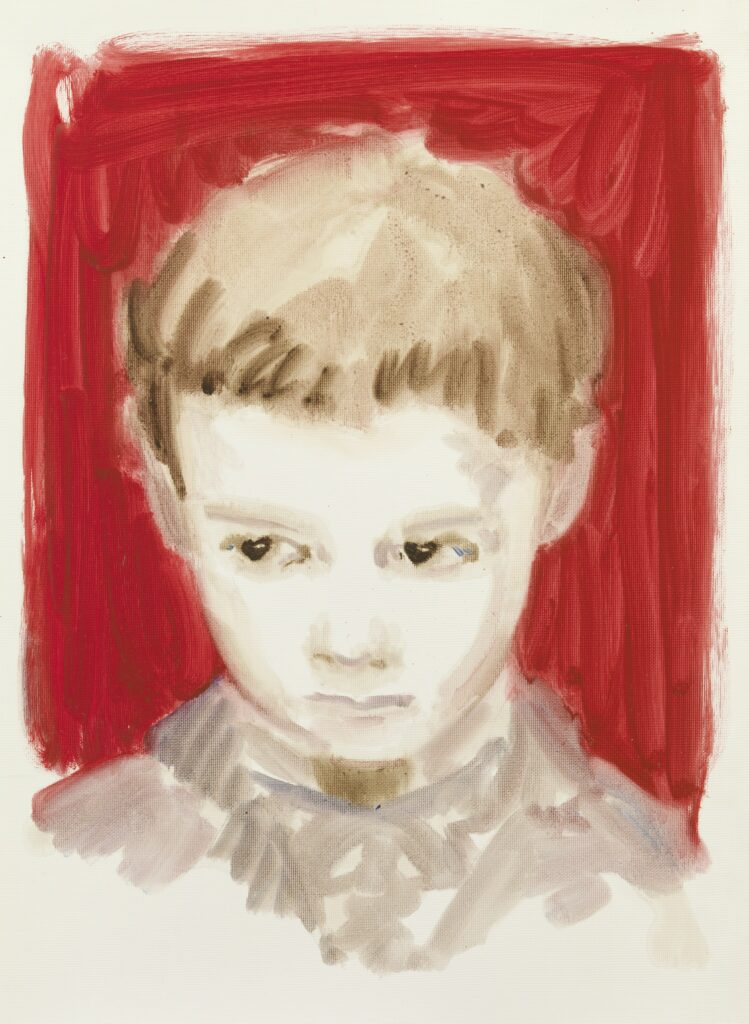
My first series of paintings, Boys, depicted thirty 20th century ‘evil’ dictators as little boys. It was while creating these works that I understood the freedom painting allows us to create images that do not exist. More than twenty of the thirty works in the series were not based on real images as I was unable to find them but I painted them anyway, refusing to abandon the subject because I could not find photos of the men as children. I did not want to exclude a person from a series, simply because there was no image of them to work from.
I have described my works as ‘anti-portraits’ because they often do not depict people as they really looked and their individuality is irrelevant to the body of work. I start a series with a concept and, often, with no idea of who will be included in the series. They are unknown to me until I do my research and, a lot of the time, there is no image of that person so I create one of them. I am pleasantly surprised when people accept my work as being based on real documentation. The ongoing presumptions around portraiture dictate that it is to be accepted as true which leads people to accept my work as ‘real’. I was once asked how I found photos of the Hemings family even though they lived before the invention of photography. There is a presumption that real documentation must have been used.
While researching women artists of the past, I discovered that many of them repeatedly painted self portraits. This was because their patrons would commission them to do this. The women artists were celebrities of their time and their self portraits were selfies created for their fans!
Each of the series in the Brighton exhibition – The History of Art, Collaborators, All the Presidents’ Girls, and Wampas Baby Stars – addresses different forms of omission and power. How do you see these series in conversation with one another, and what threads connect them in your wider practice?
Both my Collaborators and All the Presidents’ Women series look at the rewriting of history for reputation’s sake. French Nazi collaborators like Coco Chanel had to leave France after World War II to avoid being prosecuted for collaborating with the nazis who occupied France. She had, among other things, tried to use anti-Jewish laws to take over the company that made her perfume and even had a nazi spy name and number. Chanel lived in exile in Switzerland for 10 years before tip-toeing back to France when the anger against her had died down. She then targeted foreign markets where her collaboration was mostly unknown. Biographies and biopics of her life conspicuously skip over the war years so that her nazi collaboration is constantly in the process of being whitewashed. When my series was shown in Paris, it caused heated debate as people refused to believe that their beloved Chanel was, in fact, demonstratively nasty.
I think the grouping of the four series exposes the dishonesty and misogyny involved in the recording of history: most people don’t know the real names of the WAMPAS Baby Stars as they were renamed by a group of men; they don’t know that women artists were hugely successful in the past because historians wrote them out of art history and museums claim ‘they weren’t there’; most people wear Coco Chanel’s name with pride, not knowing anything about her dubious past; US presidents are revered, despite their questionable behaviour, while the women around them are treated with contempt, and so on.
As more and more information is made available to us, we have more access to alternative histories and we need to become more adept at discerning fact from fiction. I think we need to take responsibility for our own beliefs and recognise that we believe what we want to believe and then question what that says about us.
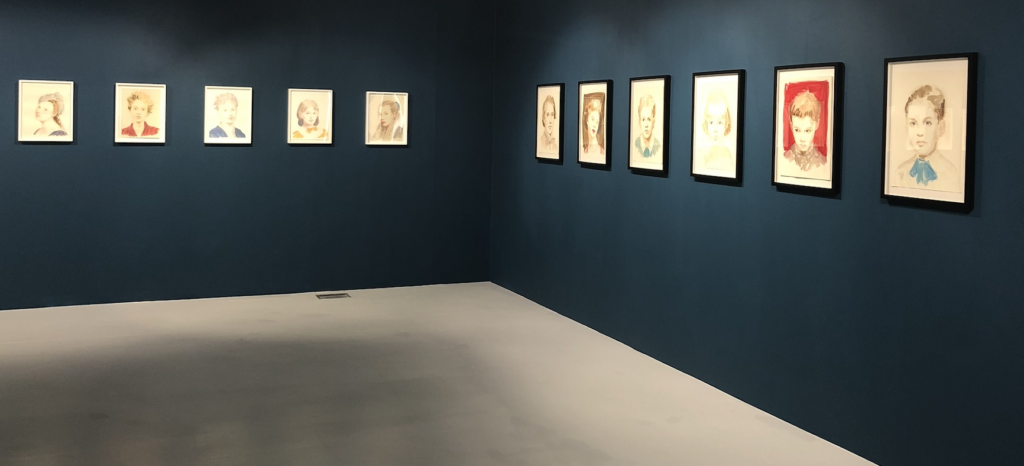
Reframing History: Paintings by Annie Kevans is at Phoenix Art Spaceuntil 19 April, 2026. Find more information here.