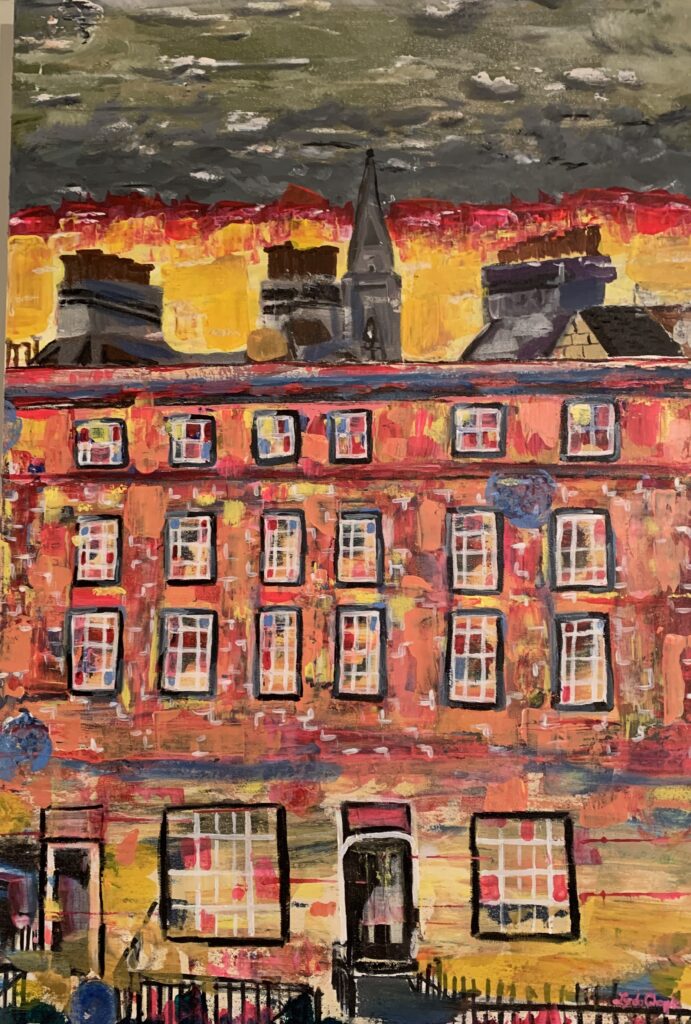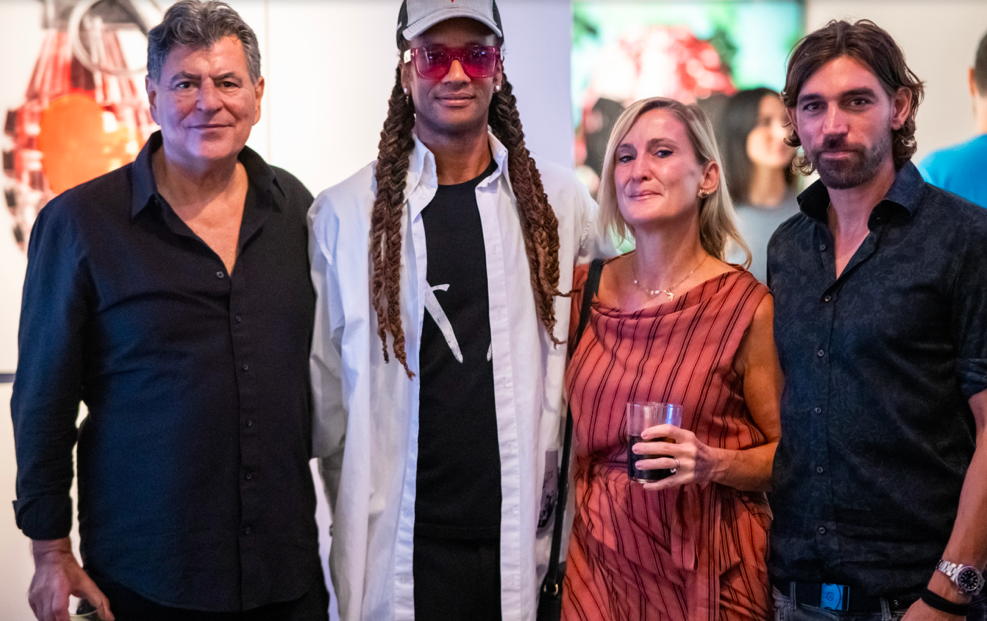


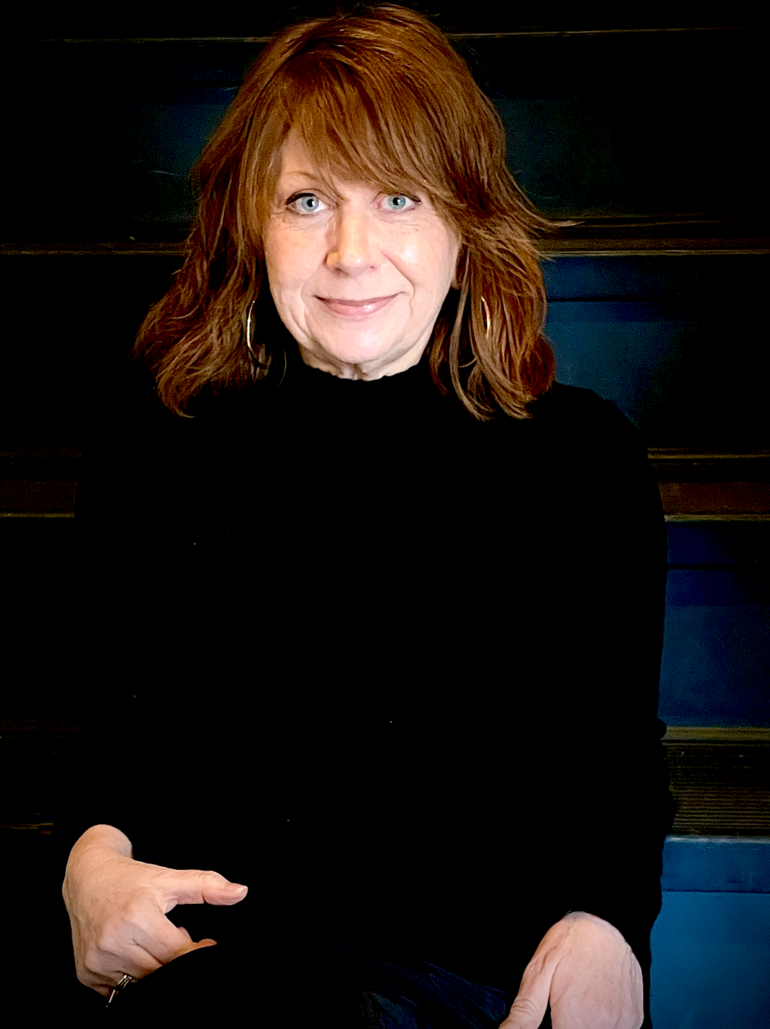
For this instalment of Culturalee’s Emerging Artist Series, we speak with Lynda Chapple, a Canadian artist whose creative life exists at the intersection of film, storytelling, and painting. With a successful career as a Property Master in film and television – including a 2024 Prop Master Guild (PMG) Award nomination for her work on Netflix’s The Fall of the House of Usher – Chapple brings a deeply narrative sensibility to everything she creates.
When she isn’t shaping worlds for the screen, Chapple turns to her studio practice as a space of curiosity, intuition, and freedom. Her paintings, informed by realism and pop art, evolve organically and reflect a lifelong devotion to process over outcome. In this interview, Chapple shares how her art continues to shift and grow alongside a demanding career, the inspirations that guide her work, and the quiet but powerful role painting plays in her creative identity.
How would you describe your artistic style and aesthetic, and how has it evolved since you began your creative journey?
I’d describe my artistic style as always shifting. Some things stay the same, but each painting nudges the work forward and opens up a new direction. My work pulls from a mix of traditional, dreamlike, and folk influences, with abstract elements running through it.
I started painting simply because I loved the process – spending time with a piece and watching the image take shape. That’s still true today. Painting isn’t my livelihood, but it’s an important extension of who I am creatively, a space where I can follow curiosity, trust my instincts and have no fear.
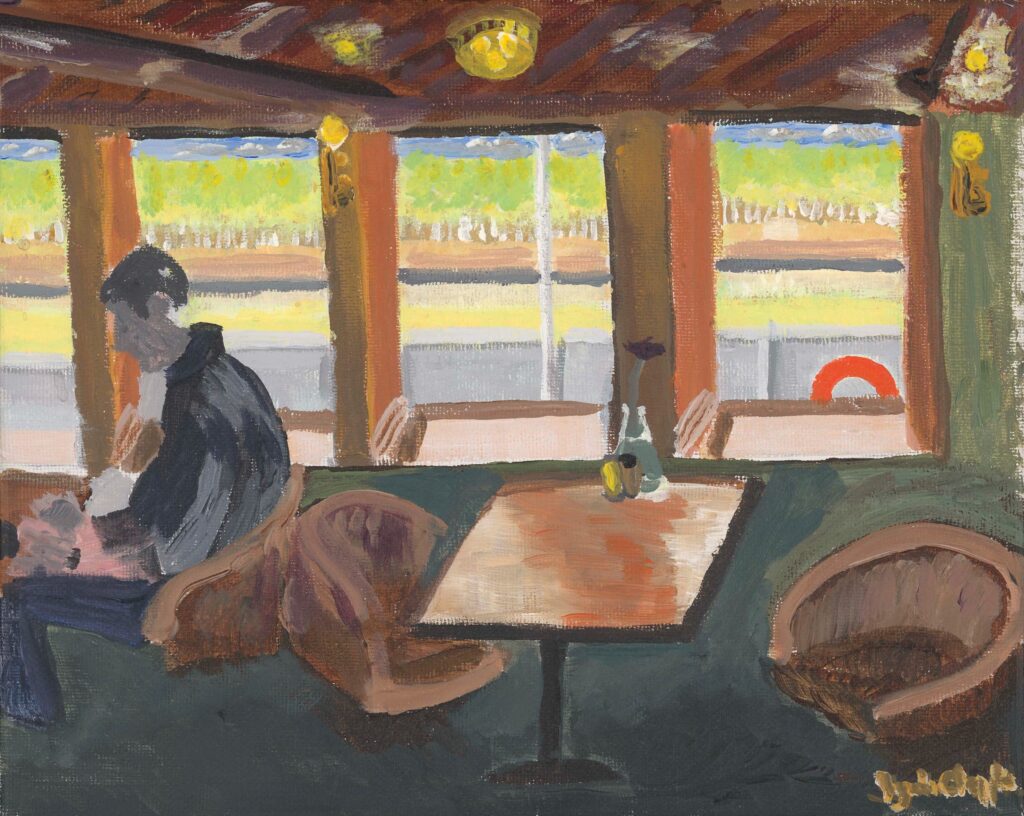
What does a typical day in your studio look like – from your creative rituals to how you develop and refine your work?
I work as a Property Master in film and television, so my weekday schedule often stretches to 60–70 hours. Painting happens in the margins – I carve out moments, minutes, or the occasional few hours whenever I can. Working on a painting mirrors the way I approach my day as a Property Master. I usually have a sense of what the day will hold, but certain things inevitably take on a life of their own.
It’s the same in my home studio. I may go in thinking I’ll work on the sky or revisit a building colour I’m unhappy with, perhaps returning it to an earlier state. But once I dive in, the process becomes far more fluid. Ideas unfold freely, and my mind often leads me down paths I hadn’t intended, allowing the work to evolve naturally.
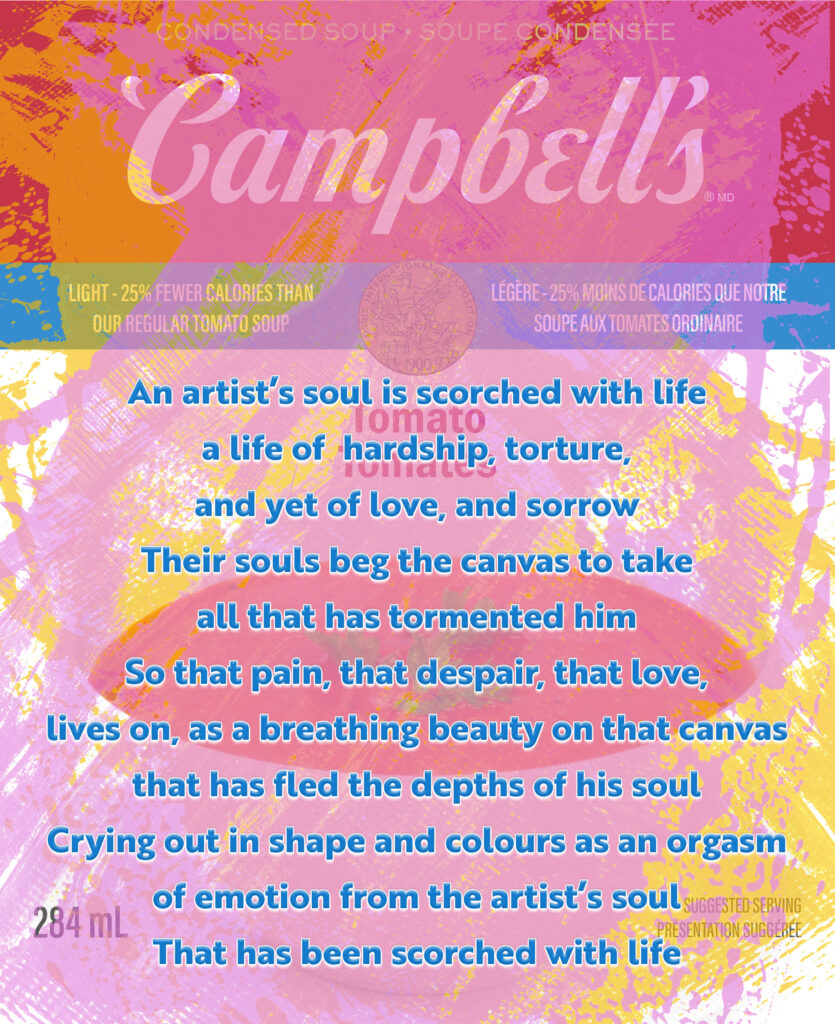
Who or what are your biggest inspirations , and how do they influence the themes or techniques present in your art?
My inspirations come from both artists I’ve long admired and those who influence me more personally. I’m drawn to Van Gogh for the dreamlike worlds he created through paint, and to Anselm Kiefer, whose work first captured me when I chose his subject matter for a university essay and continue to resonate through his powerful use of darkness and tone. Edward Hopper also deeply influences me — his paintings invite the viewer in, leaving space to imagine the story unfolding within the scene.
Closer to home, Mahlon Todd Williams is a constant presence and inspiration. Watching his practice daily has shaped not only how I approach painting, but how I move through life. Through osmosis, he has taught me to let go of rules, to trust my instincts, and to allow each painting to reveal itself in its own time. Learning to recognize when a painting is finished — and to accept that moment — has become an essential part of my process.
Follow Lynda Chapple here.