

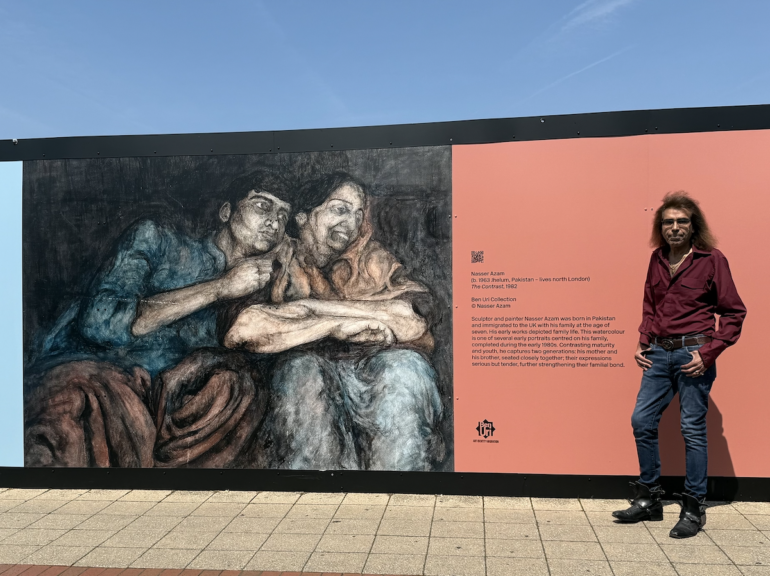
In this edition of Culturalee in Conversation, artist Nasser Azam reflects on migration, identity and belonging, as evidenced in his major presentation with the Ben Uri Gallery and Museum, curated by Sarah MacDougall, for the outdoor exhibition “Always Changing. Always Welcoming” at the O2 Centre in London.” Having moved from Pakistan to London at a young age, Azam describes living in an “in-between” space – an experience that continues to shape his artistic language.
While the exhibition celebrates a broad spectrum of the immigrant contribution to British visual culture, the work of renowned artist Nasser Azam acts as a vital focal point for this presentation, curated by Sarah MacDougall to celebrate a broad spectrum of the immigrant contribution to British visual culture.”
Azam’s practice functions as a poignant bridge between personal memory and the collective history of the city, showcased alongside other keynote artists who have shaped the UK’s creative legacy. These include Tam Joseph, whose The Hand Made Map of the World reimagines global boundaries; Elisabeth Tomalin, a refugee from Nazi Germany who became a pioneering textile designer; and Frank Auerbach, whose vigorous surges of pigment capture the transient beauty of the local landscape.
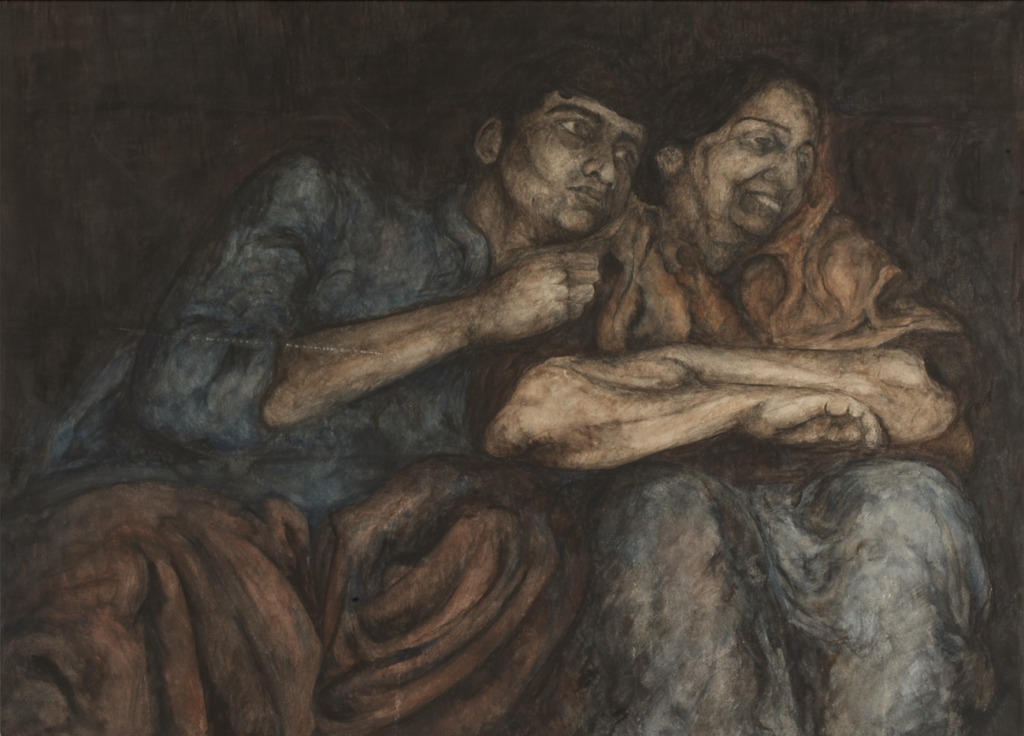
Azam’s latest contribution to the O2 Centre billboards brings these powerful narratives into the public realm with an immediacy that traditional gallery walls often lack. By mapping family and dual cultural identity onto the city’s fabric through his ongoing Diaspora Project, he reinforces Ben Uri’s longstanding commitment to championing the contribution of diaspora artists. At the centre of this dialogue is his painting The Contrast (1982), a cornerstone of the Ben Uri permanent collection that explores the “in-between” space Azam has navigated since arriving from Pakistan in 1970—a space where tradition meets the contemporary, and the intimate meets the public.
The exhibition is current and ongoing, running through mid-this year. Below, we sit down with the artist to discuss his journey and the stories he continues to preserve.
You were just five years old when you moved from Pakistan. Looking back, what sensory memories still stand out to you from that time?
I remember flashes — the heat, the close-knit family, and the vibrancy of the streets. But more than specific images, I remember the emotional texture: the confusion of leaving, the sense that something big was happening. At that age, you don’t fully understand the concept of migration, but you feel the rupture.
Growing up in the UK, how did that transition influence your developing identity, particularly as you navigated life between two distinct cultures?
It was disorienting at first. Suddenly everything — the weather, the language, the expectations — was different. I became hyper-aware of difference, both in how others saw me and how I saw myself. That in-between space has shaped my identity as much as anything — always negotiating between cultures, never entirely belonging to one or the other.
Was there a specific moment or a turning point when you began to view your own history through the lens of the “diaspora”?
Probably much later than I realised. At first, I was just living life. But as I grew older and began to reflect more deeply — especially through my art — I started to see my story in relation to others like me. That’s when I understood it wasn’t just personal, it was part of a broader collective experience: the diaspora.
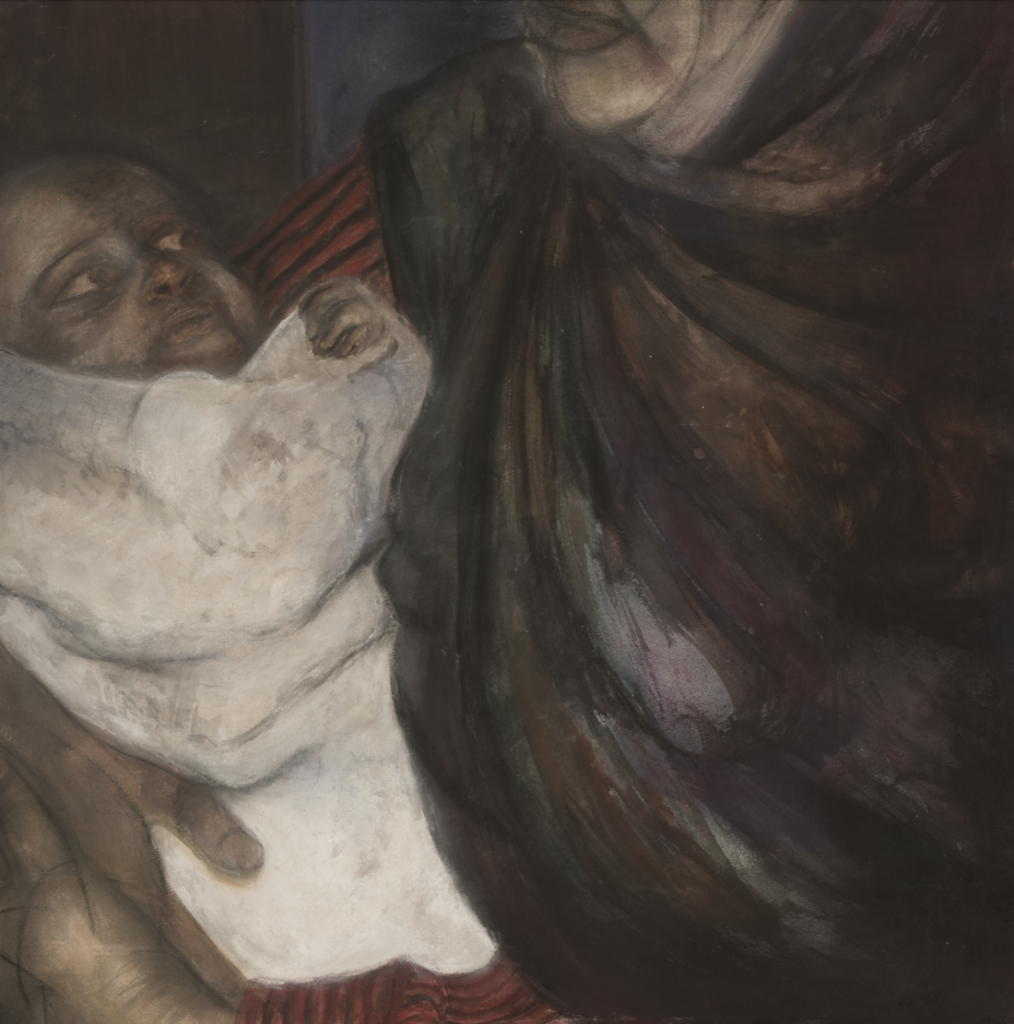
Your Diaspora Project essentially mapped your artistic career onto the London streets you’ve inhabited since 1970. What was the emotional impact of returning to those neighbourhoods as an established artist to visually claim those spaces?
It was incredibly emotional. These were places I had lived, struggled, grown — and now I was returning as an artist to mark those memories. It felt like stitching my past into the city’s fabric. It turned my journey into a shared landscape where others could see parts of their own stories too. By embedding my art in these locations, I wanted to offer something that was both deeply personal and universally resonant — a testament to the immigrant experience.
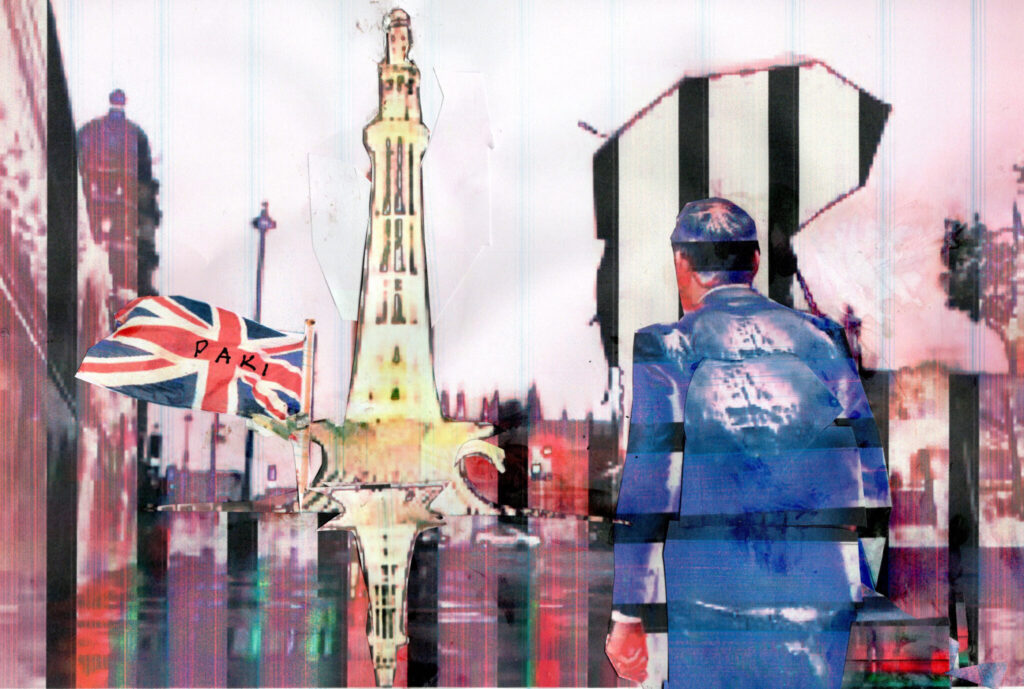
In pieces like “Dog Days,” you tackle heavy themes of modern British politics and race. What role do you think artists from diaspora backgrounds should play in today’s social landscape?
We have a responsibility to speak up, to bear witness, to add complexity to the narrative. Especially now, when so much is polarised, our voices can bridge gaps. We offer nuance, history, and a sense of continuity that mainstream discourse often lacks. Whether through quiet reflection or bold confrontation, diaspora artists can disrupt complacency and foster empathy.
We are currently seeing your work at the O2 Centre. Could you tell us more about the significance of the specific piece being showcased there?
The work displayed at the O2 Centre is my early painting The Contrast, presented as part of the Ben Uri Museum’s public display series. This piece holds particular resonance for me — it was painted during my formative years in Northwest London, a time when I was navigating the emotional complexity of growing up between two cultures. The work visually explores the dislocation and duality that shaped my youth. It juxtaposes bold, expressionist strokes with symbolic elements drawn from both Eastern and Western visual vocabularies. There’s an intentional tension in the composition — a contrast not only of form and colour but of identity, perception, and cultural expectation.
When you finally returned to Pakistan as an adult, how did the reality of the country compare to the versions of it you had carried in your mind?
The Pakistan I remembered was filtered through childhood — romantic, warm, full of family. Returning as an adult revealed a more complex picture: politically fraught, economically challenged, yet still rich in spirit. It made me see how memory simplifies, while reality deepens.
For someone who exists across different cultural worlds, how do you personally define the concept of ‘home’?
Home, for me, is layered. It’s not just a place — it’s memory, language, identity. It’s where you feel understood, even when you’re silent. I carry home with me, but I’m also always searching for it. That tension is at the heart of my work.
Northwest London has been your base for a long time. In what ways has this specific community left its mark on your creative output?
It’s been a mirror and a cradle. The diversity, the contradictions, the mix of voices — it all feeds into my art. It taught me how to live with difference, and how to find unity in complexity. It’s a space of constant negotiation and deep inspiration.
What are the core feelings or histories you hope to immortalize through your paintings?
I’m trying to hold onto the transient — the emotions, glances, textures of life that often go unnoticed. My work preserves memory, struggle, joy, migration — things that resist documentation but live vividly in our minds and bodies.
What do you hope the younger generation, especially those from similar backgrounds, takes away from encountering your art?
I want them to feel empowered, to see that their stories matter. That art isn’t just for the elite — it’s a tool for telling truths. I want them to look at my work and think: “I belong here. My story matters”. They should see that your background is your strength, not your burden.
With the Diaspora Project ongoing, what is on the horizon for you in terms of new projects or locations?
I’m continuing to develop public installations that explore identity and place, with projects in Miami and Los Angeles, as well as a new body of work that delves into archives and lost narratives within migrant communities. Also, to me the Diaspora Project is ongoing and I’m exploring plans to expand it to other cities where I have lived, opening the dialogue even further.
Follow Nasser Azam here.
Always Changing. Always Welcoming, Ben Uri Gallery and Museum, curated by Sarah MacDougall, is currently on display at the O2 Centre, NW3, through mid-2026. The exhibition is free to the public.”
Find out more about the Ben Uri Museum here.