
Award-winning experimental filmmaker and artist Andrew Kötting has spent more than 25 years creating bold, unforgettable work alongside his daughter and long-time collaborator, Eden, who was born with the rare neurological condition Joubert Syndrome. Described as structurally inventive, eccentric and collage-like, Kötting’s films blur the boundaries between documentary, performance, animation and memoir, resulting in a body of work unlike anything else in British cinema.
In this edition of Culturalee in Conversation, we speak to Kötting about The Everyworld exhibition at theUndershed gallery in Bristol, which runs until 12th April 2026. The exhibition brings together a collection of extraordinary collaborative works by Andrew and Eden, created their own idiosyncratic style. At its heart are two artworks: a new edition of groundbreaking VR work The Tell Tale Rooms – a 15-minute immersive experience exploring their Pyrenean family farmhouse, Louyre, a blend of animation, archive and live action that celebrates the wonders of Eden’s rare syndrome and her distinctive fantastical world. In the Wake of a Deadad, features two large inflatables of Andrew’s father and grandfather accompanied by a film of a journey taken with the inflatables to places of family significance, a powerful and surreal reflection on grief, memory and inherited presence.
Watch The Everyworld trailer here.
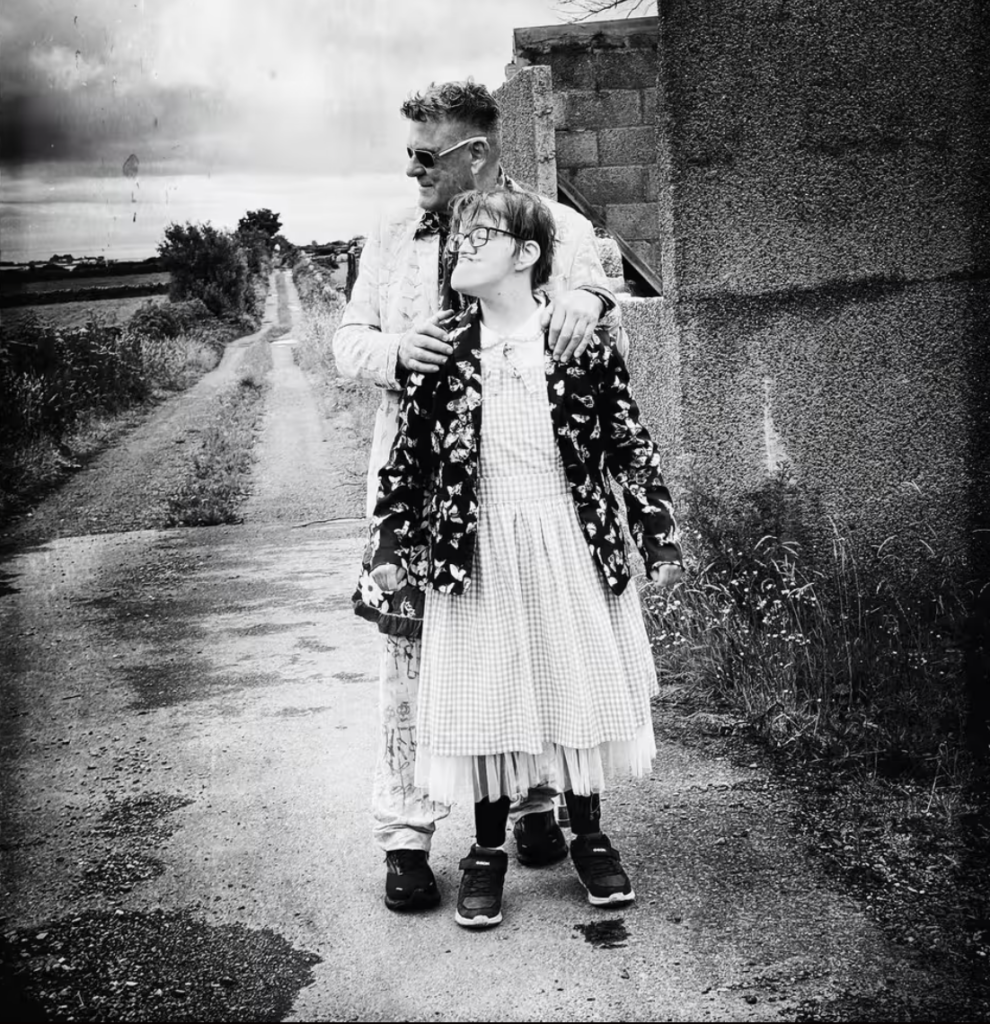
Kötting first rose to prominence with Gallivant, his acclaimed 1996 road movie filmed around the British coastline with his 85-year-old grandmother Gladys and seven-year-old Eden. Stewart Lee heralded Gallivant as one of the ten best films ever made. Reflecting on that journey and his relationship with Eden in a recent anniversary interview with Prospect, Kötting said: “Without me she’d fall over. Without her, none of this would have existed. We’re conjoined muses.”
This profound conversation explores art, fatherhood, collaboration and the radical imagination that continues to shape Andrew and Eden’s singular creative universe.
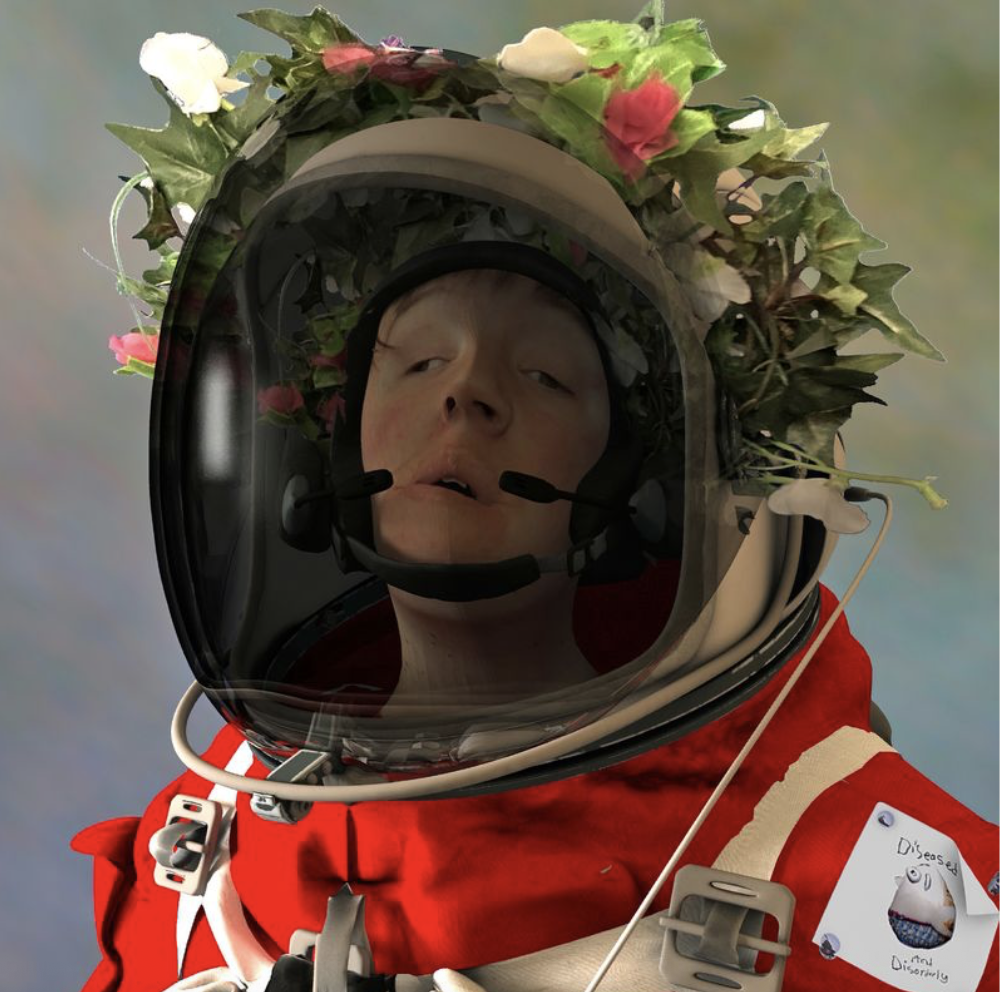
The Everyworld exhibition at Undershed gallery in Bristol brings together deeply personal works rooted in family, memory and place. What is the meaning behind the title, and how does it connect the intimate setting of your Pyrenean family farmhouse Louyre with the broader, shared human experiences of grief, love and imagination?
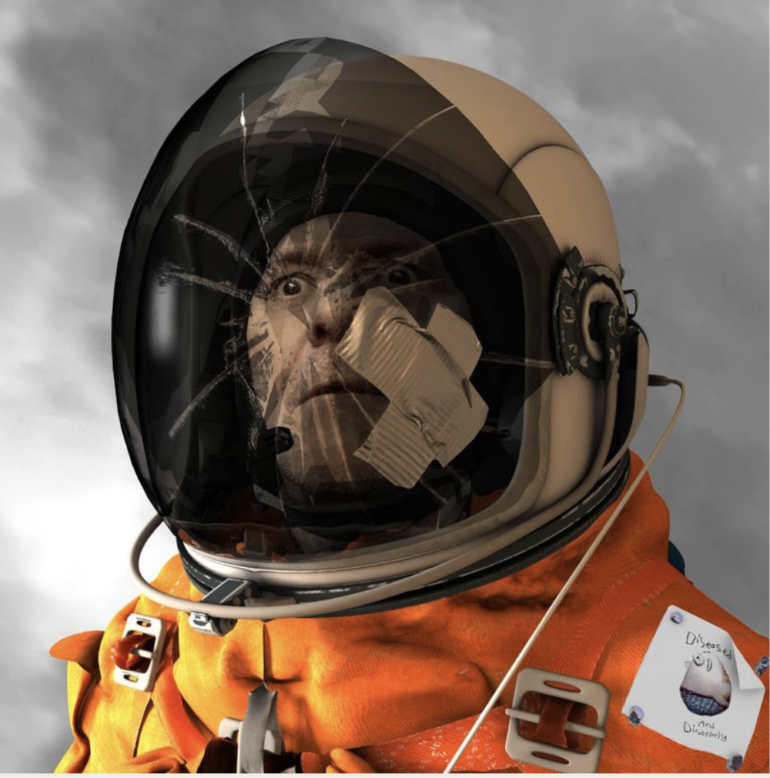
The title The Everyworld came about many years ago just as we came out of Covid, when I was making an animated film called Diseased and Disorderly with Eden, Glenn Whiting and Isabel Skinner. Along with my co-writer Hattie Naylor we liked the idea of The Everyworld being a has-been world, a could-be world or a yet-to-be world. It was born out of positivity and the hope that despite everything we had been through we were all still here. Family, place, memory and history is the glue that holds everyone and everything together. I came up with the idea that the Pyrenean hidey-hole might act as a memory hovel, wherein the past drifts through as a fug or fugue of fusty joy. Grief, longing, yearning and nostalgia are just some of the ingredients that we were playing with.
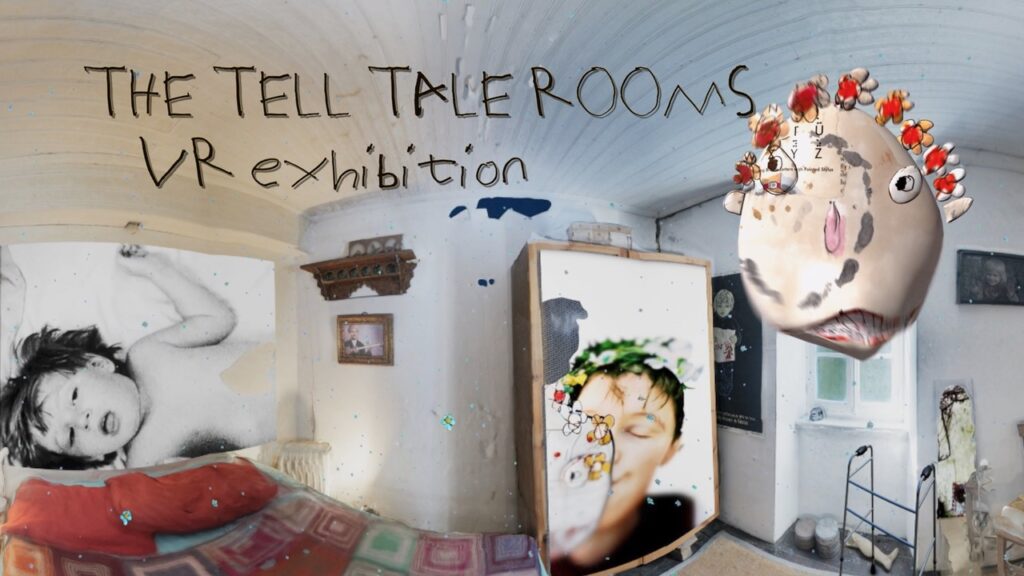
The Tell Tale Rooms revisits Louyre through VR, blending animation, archive and live action. What drew you back to this space in immersive form, and how does VR alter the way audiences inhabit your family history compared to your earlier film work?
I was very resistant to the use of VR initially, but having swum with dolphins and walked with dinosaurs, I realised that there were other ways of working with the medium which might present themselves as somewhat ‘shoddy’. In much the same way that when I first started working with super 8 film, it seemed the perfect antidote to the industry models of either 16mm or 35 mm. The fact that my friend and code writer Miles Visman had spent time at Louyre also meant that he had his own memories to work with. Much is contained within the 15 minute ‘experience’, but in a fragmented or collagic way was also inspiring.
It’s very immersive and along with the other elements presented in the installation it allowed us to encourage an audience to ‘feel’ as if they were betwixt worlds. Between the real and the fabricated. Perhaps a long way from my earlier film work but connected to ideas around atmosphere or wanting to take an audience to a place that they had not been before. Like watching Eraserhead for the first time or The Colour of Pomegranates.
In The Tell Tale Rooms you celebrate the wonders of your daughter Eden’s rare syndrome and her distinctive fantastical world. How has Eden’s perception shaped your own approach to storytelling, and what responsibilities do you feel when translating such a personal, lived reality into an artwork?
Eden is unfathomable, and this is something I have grown to accept. She finds it very hard to articulate what she is ‘feeling’ or what she ‘knows’, which has always worked as a great corrective to what might be required of one as an academic, theorist or philosopher. Areas of investigation in which I have dabbled as a Professor of Time-Based media for many years.
Therefore I have become very happy with the mindset of ‘not-knowing’. The Everyworld might be seen as political with a small p because it presents itself as ‘apolitical’ – with someone like Eden in your life it dilutes the desire to be judgemental or fixed in one’s belief systems. Things are permanently in flux. Nothing is ever ‘normal’ (whatever that means?) You learn very quickly to become comfortable with the uncomfortable. the current trend of virtue signalling then seems hollow and untenable even hypocritical. Eden is a great leveller and inspirator.
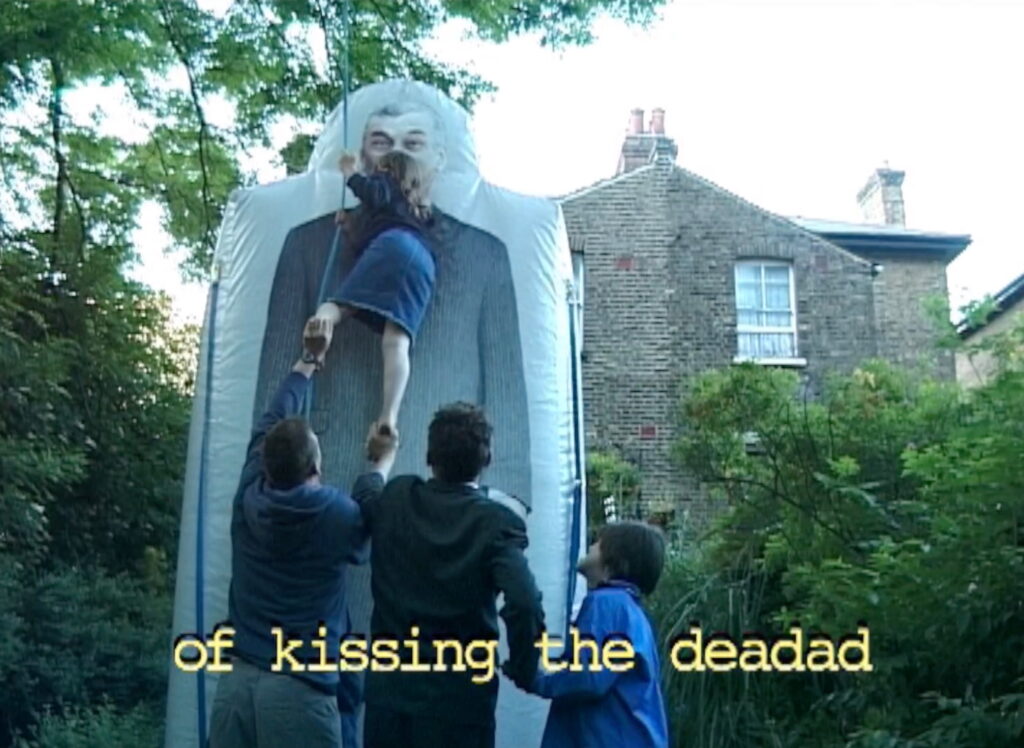
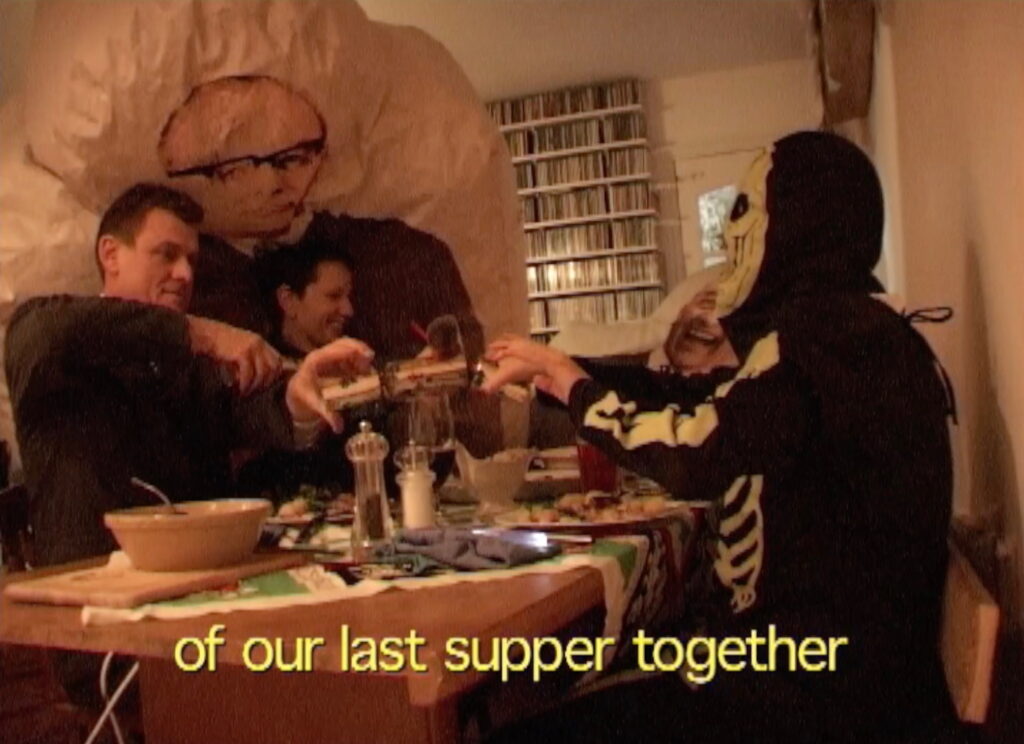
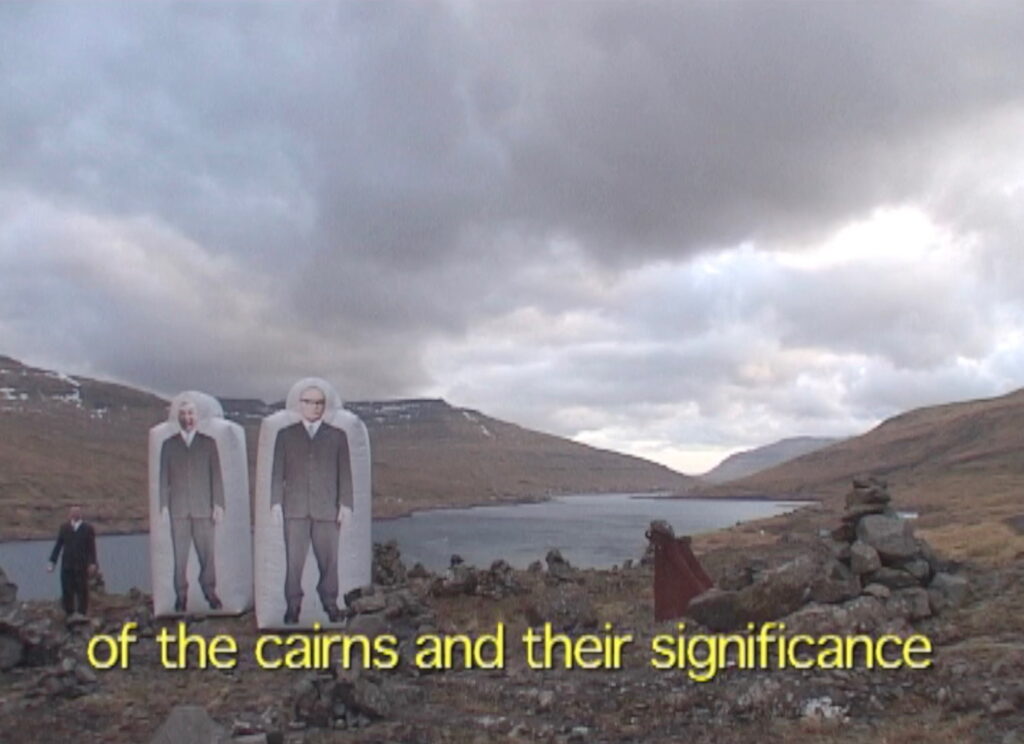
In the Wake of a Deadad is both playful and profoundly moving, as you transport large inflatables of your father and grandfather to sites of family significance. What role does absurdity or surreal gesture play in your process of mourning and remembrance?
Dada always inspired me from the get-go. There was an irreverent playfulness and aesthetic that flew in the face of the seriousness of much art practice when I was ‘growing up’. With the advent of Punk in the mid-Seventies, I also realised that you did not have to be a musician to make music or a film-maker to make films. The idea of my father and grandfather rising from the dead and then collapsing seemed a significant, and a powerful metaphor for our own lives and the way in which memories can be re-erected long after we have gone.
The physicality of transporting two industrial fans and a heavy duty generator also began to feel like a penance for all the strife I might have caused both of them whilst growing up. But more importantly an exorcism of all the hurt that my deadad had inflicted upon us five children, and in particular my mother. There is a bookwork which accompanied the project which acts almost as a Haynes instruction manual as to what the flipping heck it all means. Dada lives on….
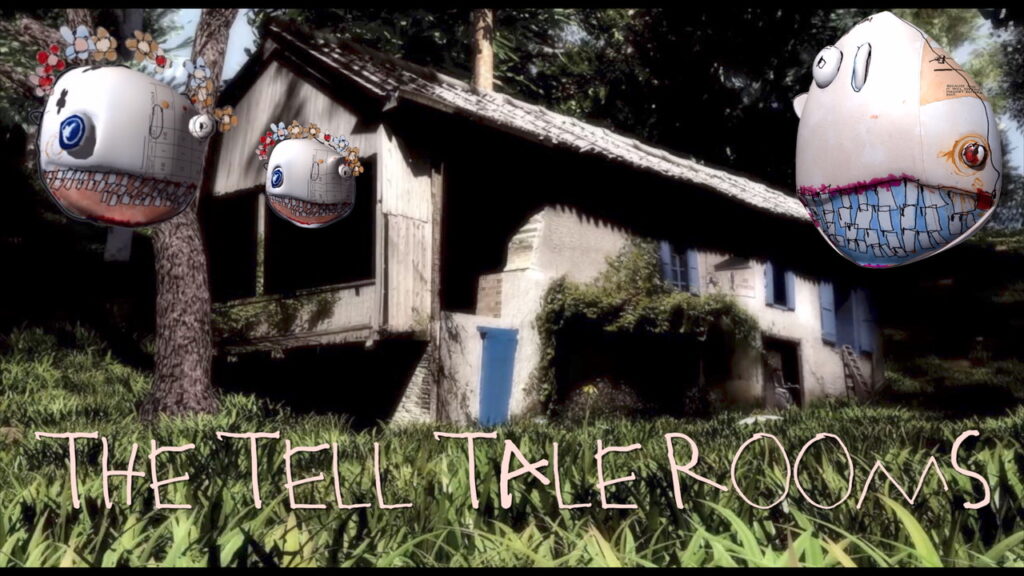
Objects such as your farmhouse, an inflatable effigy, or archival fragments, carry emotional charge throughout the exhibition. How do material things function in your work as vessels of memory, and do they help stabilise grief or keep it productively unsettled?
‘Productively unsettled’ – what a wonderful idea. There is an intrinsic power to objects ,and they themselves can work like ex-votos or mnemonics to moments from the past. They can be imbued with a potency that might also work as transporters back into times gone. Memory in all of its shoddy potential can produce moments that resonate. Louyre thus becomes a powerful memory hovel – or as Schneider (who provides many of the voiceovers) explains in the room of nostalgia ‘the older you are the bigger it gets.’ The VR thus becomes the perfect vessel to contain some of these elements. And because it is 360 degrees of immersion every experience becomes different depending on which way you are looking and what you might be listening to. Synchronicity is contingent. It is an approximation and contingent. Just like life.
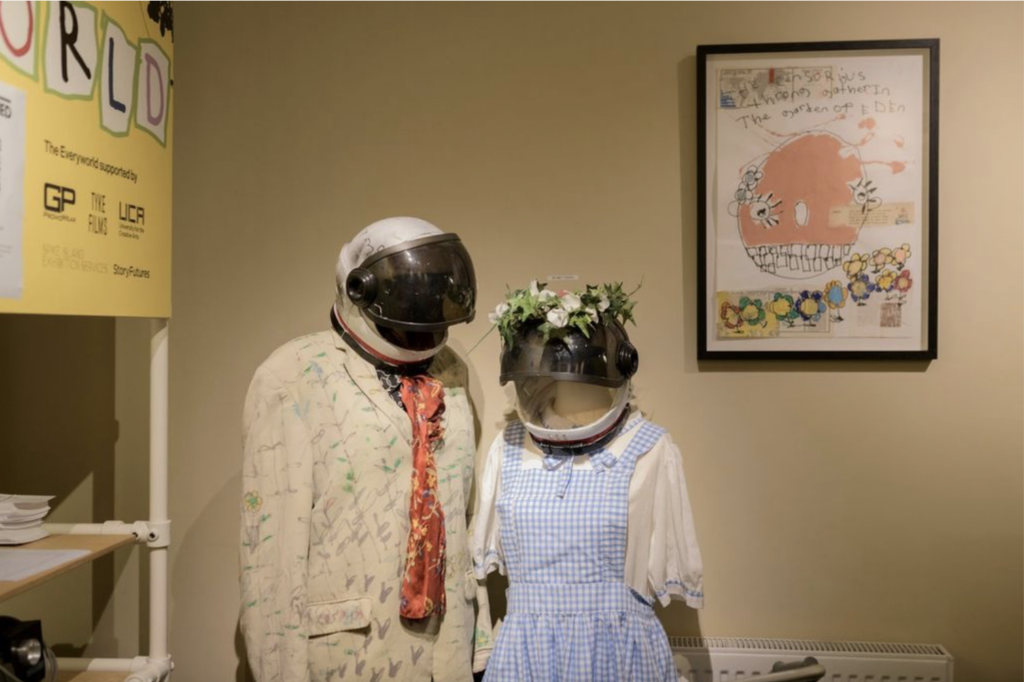
Showing The Everyworld in Bristol, within the immersive environment of the Undershed gallery, places audiences inside these layered personal worlds. What do you hope viewers take away from the experience, in particular those encountering VR or autobiographical work of this intensity for the first time?
To inspire them. Make them think about their own mortality, memory and the ideas behind metaphysical(ity).
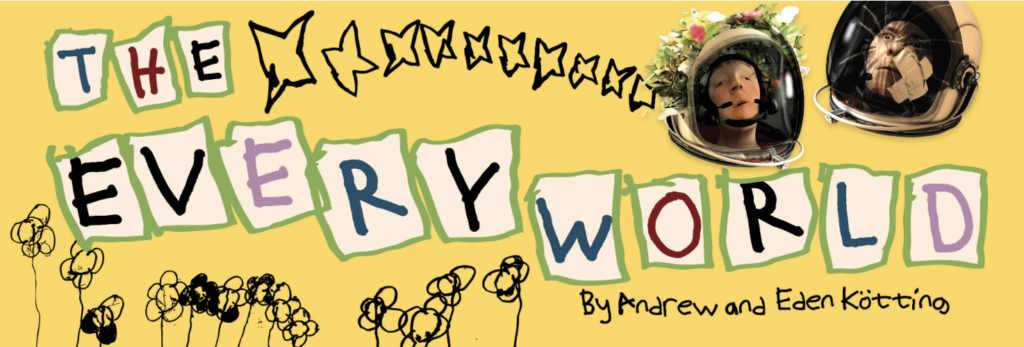
The Everyworld is at the Undershed gallery, sited on the ground floor Watershed, Bristol until Sunday 12th April, 2026. Watershed will also be presenting a series of the duo’s films in the cinema from 12 March 2026.
Find more information and book tickets here.
All images Courtesy of Andrew Kötting.