

Culturalee in Conversation with Katya Granova explores the deeply personal and philosophical roots behind All Our Yesterdays, a striking body of work that transforms forgotten photographs into evocative paintings. Drawing from family albums, flea market finds, and historical archives, Granova reflects on memory, migration, and the fragile nature of the past. In this interview, she reveals how a chance encounter with her late grandfather’s photographs sparked an ongoing artistic inquiry — one that bridges personal history with collective memory, and reimagines the emotional truth hidden within overlooked images.
Your recent exhibition, All Our Yesterdays, brings together paintings based on found photographs from family albums, archives, and flea markets. What first drew you to these overlooked images, and how did this body of work begin to take shape?
My practice with photographs started a while ago, in 2017. My grandfather passed away then, and I stayed with my grandma to comfort her. We were sorting out his office and I was bumping into some dusty plastic bags of photographs from different times, here and there, in a complete mess. I decided to organise them, bought some albums and started sorting them: 1950s, 1960s, and so on, up until the 2010s. It felt like I was passing through my grandparents’ young lives, which I didn’t know that much about. Some stories, names, and places got lost and grandma did not remember; they were gone forever with my granddad. My grandparents lived through a lot of big and tragic events. They lived in a very repressed society, but if you look at the pictures, you just want to join for an evening with these young talented scientists and their friends, attend one of those parties or summer vacations, go to those conferences and the surgery room to find out more. To what extent is this life an illusion created by photo lenses? How it really felt back then, all that was a lost knowledge impossible to claim.
Then I moved to the UK and went to RCA. The experience of immigration, the feeling of alienation, of being not understood, made me think a lot about who I am, where I am from, what formed my personality, why I feel different, what did I bring with me to this new place. Those pictures I arranged in photo albums were often visiting my mind. I felt a strong urge to somehow interact with them, maybe find a refuge and comfort in this gone world of people who loved me so much, maybe to find out what family and state stories stand behind me. Where am I really coming from?
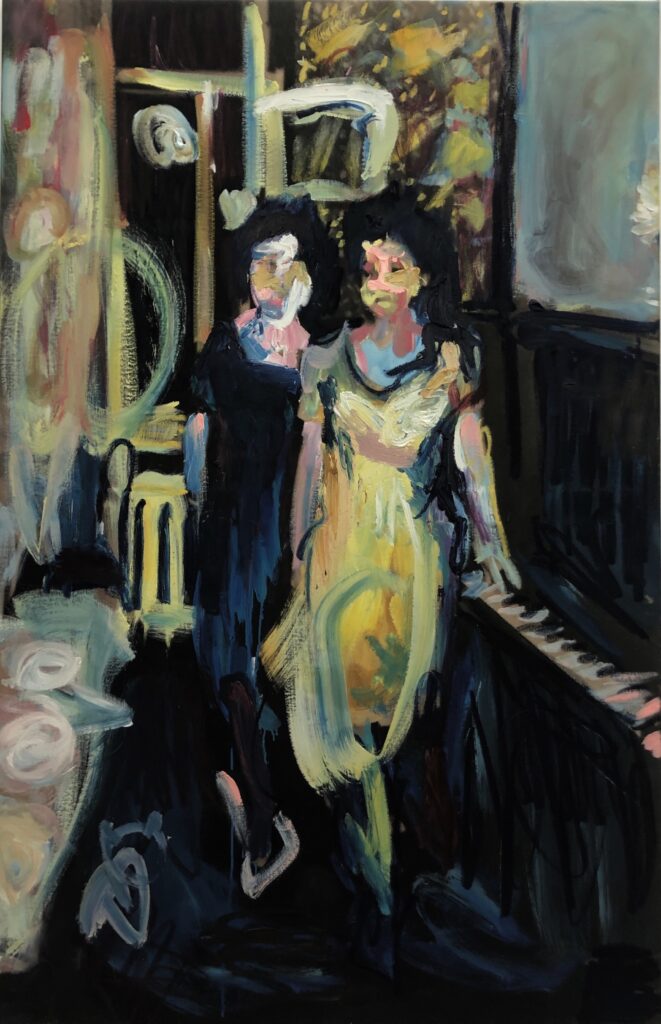
So first I printed one photograph on canvas, the one of my 20 year old glamorous grandma and her sister by the piano in front of an open window. It looks like a student house party, beautiful dresses, warm summer wind. I started painting over the picture and I discovered an energy, ease and expressivity I never had in my painting before. My hand moved with an urgency to engage with this past, to interact with them, to encounter my grandmother as a young joyful girl rather than the elderly woman I’d known. This is how it all started.
I’ve worked with old photographs for a while now. I moved from photographs of my family to photographs from the flea markets in St. Petersburg, where I am from, then to French archives, then British and German, stepping further away from my family and identity and alienation. I have seen that the painterly energy only expands. I am triggered now mostly by the very irreversibility on past, by the constancy of existential limits of human beings, and my work is born from general nonconformity: with the impossibility to meet young grandparents or turn life back, with the blurred nature of history and reachlessness of truth about the past, with nonconsensual birth, death, and the passage of time. This might be the real engine of my painting.
The title All Our Yesterdays suggests a shared or collective past. How do you think these personal, found images connect to a broader, collective memory?
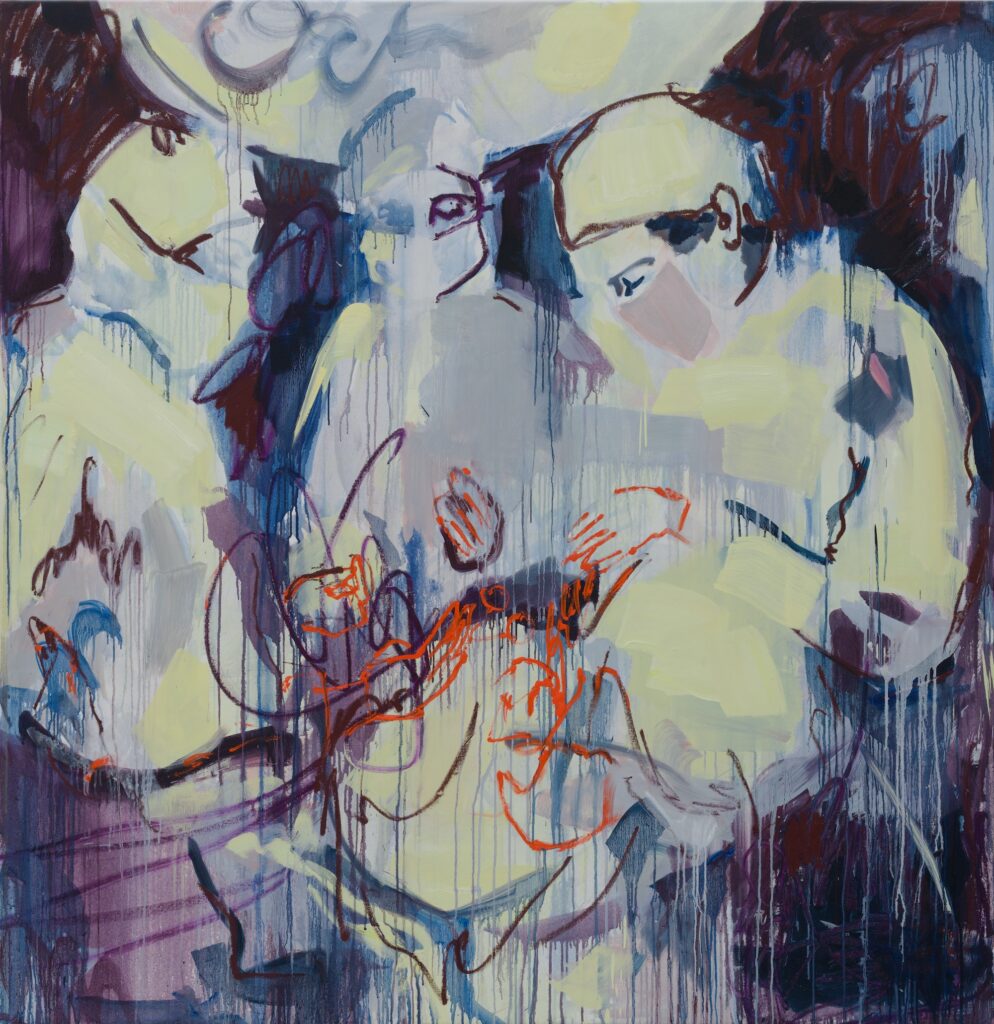
I have always been interested in social history, how people lived in other times. How did they think, what was important, and what drives me there is not just pure curiosity but also an uncanny attraction of thinking of the world without me. But when we read history books or even literature, we rarely get a proper glimpse in the mind of the ordinary people of the time, or a sense of time. Those ordinary family photographs of beach vacations or family celebrations possess no value for selling or even for history books, but they are extremely valuable as windows into the real past, not with the bias of personal memory, not through our contemporary visions, not through the state propaganda of the time. So in a way, those random images are the most truthful source of how everything looked. They are not important enough to be faked or edited. The camera has a bias of a crop; people don’t often photograph sad moments, but what they wear, how buildings or nature looks, what furniture they have, how healthy or happy they look—all of this is as close to the absolute truth about the past as it can be. And since every totalitarian rule uses the narratives of some great or humiliating past for propaganda (and we can see a lot of that in contemporary politics too), what can be more important than the real past? So mundane anonymous photographs have more truth than any history book.
Also, almost everyone has those kinds of pictures in their family albums. Still, people live different lives. My pictures show the life of a couple of successful Soviet doctors, some other album I bought in Russia shows the life of geologists in their constant expeditions, the archive from a Spinnerei factory I got in Germany holds the life of factory workers. Each of them is specific or local, but each of them offers a glimpse into the past of the country in general.
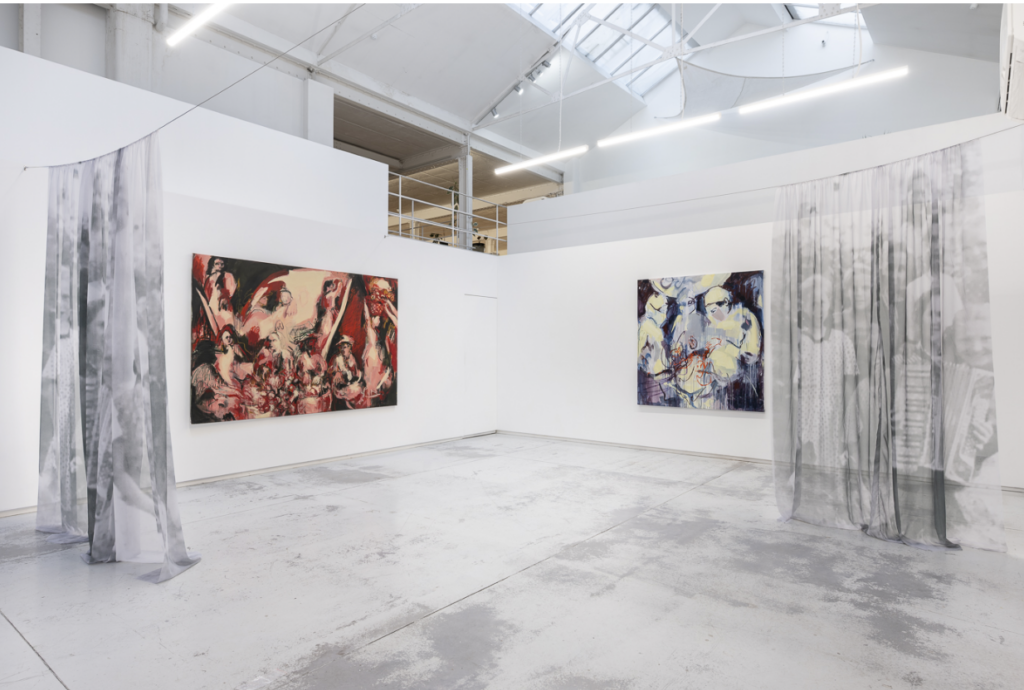
You’ve said your work is driven by a desire to “penetrate the past.” What does that mean to you in your painting practice?
I see my painting foremost as a performative action. I am not driven to represent or picture something in particular. What I do is set a stage for myself, put myself in front of the photograph, and see how my body would react. Beyond everything I said about history, standing in front of a life-size old photographs is like standing in front of a cold existential truth. I was not always here in the world, and I’ll not always be here. This moment is as unapproachable as any moment in my own life in the past and there is nothing we can do about it.
My result is never predictable. Even if I do smaller sketches in advance, I’m always getting overwhelmed by this enlarged transferred photograph. I am driven to interact with it, bring myself there, climb there to overcome the basic existential limits of human beings. The desire to exist before birth, move back and forth in time, see the real unbiased past—all of this fuels my brushwork, my bodily movement. No one can ever penetrate the past for real, so my process is completely speculative and performative.
To make a painting I need to set a situation so it comes from me naturally. Painting is a completely stupid and senseless action, it does not change the world or save lives. As an only child in a famous academic family who was expected to become at least a cancer treatment discoverer or a Nobel Prize-winning medical scientist but who chose instead to play with paints, I cannot stop thinking about it each time I come to the studio. But when I finally get myself to painting, I feel an overwhelming sense in it, which I cannot properly explain, like I touch some secrets about the world I live in, I touch some essence of the world. Both making and looking at paintings can bring us to very special states. Painting is only a process of spreading slime-like colourful matter on a surface, and this petty action can still bring us to those states—is that not pure magic? And magic is another way to overcome the basic limits of human beings and take agency over things we can’t change.
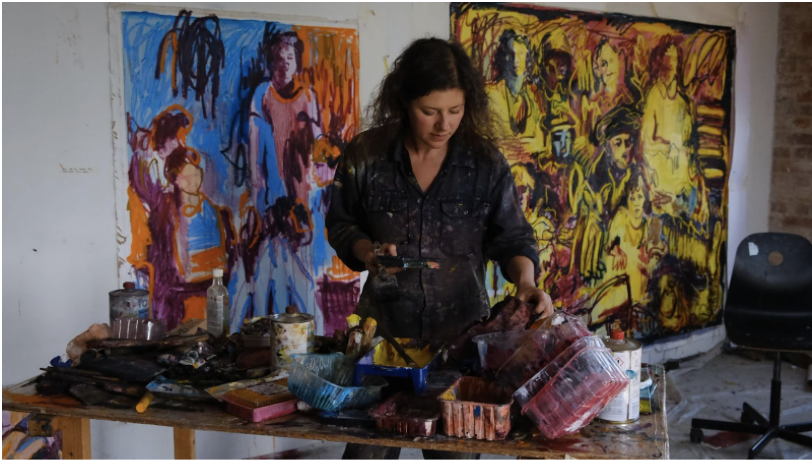
Your work challenges the idea that the past is fixed. How do you think painting can change or rewrite memory?
I wouldn’t say that painting can change or rewrite memory. What happens in my work is that I introduce a moment from the past and interact with it. I give attention and importance to these people, and I respond to them naturally through painting. It’s important to me to remain authentic to my genuine response to the photograph’s content, and, in general, I value honesty a lot. I don’t even think it’s painting’s task to change or rewrite memory. Potentially it could, but then painting would be serving propagandistic purposes, and I stand against that. I don’t want to manipulate my viewer or tell them what life is \and what the past was, because what do I know? Why do I put myself on the plinth and I think my feeling about it is better than anyone else’s? I am clumsy enough to fall from this plinth immediately!
What I’m doing is involving the viewer in the process of my own engagement with the photograph. I’m showing them the context and how I react, so maybe they relate just as we respond to dance through the micro muscle movements of our own bodies. I want to share my vision and my position towards it, but I keep the spectator free to get their own interpretations or reactions. I see this as a form of communication where I don’t try to convince or change anyone. I simply tell them how I feel and what my position is, so they can respond, whether they feel similarly, differently, or haven’t considered it before.
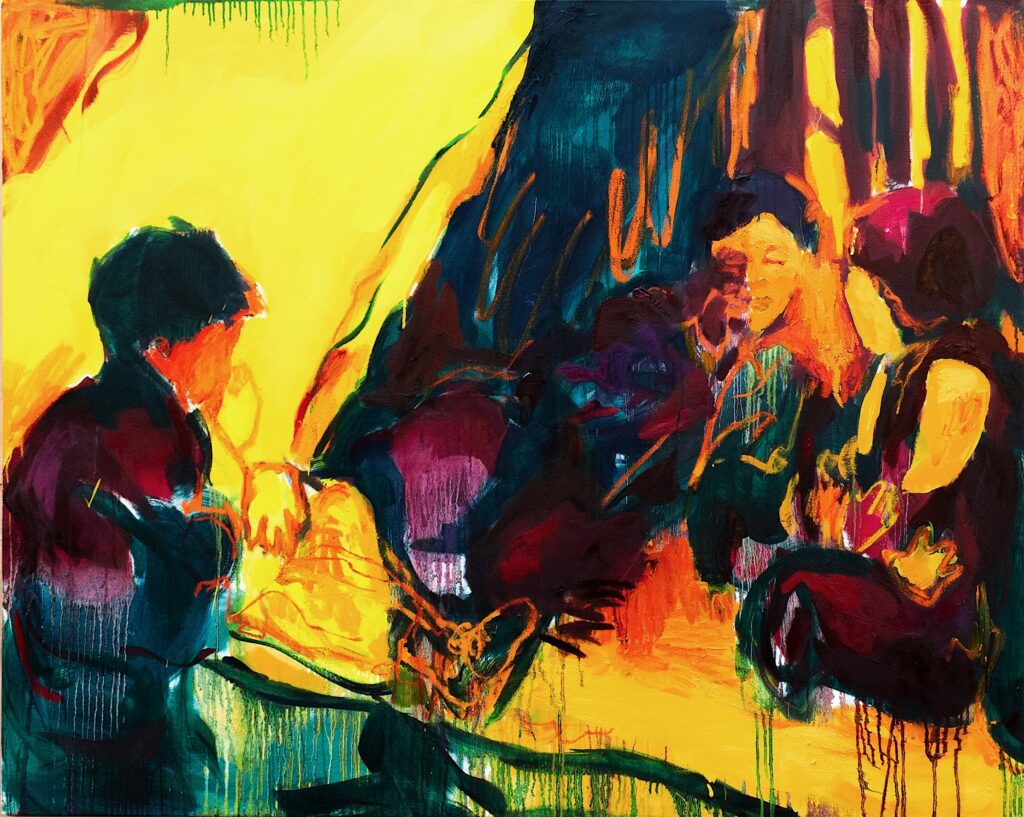
Photographs are often seen as truthful records, but you point out that they are shaped by the person behind the lens. What interests you about that tension?
I think however biased the photograph may be, however staged, before Photoshop and AI it was almost impossible to avoid photographing something real. For example, for my Spinnerei Series, I used photographs from GDR factory archives, and the obvious aim of it was to show what happy, eventful lives these Spinnerei workers had. So the purpose of those images is obviously propagandistic. Some photos are partially or completely staged, but almost everywhere there are some accidental hints of very real life happening in its full diversity. Somewhere in the corner some child cries, someone drinks liquor from the bottle.
So even if there is a propagandistic purpose, reality climbs through, and the mundane family or vacation photographs are mostly photographed with the purpose of: “Take my picture by this fountain so I can show friends and family we were there, it was summer, and I wore my nice dress looking pretty.” There is mostly no pretense for artistic value or desire to hide state secrets. So I think in those ones the subjectivity of a photographer can be removed from the equation. Everyone was mostly following the trends of the time or the basic need to share your life moments with close ones. Did anything ever change with these types of pictures? Some do, but not much. So to be completely honest, I don’t think much of this tension.
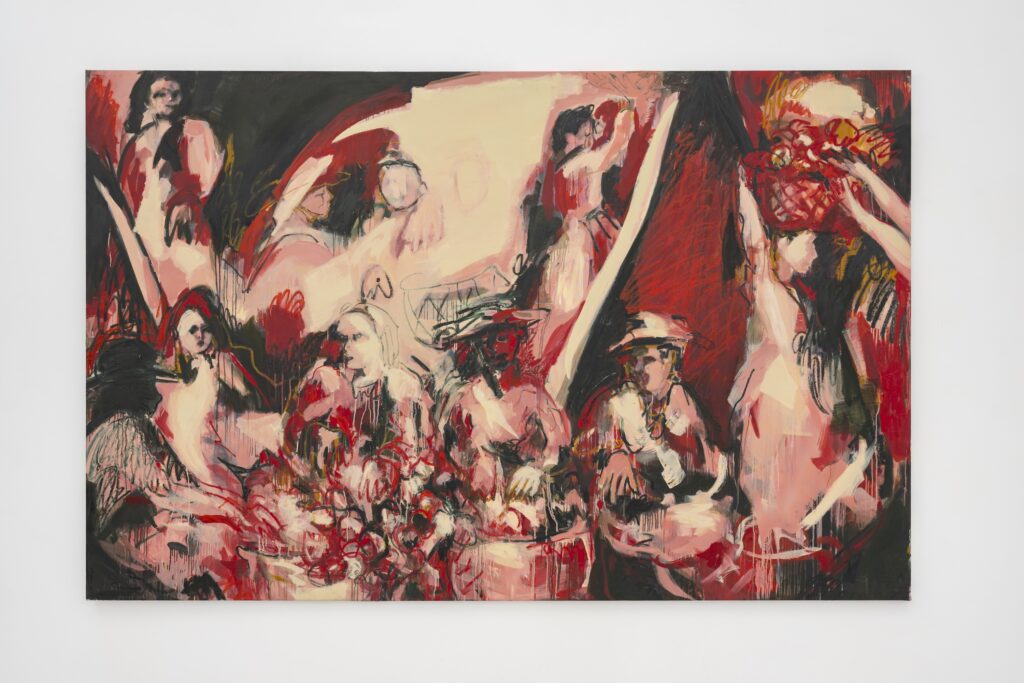
In All Our Yesterdays, you both preserve and alter the original photographs. What interested you about working in that way?
I think if preserving—meaning bringing those forgotten moments back to present—is to some extent my purpose, alterations are more of a byproduct of painterly interactions with the photographs.
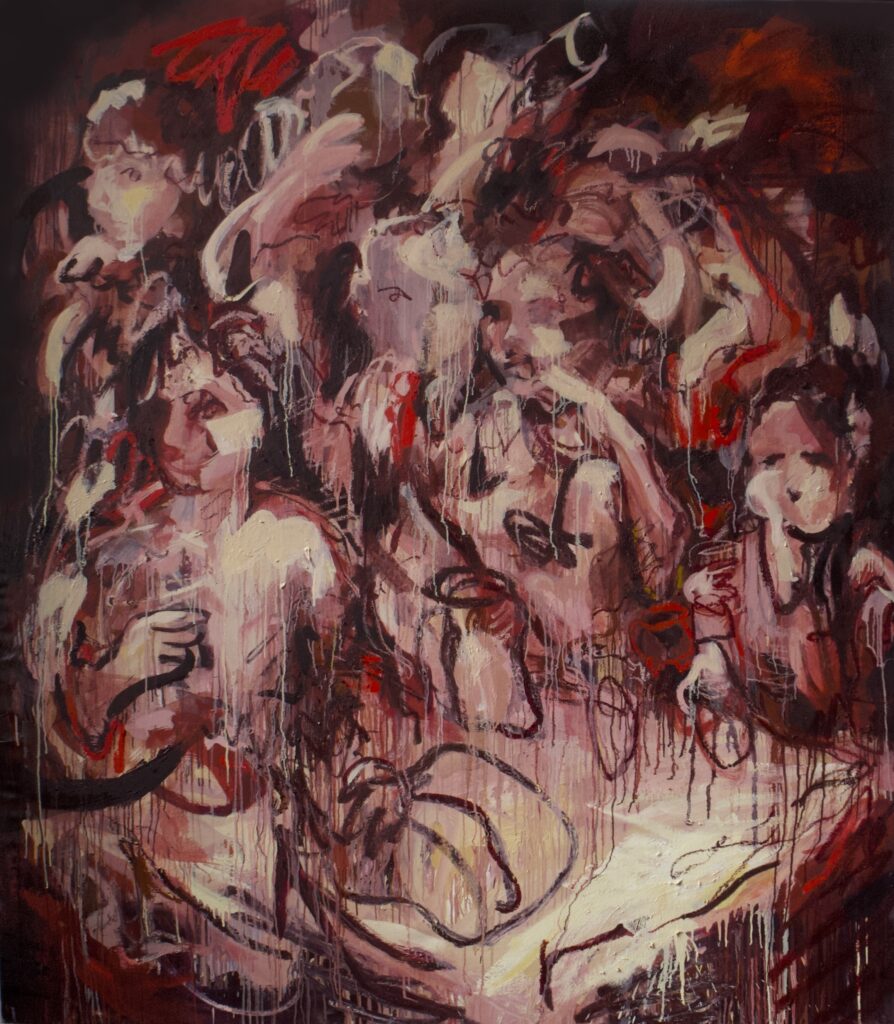
Many of your subjects are anonymous. Do you think about who they were, or are they more like starting points for something new?
I do think of who they were, but I don’t research much to be honest. In a way, who they were will not necessarily change my desire to intrude there, as I’m more interested in their time and overcoming existential limits to reach their (or any other) time than who they were per se.
Nevertheless, often if I have a special connection to the person, like when it’s my mother or grandmother, this affects my work. The response to the source image may be stronger, but since emotions might be complex depending on current relationships, it is unpredictable how exactly. Sometimes I have a very strong response to the content for other reasons. One example is a work based on the photograph of a happy family, where on the back it was written: “Lille, 1937.” So these people have the entirety of World War Two in front of them in occupied France. What if they are Jews? What if they are going to hide a Jewish person in their house? This creates a lot of compassion and worry and a strange feeling that I know what’s ahead and they don’t, which reveals itself in the process of painting.
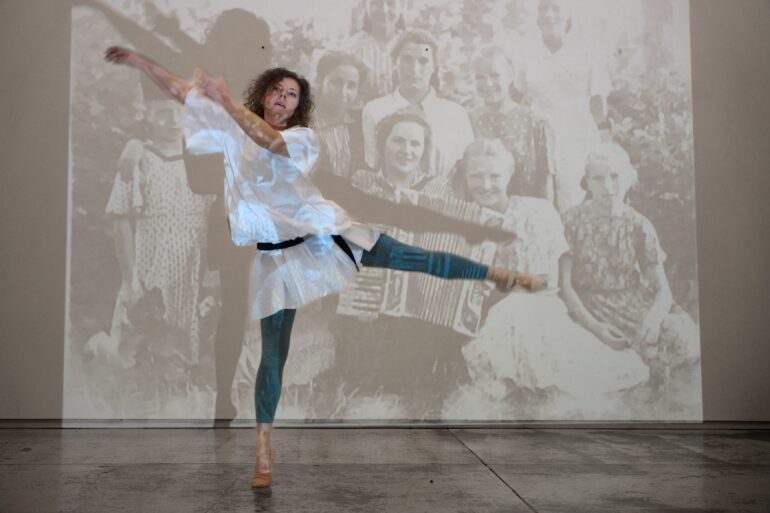
When I was preparing a performance for All Our Yesterdays, it was based on the photograph of 11 women posing together, which was projected on a wall and I was responding to them via half intuitive dance. The part about each of them started from the slight movement of the character, like someone had a shoulder a little up, arms behind the back, someone hugs someone else. So the choreographer who helped me, Mariia Litvin, and I were studying each woman with a lot of attention and speculated on their character or relationships with each other. I really enjoyed that.
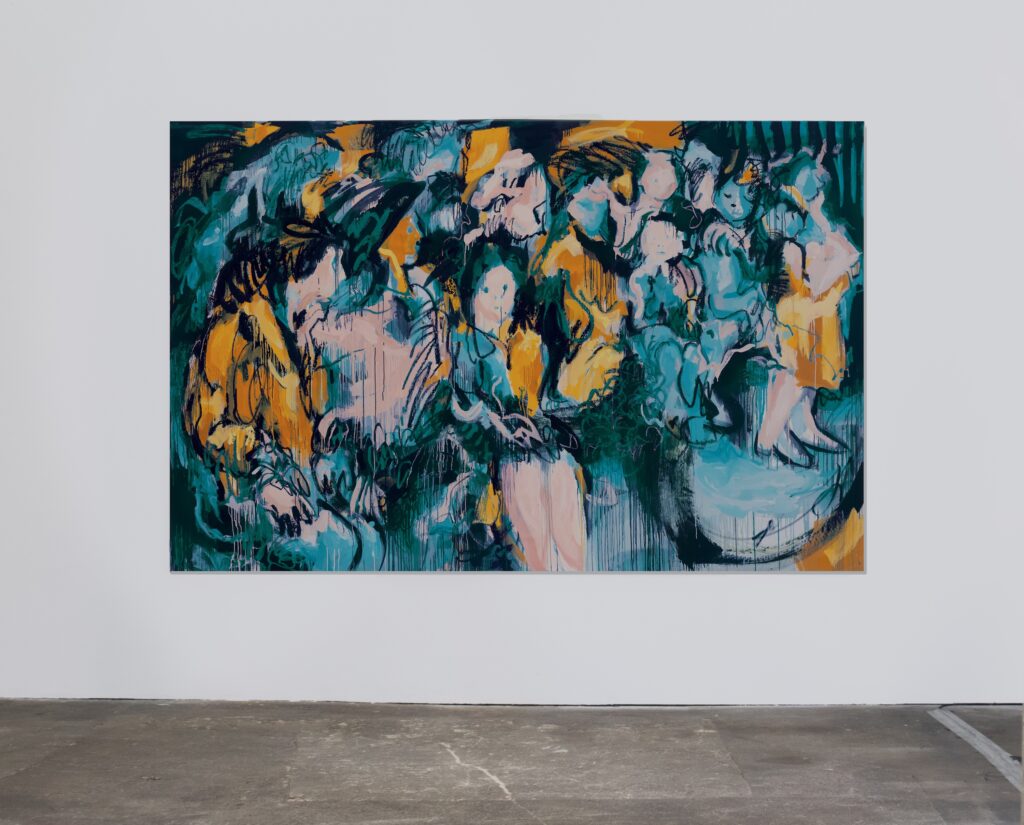
The exhibition includes a dance performance responding to the photographs. What made you want to extend the work beyond painting?
Performance is not new territory for me. I’ve engaged extensively with this medium, especially in 2015 through 2017 in the Moscow art scene, but it was not dance-related, and also I did some contemporary dance training sporadically throughout my life. But I never connected performance, dance and painting in one place.
I wanted to integrate performance into the show first of all to highlight the performative aspect of my painting practice, since in my painting I also put my body in front of the enlarged photograph and react to it, colour choices and gestures are the manifestations of those directions, and the final result is the process of movements and reactions petrified in the painting as a documentation. Performance, on the contrary, is a time-based medium, so in the performance the movement is not petrified, it is here and now, and it’s just gone after. But the essence of the action is very similar. I put myself in front of an overwhelming presence of a gone time and see what will happen. There were some movements coming from preparations of the performance, just as I do sometimes think of colour in advance, but the main thing is a spontaneous action.
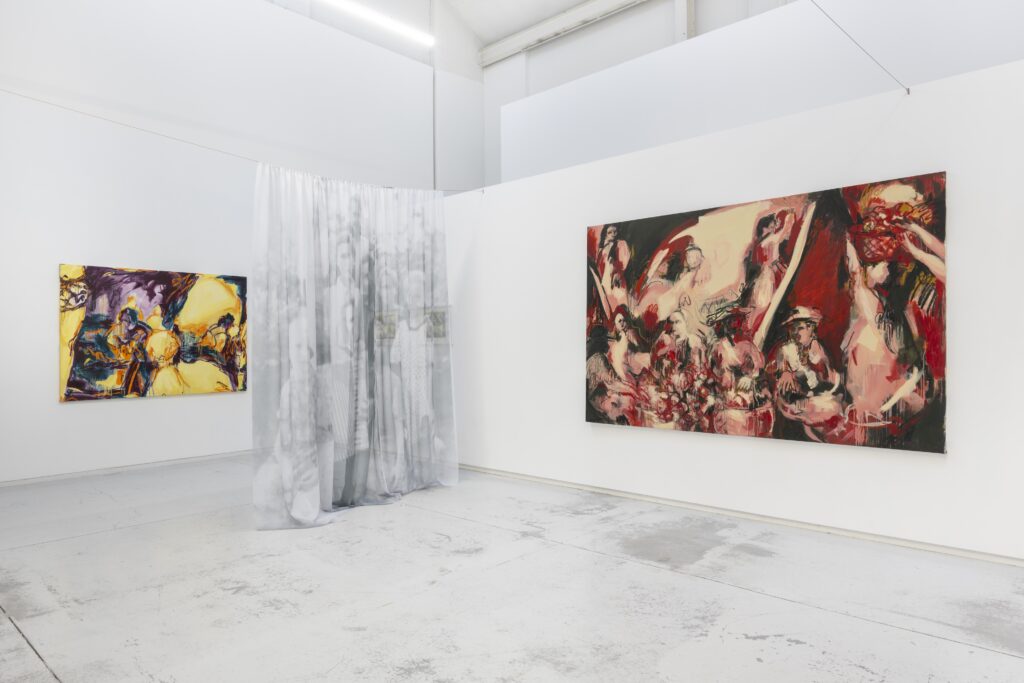
You also have work on view in the exhibition Landscape & Power with Museum of Contemporary Art Santa Barbara and Wienholt Projects in Los Angeles, as well as the solo exhibition Spinnerei-Serie with Paula Pirania in Leipzig. Do you find your work evoking different responses from audiences in different parts of the world?
I was not there in Los Angeles to receive any feedback in person, but between Germany and the UK, I see some interesting differences. Germans and Russians share a lot of similar issues with a complex unpleasant past that is very much present in the audience discourse still. Leipzig is located in the former GDR, so it has even more shared experience with the USSR, and the way people treat and approach the past often comes with a mixture of shame, trauma, and the complexity of confronting real human memory with propaganda.
In the UK, the discourse about the past, even with a postcolonial lens, is significantly different, so I often feel some kind of exoticisation of my experience as a post-USSR person. If I touch this topic at all, I feel it is seen through the lens of the other side of Cold War propaganda, which makes it difficult to bring forth a complexity of experience. Like even if I do think the USSR in general was an evil empire which repressed millions of people, my grandparents had a very decent life with many opportunities, which probably won’t be available to youngsters from the very poor outskirts of a dusty mining town in many other places back then. Does it mean life in the USSR was wonderful? Not at all. Other people there had zero opportunities and horrible lives, or even the gulag, camps, forced displacement. It was different to different people, in different times and places. But I feel in Britain, it is much harder to explain these nuances than in Germany. On the other hand, my painting practice developed in the UK and is deeply rooted in the UK painting tradition, and so when it is about separated painterly questions, I get more relatable and helpful feedback in the UK, as German tradition is quite different as far as I can see. Also, I am very invested in British culture, literature and cinema, and, after all, even the name of my show comes from a soliloquy in Macbeth!
I am actually very curious how it works in the USA. I heard that there was a lot of positive feedback but I do not know if it was more on the conceptual or visual side of things.
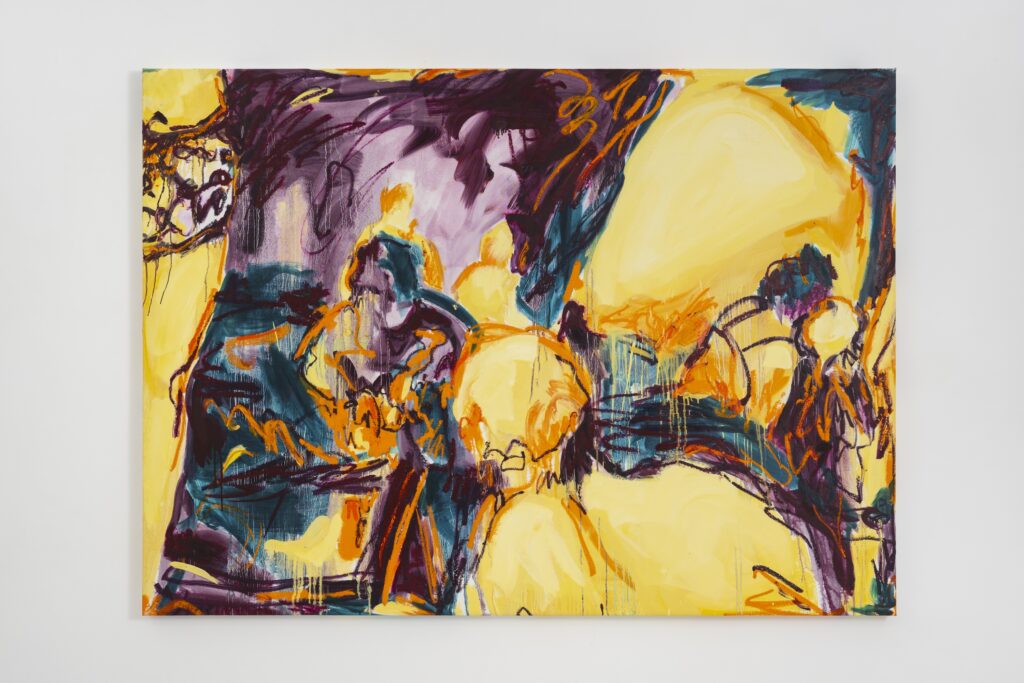
Are there any new ideas or directions you’re starting to explore?
I think performance as a direction, as something to combine with painting, is something very interesting and has some future in my work. That was the first trial to combine them together. I learned a lot from it and now I’m thinking of more ways to include it. And in painting, colour is my main obsession now. I researched the language of colour a lot, explored how it worked in different eras, and I’m experimenting a lot with the new pallets. I plan to do a residency in Mexico City in Autumn, and I think it will give my pallet a completely new turn.
Find more information on Katya Granova here.
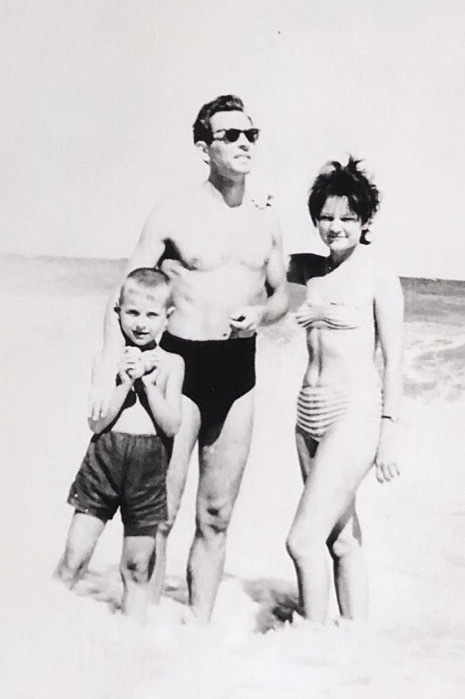
Those pictures I arranged in photo albums were often visiting my mind. I felt a strong urge to somehow interact with them, maybe find a refuge and comfort in this gone world of people who loved me so much, maybe to find out what family and state stories stand behind me. Where am I really coming from?”
Katya Granova