

Moving fluidly between playful symbolism and deeply human documentary work, Portuguese photographer Gonçalo Cunha de Sá uses photography as a powerful tool for storytelling, empathy, and social memory. From his striking In a Barbie World series shown in January 2026 at Boomer Gallery in London, to intimate black-and-white portraits of Portuguese fishermen, women wearing the traditional seven skirts of Nazaré, and families affected by breast cancer, Cunha de Sá’s practice is rooted in connection, observation, and respect for lived experience.
In this conversation with Culturalee, the photographer reflects on his creative process, the responsibility of documenting living heritage, the role of photography in social awareness, and the artistic influences that shape his distinctive visual language.
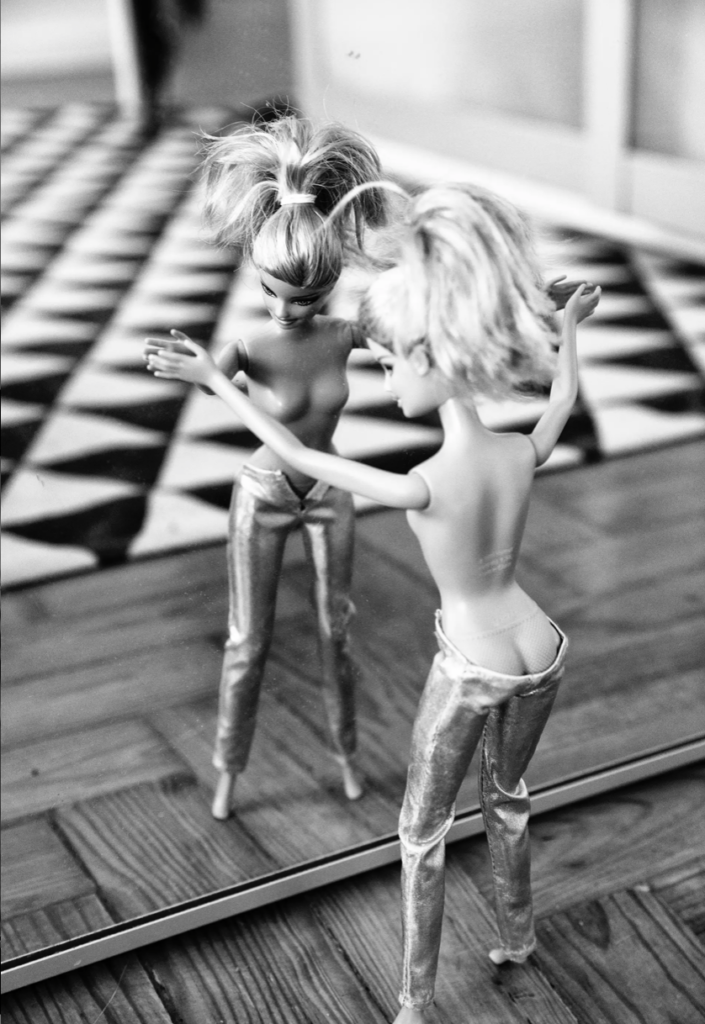
Your work often moves between the playful and the deeply human. Your recent Barbie photograph shown at Boomer Gallery in London feels strikingly different in tone from your documentary projects. What drew you to this image, and how does it sit within your broader practice?
The photographic project “In a Barbie World” is a commentary on people and society. The Barbie doll is acknowledged as a global icon that has shaped the fashion world and society. It tackles our fragilities, desires, identifications, ego and the image we want to project. Nowadays Barbie advocates for social change, has helped girls and women blend in, empowered them, has contributed for women to take a stand, make a difference and fight for their rights and place in society. But it hasn’t always been like this. Through a series of playful images I am talking about human nature and portraying society.
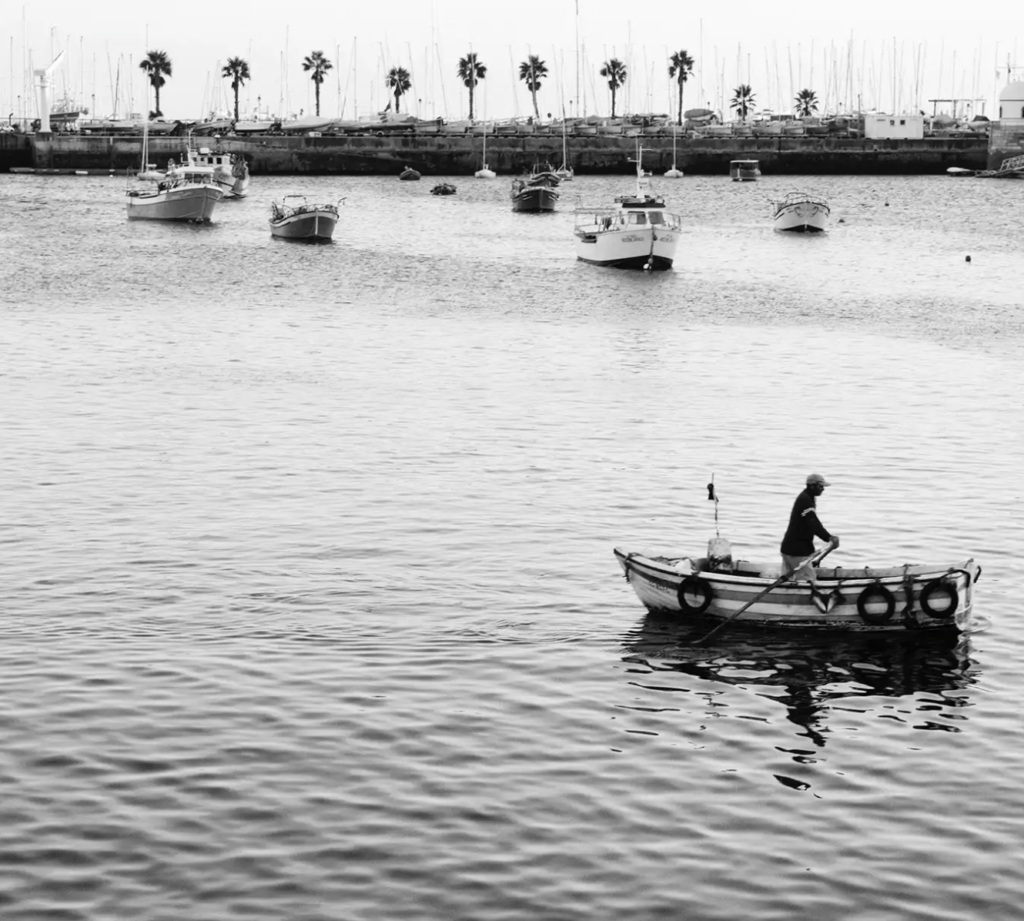
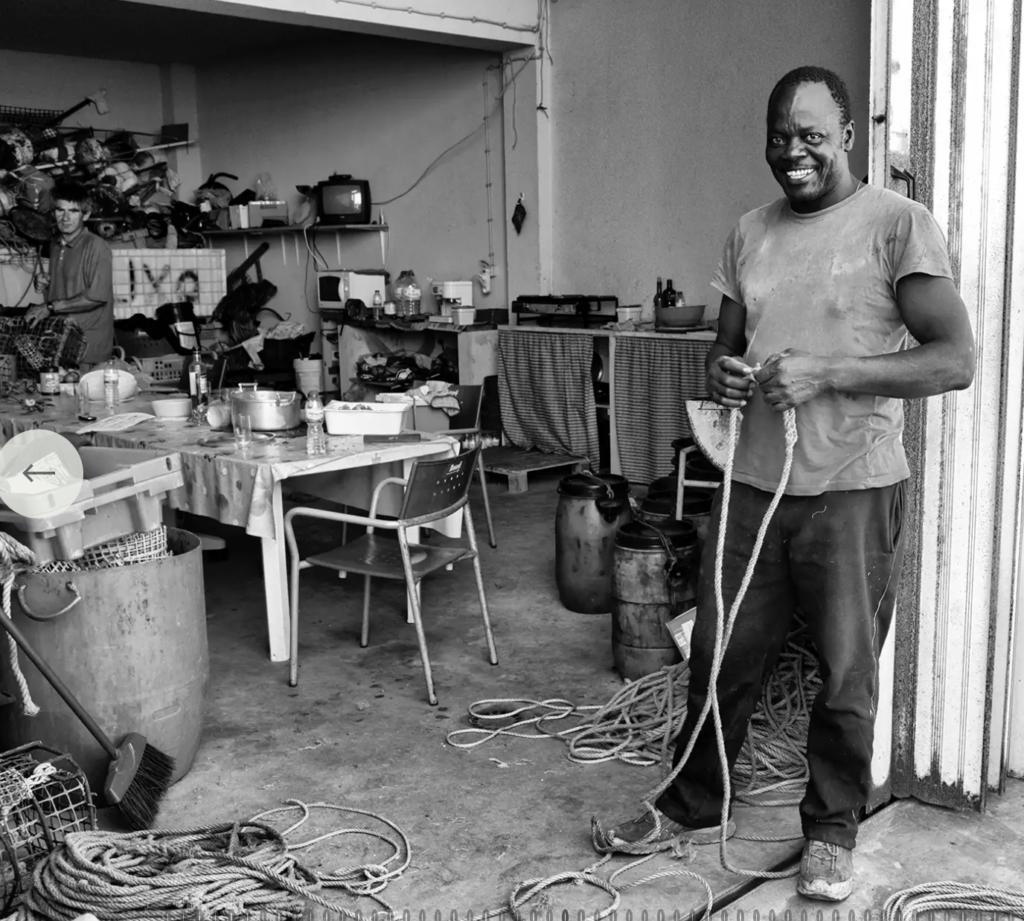
In your black-and-white series documenting fishermen in Portugal, you focus on a community and a way of life that is slowly disappearing. What first compelled you to photograph these fishermen, and how do you approach capturing a tradition that feels both fragile and enduring?
Portugal is a Coastal country – a prominent maritime nation – thus its history, culture and folklore are inevitably linked to the Ocean. Even the national anthem starts with, and talks, about the heroes of the sea – Heróis do mar. But tradition is losing its strength and importance. Many Fishermen and their families live in pauper conditions. Trawling and dredging boats are both endangering the sea fauna and the fishermen’s sustenance. As a photographer I’m recording a testimony about – and raising awareness of – the disappearing of traditions that are part of Portugal’s history and its impact on people’s lives.
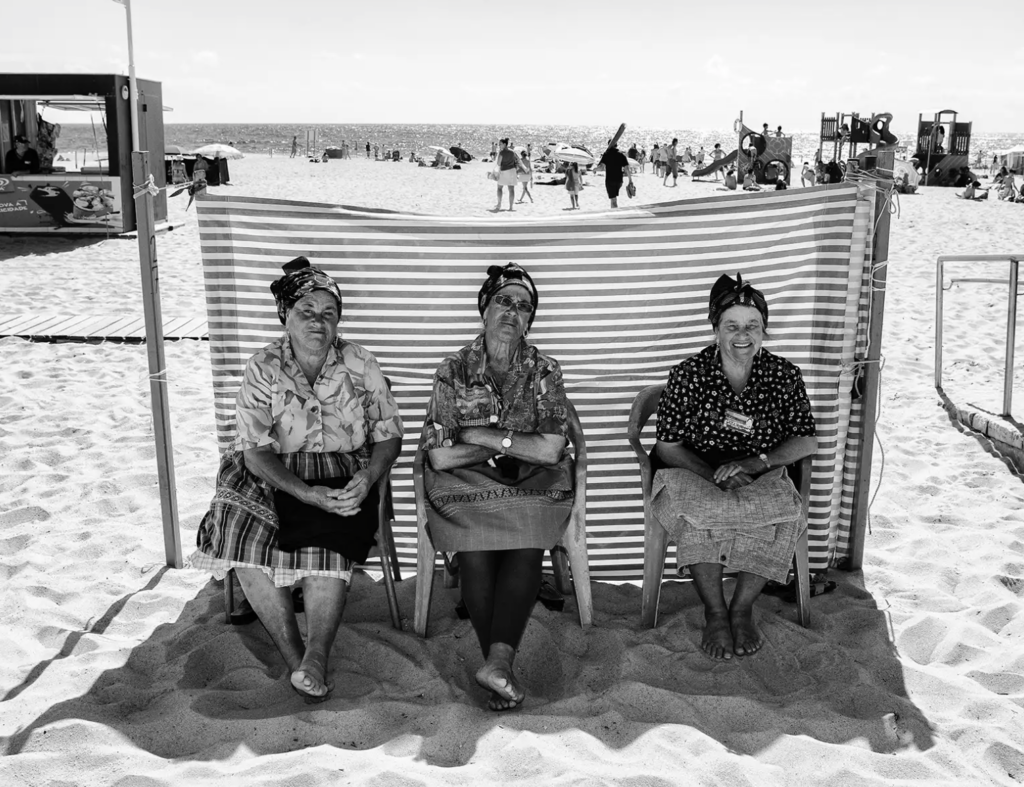
Your new series Seven Skirts engages with another vanishing cultural tradition. Why do you feel it’s important to document customs like the seven skirts and traditional fishing skills now, and what responsibility do you feel as a photographer when working with living heritage?
Soon, only photographs will bear witness of the seven skirts, as well as other customs and traditions of old such as seasonal festivals. In Nazaré old women – mostly widows – still wear seven skirts. Why did the women wear several layers of skirts? And why seven? With my portraits I talk about these women’s lives, the family, the community, the folklore, the religious beliefs, their history.
Their stories are moving, alive, inspiring, and full of resilience. Life is alive and vibrant, in constant change and evolution. With my portraits I try to be faithful and record an actual and unbiased testimony, if only embellished by the way I try to see the world and my admiration for the people that are the keepers of living heritage.
Can you walk us through your photographic process? From first encounter to final image. How do you work with your subjects, and what type of camera and equipment do you typically use to achieve the intimacy and clarity seen across your series?
What you see is what you get. The heart sees. The eyes frame. There’s not much post-production nor reframing, and never adding anything that was not there in the first place. I open my heart and talk to people. Show interest in their lives and their stories. I surrender fully to the moment. And they surrender to being photographed without putting a mask. That’s how I portray reality. And make it human. I normally use a Canon 5DsR and a Canon 24-70 2.8L lens.
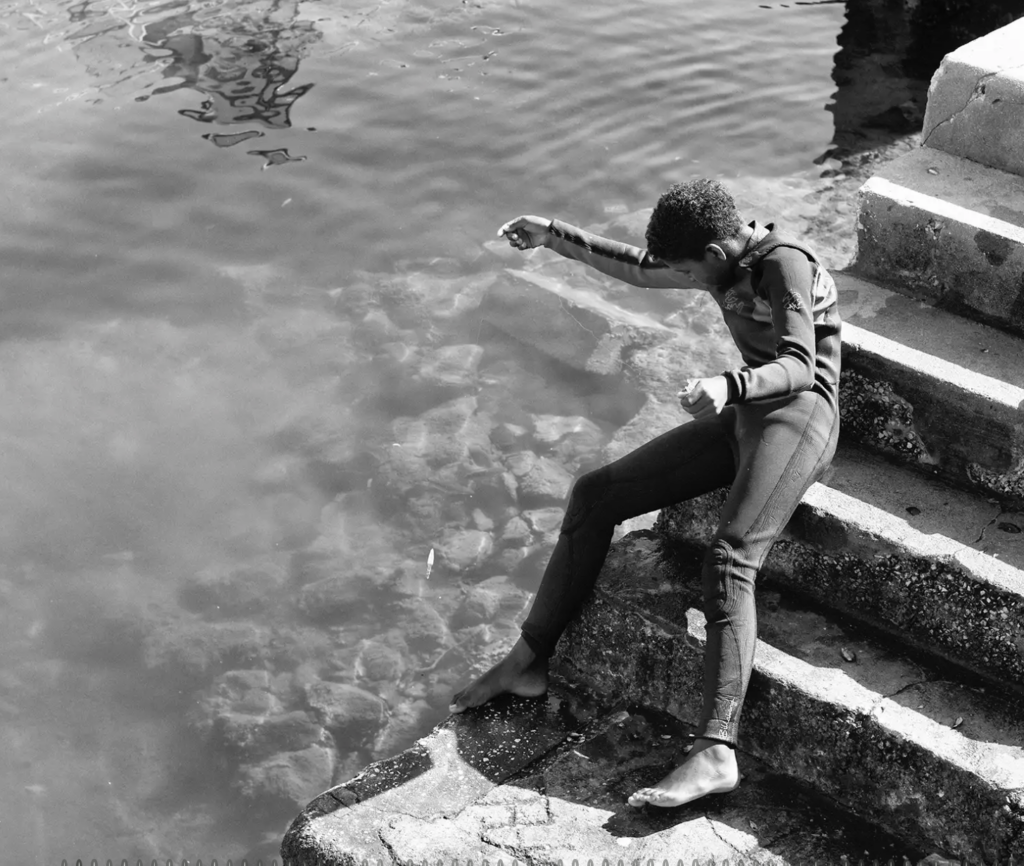
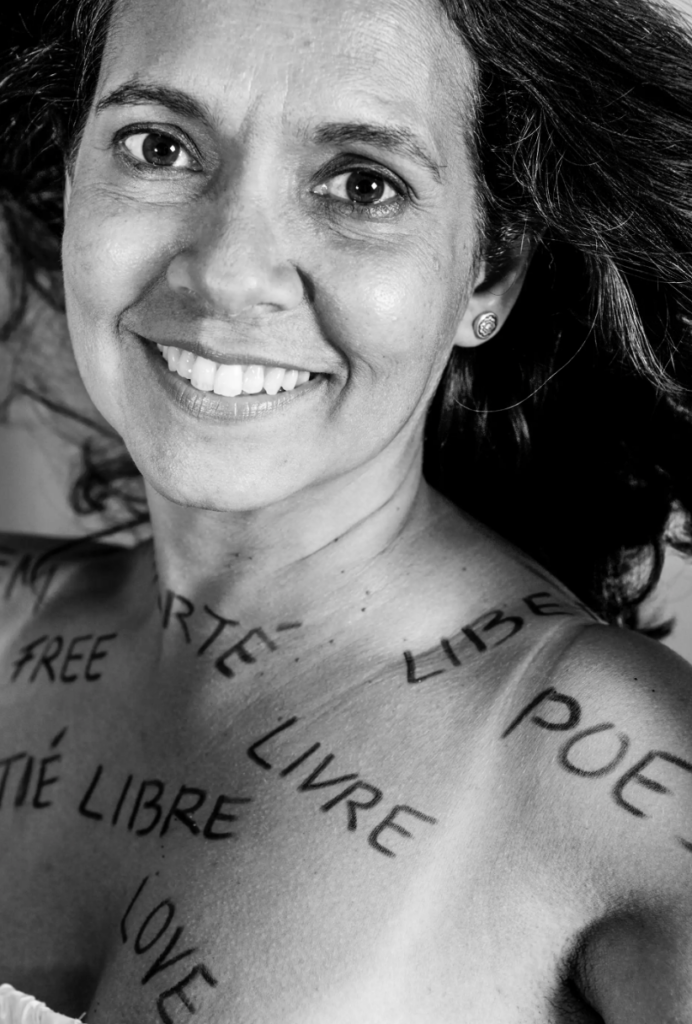
Your project Live to Tell, portraying over 100 Portuguese women affected by breast cancer and their families, is profoundly moving. How did this project begin, and how did photographing such personal stories change the way you think about photography as a tool for empathy and visibility?
We all know of someone who has been a victim of cancer. A relative, a friend or a friend of a friend. As a human being and a photographer, these stories move me, trigger the spark to raise awareness to social causes and share with the world a message of hope.
Photography is my chosen means of communication. It is a powerful universal language. In the Live to Tell series I stress the importance of love, of family and friends. Together we are stronger. Hence I also photograph the woman victim of breast cancer with her husband, her kids, mother, siblings, friends. The images can be tender or playful. The goal is to touch your heart and sensitise you. And once it does, you’ll be more aware, more conscious and more loving.
Looking across your work – from documentary portraits to conceptual images – who are the photographers or visual artists that have most influenced you, and how do those inspirations shape the balance you strike between aesthetics, storytelling, and social memory?
I love the Surrealist movement, tackling the power of the unconscious mind and dreams with its symbolism and metaphors. René Magritte is probably my favourite surrealist artist with his thought provoking paintings. Surrealism has a strong impact on the way I see things and helps me fashion the way I approach my projects.
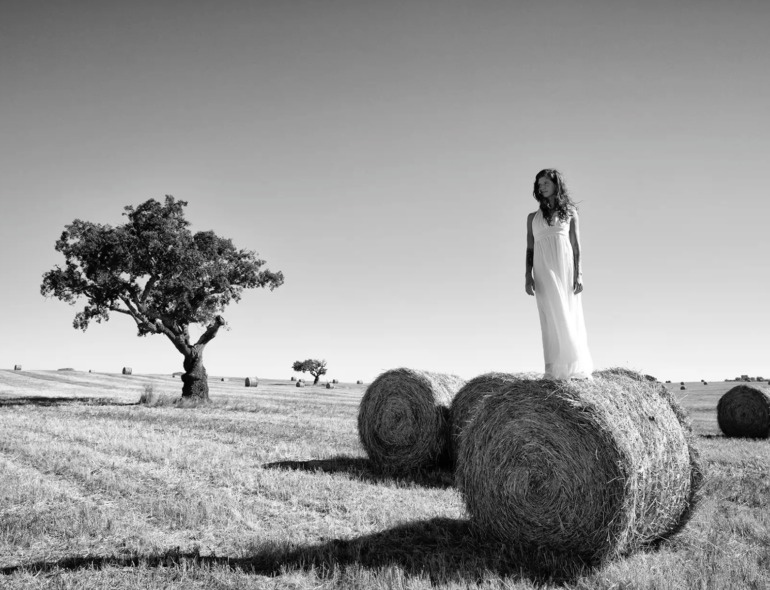
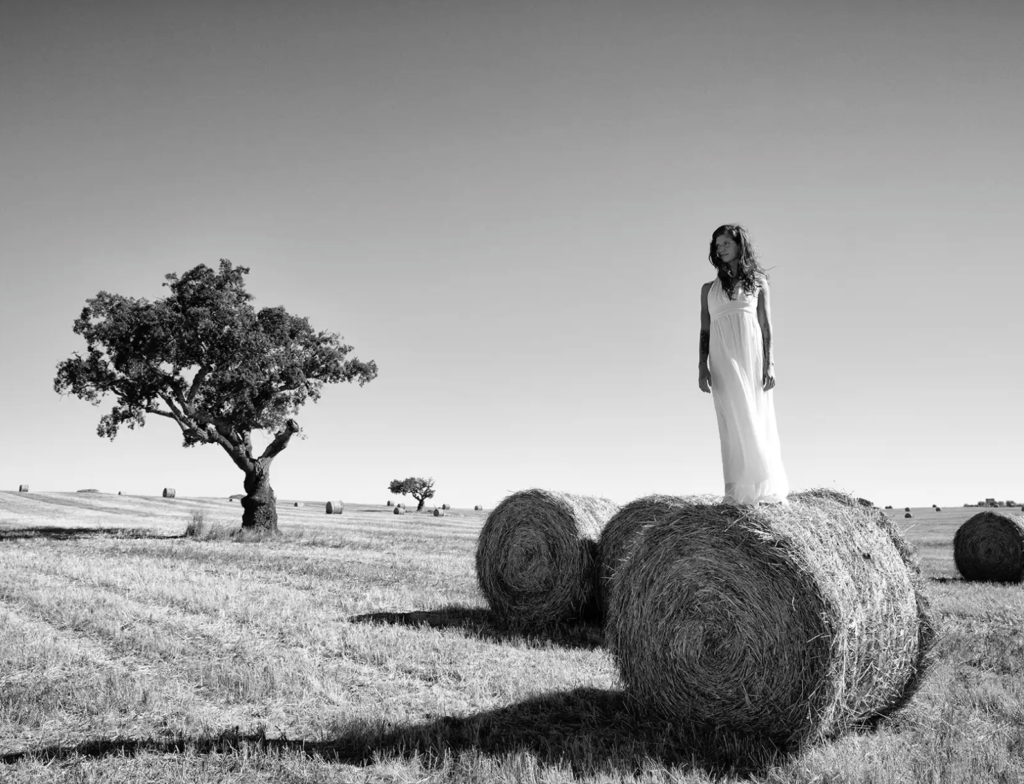
As a photographer I am a storyteller. I love to observe and photograph “real stories”, people, everyday life. In Black and White. We see life in colours. Black and White removes visual distractions (such as strong and bright colours), enhances emotions, triggers memories, creates a special mood and atmosphere.
My favourite photographers are Henri Cartier-Bresson, Eve Arnold, Elliot Erwitt, Sebastião Salgado, Doisneau Pennac, Eddie Adams, David Hamilton and Yosef Karsh. It is paramount to see as many paintings, photographs, drawings (and Art, generally speaking) as we can in order to train our eyes, get inspired and develop a sense of aesthetics. Reading is also very important as it stimulates our analytical thinking, infuses our lives with a deeper meaning and strengthens our values. All this contributes to forming our style, be clear about the message we want to convey with our work, and how we want to do it.
Find out more about Gonçalo Cunha de Sá here.