

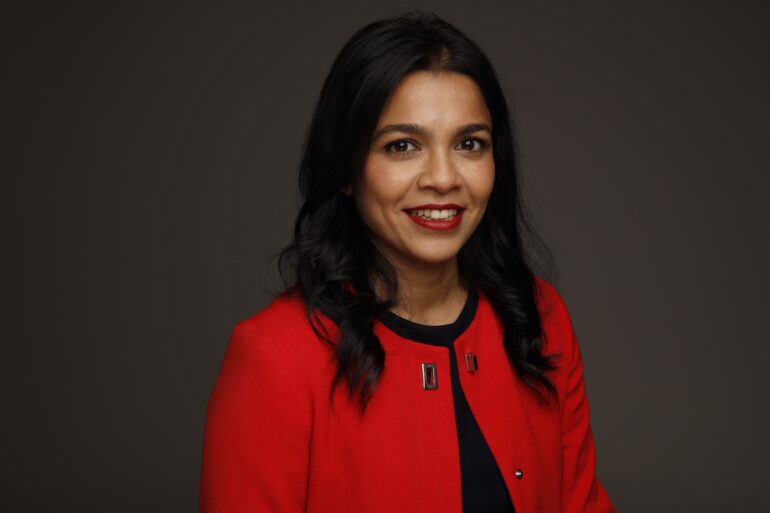
Growing up in the coastal city of Chennai and now based in London, Gayathri Chandrasekaran paints in a language of vivid colour, meditative geometry and luminous texture. Her abstract landscapes – layered with palette-knife sculpted acrylic and, at times, radiant gold leaf – feel less like depictions of place and more like inner terrains shaped by memory, ritual and reflection. From the rhythmic geometry of kolam patterns and the saturated hues of temple architecture in Chennai to the contemplative restraint she encountered in London, her practice unfolds at the meeting point of exuberance and minimalism, intuition and analysis.
This dialogue between two cultural worlds will take centre stage at her upcoming solo exhibition at Chaos London (1st to 11th March 2026). Set within the intimate, everyday atmosphere of a coffee shop near Spitalfields Market, the presentation invites viewers to encounter her Soliloquy, Rebirth and Nirvana series in a space where art and daily life quietly intertwine – an unguarded sanctuary of colour, light and contemplation amid the city’s hum.
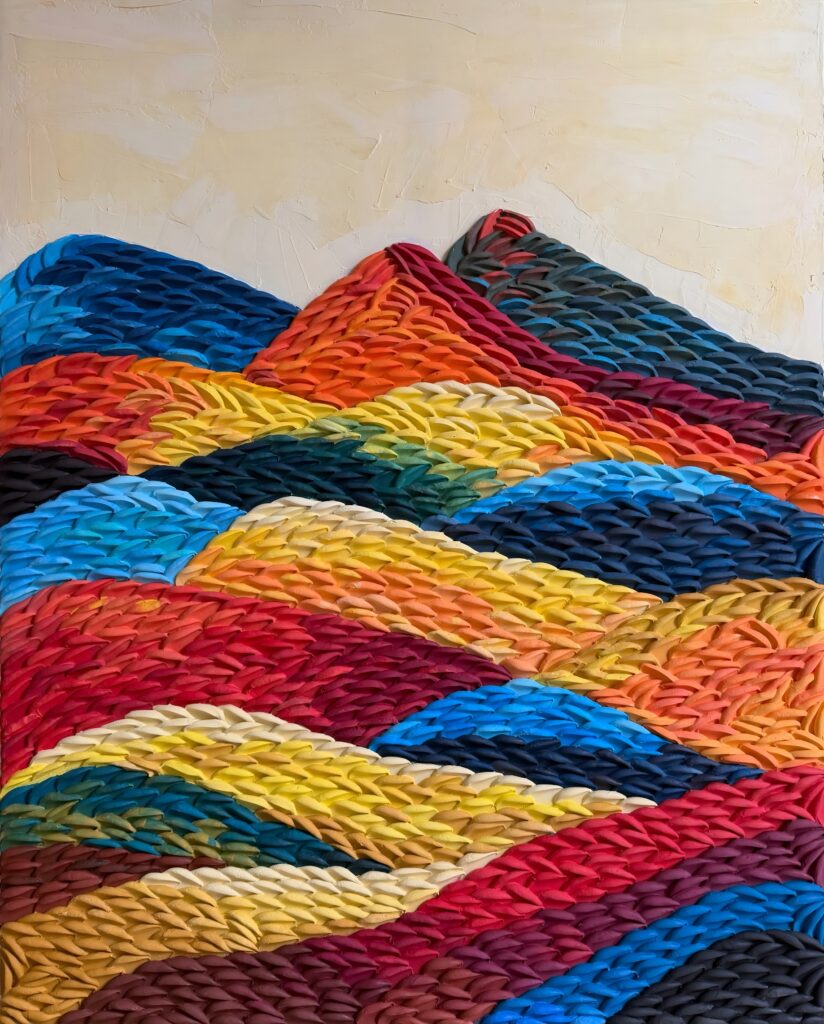
Having grown up in the coastal city of Chennai and now based in London, your work radiates vivid colour and layered texture. How does your cultural heritage continue to influence your palette, materials, and emotional language, and in what ways do you see your practice bridging these two worlds?
Growing up in Chennai meant embracing rhythm from the vivid colours of temple architecture and cyclical rituals to the meditative geometry of kolam patterns and the undulating sound of Carnatic music. Those sensory impressions have deeply shaped my sense of light, movement, and colour. They continue to surface in my love for saturated tones, organic motifs and the quiet spiritual undertones that thread through my work.
London, by contrast, brought conceptual depth. It challenged me to think abstractly about form, emotion and meaning. It sharpened my sense of composition and encouraged introspection through restraint. My practice now lives in the meeting point of these worlds between exuberance and simplicity, tradition and abstraction, intuition and analysis.
I see my art as a dialogue between Chennai’s visual abundance and London’s contemplative minimalism. Each painting becomes a bridge, an evolving expression of belonging that embraces multiplicity rather than choosing one identity over the other.
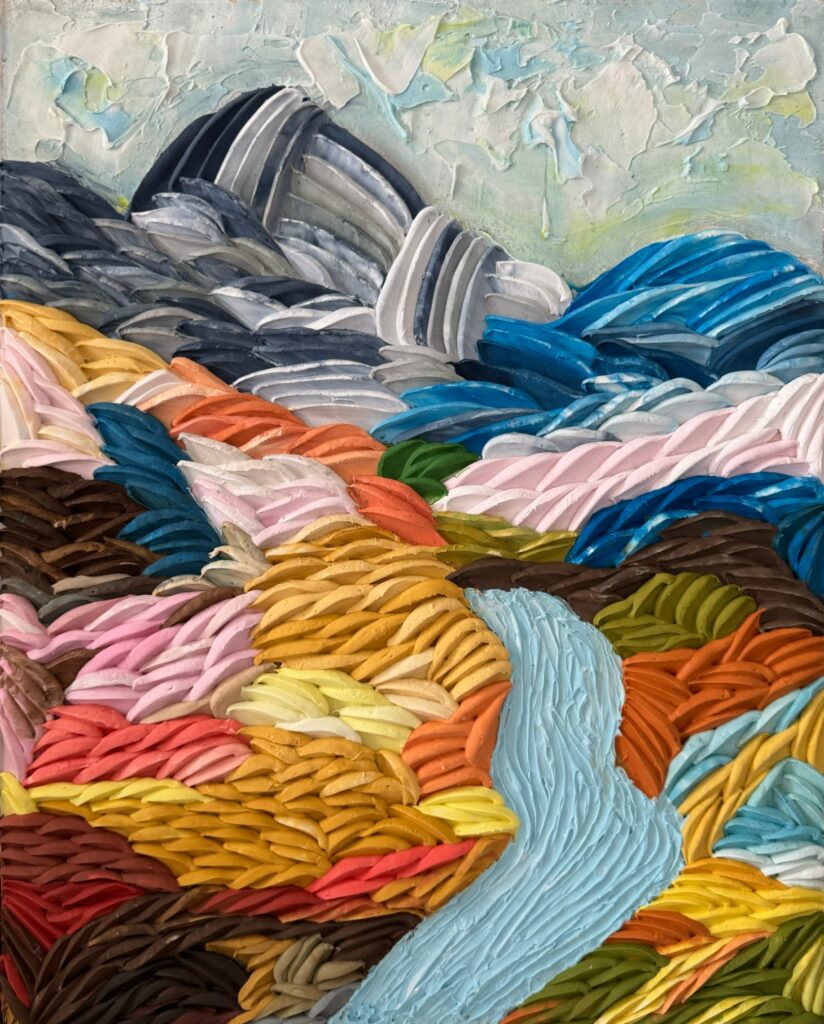
In works such as Salty Mornings and Sunrise on the Dunes, texture and luminosity feel especially powerful. Could you speak about the specific techniques you use in these paintings, from palette knife layering to gold leaf application, and how these processes help convey depth, movement, and atmosphere?
Salty Mornings and Sunrise on the Dunes both emerge from moments of quiet contemplation in nature, the stillness of dawn where light reveals both clarity and mystery.
My process begins with layering heavy-body acrylics mixed with mediums, using palette knives instead of brushes. This allows me to build texture intuitively with each stroke, scrape and pause recording traces. While both works employ textured techniques, there are subtle differences in how the surfaces behave. I use different types of palette knives, shifting their angles, pressure, and edges to create variation in rhythm and depth. Some strokes carve sharper, sculptural ridges that catch the light dramatically; others spread paint softly, diffusing luminosity and creating a more meditative atmosphere. These minute technical choices alter how the texture breathes and how the painting reveals itself under changing light.
Although these particular works do not include gold leaf, it remains an essential part of my wider practice. I am drawn to its radiance and symbolism — gold as a vessel for light, abundance, and transcendence. When incorporated, it transforms the surface into something living and fluid, a bridge between material presence and spiritual resonance.
Ultimately, these layered processes, the variation of texture, interplay of light and shadow as well as sensitivity to material allow my paintings to become inner landscapes, spaces of stillness and movement that invite viewers into quiet reflection.
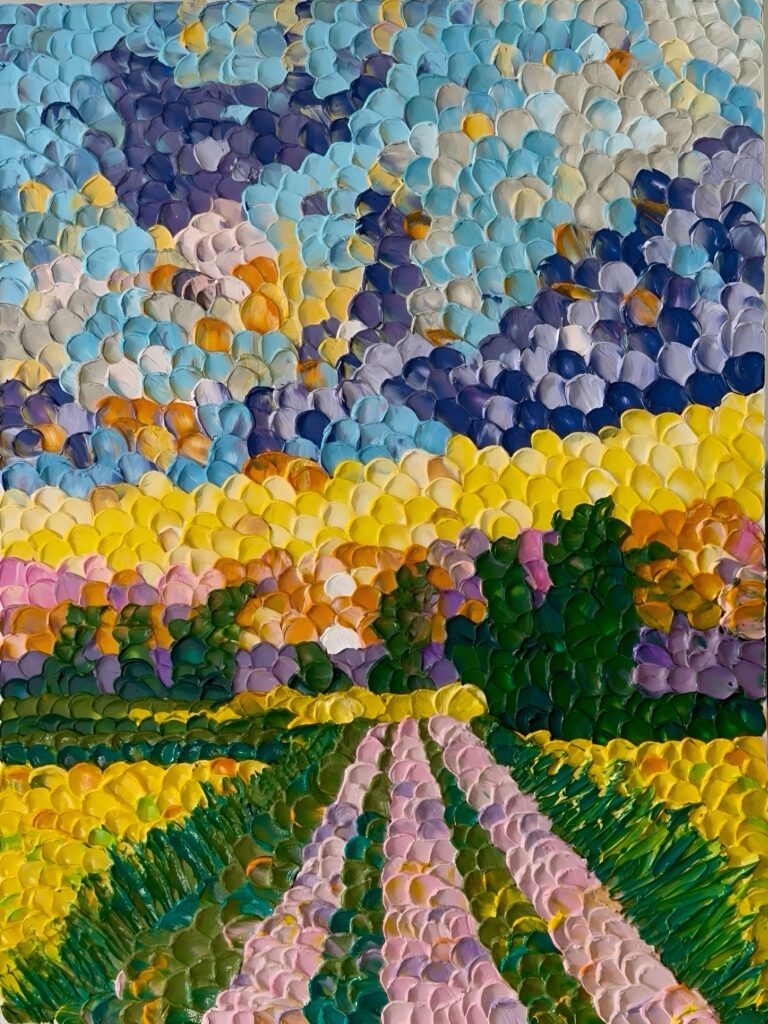
Landscape plays a central role in your practice, yet your paintings feel less like depictions of place and more like inner terrains. How do you approach landscape painting as a form of meditation, and how does the act of painting become a contemplative or even spiritual process for you?
Although my work references mountains, dunes, rivers, or coastlines, I am rarely painting a specific location. Landscape, for me, is a psychological structure. It is more about mapping emotional and spiritual topographies.
When I begin, I often sit with the canvas in silence. The act of layering becomes rhythmic, almost breath-like. The palette knife moves in repeated arcs; the body leans in and pulls back. There is a point in the process where control softens and instinct takes over. That is where the work becomes meditative.
Painting becomes a form of soliloquy, a private dialogue between the conscious and the intuitive. The terrains that emerge are internal – resilience, longing, expansion, surrender. Mountains become thresholds. Rivers become transitions. Light becomes insight.
The spiritual element is not performative, it arises from attention. When one is fully present to texture, pressure, light, and balance, something shifts. The painting records that state.
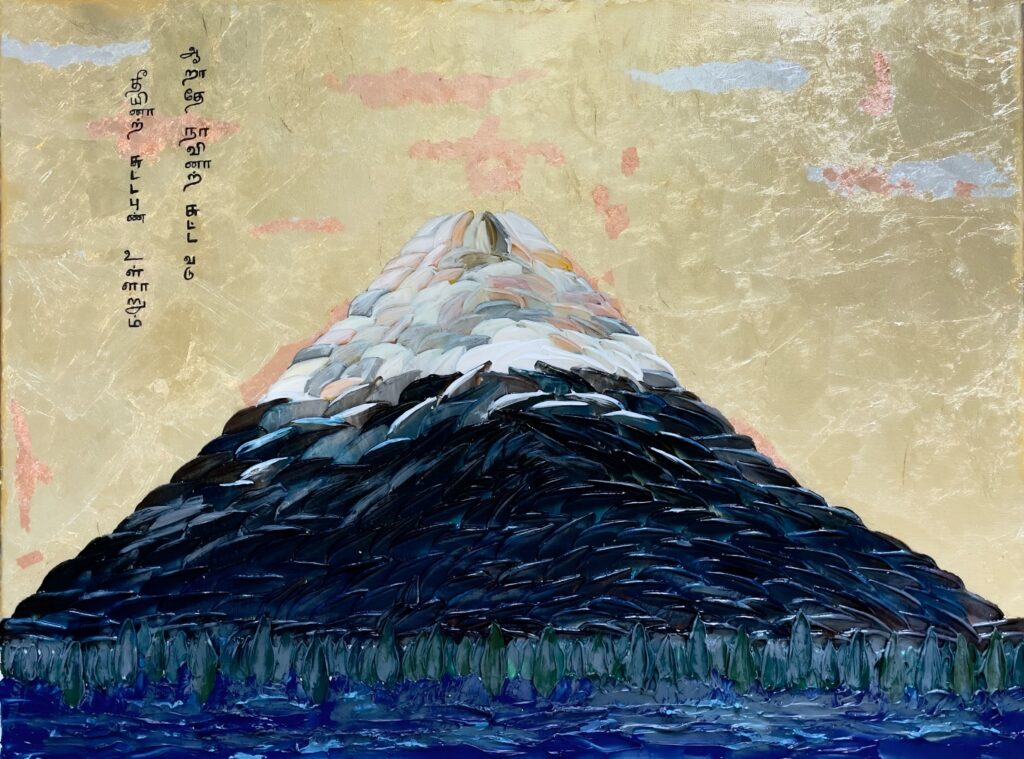
Your upcoming solo exhibition at Chaos London (1st–11th March 2026), will be set within the intimate atmosphere of a coffee shop near Spitalfields Market. How does this informal, everyday setting shape the way you envision audiences engaging with your paintings, and what can visitors expect from this presentation?
I’m genuinely excited about exhibiting at Chaos London. The setting – a coffee shop within the vibrancy of Spitalfields – offers a beautifully unguarded way of encountering art. Unlike the formal silence of a white-cube gallery, this environment allows for spontaneous dialogue, for art to coexist with the pulse of daily life.
My intent is to create an ambience of pause within the everyday. The works from my Soliloquy, Rebirth and Nirvanaseries will be featured, pieces that invite contemplation and inner stillness amid movement and chatter. The textured surfaces and gold accents will respond to the changing light, shifting subtly as the day unfolds, almost mirroring the meditative quality of a quiet conversation over coffee.
I want visitors to feel as though they’ve stumbled upon a sanctuary. A small, reflective space in the midst of London’s energy. A reminder that transcendence can be found in the most ordinary settings.
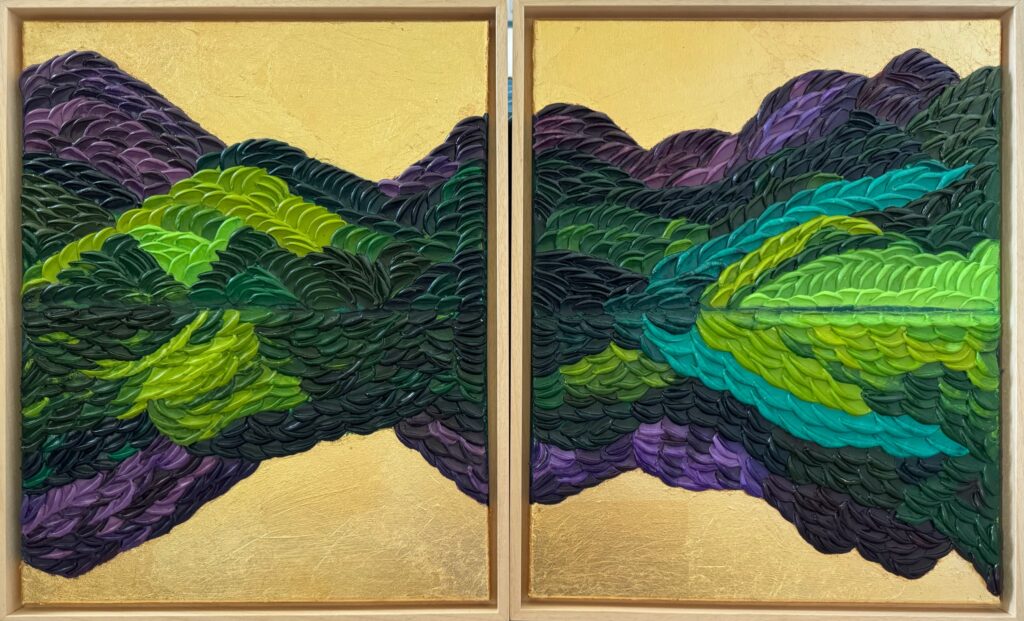
Your work explores themes such as shared human experience, Soliloquy, Rebirth, and Nirvana – concepts that touch on introspection, transformation, and spiritual growth. How do these ideas manifest visually in your abstract landscapes, and what kind of emotional or reflective journey do you hope viewers undertake when standing before your work?
These themes form the architecture of my practice — Soliloquy is the inner dialogue, Rebirth is transformation, Nirvanais transcendence, and together they chart the quiet evolution of the human spirit.
Soliloquy is introspection — layered textures, moments of tension between colour fields, areas where light struggles through density.
Rebirth introduces contrast and emergence — bolder transitions, heightened luminosity, structural shifts within the composition.
Nirvana softens edges. There is more space, more breath, often a calmer horizon line. Gold appears less as an accent and more as quiet radiance.
Visually, these ideas appear through layered textures, shifting light, and a restrained yet rich palette. The surfaces carry traces of decisions and revisions — much like the layers of lived experience. Gold leaf becomes a metaphor for grace: fragile yet enduring, it catches light even in shadow.
When viewers stand before my work, I hope they feel something awaken, perhaps recognition of their own transitions. My aspiration is that the painting offers a moment of stillness, followed by expansion.
If someone walks away feeling slightly lighter, more reflective or quietly empowered, then the work has completed its journey.
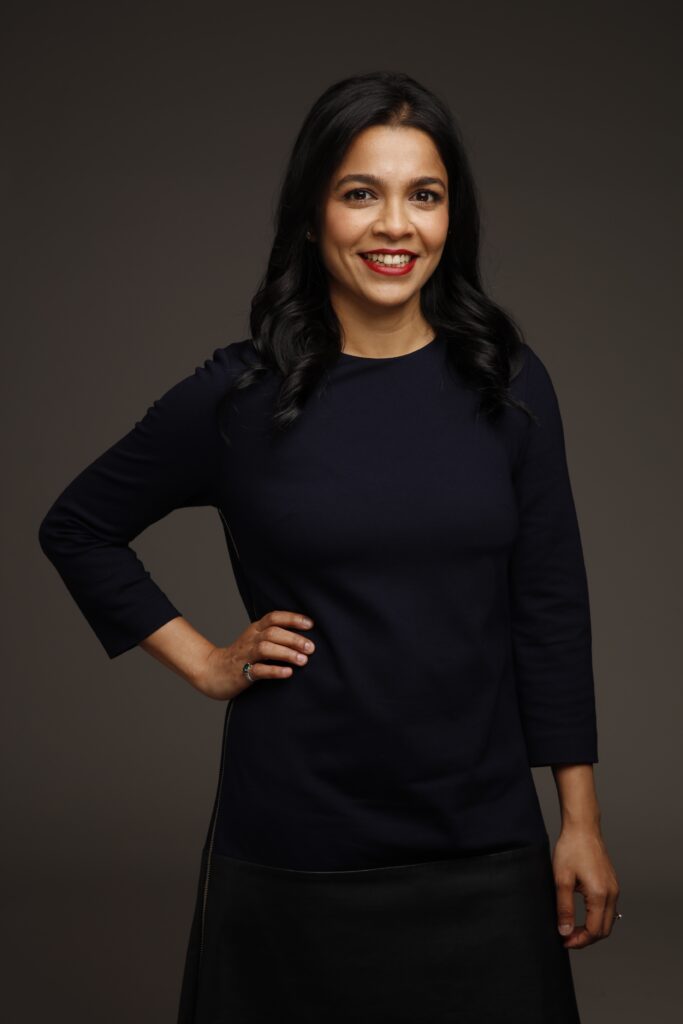
Find out more about Gaya Chandrasekaran here.