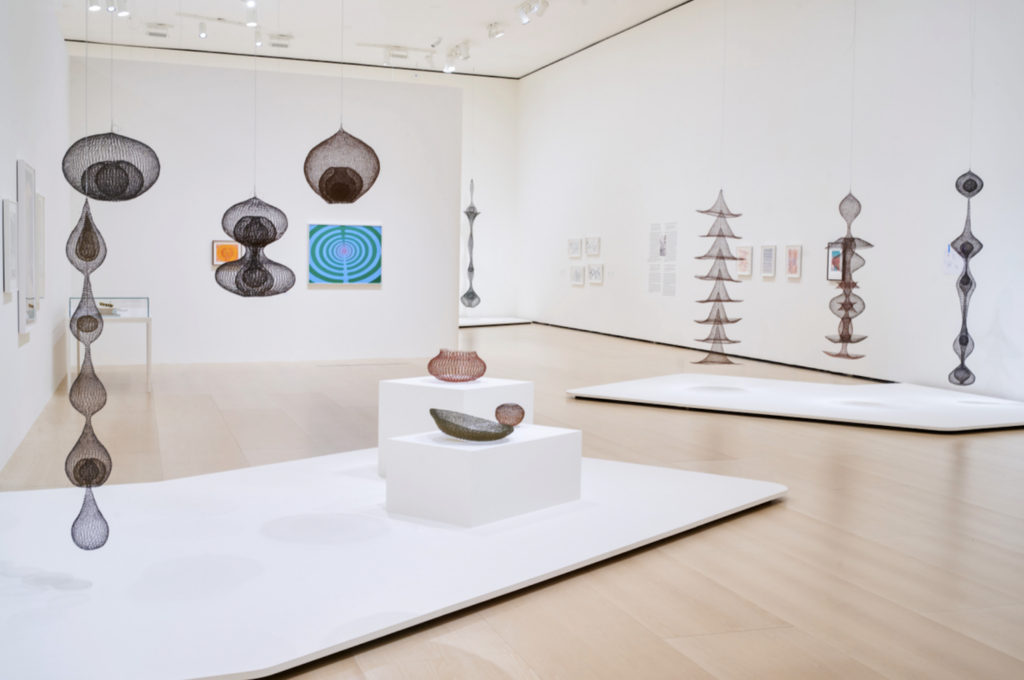


The Guggenheim Museum Bilbao presents one of the most important art exhibitions of 2026 with Ruth Asawa: Retrospective, a major international collaboration with SFMOMA and MoMA. Running from 19th March to 13th September 2026, this landmark show offers a comprehensive reappraisal of Ruth Asawa, tracing her six-decade career through iconic looped-wire sculptures, works on paper, and rarely seen archival material. Bringing together over 200 works, the retrospective positions Asawa as a pioneering force in postwar art, highlighting her radical approach to form, material, and community. This Guggenheim Bilbao exhibition is not only a must-see cultural event in Spain but also a defining moment in the global recognition of one of the 20th century’s most innovative sculptors.
Curated by Janet Bishop (SFMOMA) and Cara Manes (MoMA), in collaboration with Geaninne Gutiérrez-Guimarães (Guggenheim Bilbao), the exhibition reflects a remarkable level of international cooperation. Supported by The Henry Luce Foundation, the retrospective is part of a global tour that includes SFMOMA, MoMA in New York, Guggenheim Bilbao, and Fondation Beyeler in Switzerland.
This retrospective of one of the most prolific and innovative Postwar artists marks the first major museum retrospective to really explore and celebrate the breadth and originality of her practice.
A Six-Decade Journey Through Innovation
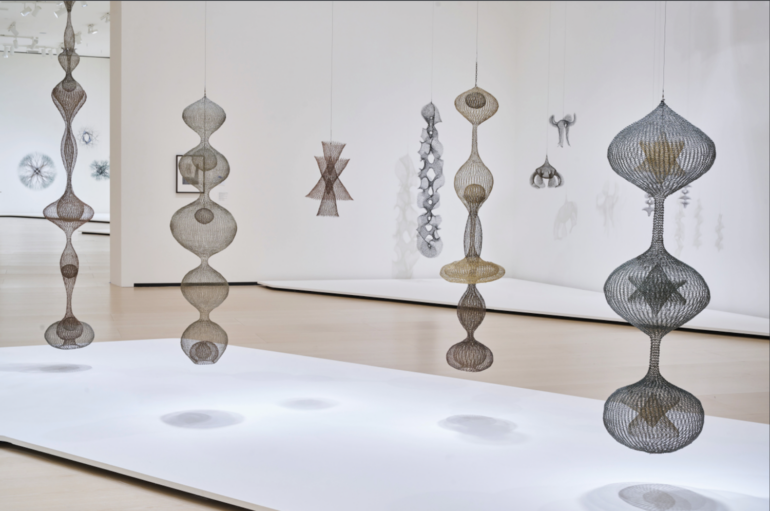
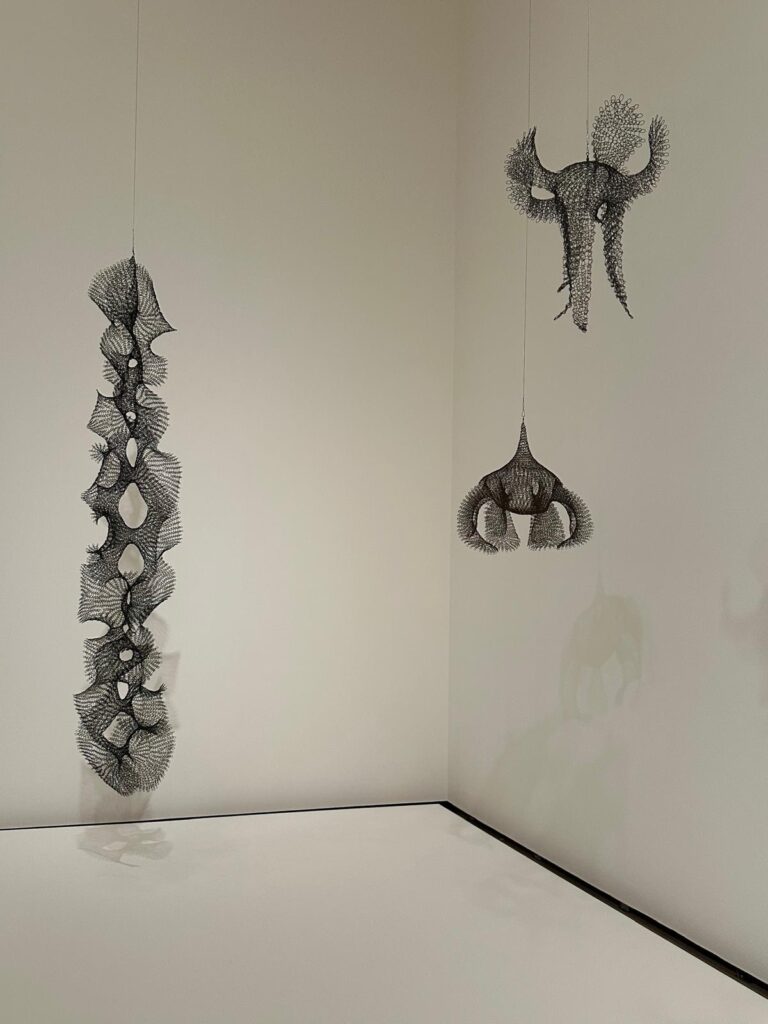
Spanning ten thoughtfully curated sections, the exhibition traces the evolution of Asawa’s work from her early experiments to her mature, iconic creations. Best known for her iconic looped-wire sculptures – ethereal, weightless forms that seem to float effortlessly in space – Asawa’s practice is revealed here in its full breadth.
A wide range of works in varied materials are featured in the exhibition, including Ruth Asawa’s suspended sculptures, nature-inspired tied-wire pieces, clay and bronze casts, paperfolds, paintings, drawings, sketchbooks, and prints ranging from 1947 to 2006. The diversity of media underscores her relentless curiosity and commitment to experimentation.
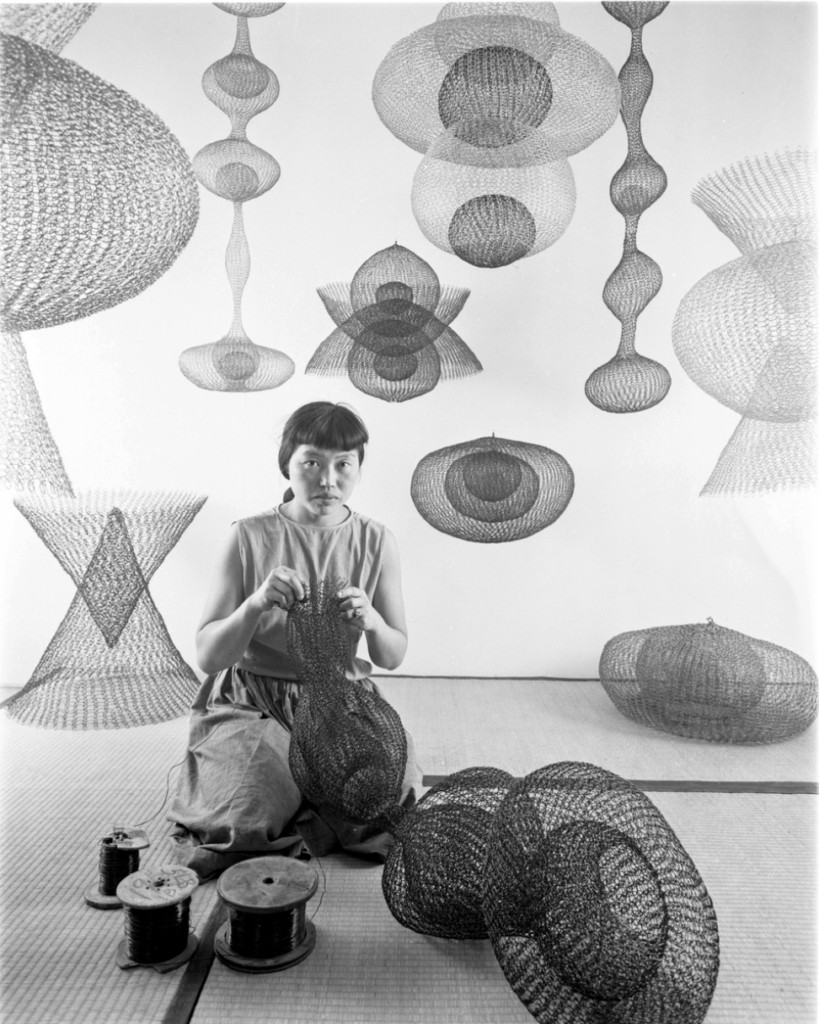
Photographs and archival ephemera are interwoven throughout the galleries, offering insight into how Asawa’s artistic practice was inseparable from her personal life as an educator and community advocate. Asawa’s signature sculptural motif arose during the early 1950s when she was searching for a ‘continuous form within a form’ and arrived at a shape that she described as ‘inside and outside at the same time’. Her sculptures often started out with a geometric floral center, from which she worked outwards and mirrored patterns found in nature.
Art, Identity, and Resilience
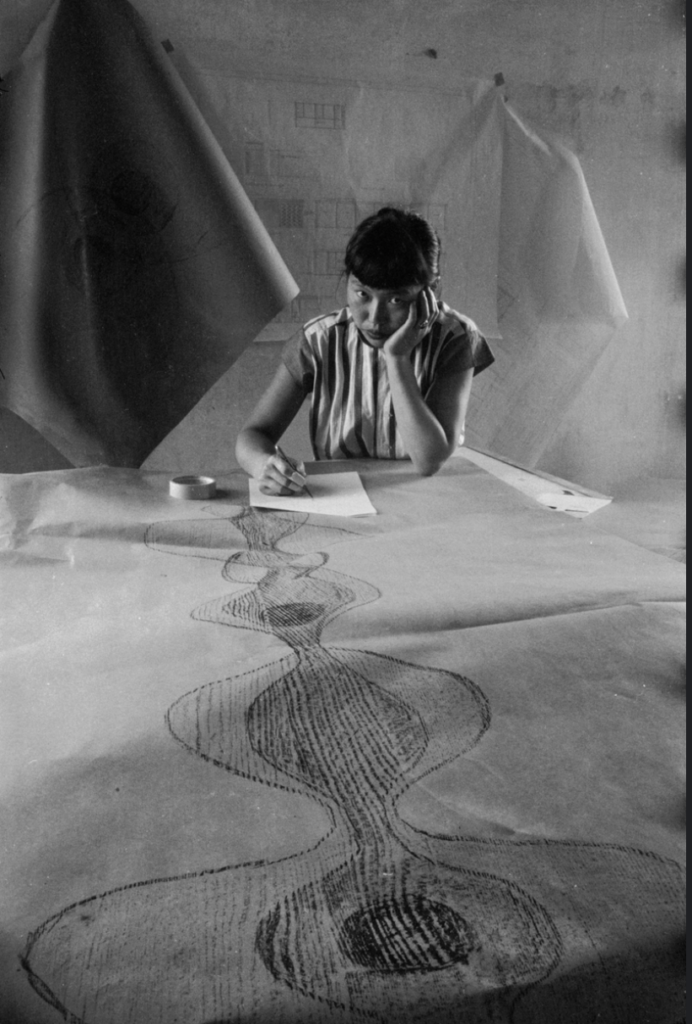
A key strength of Ruth Asawa: Retrospective lies in its sensitive contextualisation of the artist’s life. Born in 1926 in Norwalk, California, to Japanese immigrant farmers, Asawa’s early years were marked by hardship. Asawa was one of seven children, and during World War II, she and her family were forcibly incarcerated by the United States government, which was a formative experience that shaped her worldview and artistic sensibility. She died in San Francisco in 2013, during what would have been her centenary year.
Denied an art teaching degree in 1946 due to anti-Japanese prejudice, Asawa instead enrolled at Black Mountain College in North Carolina. There, within a progressive and experimental environment, she developed a philosophy grounded in discipline, material exploration, and democratic creativity—principles that would define her lifelong practice.
The Guggenheim Bilbao retrospective features works developed by Asawa during her studies at Black Mountain College in the 1940s, including Untitled (BMC.52, Dancers), ca. 1948-49, which features an abstracted dancing figure inspired by dance classes that Asawa took from Merce Cunningham and with Elizabeth Sch mitt Jennerjahn in her final year at BMC. The work is composed of layered rounded forms on a yellow ground, and it was a precursor to the artist’s wire sculptures of the 1950s. It was during a trip to Mexico in 1947 that Asawa discovered the wire baskets and weaving techniques that became a core element of her artistic practice.
Asawa’s commercial designs from the early 1950s are exhibited in the retrospective, including plastic panels based on her paperfolds and wallpaper and textile patterns incorporating logarithmic spiral forms. Other important works featured include; The Tamarind Prints of 1965; Nature, Tied Wire and Later Sculpture of the 1960s-1990s; and large-scale works including her Origami Fountains of 1975–76.
A Dialogue of Form and Space
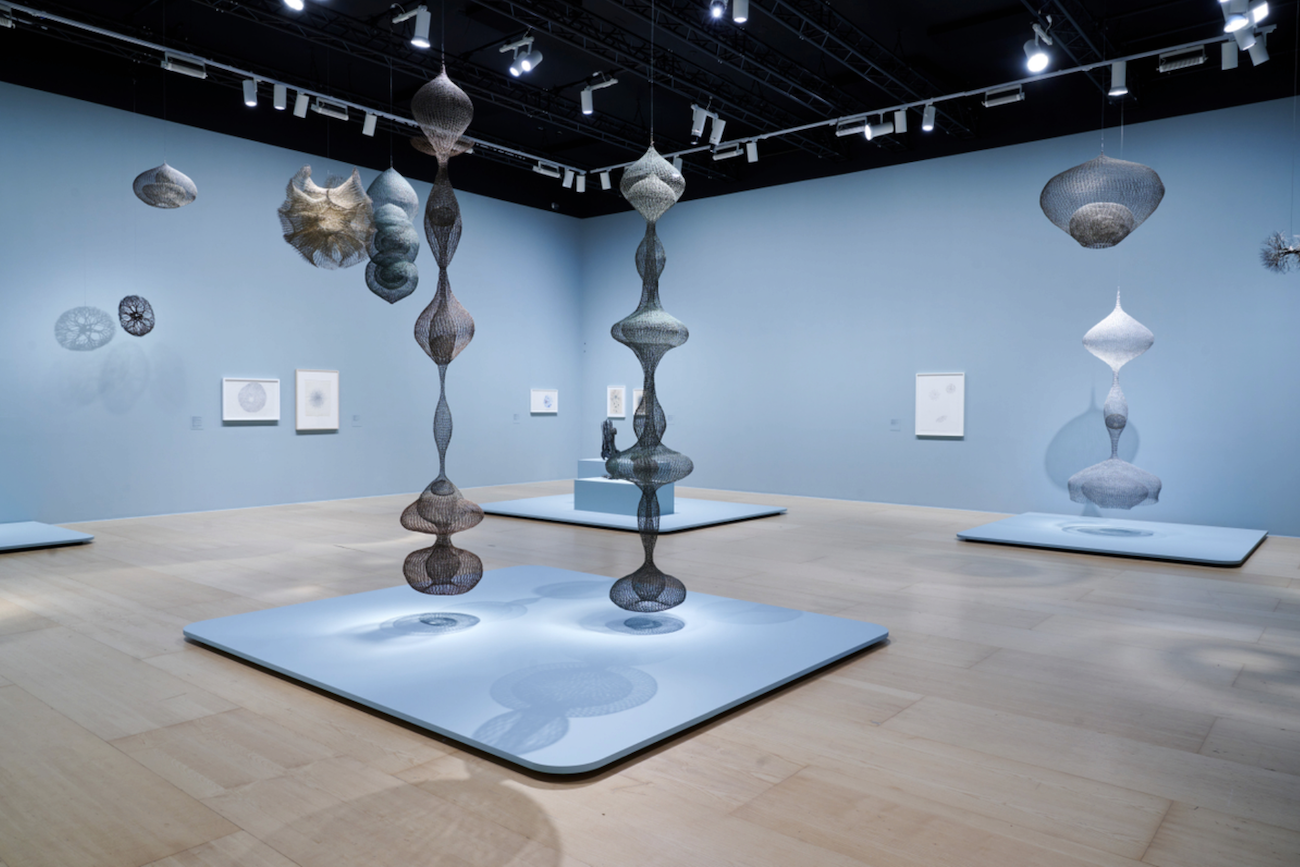
The exhibition highlights Asawa’s enduring fascination with transparency, repetition, and spatial relationships. Her work challenges traditional distinctions – between abstraction and representation, figure and ground, and positive and negative space – inviting viewers to reconsider how objects exist within and interact with their surroundings. Her looped-wire sculptures, in particular, create a dynamic interplay of light and shadow, constantly shifting as viewers move around them. These pieces are not static objects but living compositions that respond to their environment.
From the 1960s onward, Asawa expanded her influence beyond the studio, engaging deeply with her community through public art commissions, arts education initiatives, and civic advocacy. This retrospective thoughtfully acknowledges these contributions, reinforcing her legacy not only as an artist but as a cultural change maker.
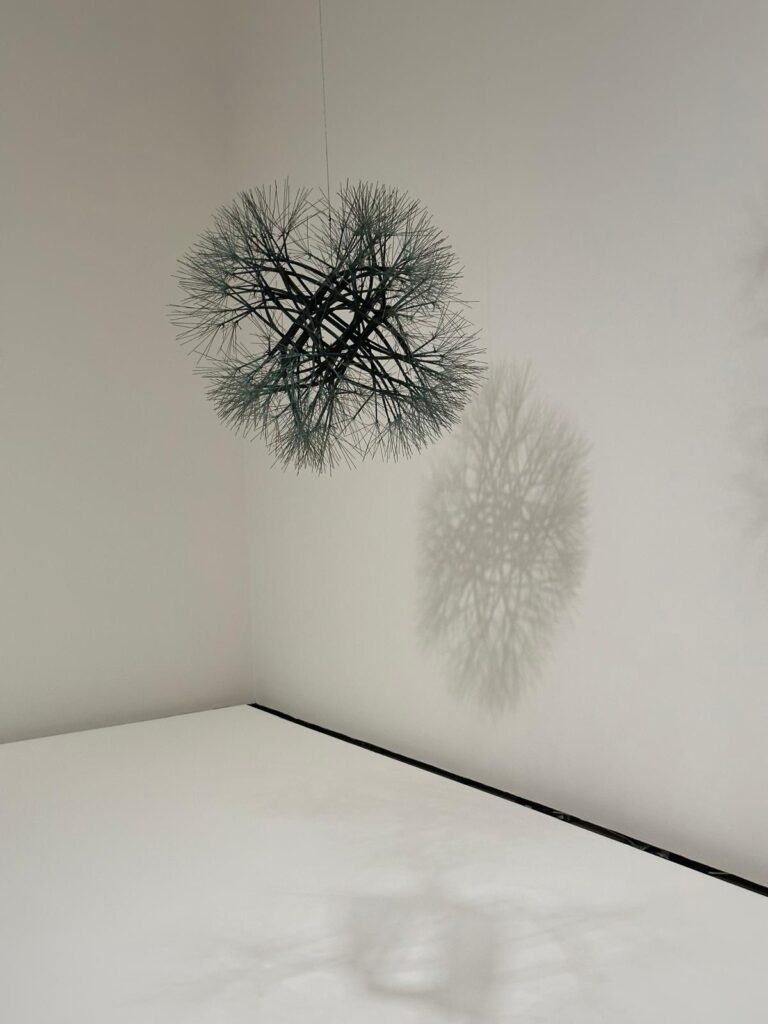
The work is one which dictates a way of growing and the more one learns about this way of growing the more possibilities are opened up for the creating of sculpture peculiar to the process.”
Ruth Asawa
A Must-See Exhibition in Bilbao
Set within the architectural icon that is the Guggenheim Museum Bilbao, this retrospective feels particularly resonant. The museum’s sweeping, light-filled spaces provide an ideal setting for Asawa’s suspended works, allowing them to breathe and interact with the building’s dramatic forms.
For visitors to Bilbao in 2026, Ruth Asawa: Retrospective is essential viewing—an exhibition that is as intellectually enriching as it is visually enchanting.
This is more than a retrospective; it is a profound reappraisal of an artist whose influence continues to grow. Through its comprehensive scope and thoughtful curation, the exhibition captures the essence of Ruth Asawa’s vision—transforming the ordinary into the extraordinary.
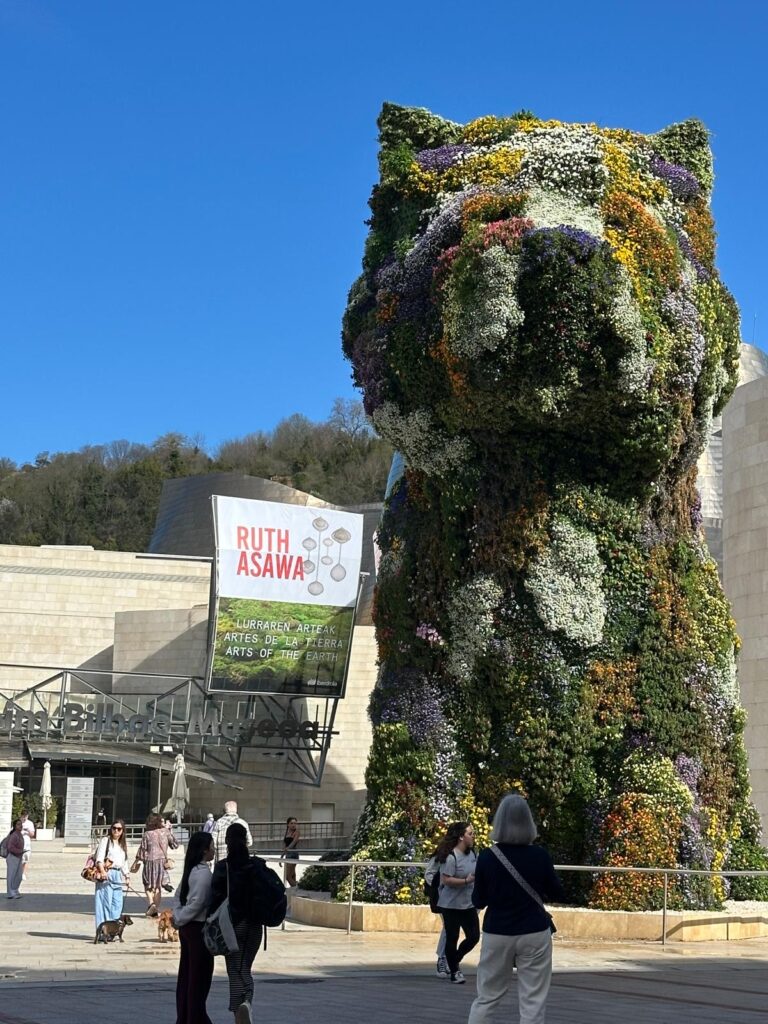
Ruth Asawa: Retrospective is at the Guggenheim Bilbao from 19th March to 13th September, 2026.
Find moe information and tickets here.