

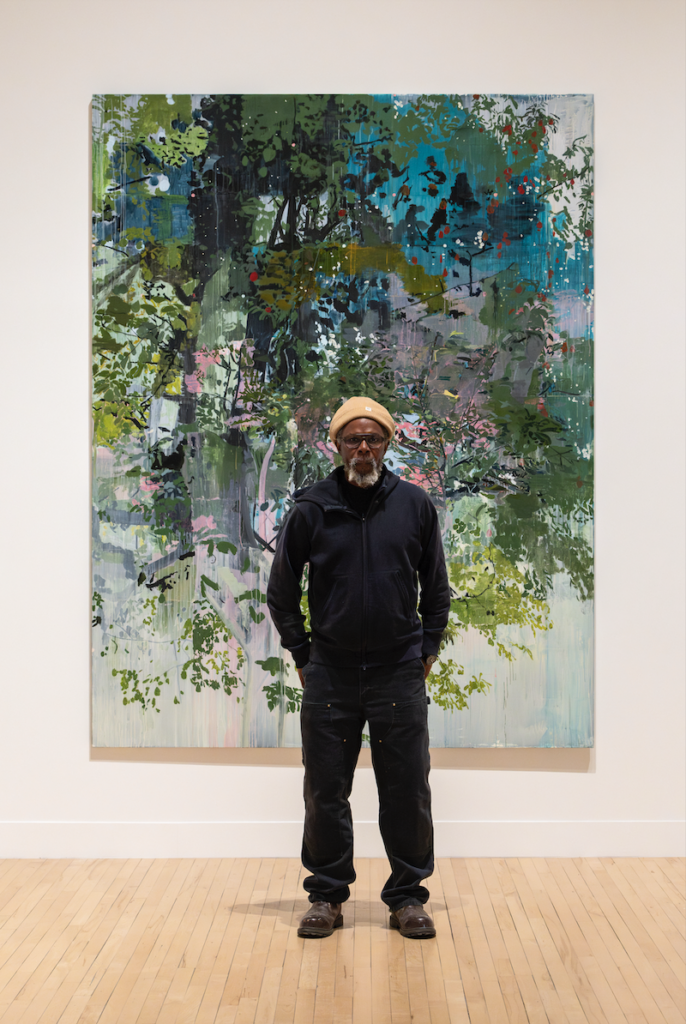
Tate Britain presents a groundbreaking moment in contemporary art with its first major survey exhibition of Hurvin Anderson, one of the most significant painters of his generation. Bringing together around 80 works spanning a 30-year career, the exhibition traces Anderson’s evolution from early formative pieces to powerful new paintings shown publicly for the first time. Known for his vivid, colour-rich landscapes and interiors, Anderson’s work explores themes of identity, memory and diaspora, moving fluidly between Britain and the Caribbean. This landmark show offers an immersive journey into the artist’s deeply atmospheric practice, cementing his status as a defining voice in contemporary British art.
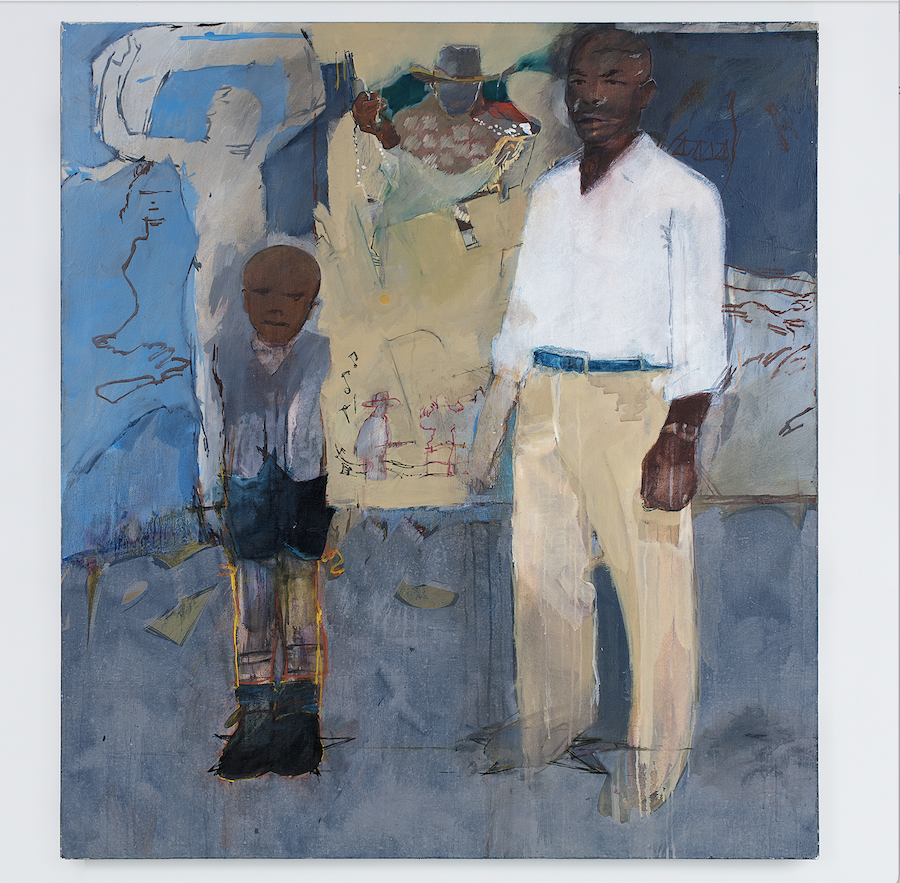
The artist was the first member of his family to be born in England, after his father emigrated from Jamaica in 1961. Anderson’s upbringing in Birmingham, as well as his time as an artist-in-residence in Trinidad, were determining influences on his practice. His depictions of specific sites and experiences from his youth often appear to slip through space and time, becoming dislocated. The exhibition reflects this by looping back and forth, following a thematic journey through the artist’s 30-year practice. Family photographs, early portraits and studies depicting family members will set the scene of his boyhood. These will include the earliest work in the show, Bev 1995, a double portrait of his sister, who appears simultaneously as a woman and as a young girl, and Hollywood Boulevard 1997, an image of Anderson as a child standing beside his father. In compositions like this, the artist plays with time, conflating past and present to invent imagined familial support systems and transitory memories.
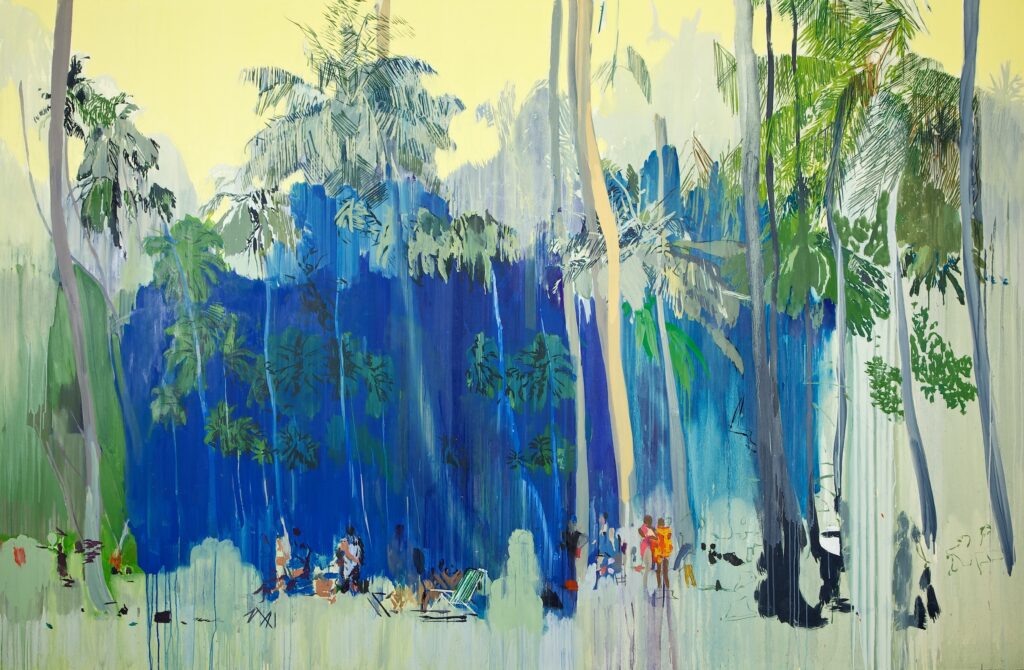
A key development in Anderson’s unique visual language is explored through four paintings from his Ball Watching series (1997-2010), which established his preoccupation with revisiting and reformulating different elements of the same subject across multiple works. Derived from a photograph he took of his friends watching their football in the water in Handsworth Park in Birmingham, the artist transforms a recognisable image of Englishness into a tropical locale by layering one location onto another. This series combines Anderson’s central thematic concerns, including the unreliability of memory and tension around cultural heritage. The acclaimed 1986 film essay Handsworth Songs by Black Audio Film Collective is screened outside the exhibition, offering visitors the chance to contextualise the artist’s childhood and adolescence in 1970s and 80s Birmingham.
A significant element of Anderson’s practice is his re-imagining of public spaces that have individual and cultural significance. The barbershop is a subject that the artist has returned to throughout his career and is imbued with social history and personal meaning. His prolific Barbershop series (2006-2023) references a period in the 1950s and 60s when Caribbean immigrants created make-shift barbershops in their homes, serving as places for social gatherings, as well as for economic enterprise. The series, together with Peter’s series (2007-9) have become his best-known works in the UK. From the latter, Tate Britain presents Peter’s Sitters II 2009, focusing on an anonymous figure in a chair, while early Barbershop compositions including Jersey 2008 are shown alongside some of his most recent works, including Skiffle and Shear Cut (both 2023).
A major highlight of the exhibition is the UK debut of Anderson’s monumental Passenger Opportunity 2024-25, inspired by two murals painted by Carl Abrahams in 1985 for Jamaica’s Norman Manley International Airport. Serving as a loose historical record of emigration from Jamaica to Britain from the 1940s to the 1970s, the 24-panel piece will be reconceived and reworked to reflect its fresh presentation, with new historical narratives which delve into the relationship between Britain and the Caribbean.
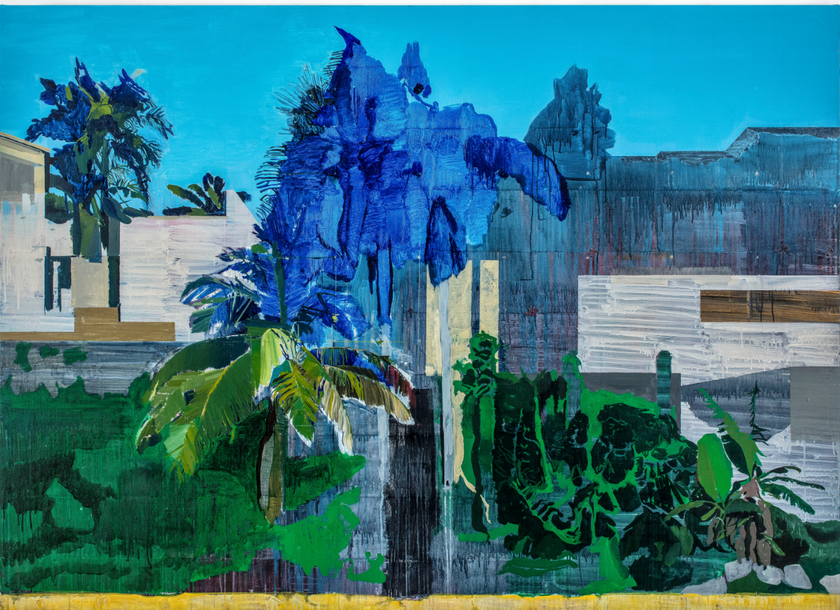
Visiting Trinidad in 2002, Anderson felt a sense of dislocation, often feeling both an insider and outsider. Tate Britain presents four works from the artist’s Welcome series, depicting a Caribbean bar through a red security grille, observed on this trip. The artist’s use of fencing or grilles seeks to distance the viewer, creating a physical and emotional separation. This situates the viewer firmly on the outside, an idea he has continued to explore in his later practice, including Country Club: Chicken Wire 2008, where a hexagonal fence separates the viewer from the scene, acting as a remnant of racialised and social segregation in Trinidad. Tate also shows seven works from Anderson’s hauntingly evocative Jamaican hotel series, including Grace Jones 2020 and Ashanti Blood 2021. Inspired by a visit in 2017, these works depict derelict hotels, once only accessible to tourists, now engulfed by vegetation and reclaimed for the natural environment.
Anderson’s seminal painting Is It OK To Be Black? 2015-16 is a rare instance in which Anderson has included recognisable figures in his work, exploring the complexities of race relations and cultural history. Featuring semi abstracted images of key figures in black history, including Martin Luther King Jr. and Malcolm X, the artist subverts the gaze of the viewer, placing us in the role of sitter and directly involving us in the conversation.
Hurvin Anderson is at Tate Britain, Millbank, London SW1P 4RG from 26th March to 23rd August 2026. Tickets available here.