

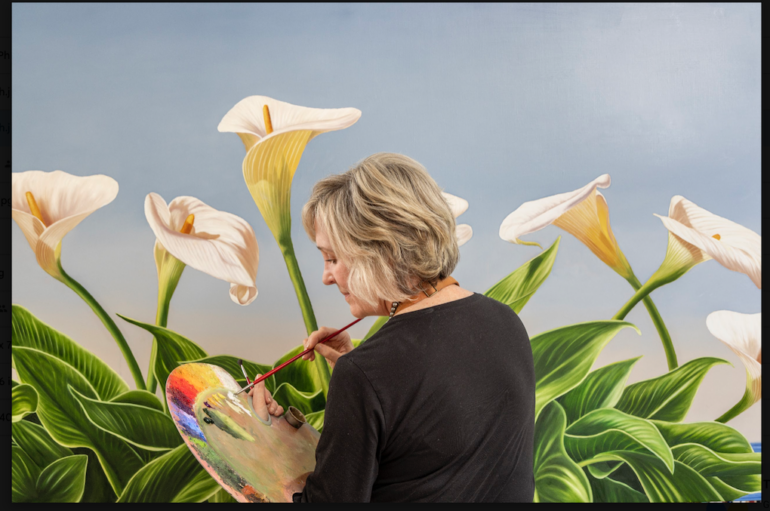
For Elizabeth Barlow, flowers are far more than subjects of beauty—they are portraits of presence, resilience, and transformation. Drawing on the rich legacy of still life painting while reshaping it through a contemporary lens, Barlow’s Flora Portraits invite viewers to slow down and encounter flowers as living individuals, each carrying its own spirit and story. Rooted in careful observation, meditation, and an enduring fascination with nature, her paintings bridge art, mindfulness, and the timeless symbolism of the botanical world.
In this conversation with Culturalee, Elizabeth Barlow reflects on reimagining the still life tradition, the emotional and intuitive process behind selecting her floral subjects, the profound influence of The Phoenix Rose, and how painting has become a practice of presence, hope, and quiet transformation.
Your work builds upon the rich history of still life painting, yet it feels distinctly contemporary. How do you strike a balance between working within that history while also expanding upon it? Are there any aspects of the still life tradition that you embrace, challenge, or reinterpret through your Flora Portraits?
For centuries, women painted flowers because they were accessible—and acceptable—subjects for “ladies” to paint. Many museum works by women of the 17th-19th centuries are of flowers in vases. I am very conscious that my work is a contemporary expression of this tradition of painting, but my focus and intention is very different.
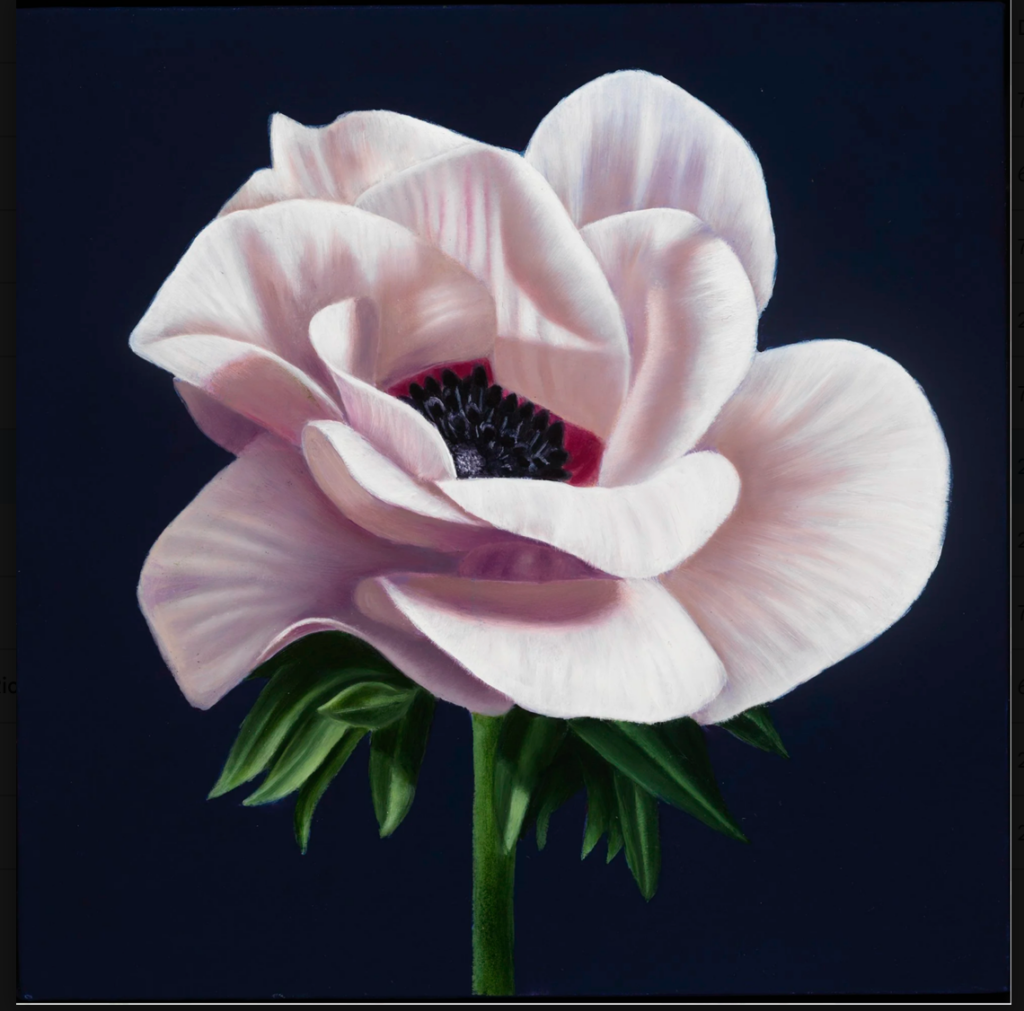
Rather than painting a beautiful scenario (a vase of flowers on a table), I am painting portraits of flowers. I call these paintings Flora Portraits.
I paint them as individuals (portraits) because I believe that flowers (and their mighty cousins, the trees) are the perfect teachers in the art and power of present moment awareness. Flowers go quietly about their serious business of budding, blooming and fading—unhurried, unworried, just doing what they are meant to do. And all the while they shine forth into the world with the gift of their astonishing beauty. If I can capture a bit of a flower’s spirit and life force, then I have done my job well.
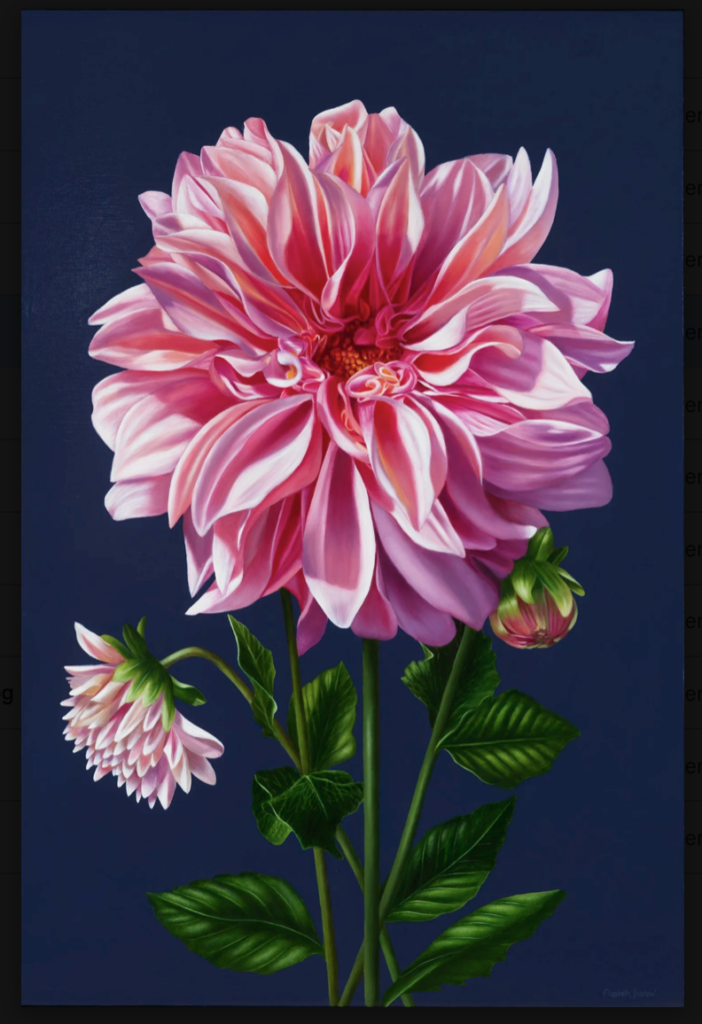
Empress – Oil on linen
Before a flower enters one of your paintings, what is your relationship to it? Do you spend time learning about its history, uses, symbolism, or lifecycle? Or is it more of a visual and intuitive attraction?
When I first select a flower to paint, my decision is entirely emotional. There are so many stunning flowers to choose from, and when I walk through my favorite farmers’ market or flower shop, I feel intoxicated with beauty. However, there is always one that stops me in my tracks. I feel a rush of recognition, longing, desire to paint that flower. Where this comes from exactly, I don’t know, but I believe that all artists feel it when they encounter a muse.
Only after finding the flower do I spend some time reading about the history and symbolism of it. I love research, so I enjoy learning about the history and symbolism of a particular flower, but this remains in the background of the painting. I am always striving to say something about this flower.
Have there been any flowers whose histories, uses, or symbolism changed the way you approached its representation?
Yes! There is one rose bush that changed my painting practice forever.
In 2018, a philanthropist and collector invited me to create a work for his soon-to-be built vineyard home in Sonoma. The homeowner and his wife had lost their prior home in the terrible 2017 Wine Country Fires, barely escaping with their lives. Everything on the property was destroyed and the only things that survived were the vines and one rose bush. Even more tragedy followed when the wife died several months later. But then something miraculous happened. That single rose bush began to bloom gloriously. The homeowner decided to build a new house on the same site and asked me to create a 6-foot painting of that rose bush for the house. We titled the painting The Phoenix Rose, because it literally rose out of the ashes.
Although I had already been painting flowers for some time, The Phoenix Rose taught me that flowers can be powerful messengers. They lure us in with their beauty and then offer potent lessons of hope, renewal and presence. After painting The Phoenix Rose, my painting life was utterly transformed. The beauty of a flower is the lure, and it beckons us to an inner awakening.
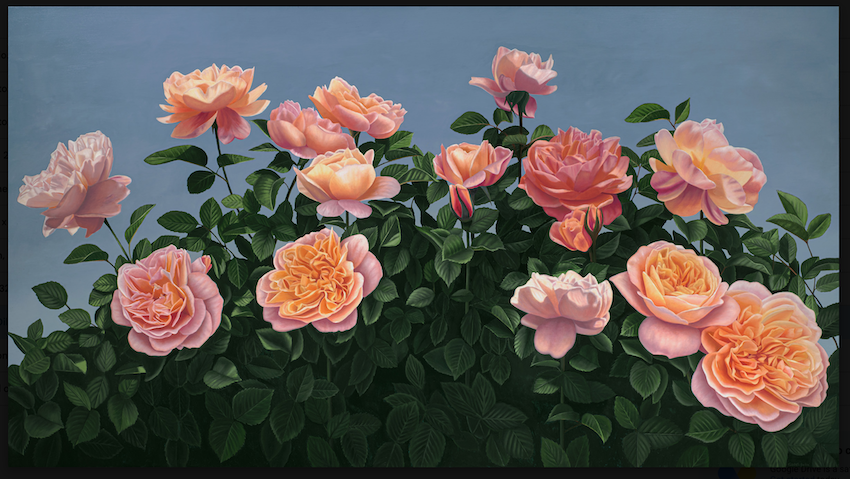
Your paintings emerge from a deep and sustained level of observation. Has this ability to look at something so deeply and with such great attention come naturally to you, or is it something you have consciously had to put into practice?
Seeing the inner spirit of the flowers that I paint is directly connected with my meditation practice. I attend a weekly mediation group and begin each of my days with spiritual reading meditation (and coffee). This practice has transformed my life and my art.
Each day as I sit in silence, I am practicing the art of awareness and being present, which is such a difficult thing to do in our increasingly “noisy” world. I’ve discovered that the more I practice stillness I am able to see more deeply and sense more acutely the wondrous living things around me, which of course include flowers.
What has your time observing flowers taught you about not just the flower or the painting but about the world and how you experience it?
I am a slow painter because my paintings require many layers, and this has opened my eyes to the inner beings of my flower subjects. Doing anything slowly in our speed-of-lightning world is a skill and it requires practice. I want to move through life more slowly, savoring the smallest of moments. So, when I take the time to look deeply at a rose as I paint it, I am awakened from the deep sleep of busy-ness and see the wonder of this particular rose, this sunlight, this breeze, this sky, this now.
What kind of experience do you hope someone has when viewing your paintings?
I hope that the viewer will feel a sense of astonishment and reverence when looking at one of my Flora Portraits because that is what I felt as I painted it. Each of my subjects gave me a thrill and a sense of wonder as I gazed upon it, and I want to share that treasure with the viewer.
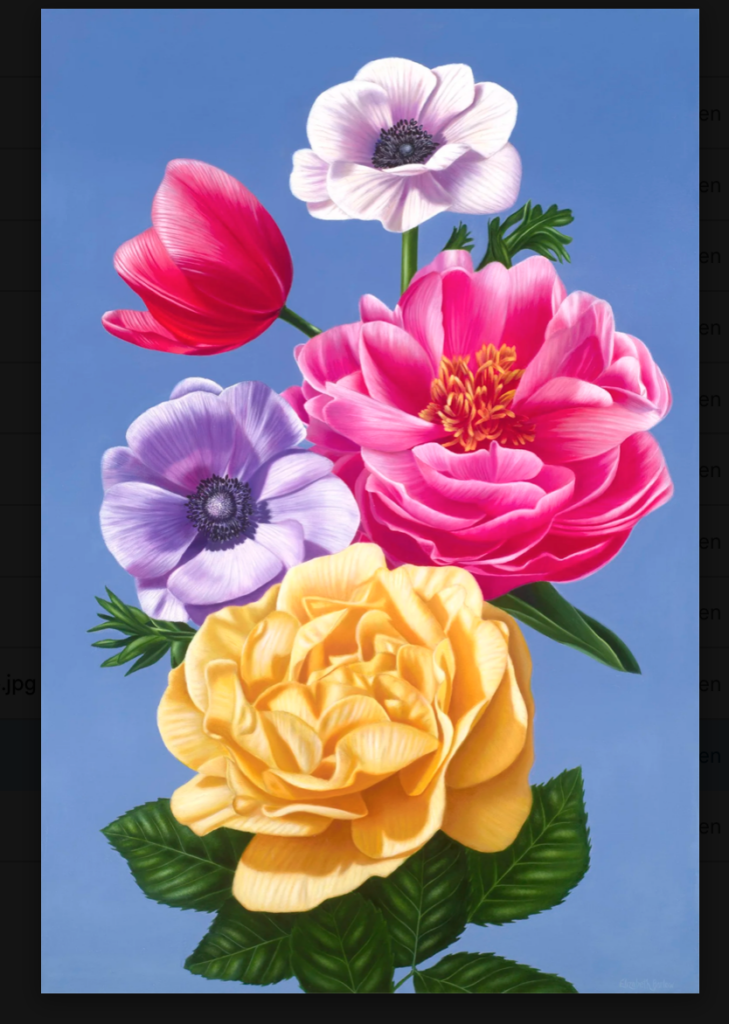
Springs Promise – Oil on Linen
While co-curating your upcoming group exhibition Seed at Andra Norris Gallery, does anything change in the way you view your own work as it comes into communication with the others being presented?
Seed will be an explosion of flowers expressed in vastly different forms and styles. Some of the flowers will be buds waiting to open, others will be in lush full flower, and some will be fading from life. There will be oil paintings, drawings, porcelain, paper sculpture, and photographs. The exhibition will be like walking through a profuse garden, each floral work a unique spirit with its own voice, combined together into one gorgeous whole being.
How do you think your practice might evolve after curating this exhibition? Has it taught you to see flowers in a new light or has it strengthened your preexisting ideas of them?
I feel that my work is entering a new phase in terms of how I am presenting the flowers in my paintings, but I can’t quite yet see what that will be. I long for the composition to be both more complex and more abstract but I haven’t yet found my way there. This is the joy of being an artist. You learn to trust that your creativity is constantly at work and that each time you try something and it doesn’t quite work, it will always lead you to the next evolution in your art making.
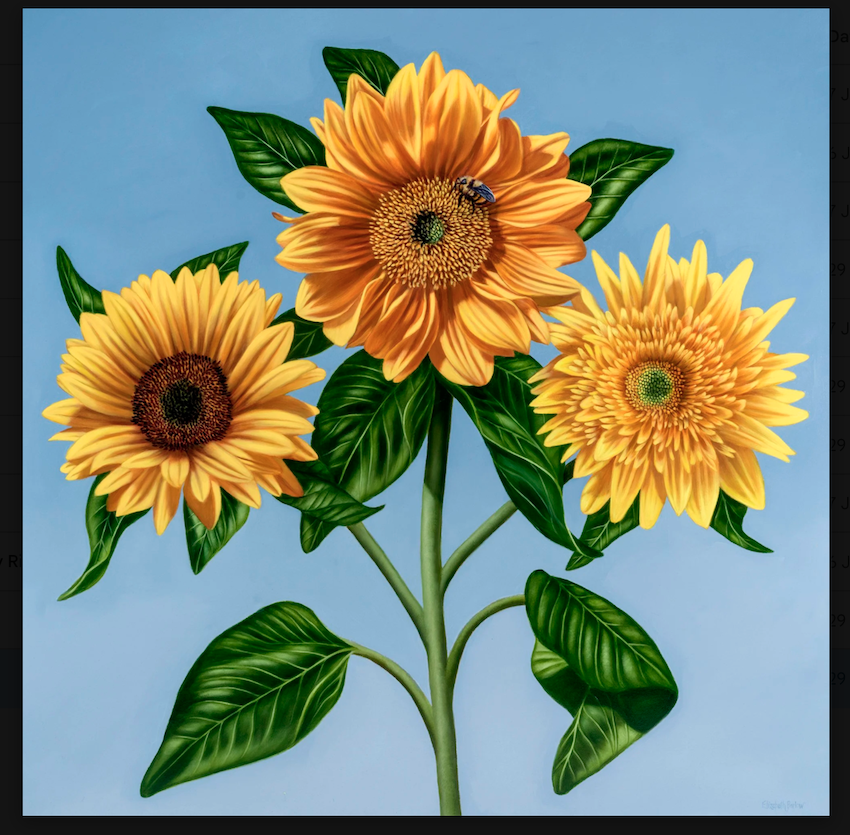
The Seeds of Love – Oil on linen
By enlarging flowers beyond life size, they turn into something more monumental. How do you think scale shapes the emotional and psychological experience of your work?
By exaggerating the scale of a flower, it requires me—and the viewer—to pause, breath, look deeply. The flowers in my paintings are messengers and their beauty is a call to remember the power of stillness and the hope, faith, grace and transformation that can be rekindled there.
How do you approach color when crafting a painting and what role does it play in communicating the character of a particular flower?
I find it fascinating that artists are examples of nature nurture. We learn and develop our techniques, and we are inspired by other artists from particular traditions. All of this is “nurture.” But as artists, we also come into the world with talents, gifts and unique inner eyes. I love black-and-white drawings by other artists and paintings with muted, simple palettes. The hushed colors and soft lines of an Agnes Martin painting or the velvety shadows and quiet palette of Vermeer move me deeply. But when I pick up a brush and put paint on the canvas, my colors emerge in a lush, almost voluptuous palette. This is the “nature” part of being an artist, and it is a mystery to me. For this reason, I have a deep respect and reverence for art and the humans who strive to make it.
Find more information on Elizabeth Barlow here.