
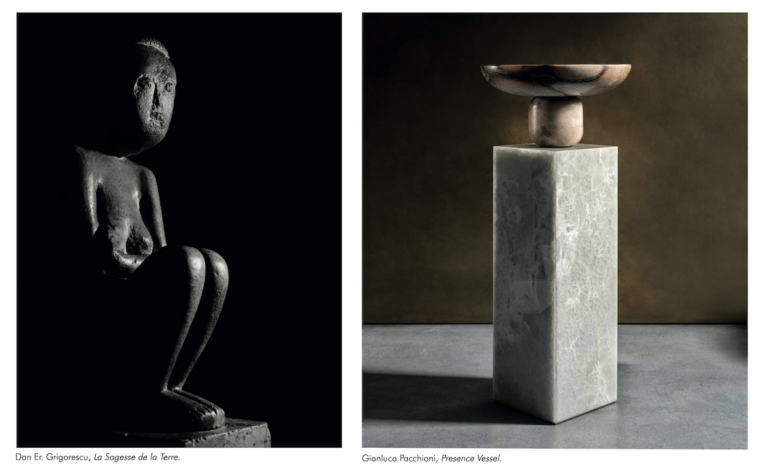
Galerie Negropontes in Paris presents the third and final installment of the series Reflections on Brancusi to mark the 150th anniversary of Constantin Brancusi’s birth, from September 11 to December 19, 2026. Following two exhibitions that explored connections between Constantin Brancusi’s work, as seen through the photographs of Dan Er. Grigorescu, and the practices of contemporary artists, the Reflections on Brancusi series returns with a third exhibition focused on sculpture.
This new exhibition brings together works by Mircea Cantor, Gianluca Pacchioni, Mauro Mori, Perrin & Perrin, Agnès Baillon, and, for the first time, Morgane Baroghel-Crucq. Their works are shown alongside Grigorescu’s photographs of Brancusi’s major sculptures, taken between 1964 and 1967.
A self-taught photographer fascinated by Brancusi’s world, Grigorescu never sought merely to document the sculptor’s work. Instead, his images isolate forms, heighten contrasts, and reveal the play of light and structure within the sculptures through a contemplative gaze. Through tightly framed compositions and rich blacks, he offers a distinctive interpretation of Brancusi’s oeuvre.
This third exhibition builds on that approach, bringing together artists whose work engages themes central to Brancusi’s practice: the reduction of form, the expressive qualities of materials, balance, verticality, and an organic relationship to sculptural making.
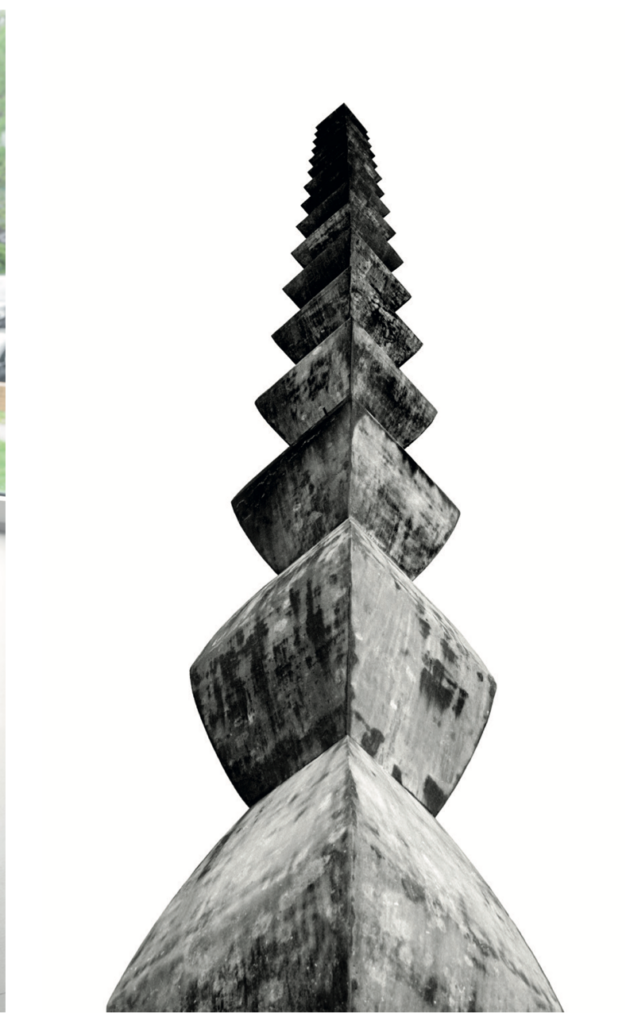
Different views of the Endless Column serve as a visual thread throughout the exhibition. Through Grigorescu’s lens, the sculpture becomes a study in rhythm, repetition, and ascent – a dynamic echoed in the works of Mircea Cantor, Mauro Mori, and Perrin & Perrin. Whether through the vertical thrust of Add Verticality to Your Seat (to Socrate), the architectural forms of Pylone and Piramidone, or the slender presence of L’Un et l’Autre, each work explores ideas of elevation, structure, and equilibrium in its own way.
Themes of memory, spirituality, and transformation run throughout Mircea Cantor’s practice, establishing a compelling dialogue with Brancusi’s legacy. Working with simple, immediately recognisable forms, Cantor develops a visual language in which symbols and poetic associations become means of addressing the tensions of contemporary life. His ability to distil complex ideas into concise forms recalls Brancusi’s own pursuit of essentiality, creating works that invite contemplation and reflection.
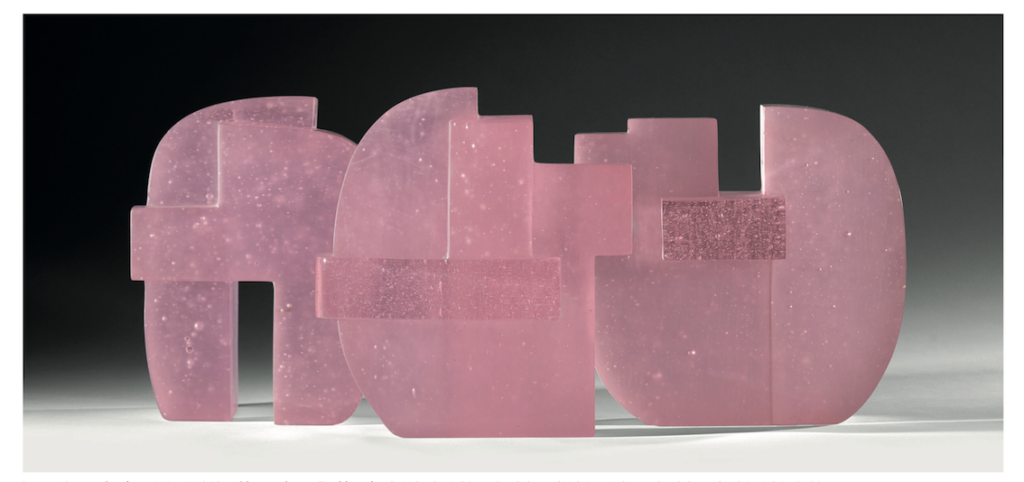
Grigorescu’s photograph of Mademoiselle Pogany, in which Brancusi reduces the face to a few essential lines, reveals form at its most distilled. This economy of means finds echoes in Gianluca Pacchioni’s Presence Vessel, whose mineral-like volumes seem charged with internal energy, and in Mauro Mori’s works such as Humm, where material is shaped until it acquires an almost autonomous presence.
Morgane Baroghel-Crucq’s Un chemin vers l’immuable II explores themes of connection and duality. Two suspended forms, linked by a delicate network of threads, suggest a relationship that is at once fragile and essential. The tension between separation and unity resonates with The Kiss, captured by Grigorescu in all its quiet intensity.
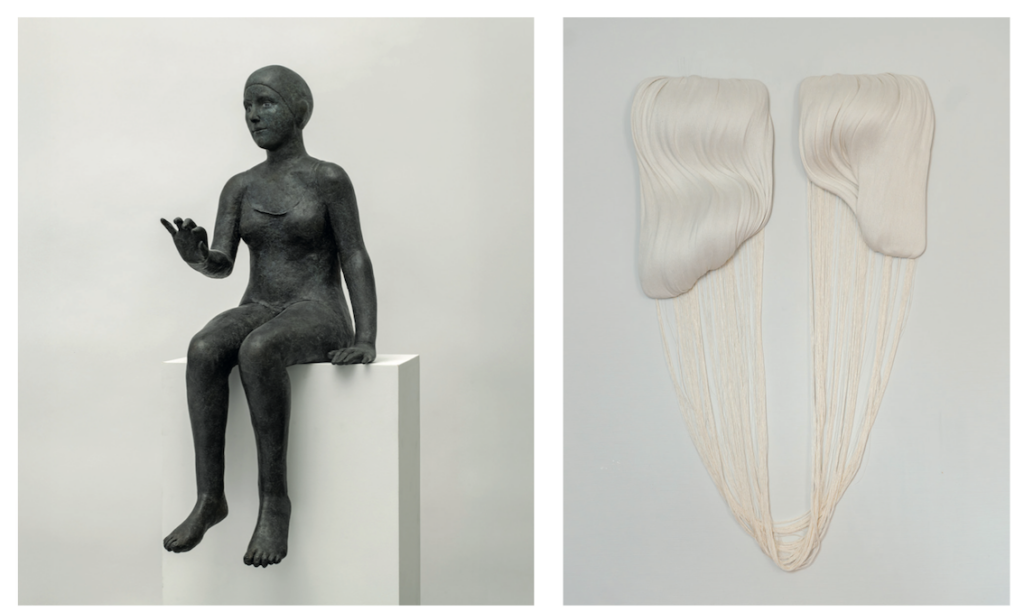
Finally, Agnès Baillon’s Le Geste introduces a rare human presence into the exhibition. Through its restrained posture and inward quality, the figure appears animated by the same sense of stillness that permeates Grigorescu’s photographs. Set against Brancusi’s pared-back volumes, it reintroduces the body without sacrificing emotional depth or formal economy.
With this exhibition, Galerie Negropontes continues its exploration of the relationship between Brancusi’s legacy and contemporary artistic practice. Grigorescu’s photographs do more than document the Romanian master’s sculptures; they sustain a particular way of seeing form, light, and material. Together, the works on view highlight the enduring relevance of Brancusi’s ideas and their continued resonance within contemporary sculpture.
Brancusi is at Galerie Negropontes in Paris from from 11 September to 19 December, 2026.
Find more information here.