

In this exclusive Culturalee Innovators interview, artist and digital art pioneer Kim Mannes- Abbott reflects on her ground-breaking career at the intersection of art, design, and technology. From discovering the revolutionary Quantel Video Paintbox in the early 1980s to shaping the visual identity of MTV Europe, Mannes-Abbott was at the forefront of a creative shift that redefined how images are created, conceived and interpreted.
Speaking with Culturalee Editor Lee Sharrock, Mannes-Abbott shares insights into the early days of digital experimentation, the challenges of working in a male-dominated industry, and how the limitations of early emerging technology helped forge a bold new visual language and aesthetic that continues to influence contemporary art today.
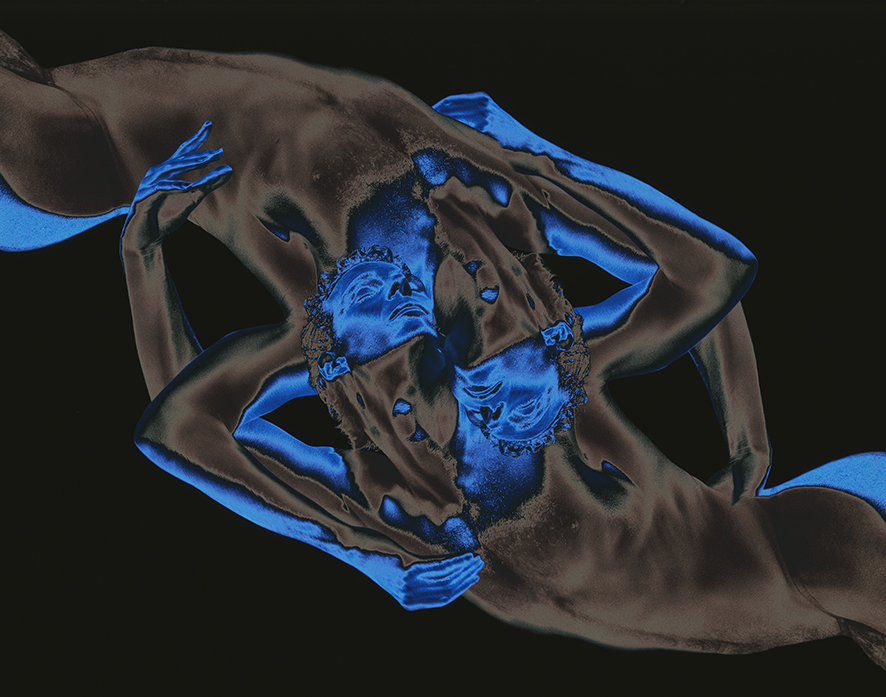
Blue Steel, a portrait of Marcus D’Amico (1965-2020) a film, TV and stage actor best known for his role as Michael “Mouse” Tolliver in the 1993 Tales of the City miniseries.
Let’s start with your background. You grew up surrounded by art before studying graphic design at Middlesex and becoming interested in digital art. Can you tell us about that journey and how you first encountered the Quantel Paintbox?
Yes, that’s true. I grew up in a very artistic and entrepreneurial family. My mother and stepfather were always inventing things. My mum was a painter, and she hand-painted film titles before digital typography existed. I remember watching her work, it was incredible! They built a successful international company together around her work, of which I was part from a very young age.
As a teenager, prior to studying and throughout art school, I worked in the studios of my first mentor, Dick Budden. We built sets for commercials, pop videos, and films, including
Absolute Beginners, and carved the huge polystyrene hands for the comedian Kenny Everett. So the creative field was a natural step for me.
I chose to study graphic design, but at the time it felt somewhat restrictive: overly functional and constrained in scope. I was drawn towards a more experimental and exploratory approach, incorporating photography and drawing into my work and deliberately pushing beyond the brief. Everything changed when I first encountered the Quantel Video Paintbox in 1984 at art school. It was revolutionary. There was nothing like it.
Quantel, a British company, released the first Paintbox in 1981. At a unit price of USD 250,000, equivalent to approximately USD 900,000 today, it was only affordable for major broadcasters. Thankfully, Quantel had the foresight to place several machines to be shared between a number of art schools across the UK, and mine was one of them.
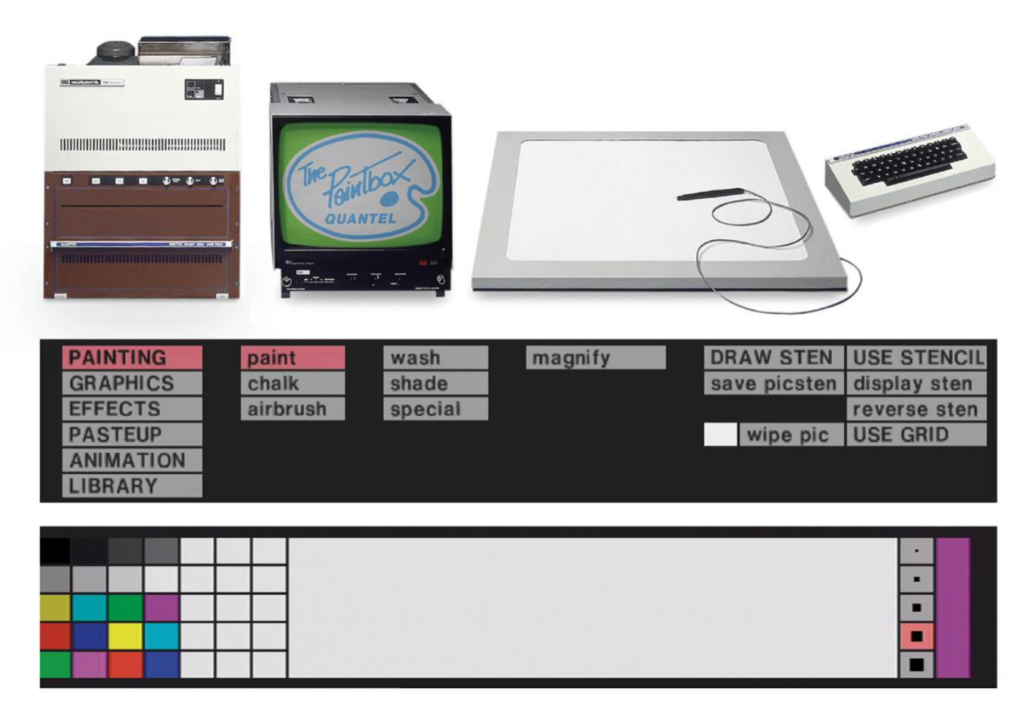
Left to right: Fujitsu drive & Paintbox, Broadcast TV monitor, digitizer tablet and pressure sensitive pen, keyboard, Paintbox menus.
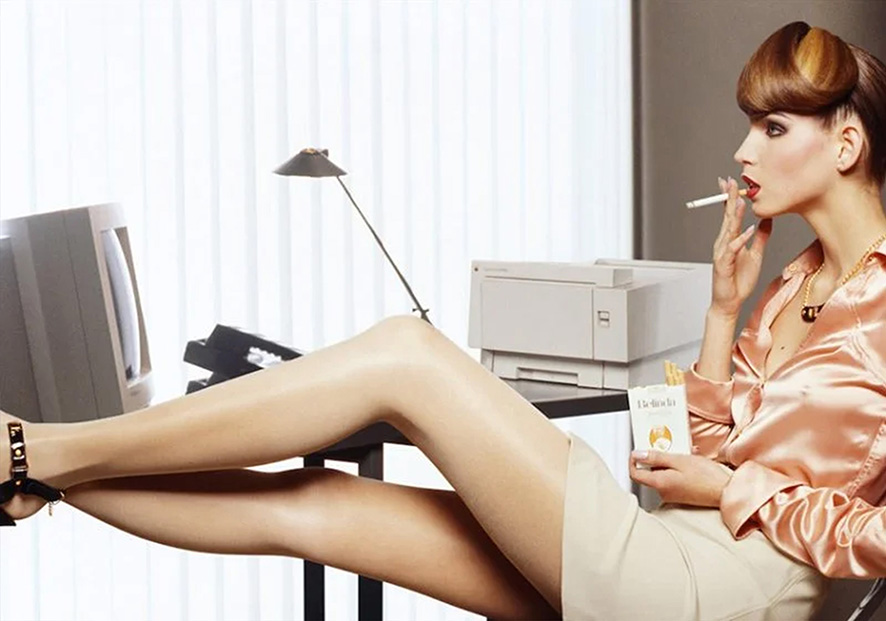
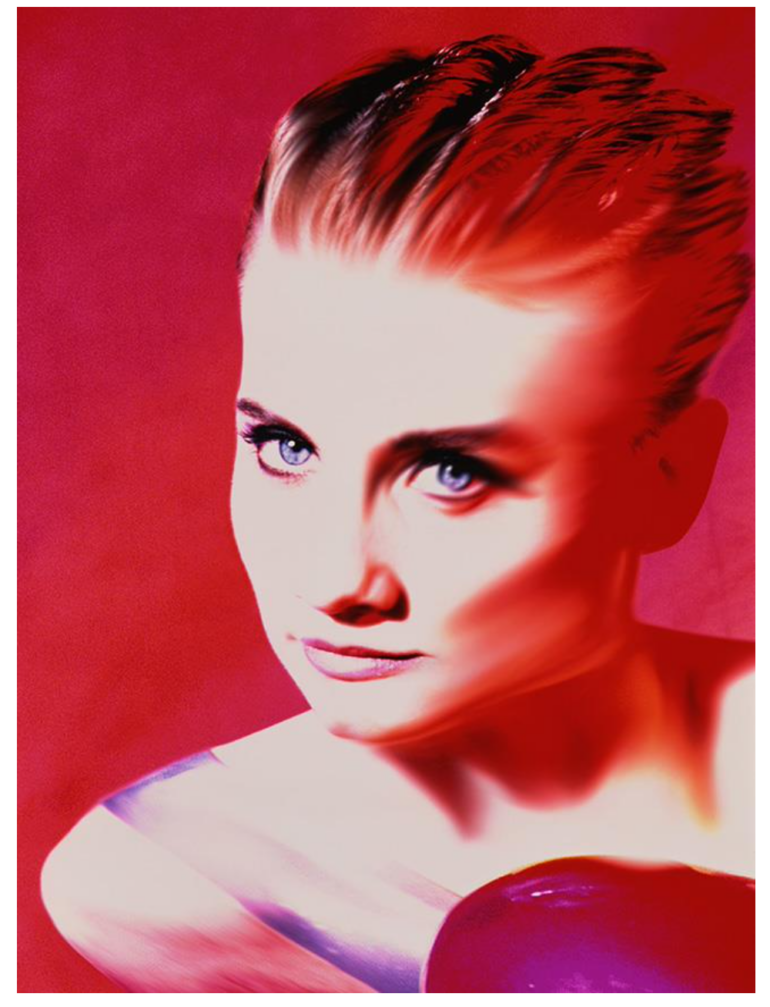
Photography: Inez & Vinoodh / Image manipulation: Kim Mannes-Abbott on Quantel Graphic Paintbox at Colourspace, London
What was the Quantel Paintbox like to use?
Huge. The setup was extraordinary. It consisted of a tablet, a pressure-sensitive pen, a small screen, and a hard drive that required cooling units in another room.
The Paintbox had an incredibly intuitive interface. It felt like working in the future. Many were intimidated by it, as computers were not yet seen as creative tools. There was a live input camera attached, which I used to capture frames of my drawings and photographic experiments from the darkroom. I then combined everything in the Paintbox, creating a new kind of digital media.
I ended up spending almost all my time on the Paintbox. It opened up a completely new visual language. You could construct images in ways that simply were not possible before. It was early multimedia, really. Like the other lucky students, we were “Paintboxing” and creating a new medium that was later referred to as multimedia and Photoshopping. This was five years before Photoshop 1.0 was released.
And you used it for your degree show?
Next to all the required coursework, I produced a huge body of additional digital Paintbox work that I wanted to show, but there was resistance. The tutors did not quite see it as valid. In the end, I had to take it down and present more traditional work. Ironically, I was one of the few who sold both traditional work and digital Paintbox art prints, 0.8 MB per image, and immediately got offered work at the graduation show. I started freelancing on the Paintbox, paid around USD 500 per hour in London at the time, while also selling printed art pieces. That early digital work, despite being technically limited, found an audience.
That’s an incredible start. And it led quite quickly to major opportunities, didn’t it?
Yes, it did. I won a competition at art school, which led to my work being shown at the ICA, the Institute of Contemporary Arts in 1986 with a groundbreaking series that fused digital and mixed media. Inspired by that work, I was invited to work on the launch of MTV Europe in 1987.
I worked on the visual identity, including logos, bumpers, animations, and the overall aesthetic. It was not just me, of course, but it was thrilling to develop that iconic visual language. MTV was defining a visual culture, and the Paintbox was central to that.
At the same time, I was also commissioned to digitise The Economist. That was fascinating because moving from analogue processes to digital production changed the whole dynamic. Suddenly, the designer had more control.
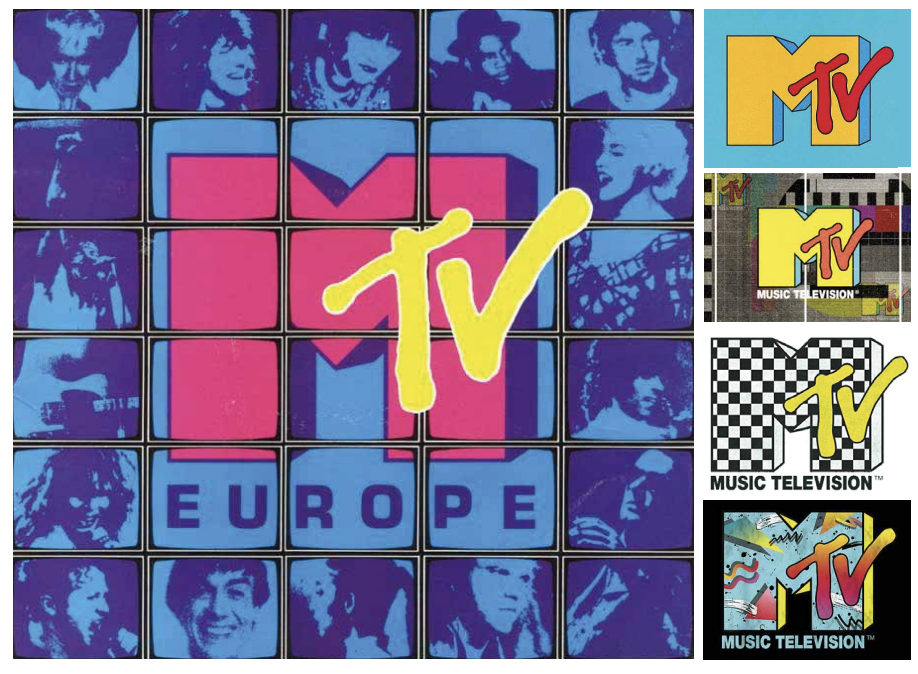
All digital artwork displayed is the intellectual property of Kim Mannes-Abbott and /or the respective Paintbox artists and photographers.
Did you encounter any barriers at that stage, particularly as a woman in a male- dominated industry?
The barriers I encountered back then, and even today, were more about the disbelief that it was possible to play such a significant role, particularly as a young woman. Thankfully, the first MTV VJs, who I am still in contact with, can endorse this.
In the late 1980s, I joined Quantel, supporting the R&D department with interface development and travelling the globe to showcase the Paintbox, Graphic Paintbox, Carousel, and Henry on a creative level in what was referred to as a demonstrator role. This was a constant challenge. I was in my early twenties, female, with a company credit card, and often turning up in the company’s private jet. Occasionally I was accompanied by a sales representative or engineer who was always assumed to be the working husband!
More broadly, it has been a 40-year digital career as a woman, and that does come with its challenges.
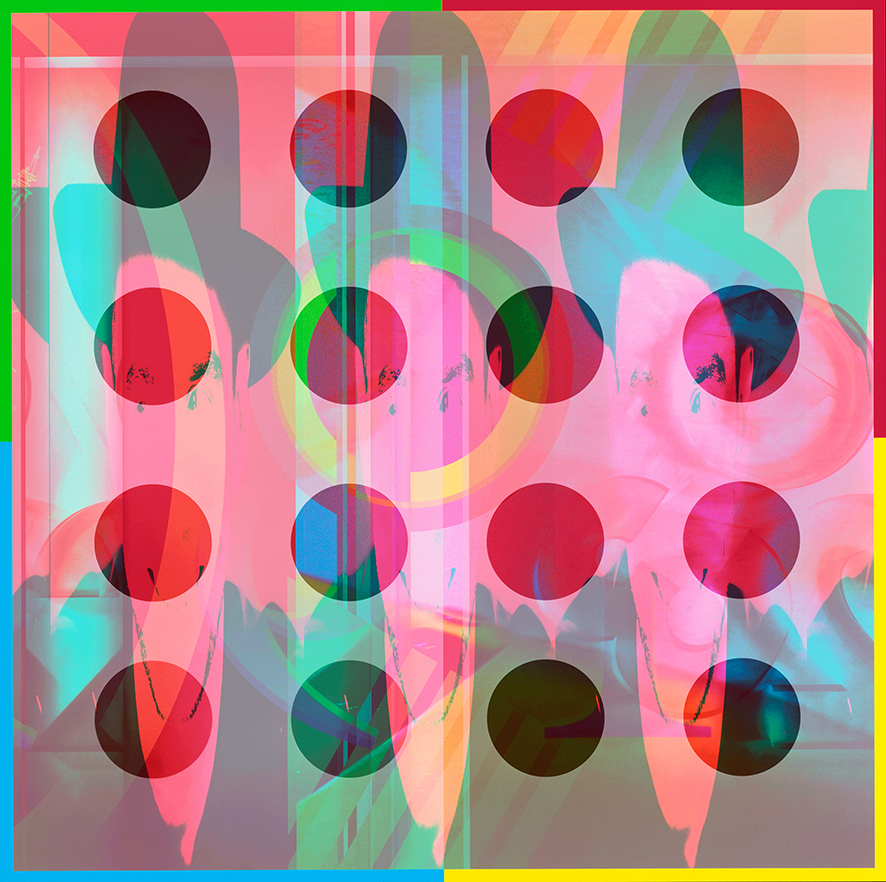
Artist: Kim Mannes-Abbott / Photography: Steve Pyke.
Your work seems to sit at the intersection of art, design, and technology. There has also been a renewed interest in the Paintbox in recent years, hasn’t there?
Yes, this coincided with the 50th anniversary of Quantel, and people began rediscovering that early digital aesthetic, starting with the Computer Arts Society and the British Computer Society in the UK in 2023. I was curated in exhibitions by Adrian Wilson alongside the likes of April Greiman, David Hockney, Richard Hamilton, and Keith Haring, and I spoke at the BCS about my career and the continuing thread of the Paintbox.
Thanks to the Paintbox world tour by ArtMeta and Tezos, which paid homage to the trailblazing heritage of the Paintbox, this led to exhibitions at major institutions and a touring show that started in Miami and travelled internationally, culminating in the Paintboxed! exhibition at on the Digital Mile at Art Basel in 2025. It brought together pioneering artists who had used the Paintbox, as well as younger artists invited to experiment with it today.
What struck me was how contemporary that early work still feels. One of the pieces I exhibited, “Blue Steel” (1992), in the Basel show was acquired by a traditional collector.
There was something about the limitations of the Paintbox technology that created a very distinctive visual language that placed it in time. However, these pieces have remained seemingly contemporary within the body of work I have continued to create to this day.
The idea that limitations can actually drive creativity is really interesting, don’t you think?
Absolutely. The Paintbox had no undo function, for example. You had to think carefully before making a mark. That required a different kind of discipline and skill. It was not about endless revision. It was all about intention.
You also collaborated with artists Inez van Lamsweerde and Vinoodh Matadin, who recently had a major retrospective exhibition at the Kunstmuseum in Den Haag, quite early on. Can you tell us about that?
Yes, that was a really exciting period. At the time, much of the Paintbox work was quite commercial, including advertising and retouching. But Inez and Vinoodh came in with a completely different vision. They wanted to push the medium into something more conceptual and artistic.
I helped facilitate their work by arranging sponsored access to the Paintbox and working closely with them on elevating their creative thinking in production. What they created was extraordinary. The resulting images were far ahead of their time. I am proud to see so much of the groundbreaking early work we created in the early 1990s on the Quantel Graphic Paintbox featured throughout their 40-year retrospective show, particularly the two series For Your Pleasure and Global Warming TV, both published in The Face in 1994. These works pioneered a disruptive hyper-realistic TV style, combining fashion photography with suburban staged environments to create a surreal and sometimes unsettling aesthetic.
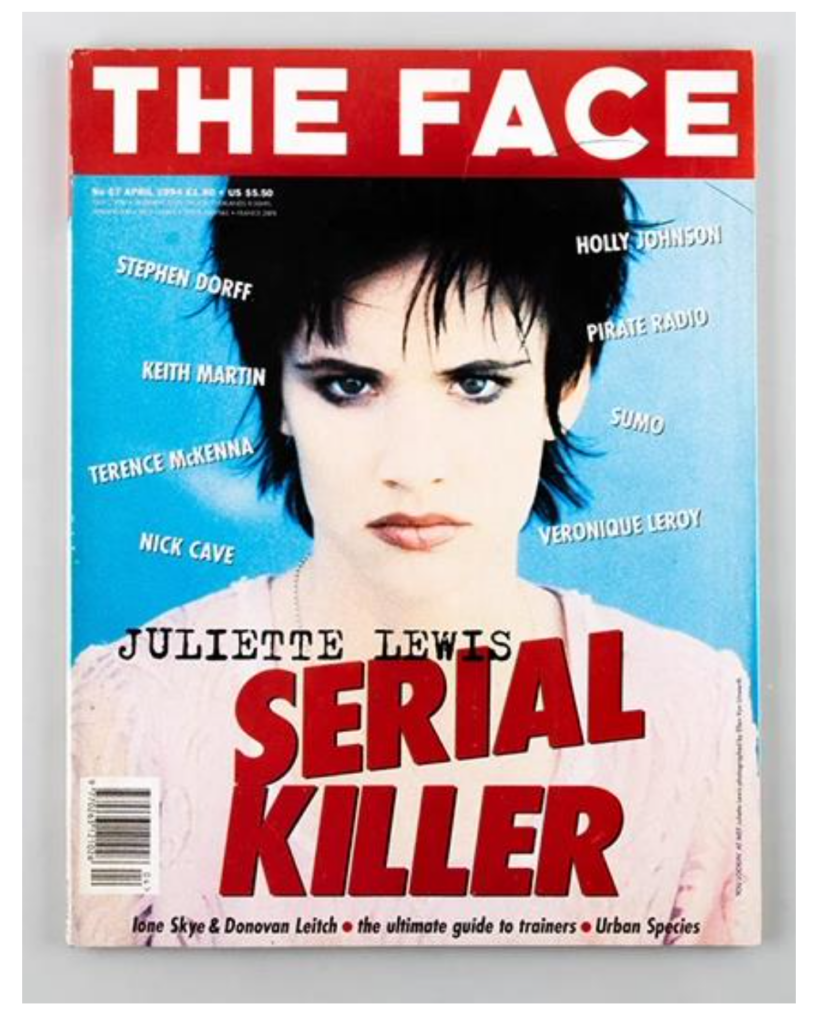
The cover of the issue in which the “For your pleasure series” was published
The work that you collaborated on with Inez & Vinoodh has really stood the test of time, hasn’t it?
It has. Much of the work has become iconic around the world, particularly the image below titled “Well basically basuco is coke mixed with kerosine.” These works resonate just as strongly now, perhaps even more so.
At the time, though, it was time-consuming work. You could not simply Photoshop something in seconds, use undo, or filters. Compositing images by combining elements and building a final picture could take days. It was incredibly labour-intensive, but also very deliberate.
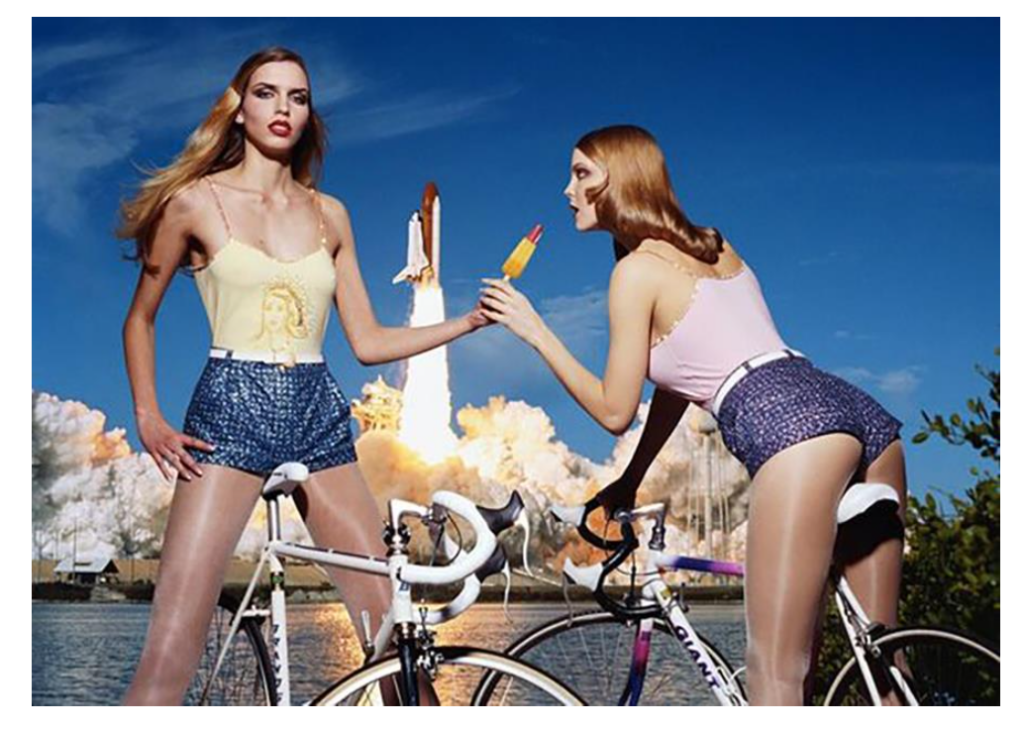
Photography: Inez & Vinoodh / Image manipulation: Kim Mannes-Abbott on Quantel Graphic Paintbox at Colourspace, London
Looking back, do you see that period as the beginning of digital art as we understand it today?
Digital art began back in the 1960s, of course, but this was the start of something fundamental, a shift in how images are created, conceived and interpreted. The approachable interface offered the ability to paint in real time with 16 million colours, combining photography, typography and layered images. We were essentially inventing a new visual language. While the tools have evolved, many of the ideas we were exploring then, about manipulation, identity, and digital aesthetics, are still central today.
You are also a multi-award-winning Creative Director, Designer, and founder of KM/A Liquid Design. How does this relate to where your work is today?
I run a successful “Liquid” company, KM/A Liquid Design, where I curate talent for each project, whether local or on a global platform, merging branding, storytelling, and design. Alongside this, I continue to develop my own digital art, visual storytelling built in layers, presented as a singular, non-linear story that I refer to as An Ordinary Life. I currently have a working Paintbox in my Amsterdam studio linked to recent technology where I am creating new work.
Visit: kimmannesabbott.com
Kim is returning to exhibit at the DIGITALISM #3 exhibition at the Saatchi Gallery in London during the British Art Fair.
24-27 September 2026 / Saatchi Gallery, London / Top floor / Booth D3