

From pioneering women of Abstract Expressionism to the radical modernism of Morocco, an Ancient Egyptian head of the lion-headed goddess Sekhmet and a cosmic Buddha, Frieze Masters 2026 offers a compelling journey through overlooked histories, rediscovered artists and influential figures who reshaped twentieth-century art.
Culturalee Editor Lee Sharrock selects six standout presentations to discover at this year’s fair, from Anna Zemánková’s fantastical botanical drawings to Alice Neel’s exploration of queer identity and the evolution of Mohamed Melehi’s iconic wave motif.
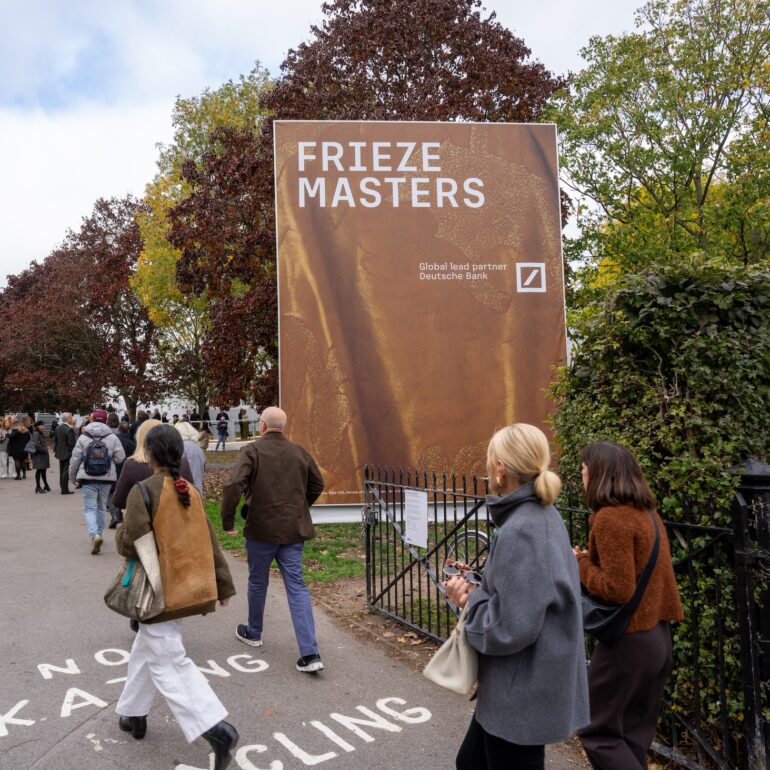
Frieze Masters runs from 14 to 18 October at The Regent’s Park, London. Find more information here.
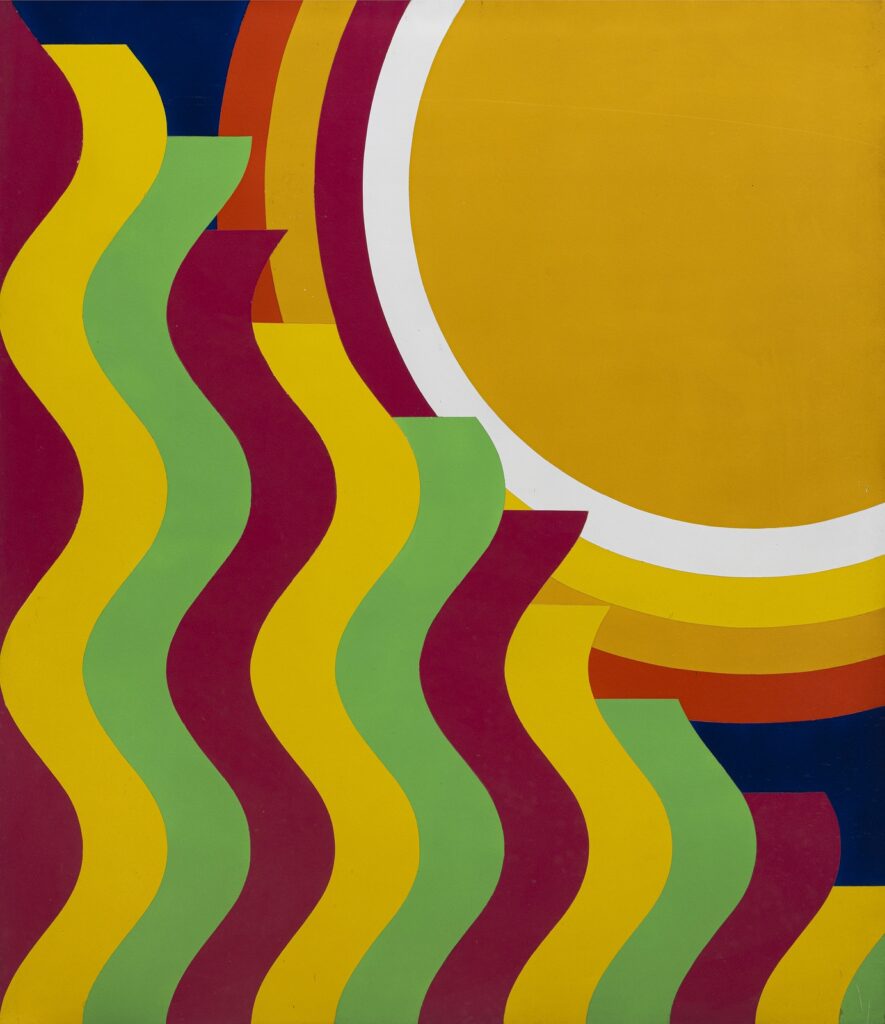
Mohamed Melehi: Wave Forms at Loft Art Gallery (Booth S02)
Moroccan modernist Mohamed Melehi (1936–2020) takes centre stage at Loft Art Gallery with Wave Forms, a solo presentation in Frieze Masters’ Spotlight section, curated by Devika Singh and Sofia Gotti.
A defining figure of Moroccan modernism and a leading force behind the Casablanca Art School, Melehi developed a distinctive visual language that brought geometric abstraction into dialogue with Moroccan cultural traditions, architecture and design. His iconic wave motif became a defining element of his practice, transforming a deceptively simple form into a dynamic exploration of colour, rhythm and movement.
Bringing together paintings from the 1960s and 1970s through to 1980, the presentation traces the development of this signature motif across two decades. The works reveal the evolution of an artist whose practice helped establish a new visual vocabulary for Moroccan modernism while engaging with wider international conversations about postwar abstraction.
Loft Art Gallery’s presentation also highlights the importance of revisiting the histories of modern art through a global perspective. Melehi’s work challenges narratives that position European and American abstraction as the central reference points of postwar art, demonstrating instead the innovation and international significance of North African modernism.
Women of the 8th Street Club at Berry Campbell (Booth A09)
At Frieze Masters 2026, New York gallery Berry Campbell shines a spotlight on the women artists who helped shape Abstract Expressionism through their involvement with “The Club”, the influential gathering place for artists at the centre of postwar New York’s avant-garde.
Women of the 8th Street Club foregrounds Elaine de Kooning, Perle Fine and Mercedes Matter, the only three women admitted as voting members, alongside fellow participants Mary Abbott, Alice Baber, Helen Frankenthaler, Grace Hartigan, Joan Mitchell, Ethel Schwabacher and Yvonne Thomas.
The presentation reflects gallery co-founders Christine Berry and Martha Campbell’s ongoing commitment to reassessing the contributions of twentieth-century women artists and securing their rightful place in the art-historical canon.
Highlights include Mercedes Matter’s Untitled (c. 1948), an early abstraction exploring gesture, structure and space, priced at $750,000; Elaine de Kooning’s Robert Mallary (1964), a vibrant portrait of the sculptor that demonstrates her distinctive approach to gestural figuration, priced at $330,000; and Alice Baber’s The Flag of the Jaguar Turns to the Mountain (1981), a luminous exploration of colour and light, priced at $165,000.
Beyond the fair, Berry Campbell will open a landmark solo exhibition dedicated to Elaine de Kooning on 29 October, her first major solo presentation at the gallery in a decade. Together, these projects offer an opportunity to reconsider the women whose contributions were integral to the development of American abstraction.
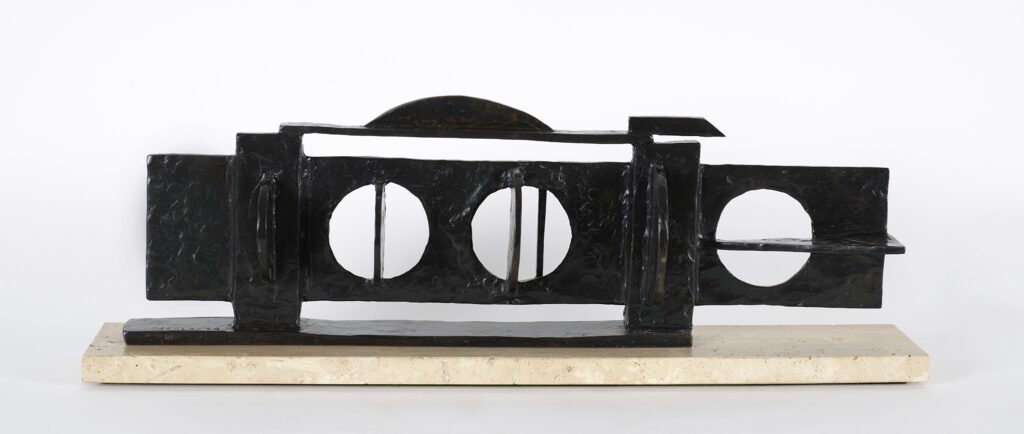
Courtesy Berry Campbell, New York
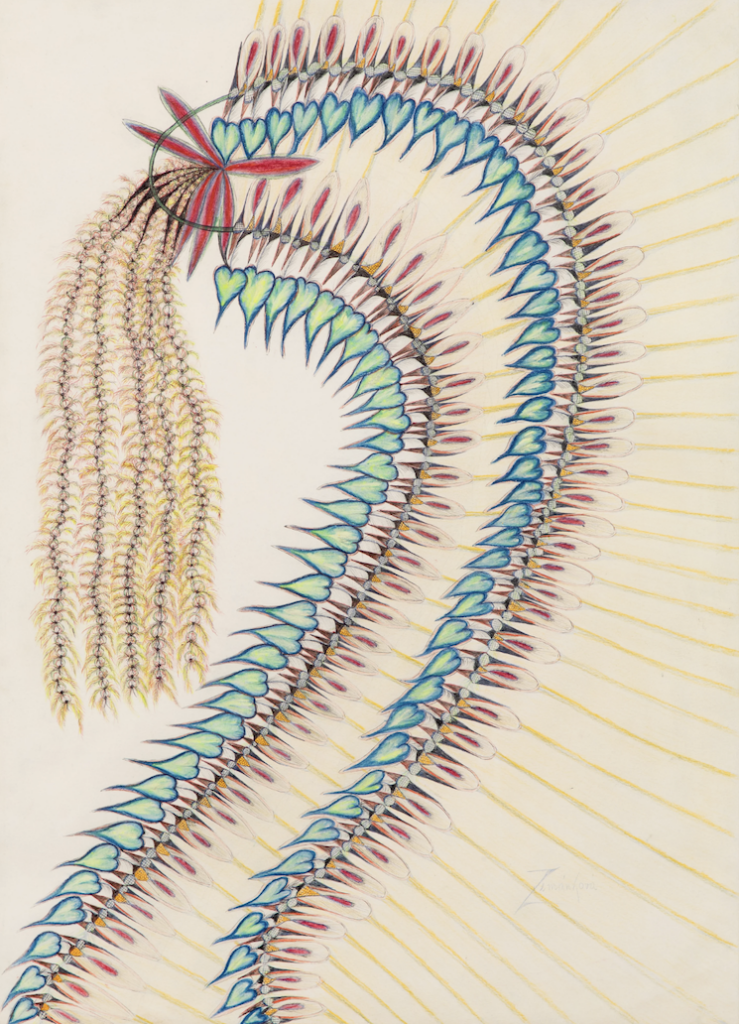
Anna Zemánková at The Gallery of Everything (Booth S16)
The Gallery of Everything presents a solo exhibition of Czech artist Anna Zemánková (1908–1986) in Frieze Masters’ Spotlight section, bringing together approximately 25 works that reveal the extraordinary breadth of her imaginative practice.
Spanning monumental pastel drawings from the 1960s, rarely seen embroidered works and intimate postcard-sized compositions, the presentation celebrates an artist whose fantastical botanical and biomorphic forms occupy a singular position in twentieth-century art.
Zemánková began making art in her fifties, often working in the early hours of the morning. Invented flowers, fantastical organisms and intricate textile-based works emerged from a deeply personal visual language that resists easy categorisation. Moving between drawing, abstraction, surrealism and what has traditionally been described as outsider art, her work challenges conventional distinctions between artistic disciplines and established narratives of modernism.
Her practice has attracted significant international institutional attention, including inclusion in The Encyclopedic Palace, curated by Massimiliano Gioni for the 55th Venice Biennale in 2013.
At Frieze Masters, the breadth of the presentation offers a rare opportunity to encounter Zemánková’s work beyond the familiar categories through which artists working outside mainstream art institutions have often been viewed.
Alice Neel: Queering Modernism at Victoria Miro and David Zwirner (Booth D09)
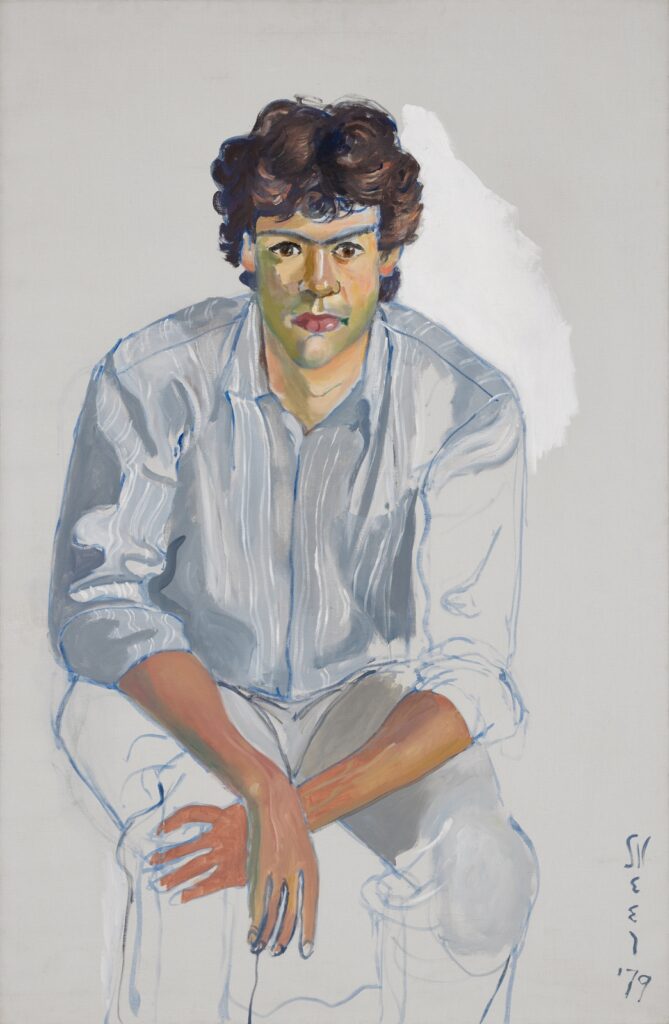
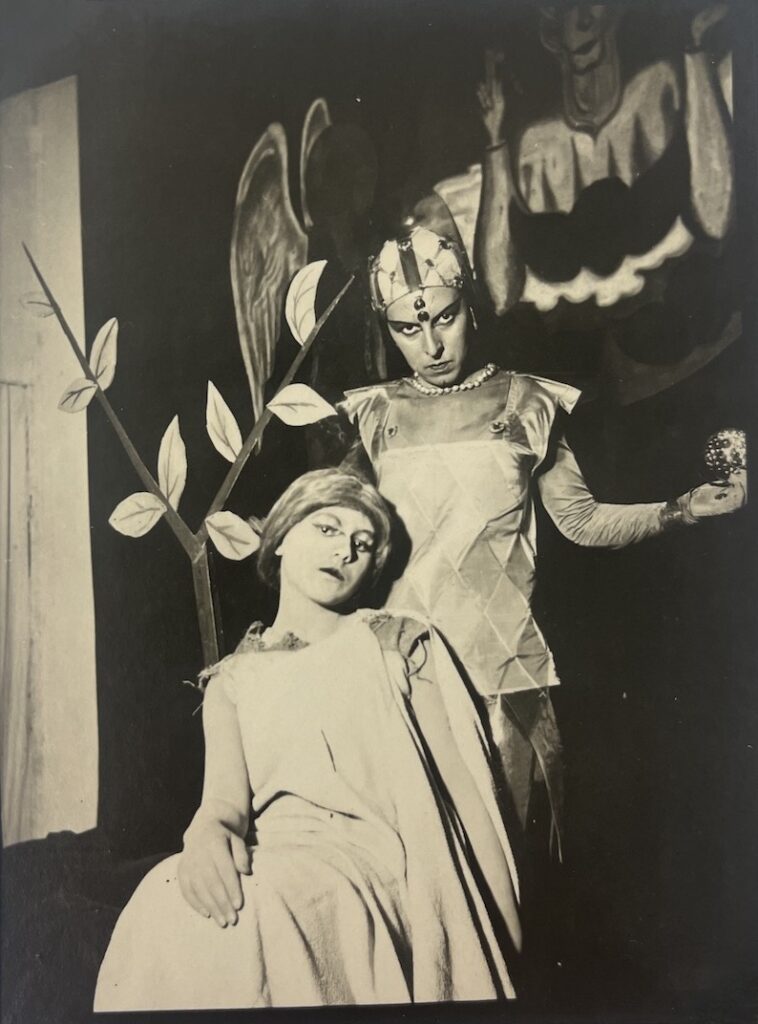
Victoria Miro and David Zwirner collaborate on Alice Neel: Queering Modernism, curated by Anke Kempkes as part of Frieze Masters’ curatorial initiative Queering Modernism: Visual Languages of the 20th Century.
The wider initiative explores how artists engaged with queer experience and represented LGBTQI+ subjects throughout the twentieth century, bringing alternative perspectives to the histories of modern art.
Neel (1900–1984) is celebrated for her psychologically incisive portraits, which capture the complexities of identity, vulnerability and power. Her willingness to depict people beyond conventional ideals of beauty and respectability made her an important chronicler of marginalised communities and the social realities of her time.
The presentation places her work within a broader reconsideration of modernism, foregrounding the ways portraiture can challenge dominant social conventions and offer a more expansive understanding of identity. By revisiting Neel through a queer art-historical lens, the exhibition contributes to an ongoing reassessment of the people, experiences and visual languages that shaped twentieth-century art.
Monumental Ancient Egyptian Head of Goddess Sekhmet at Art Ancient
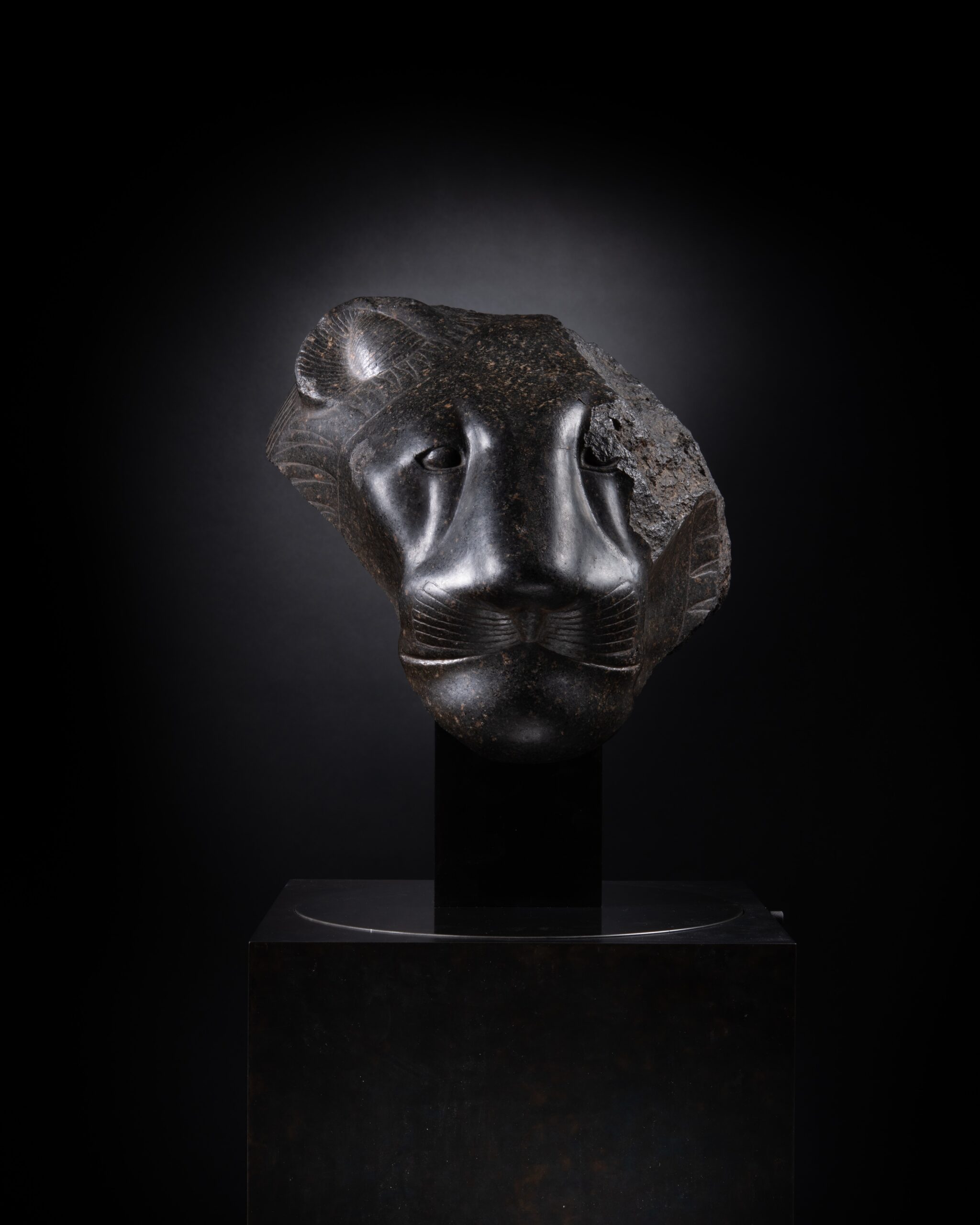
The centrepiece of ArtAncient‘s presentation is a monumental head of the lion-headed goddess Sekhmet, created for Pharaoh Amenhotep III’s temple at Kom el-Hettan around 3,400 years ago. One of around 730 statues made for the king’s jubilee, it demonstrates the extraordinary scale and technical achievements of ancient Egypt’s Golden Age. Traces of red pigment have survived in the eyes, hinting at Sekhmet’s fearsome power as a warrior goddess. After over a century in the same French family’s collection, the head resurfaced in 2025 thanks to the gallery’s research into the family’s archives. The head was traced back to an acquisition in Paris in 1923, establishing an unusually well-documented ownership history. The sculpture is now being incorporated into the Vatican Museums’ international Sekhmet Project, the first comprehensive study of the surviving collection.
Cosmic Buddha at Carlton Rochell Asian Art
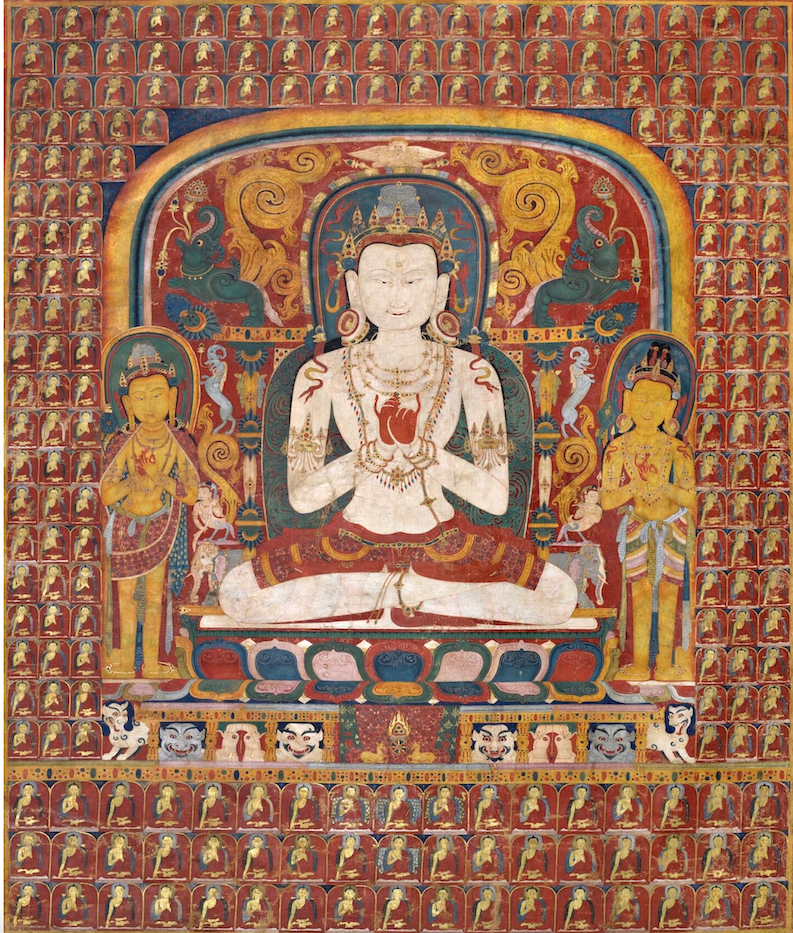
Carlton Rochelle Asian Art are presenting sculptures and paintings that reflect the diversity of artistic traditions across South and South East Asia. From Gandhara sculptures of the Buddha to finely detailed Himalayan paintings and Indian miniatures, the selection traces the movement of ideas and materials across centuries and cultures. A major work on show is a Tibetan Thangka of Vairocana painting from the 14th century, which depicts a Vairocana – a cosmic Buddha from Mahayana and Vajrayana Buddhism – seated beneath a radiant arch and surrounded by hundreds of smaller Buddhas. The work belongs to a tradition of early Drigung Kagyu paintings, in which a single enlarged figure presides over a vast spiritual assembly.