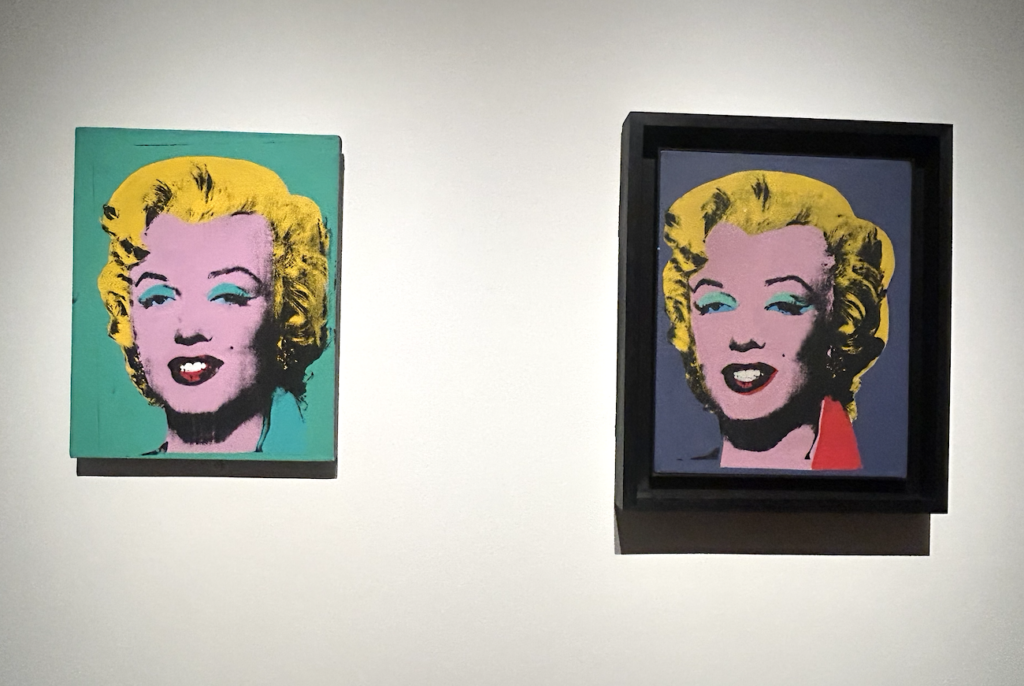


Opening Marilyn Monroe: A Portrait, the National Portrait Gallery’s major exhibition commemorating the centenary of the Hollywood icon’s birth, is Andy Warhol’s dazzling Nine Multicoloured Marilyns (Reversal Series) (1979–86). Warhol’s endlessly reproduced screenprints remain among the defining images of Monroe, first conceived shortly after her death in 1962 using a publicity still from the 1953 film Niagara. A gallery label quotes the artist: “When Marilyn Monroe happened to die that month, I got the idea to make screens of her beautiful face – the first ‘Marilyns’.”
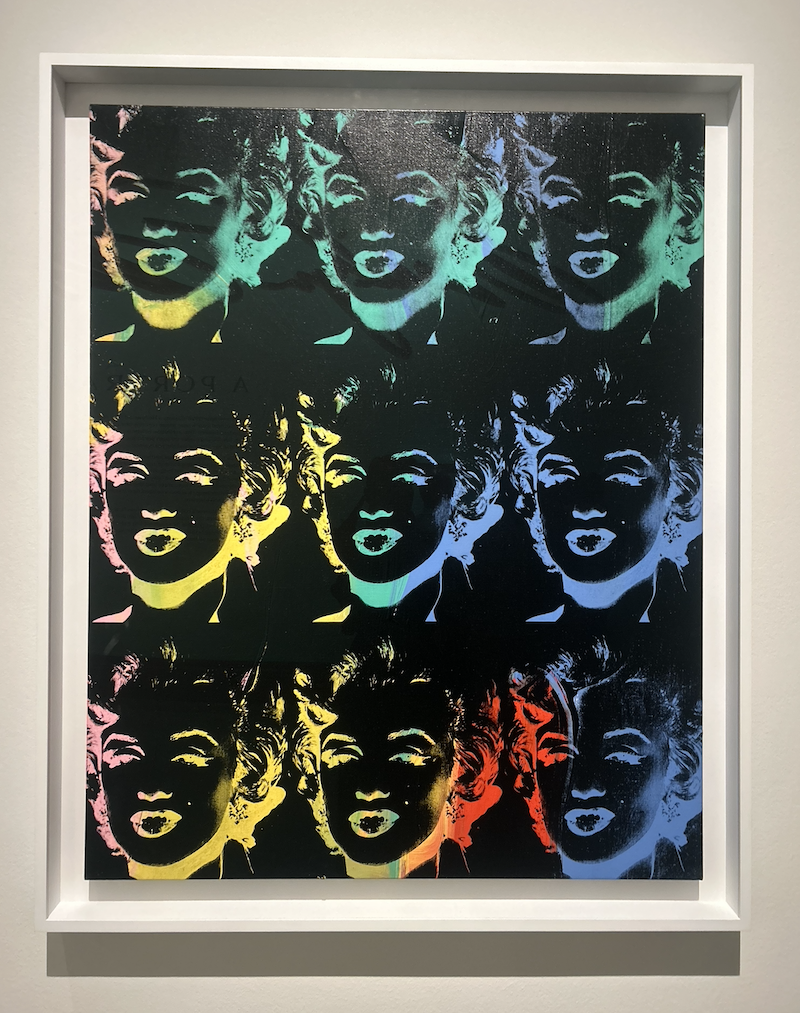
Warhol immortalised the manufactured movie star: crimson lips, luminous blonde curls and impossibly symmetrical features. Yet it is British Pop artist Pauline Boty’s monumental Colour Her Gone (1962) that provides the exhibition’s emotional centre. Borrowing its title from a lyric by Fred Ebb, Boty’s portrait captures Monroe not as a glamorous sex symbol but as a figure suspended between innocence and tragedy.
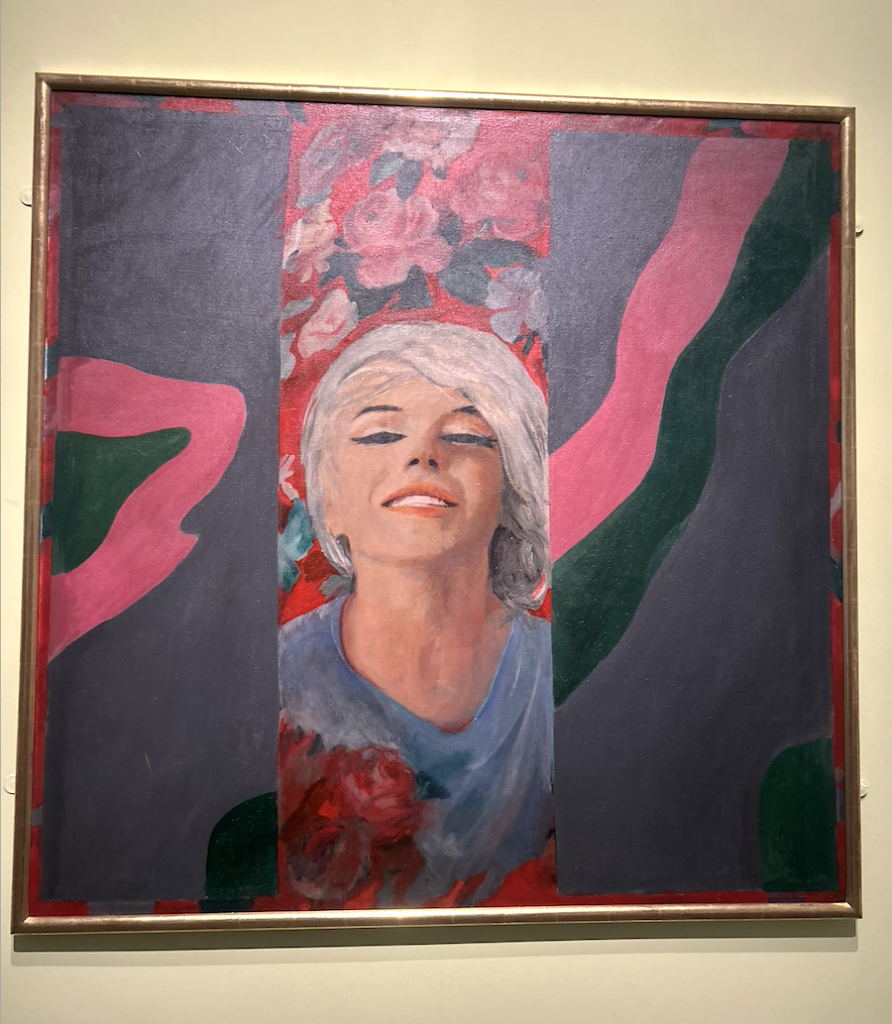
Knowing Boty’s own story lends the painting additional poignancy. The artist died of cancer in 1966 at just 28, only months after giving birth, having refused treatment during pregnancy. Her untimely death echoes Monroe’s own, creating an unexpected dialogue between two women whose brilliance was only fully recognised after their lives were cut tragically short.
Positioned beside the painting is the TOWN magazine cover that inspired it. Boty surrounds Monroe’s face with flowers, transforming her into an almost Pre-Raphaelite heroine. The floral border suggests the fleeting nature of beauty, while Monroe herself recalls Ophelia, forever poised between youth and mortality.
That tension between dazzling celebrity and profound vulnerability defines the exhibition. Monroe died in Los Angeles in 1962 at just 36, leaving behind an extraordinary cinematic legacy and decades of speculation surrounding her death. Throughout the galleries, visitors are confronted by the paradox at the heart of her enduring appeal: an image of effortless perfection forever shadowed by exploitation, loneliness and loss.
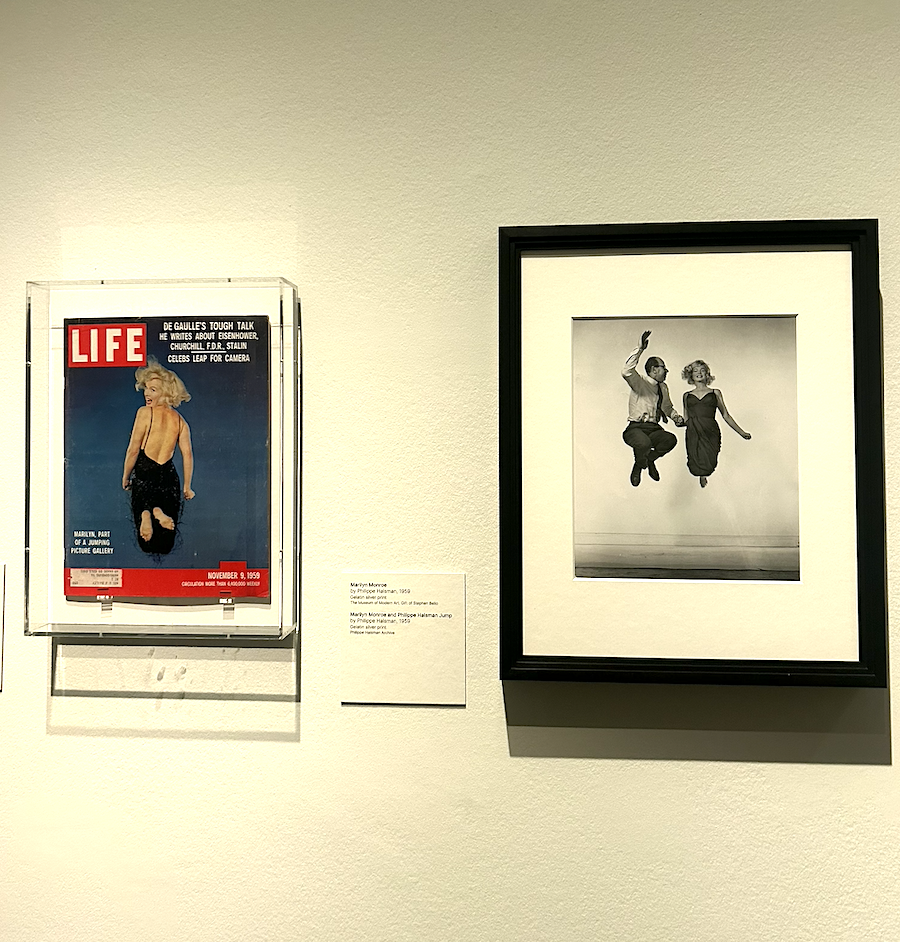
One of the exhibition’s highlights is a joyful projection of Philippe Halsman’s celebrated 1959 “jump” photographs, created during their final collaboration. Halsman famously observed that Monroe “knew how to woo the lens better than any actress I ever photographed,” and the images radiate an infectious spontaneity rarely associated with the carefully managed Hollywood icon.
Nearby, Halsman’s surreal collaboration with Salvador Dalí merges Monroe’s face with Chairman Mao Zedong. Even within this deliberately unsettling photomontage, Monroe’s extraordinary beauty remains unmistakable, demonstrating the extraordinary visual power of her image regardless of context.
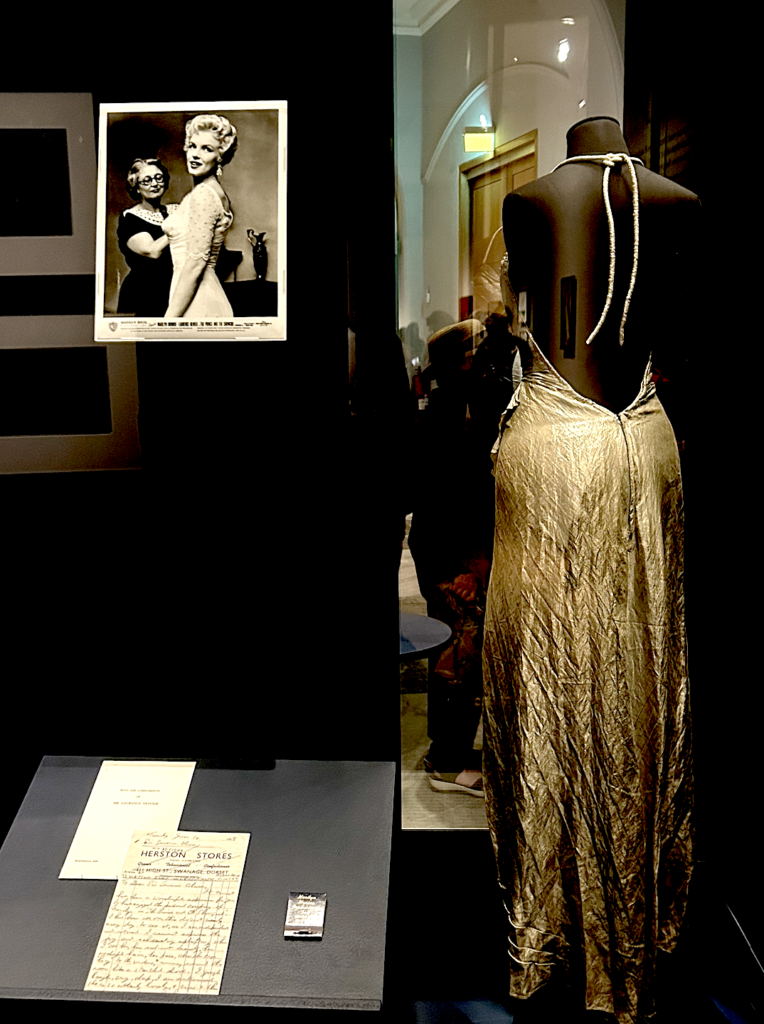
A corridor lined with photographs by Eve Arnold, Cecil Beaton and Milton H. Greene charts Monroe’s transformation from rising actress to international phenomenon. Each photographer discovers a different Marilyn, yet every portrait is animated by the same magnetic relationship with the camera. That charisma is reinforced by projected clips from Some Like It Hot and Gentlemen Prefer Blondes, while Monroe’s shimmering silver costume from the latter film reminds visitors that cinema itself helped construct one of the twentieth century’s most enduring myths.
Perhaps the exhibition’s most moving photographs are those by French photographer André de Dienes, who captured Monroe before global fame transformed her life. Wandering barefoot on a Malibu beach, makeup-free with windblown hair, she appears remarkably natural and carefree. De Dienes encouraged her to imagine different emotional states, culminating in the haunting image of Monroe hiding beneath a blanket when asked to picture death.
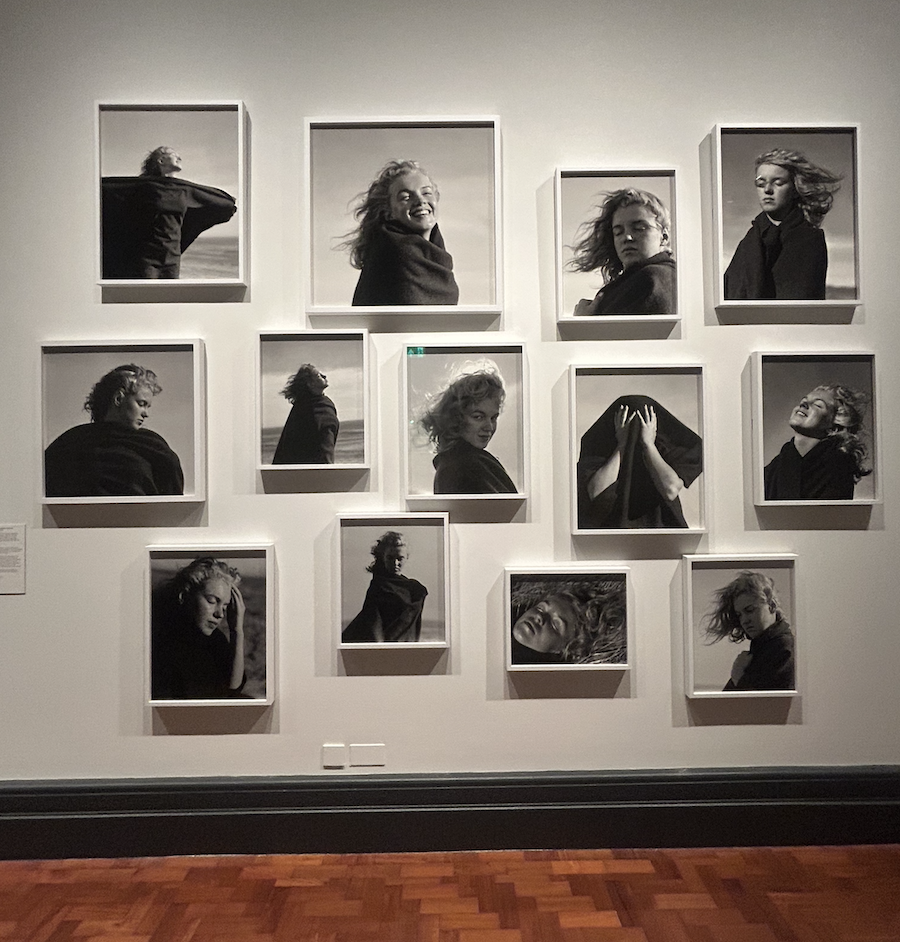
“An entire spectrum of life, depicting happiness, pensiveness, introspection, serenity, sadness, torment, distress – I even asked her to show me what ‘death’ looked like in her imagination. She threw a blanket over her head; that was how she interpreted it.” André de Dienes
The juxtaposition of these youthful photographs with Monroe’s early nude pin-up images is particularly affecting. Innocence quickly gives way to commodification, subtly illustrating how Hollywood’s star-making machinery transformed Norma Jeane Baker into Marilyn Monroe, often at immense personal cost.
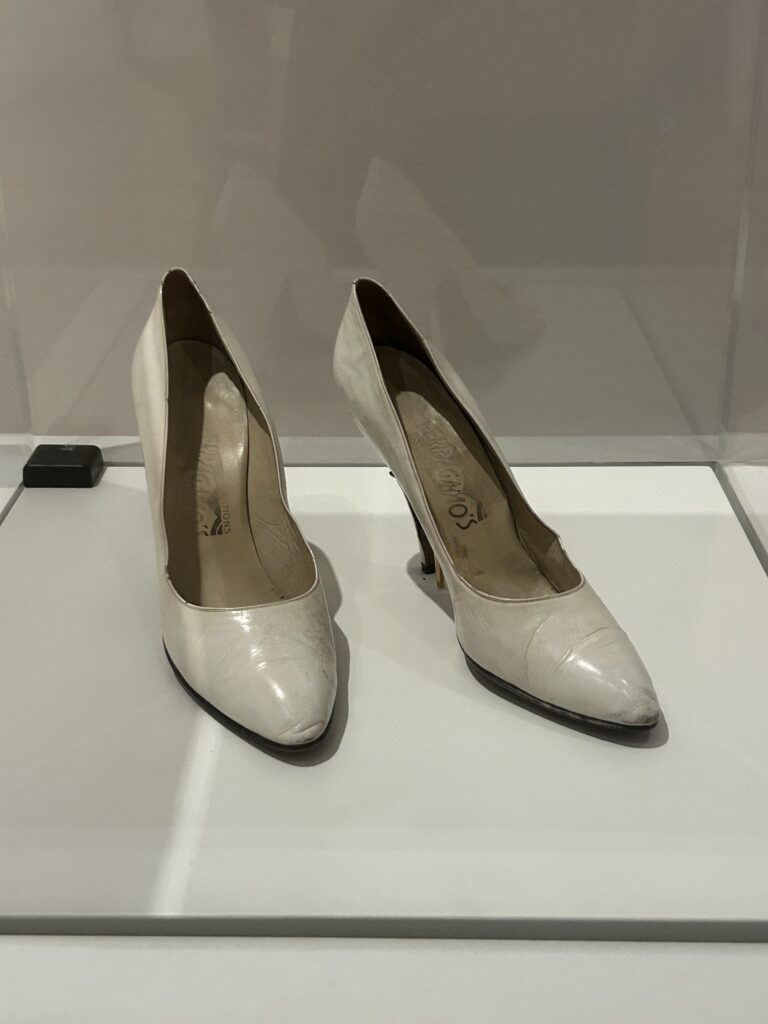
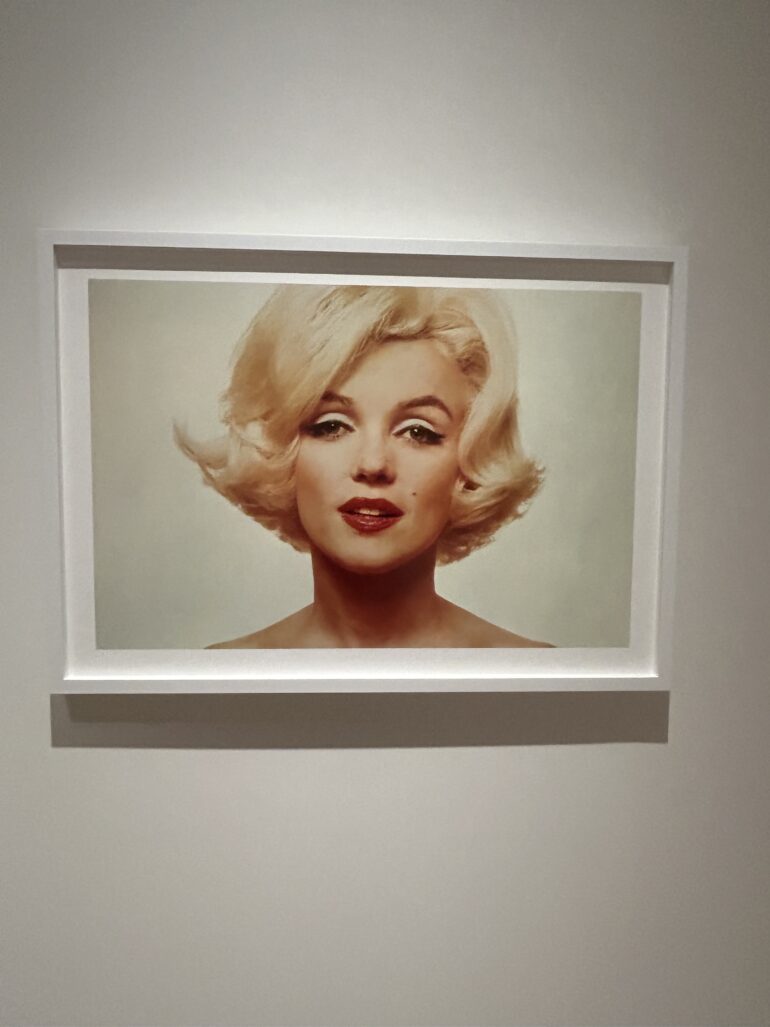
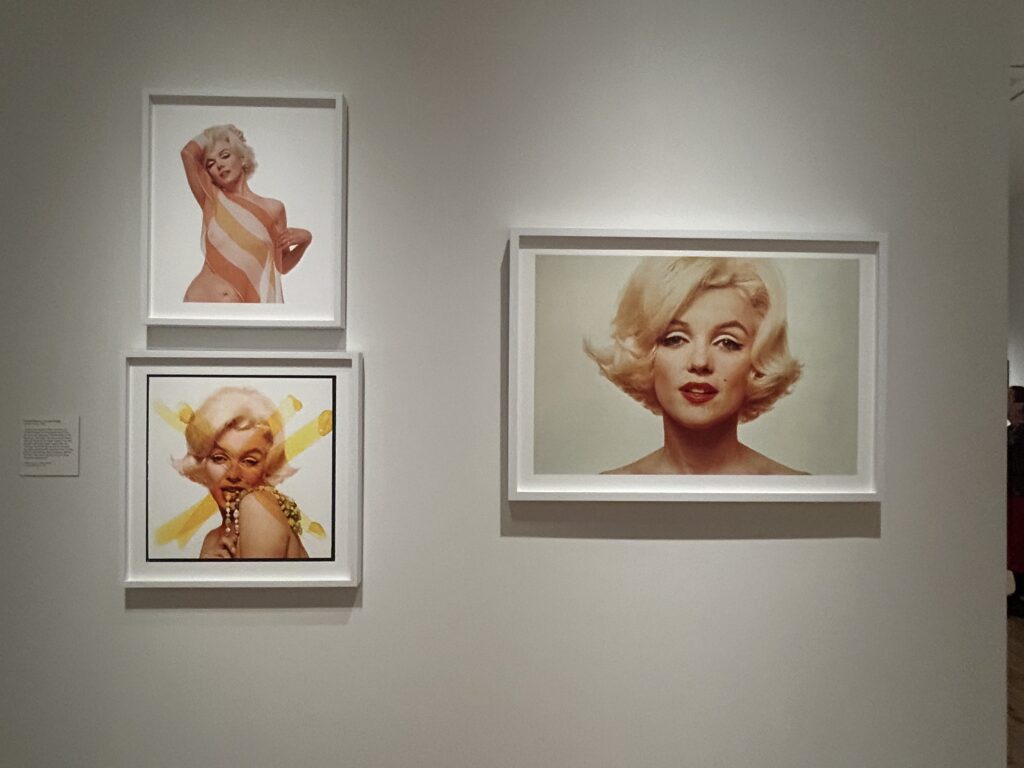
The exhibition concludes with previously unseen photographs taken by Allan Grant at Monroe’s Brentwood home just one day before her death for Life magazine, alongside Bert Stern’s final portraits, further Warhol screenprints, works by Richard Hamilton, Peter Blake, Pauline Boty’s The Only Blonde in the World (1963), and Willem de Kooning’s strikingly abrasive abstraction of Monroe. Among these celebrated artworks, perhaps the most touching object is also the smallest: Monroe’s delicate white Ferragamo heels worn during The Seven Year Itch, displayed reverentially in a Perspex case like a Hollywood equivalent of Dorothy’s ruby slippers.
Given its exceptional gathering of photographs, paintings and memorabilia by some of the twentieth century’s greatest artists and photographers, Marilyn Monroe: A Portrait is unsurprisingly one of the National Portrait Gallery’s blockbuster exhibitions of the year. Yet curators Rosie Broadley and Georgia Atienza wisely resist presenting Monroe as simply another cultural icon. Instead, they reveal the woman beneath the mythology: intelligent, ambitious, vulnerable and profoundly human.
Like Princess Diana decades later, Monroe became trapped within an image consumed relentlessly by cameras and public fascination. Both women achieved an almost mythological status in life, only for their premature deaths to elevate them into enduring modern legends. This thoughtful and beautifully curated exhibition reminds us that behind one of history’s most recognisable faces was a complex individual whose humanity remains every bit as compelling as her extraordinary beauty.