

From Katayoun Karam’s powerful self-portraits to Raghu Rai’s iconic images of Old Delhi, Culturalee Contributor Bakul Patki selects six standout photography presentations at India Art Fair 2026 and must-visit exhibitions happening across the capital.
Each February, Delhi sees a plethora of exhibitions and events programmed around India Art Fair, the country’s leading fair for art and design, which attracts visitors from across South Asia and beyond. Now in its 17th year, India Art Fair brings together hundreds of regional and international galleries and institutions, as well as a design section and extensive programming of workshops, tours and talks by speakers from around the world.
Although the fair heavily caters to the predominant regional appetite for painting and sculpture, a number of photographic exhibits made their mark at this year’s edition, and at presentations across the city. Here are Six Culturalee picks of the best photography at India Art Fair and beyond:
Katayoun Karam @ Vida Heydari Contemporary
One of several Iranian female artists exhibited by this Pune-based gallery, Katayoun Karam creates socially-driven projects that reflect shared communal experiences in today’s world.
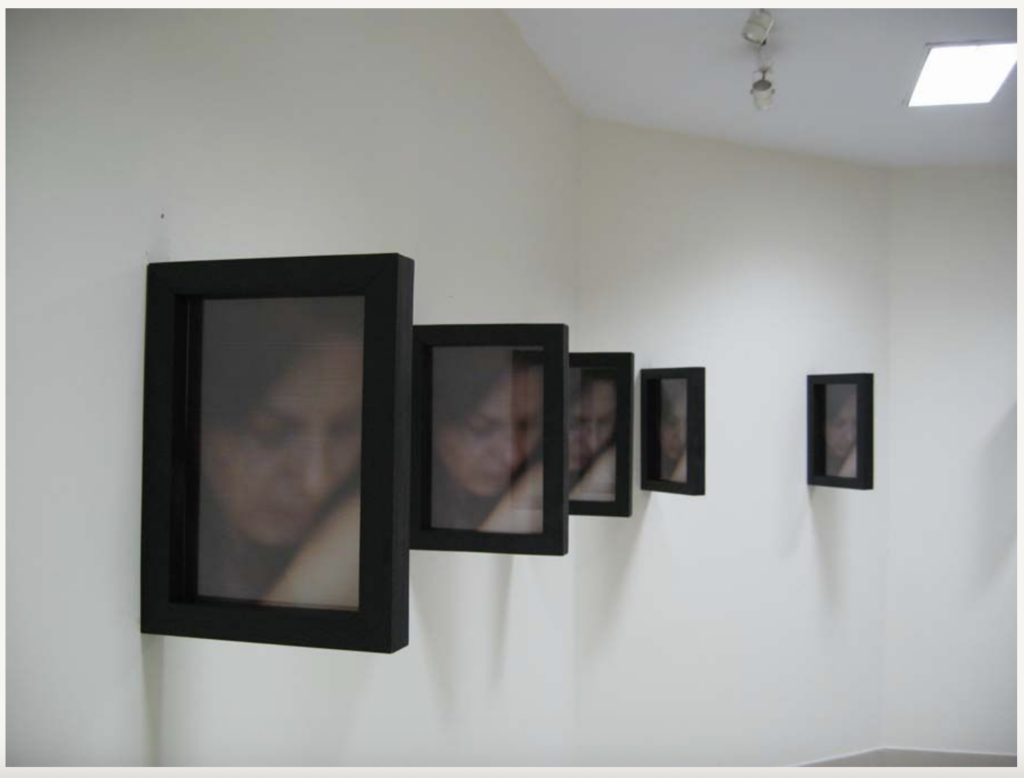
Her deeply effecting series The Other Side deals with the tradition, in many Islamic cultures, that sees girls required to cover their hair at the age of nine. For Karami, this moment marked the quiet beginning of a long absence – an erasure of something tender and natural. Thirty-one years later, at the age of forty, she confronted her reflection and felt a deep sorrow at the realisation that, her “hair had begun to gray without ever having felt the sun”.
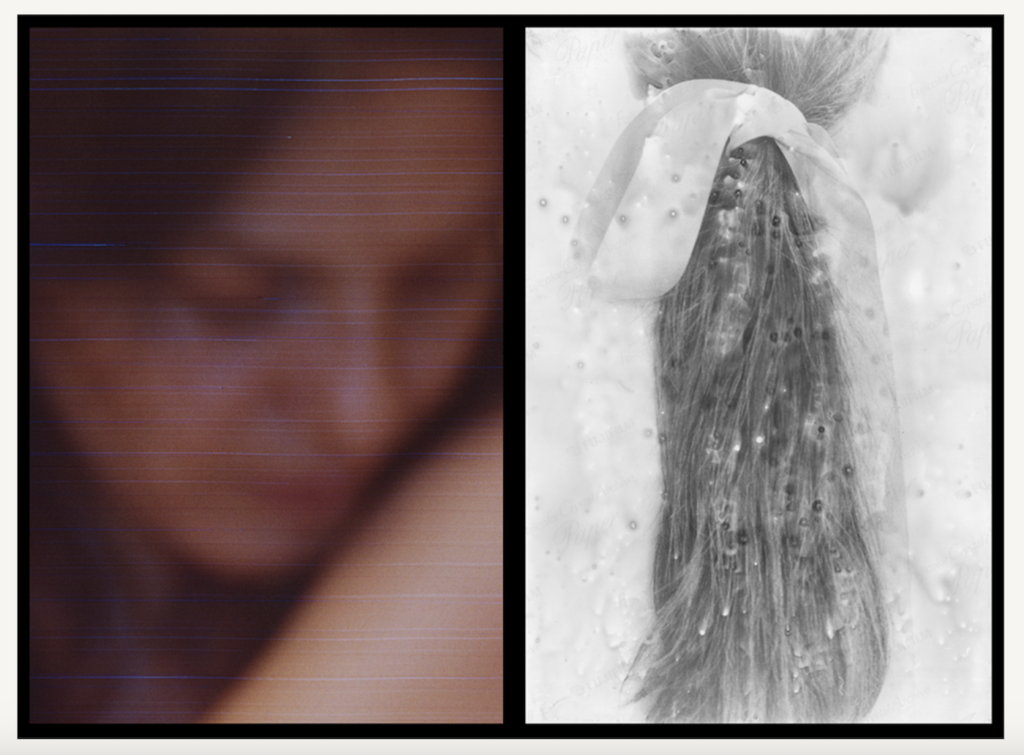
The Other Side is a series of double-sided self-portraits, which emerged from that moment of realisation. On the front of the images, Karami presents her veiled head, gradually fading the saturation of black until it nearly disappears – a visual metaphor for loss, invisibility, and time slipping away. On the reverse, she reveals what is usually hidden: the hair itself. Coated in handmade black-and-white silver gelatin emulsion, it appears limp, drained, and lifeless – a haunting reflection of a life denied even the smallest freedoms.
By confronting what is both personal and universal, The Other Side becomes an act of reclamation. Karami gives form to what was silenced, inviting the viewer access to what was never allowed to be seen.
Dia Mehhta Buphal @ Gallery Ske
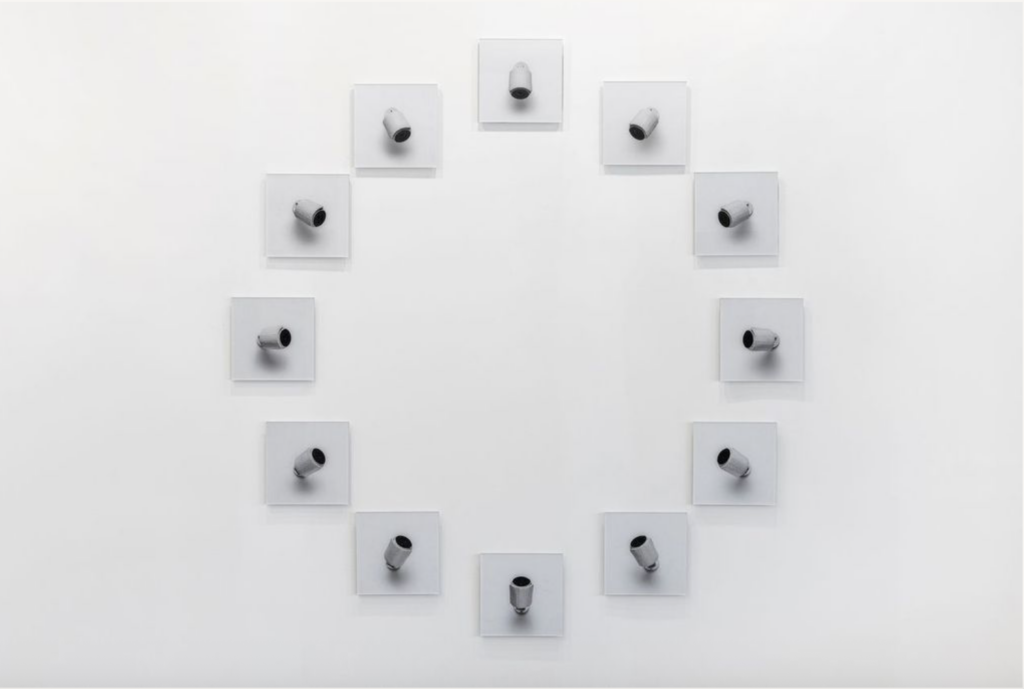
‘Compound eyes’ – a quite photographic installation by Dia Mehhta Buphal presented by Delhi-based Gallery Ske, was one of the most impactful works at the fair.
The artist is best known for her often large-scale sculptural installations, constructed from rolled up pieces of used magazines and newspapers, that draw one into intimate worlds to voyeuristically explore the lifestyles of their inhabitants.
This idea of voyeurism, or surveillance, is turned on its head in Compound eyes as Buphal interrogates how technology has changed our daily lives. A photograph of a paper sculpture surveillance camera is replicated twelve times and displayed to corelate with each hour on the face of a clock, reflecting the state of constant surveillance we live in. Each print sees the camera rotated inward to a central point, powerfully amplifying a sense of unease – making one feel intensely exposed, vulnerable and claustrophobic.
Gallery Ske / Dia Mehhta Buphal
Hylozoic/Desires + Gauri Gill @ Vadhera Art Gallery
Two stand-out presentations were to be found at Vadhera – one of India’s most established and influential contemporary art galleries. The Salt Print series of images by Himali Singh Soin & David Soin Tappeser aka Hylozoic/Desires, taken from their wider Salt Lines project, forms a speculative archive of the Great Hedge of India – a 4000km hedge constructed by the British in nineteenth-century India to enforce the empire’s monopoly on salt taxation – of which there is no remaining visual evidence.
Some images originate from fictional re-enactments shot at Sambhar Lake, an important British outpost for the collection of salt, while others are generated using artificial intelligence as a troubled archive. The images are converted into salt prints, a method of photographic development used in the same period, before salt was replaced with albumen. The prints are then toned with pure gold, bringing salt’s value to the fore. Reimagining this contentious border patrol line, which is now largely erased from memory and landscape, the duo explores conjectural visualisations of empire, retroactive justice and ecological flux – and questions whether fiction can claim to be the truth within the context of unreliable historical narratives.
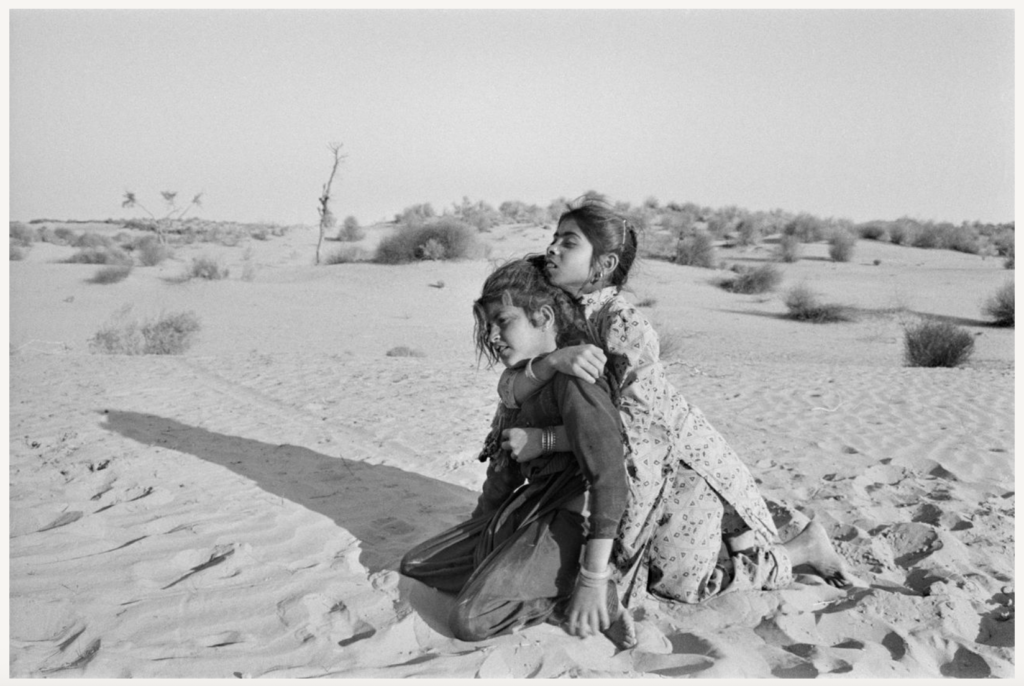
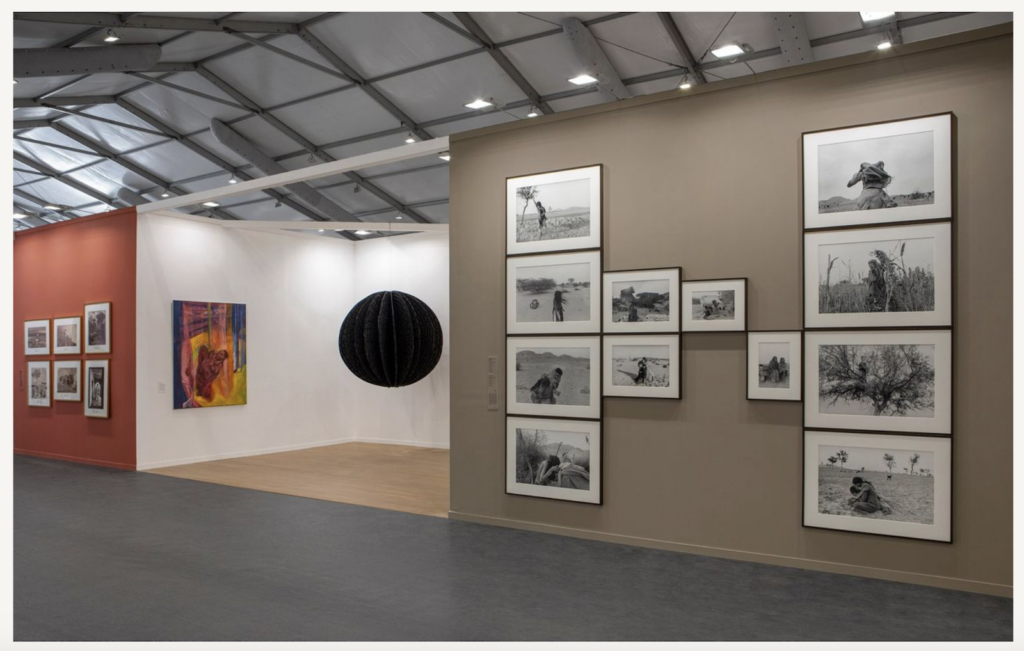
Nearby, recent Prix Pictet-winner Gauri Gill’s Notes from the Desert series also explores relationships with land – this time those of marginalised and diasporic Indian communities. The images are a record of time Gill spent among fringe rural communities in Western Rajasthan, including nomads, migrants and small farmers. They are stunning and beautifully celebrate what Gill calls “The inextinguishable strength and fertile agency of people in perilous circumstances – especially women, including mothers and daughters, who are able to find exorcism, joy and ultimate renewal in a landscape that is as stark as it is luminous”.
Vadhera Art Gallery / Hylozoic/Desires / Gauri Gill
Symran Gill + Lionel Wendt at Jhaveri Contemporary
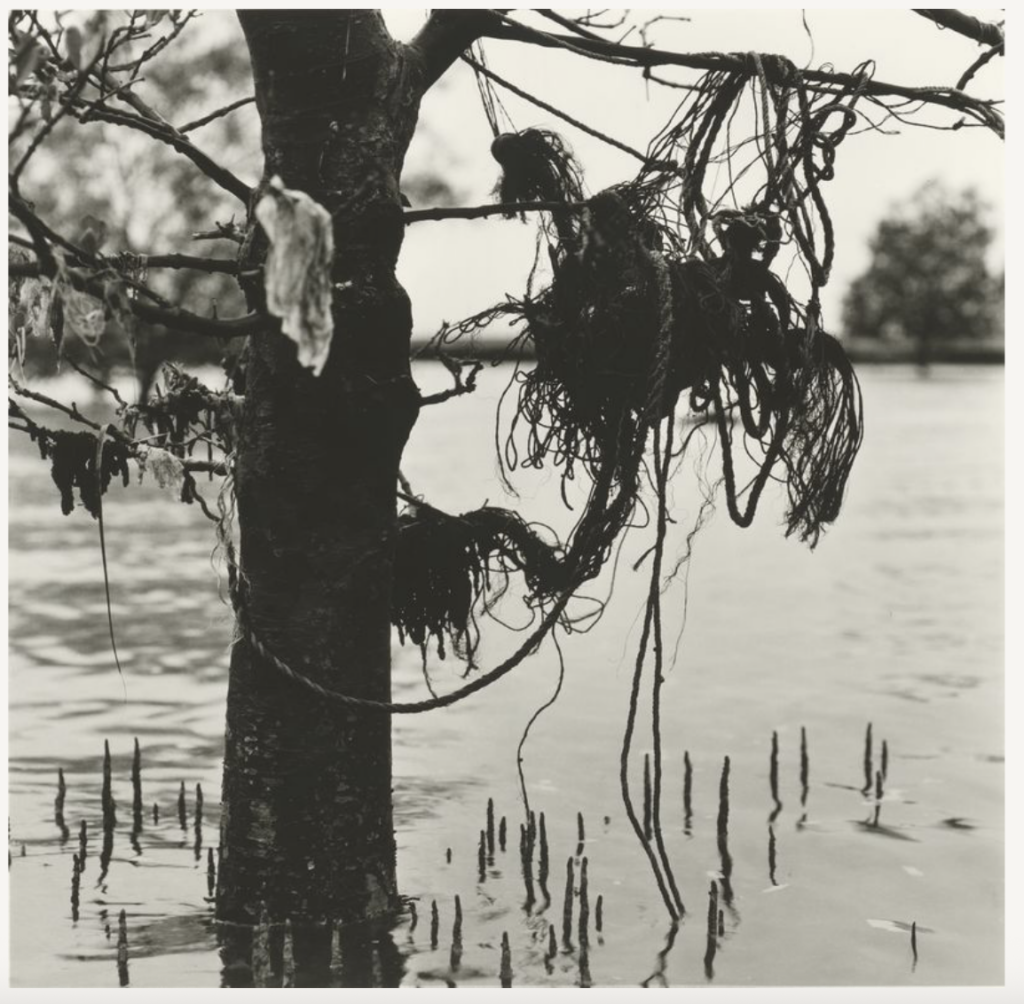
Amongst Jhaveri Contemporary’s excellent group presentation, two small but perfectly-formed photographic installations stood outas highlights within the fair. Firstly, three images from Symran Gill’s Channel series (2014), which in its entirety comprises twenty-nine near-square format photographs taken in a small mangrove forest of Port Dickson – the artist’s hometown in Malaysia. The images capture this coastal environment, framed and criss-crossed as it is by mangrove trees. Hanging almost like clothes on a washing line, plastic bags, fishing rope and other items of domestic detritus are entangled in branches. Gill integrates this waste into her compositions in such a way as to make it feel like a natural, almost beautiful part of the landscape, rather than an unnatural and unhealthy intrusion.
Elsewhere in the booth, the gallery presented two tiny, perfect prints by legendary Sri Lankan photographer Lionel Wendt. One of Asia’s earliest modern photographers and a leading cultural figure in the country, Wendt was preoccupied with the body, playing with cropping to enhance the erotic nature of his portraits. Clearly influenced by Surrealism, Wendt’s use of techniques, such as photomontage, photogram, solarisation, and double printing mean that his work somehow feels at once surreal and entirely real – sculptural, tactile and thoroughly tempting to touch.
Jhaveri Contemporary / Simryn Gill / Lionel Wendt
IOIOI, Raghu Rai + Ketaki Sheth at PHOTOINK
Widely acknowledged as India’s leading gallery for photography, PHOTOINK presented a thoughtfully curated salon of images by eight artists who explore photographic imagery and its ability to represent lived time.
Amongst them, highlights included Raghu Rai’s iconic series The Wall, Old Delhi – an extraordinary study of the city in the 1970s. Taking a single wall as his leading character, Rai capture’s the raw, gritty, and crowded essence of Old Delhi, celebrating its inhabitants, across classes, genders, ages and eccentricities – and touching on the larger troubles of a nation that background each of their lives.
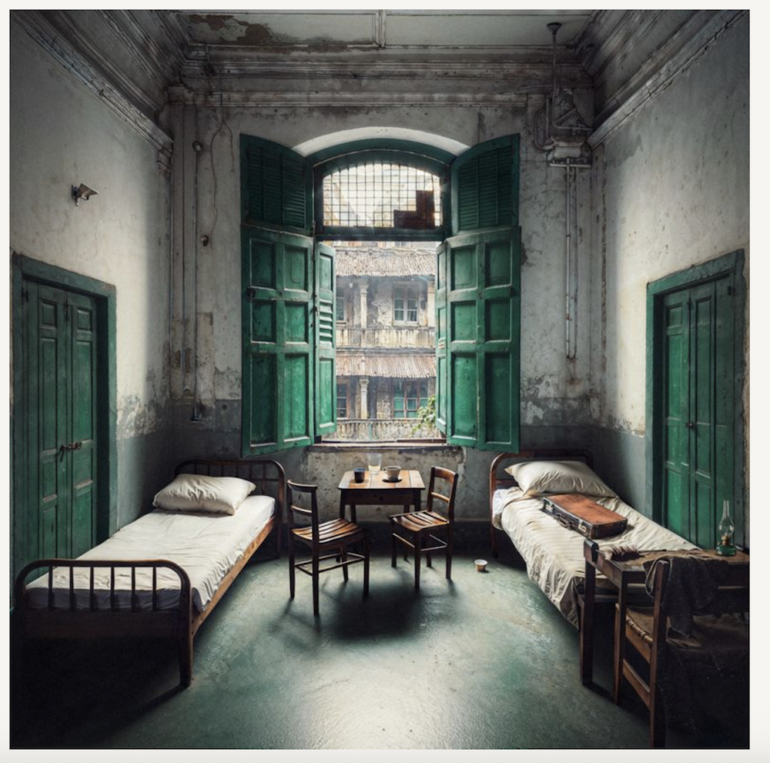
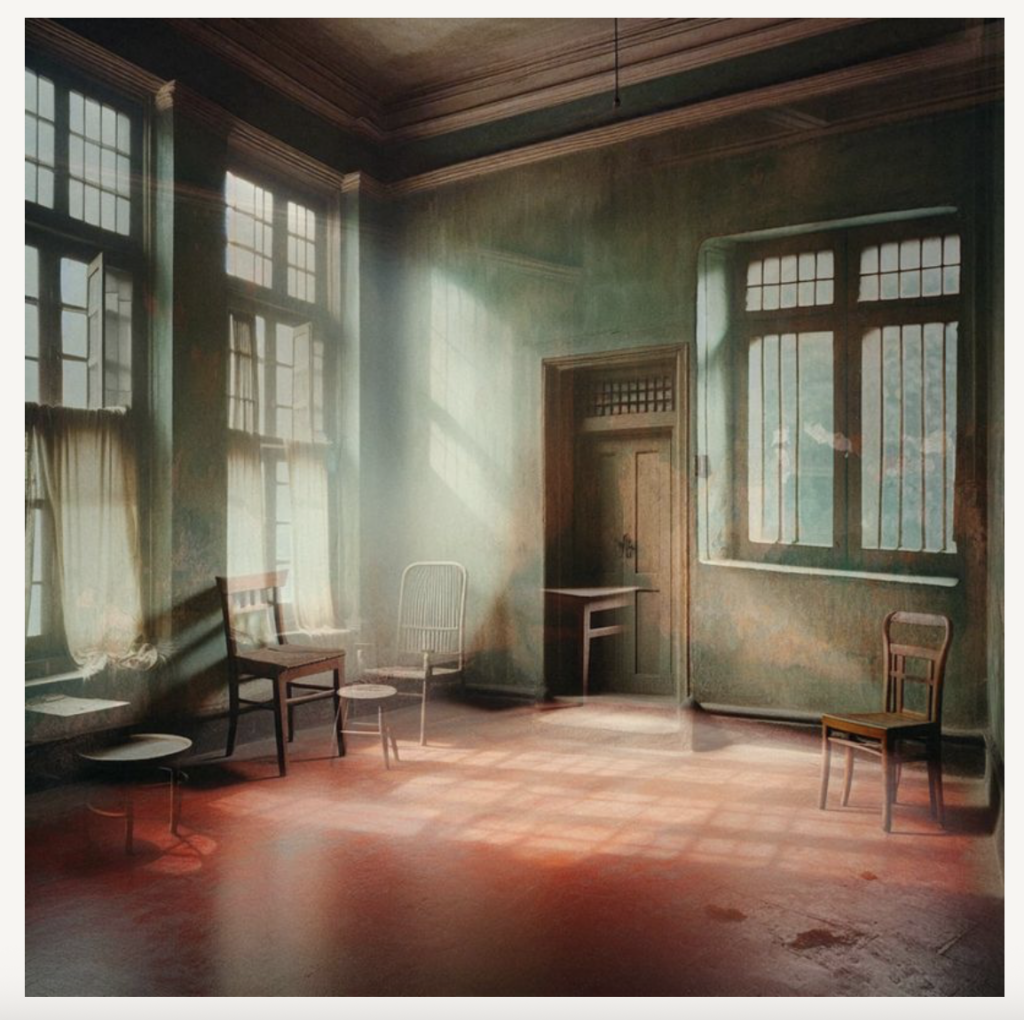
Discovered and prepared by researchers at the Institute of Orphaned, Invisible and Obscure Images (IOIOI), recovered archives of Dinabandhu Das’ photographs of empty boarding houses are hauntingly beautiful. Das used multiple exposure to create dream-like composites that could be mistaken for watercolours at first glance, and that seem to testify to a special sort of inevitable temporality.
Ketaki Sheth is one of India’s most critically acclaimed photographers. At the fair, the gallery presented a landmark series of portraits of the Sidi – Indians of African descent that still live in Gujerat. The photographs document the texture of ordinary life amongst a people integral to any account of India’s plural history. Outside the fair, at PHOTOINK’s permanent Delhi space, the gallery also presents a must-see exhibition that draws from Sheth’s journeys in the film worlds of Bombay and Madras between 1985 and 1993. Flashback peels back the curtain on the enigmatic Indian movie set, as the photographer captures young actors and movie stars, aspiring extras and skilled crew, quietly unwrapping the spectacular trappings of show business and fame.
Ketaki Sheth ‘Flashback’, at PHOTOINK, until 17th March 2026. B-74 Defence Colony, New Delhi 110024
PHOTOINK / IOIOI / Raghu Rai / Ketaki Sheth
Rohit Chawla at Stir Art Gallery
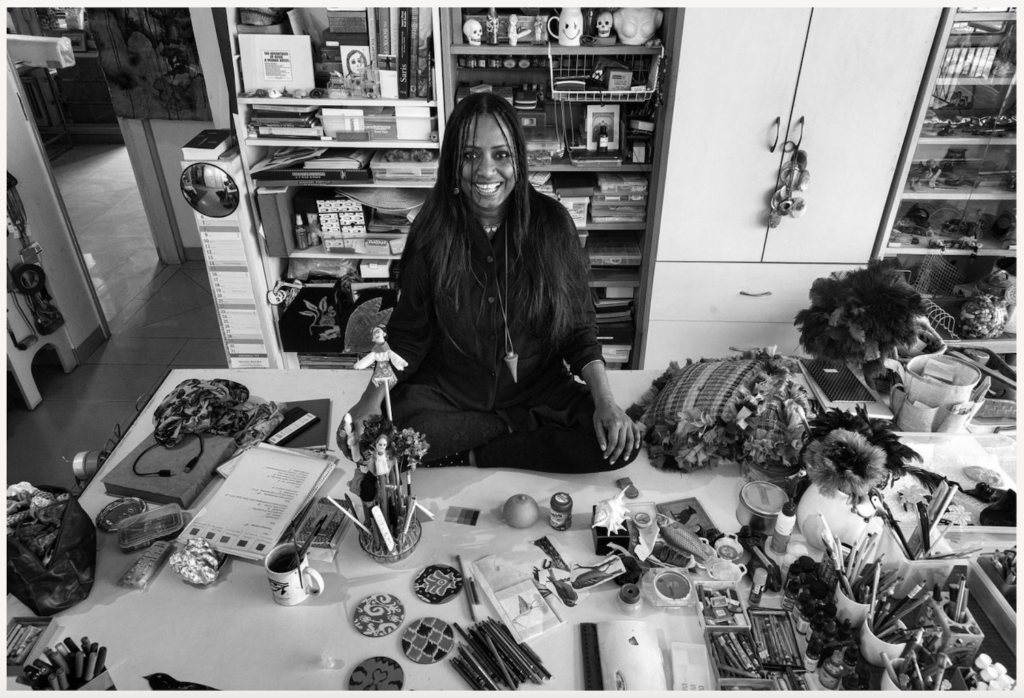
Something of a living legend, Rohit Chawla’s work could be found in several places throughout the fair, with a focus on his Portrait of an Artist series, marking the recent launch of a book of the same name.
Released as a collaboration between the Kiran Nadar Museum of Art and Mapin Publishers, the book features 130 portraits of around 60 contemporary Indian artists in their studios, including Atul Dodiya, Bharti Kher, Mithu Sen, Ravinder Reddy, Shilpa Gupta, and Sudarshan Shetty. In inviting Chawla into their most intimate spaces, the artists also invite the public into their deeply personal and individual creative processes.
For those who didn’t have an opportunity to catch the work at the fair, a comprehensive exhibition of images from the book runs until the end of the month at one of Delhi’s most elegant spaces, Stir Art Gallery.
Rohiy Chawla ‘Portait of an Artist’ at Stir Art Gallery, until 28th February 2026. 2, North Drive, DLF Chattarpur Farms, New Delhi 110074.
And one for luck…Party is Elsewhere at The Radial
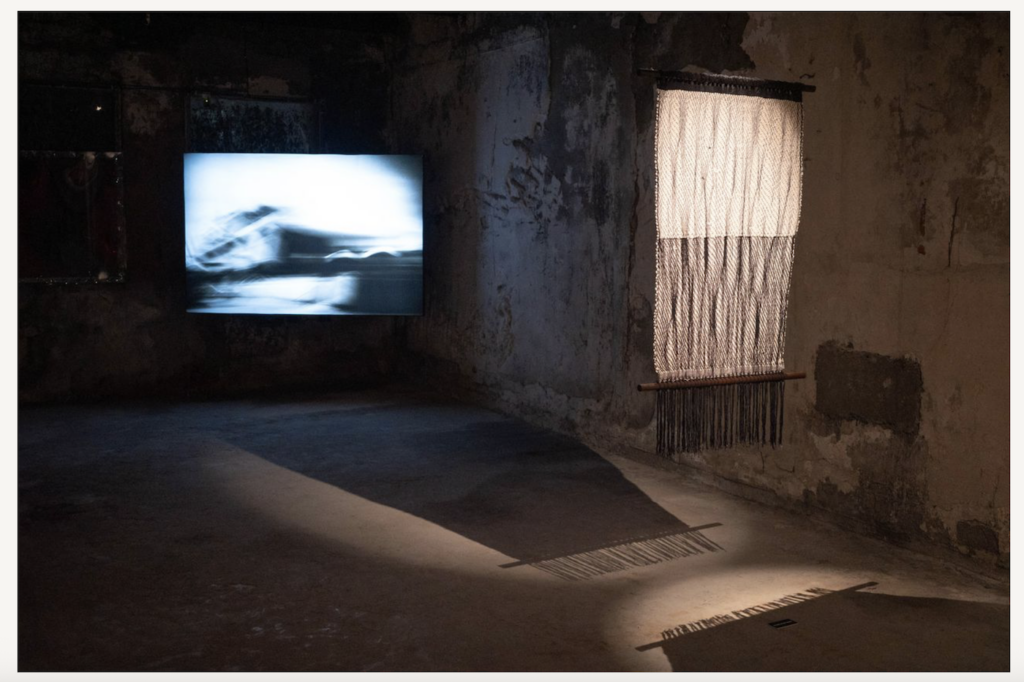
A veritable hidden treasure, Party Is Elsewhere is a group show curated by Reha Sodhi and Amit Kumar and presented in temporary experimental space The Radial. Climbing up steep stairs of Connaught Place into an abandoned nightclub, visitors are met by the Sudarshan Shetty’s iconic 2005 kinetic installation, from which the exhibition takes its name. Other artists include Shilpa Gupta, Zarina Hashmi, Ayesha Sultana, Subodh Gupta, Rana Begum, Jyoti Bhatt, Atul Dodiya and photographer Shovan Gandhi, whose work featured heavily within the show.
Taken from the series Temporal Materialities: Memory, Perception, and Architectural Impermanence in the Anthropocen, Gandhi’s photographs explore architectural spaces situated within rapidly shifting cultural and environmental landscapes – particularly sites poised at the threshold of change and structures whose original functions have dissolved or are being redefined by development, climate instability, and socio-political shifts. The artist’s technique ambiguates structures, adding to a sense of transition and transformation, and creating an eery uncertainty that casts a spell on the on viewer that’s hard to resist.
‘Party Is Elsewhere’, until 28 February 2026
The Radial, F Block Inner Circle, Connaught Place, New Delhi.
Far gone are the years when lullabies caressed my hair and the summer breeze could call it home. And suddenly everything went dark… and now the only brightness is the reflection of my own gray hair.”
Katayoun Karam
Bakul Patki is a Curator, Creative Producer, Cultural consultant and writer based in London, New York and India. Follow Bakul Patki here.