


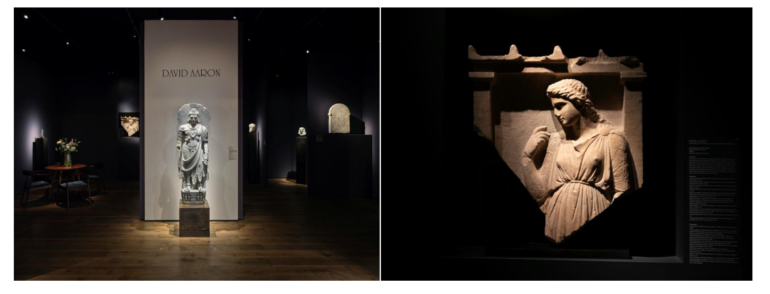
At the opening preview of TEFAF Maastricht, leading antiquities dealer David Aaron placed the rare Stele of Medeia—an Attic grave monument dated circa 375–350 B.C. and among the few surviving stelae dedicated to a Parthenos, an unmarried Athenian woman—with a major US museum in a deal reported at £450,000.
David Aaron presents an exhibition of significant pieces of antiquity spanning Classical Greek and Roman, Egyptian and Near Eastern cultures at Maastricht. Pieces in exceptional condition with highly researched provenance including an Egyptian limestone Baboon from 664-343 B.C., 26th-30th Dynasty, Late Period, a Roman Torso of a Youth from the 1st-2nd century A.D., and a Roman marble Head of Hadrian dated 120-130 A.D.
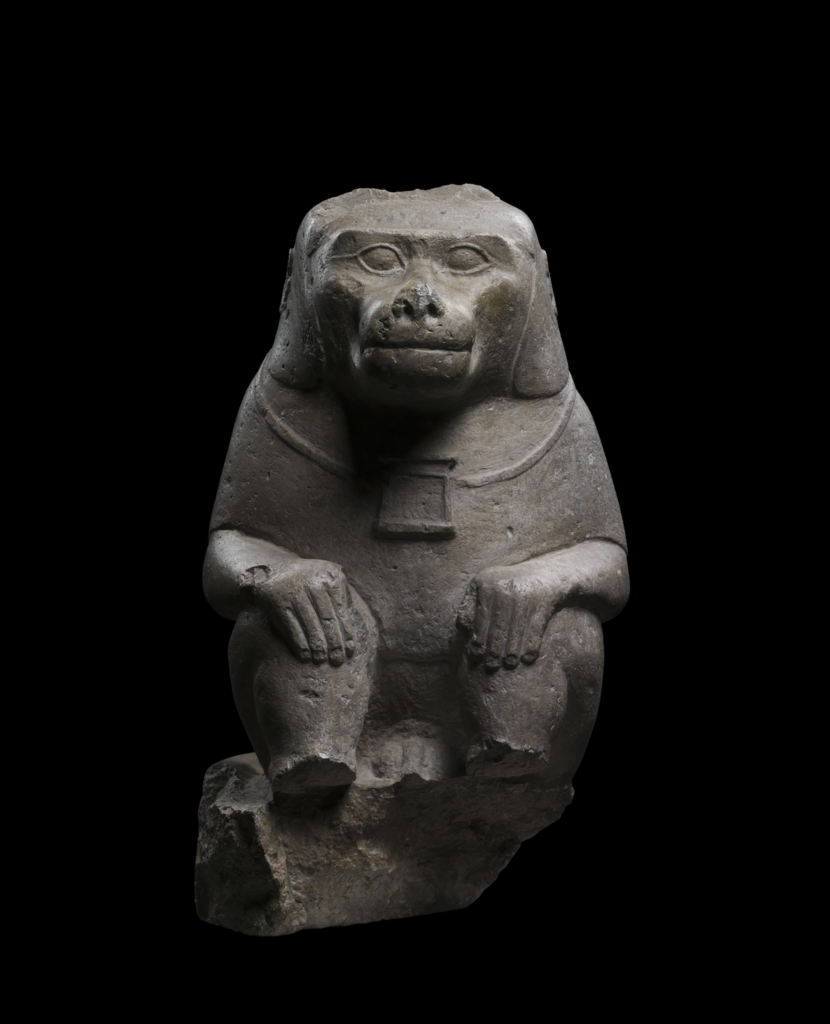
presentation.
Photo: Yosuke Kojima
Image courtesy David Aaron
We’ve had a strong start to the fair with the sale of the Stele of Medeia to a major American museum. We’re pleased to see one of the standout pieces from our TEFAF presentation attract such early enthusiasm at the fair. The stele represents an interesting story of a young Parthenos woman in Greek society and the rarity of this subject matter accompanied by impeccable provenance makes it a desirable museum quality piece. We look forward to the next week at TEFAF and meeting with museums and collectors from around the world.”
Salomon Aaron, Director, David Aaron
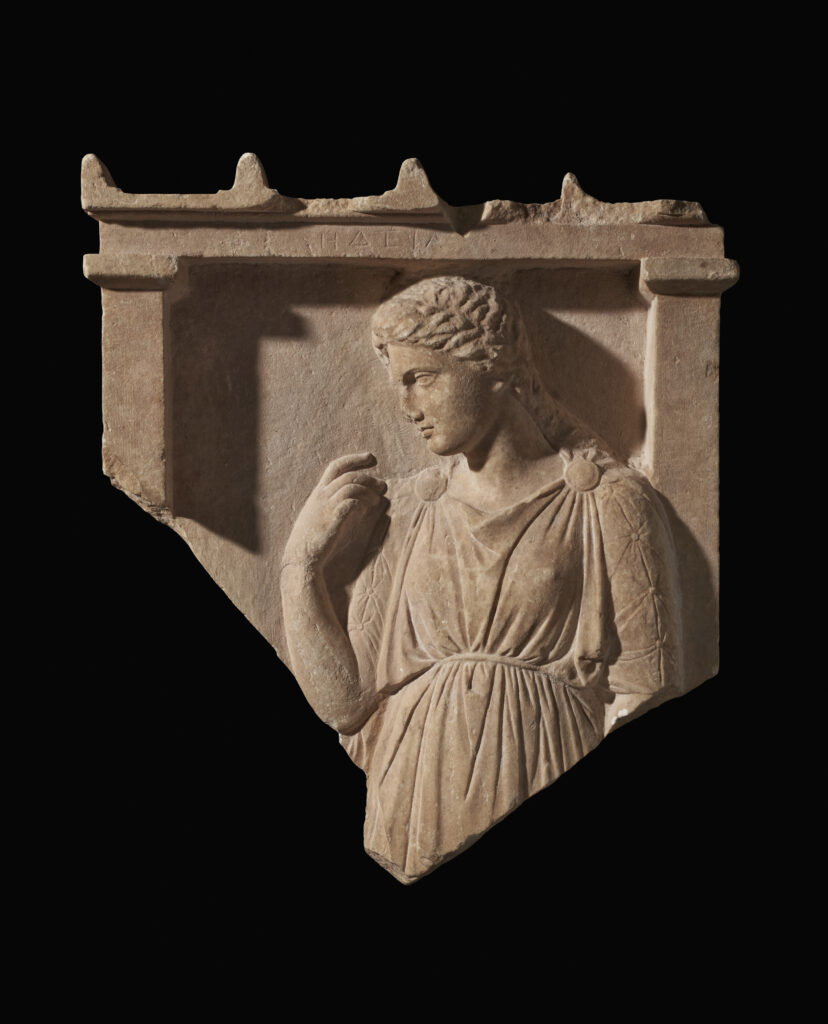
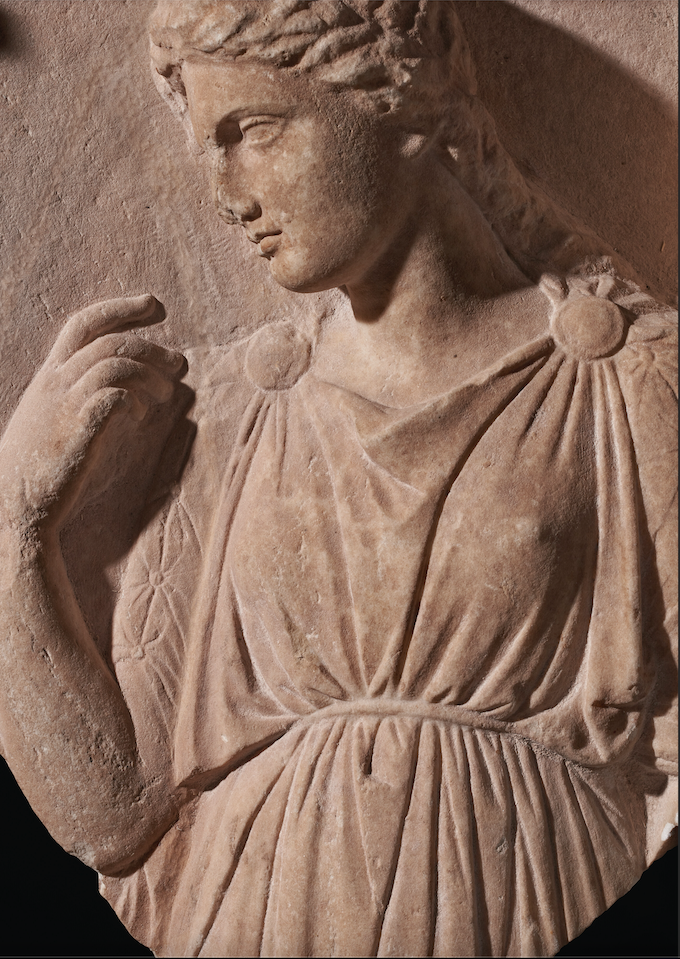
The marble grave Stele of Medeia is exceptionally carved in high relief, depicting a young female figure with her right hand raised elegantly towards her shoulder. Titled Stele of Medeia, a single line of inscription in the architrave identifies the subject of the piece as a young girl called Medeia.
The stele’s subject is recognisable due to her traditional chiton dress, a finely draped tunic belted around the waist with a back mantle fastened at the shoulders with large circular brooches, a distinctive marker for the attire worn by Parthenoi or unmarried young women.
What makes this work extraordinary is its rarity. The term Parthenoi refers to the brief transitional period between childhood and entry into adulthood through marriage making depictions on Greek stelae scarce. Swiss classical archaeologist Christoph W. Clairmont’s seminal research on Attic tombs further supports the rarity of Parthenos steles as they make up only 4% of the funerary reliefs examined in the eight volumes published by Clairmont. Their importance is reflected in the fine funerary monuments dedicated to Parthenoi; these monuments form the basis of art historian and archaeologist Linda Jones Roccos’ theory that the death of a Parthenos was significant from both a personal and societal perspective, as it removed the possibility of future children being born to support the Athenian cause.
Adding to this stele’s importance is its distinguished provenance. The stele was first recorded in the collection of Athenian art dealer Theodoros A. Zoumpoulakis, before being acquired in 1923 by renowned gallerist Joseph Brummer and remained with the Brummer family for more than half a century. Led by three Hungarian brothers – Joseph, Imre, and Ernest – the Brummer gallery business was established in 1910 and they rose to prominence as influential dealers of ancient and medieval art in Paris and New York across the 20th century.
Upon Joseph’s passing, The Metropolitan Museum of Art acquired a significant amount of his private collection. The Stele of Medeia was passed down to his brother Ernest, and then to Ernest’s wife Ella Laszlo Baché Brummer, founder of the cosmetics company Ella Bache.
David Aaron is exhibiting at stand 804 until 19 March 2026. Further information can be found on the David Aaron website here.
To find out more about TEFAF MAASTRICHT follow this link HERE.