

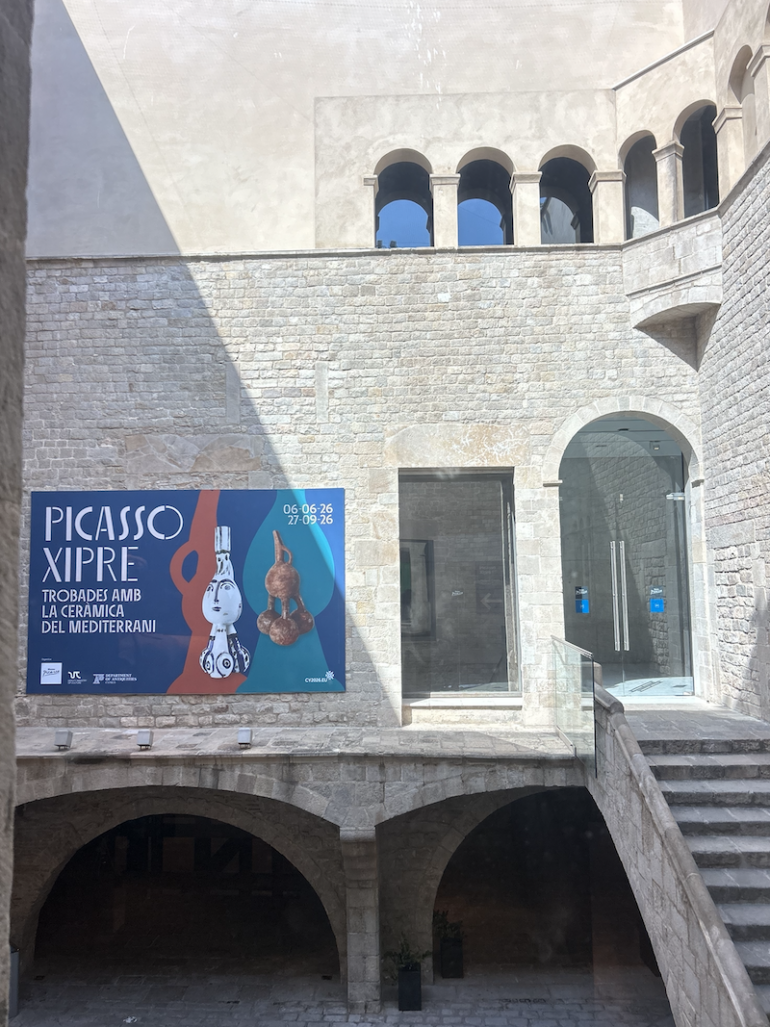
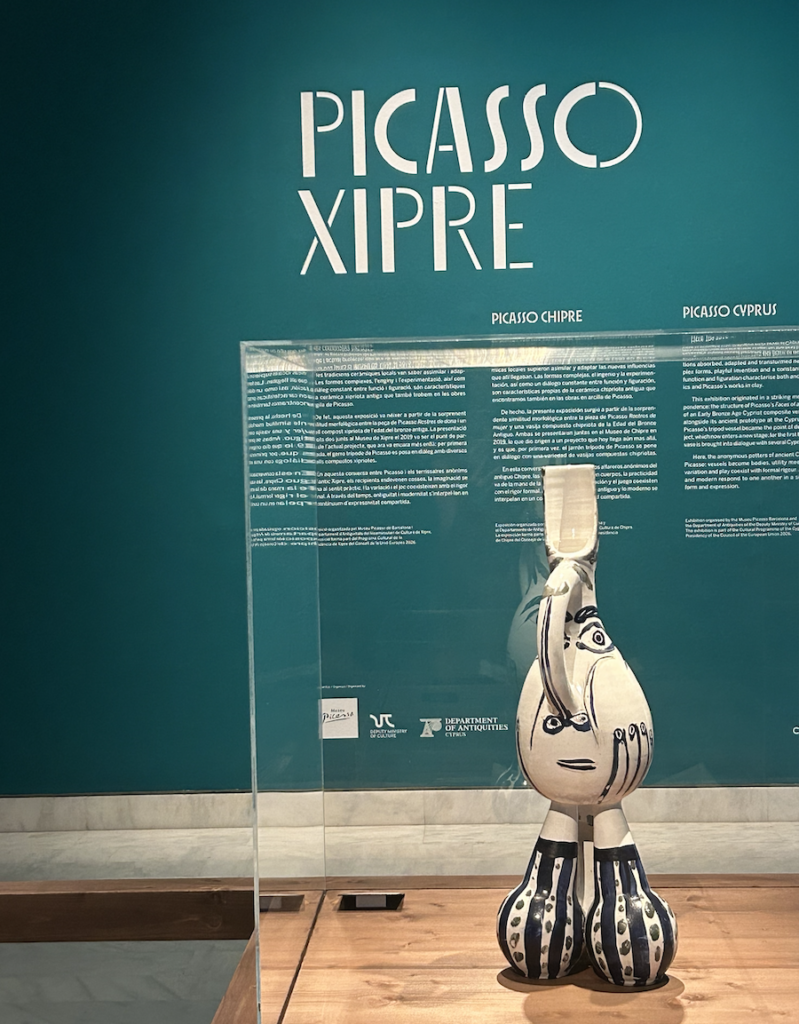
Although Pablo Picasso never visited Cyprus, his fascination with the island’s ancient art offers a revealing new lens through which to understand his enduring engagement with Mediterranean culture. Picasso Cyprus: Encounters with the Ceramics of the Mediterranean, at the Museu Picasso Barcelona, brings Picasso’s ceramics into dialogue with ancient Cypriot vessels, revealing unexpected connections between antiquity and one of the defining artists of modernism.
Rather than presenting Picasso’s relationship with ancient art as straightforward appropriation, the exhibition explores a deeper fascination with the formal inventiveness, hybrid imagery and expressive freedom of Cypriot antiquity. Picasso encountered Cypriot objects through European museum collections, including the Louvre, as well as through the archaeological publications circulating during his lifetime. These encounters became part of a broader visual vocabulary that informed his restless experimentation with form, mythology and the human figure.
Curated by Emmanuel Guigon, Androula Michael and Eftychia Zachariou-Kaila, the exhibition brings together Picasso ceramics from the Museu Picasso Barcelona with ancient Cypriot objects drawn from European museums and collections, including the Department of Antiquities of Cyprus. The resulting dialogue is one of the exhibition’s greatest strengths: rather than simply illustrating influence, it encourages us to look at the ancient objects and Picasso’s works as participants in a continuing Mediterranean conversation.
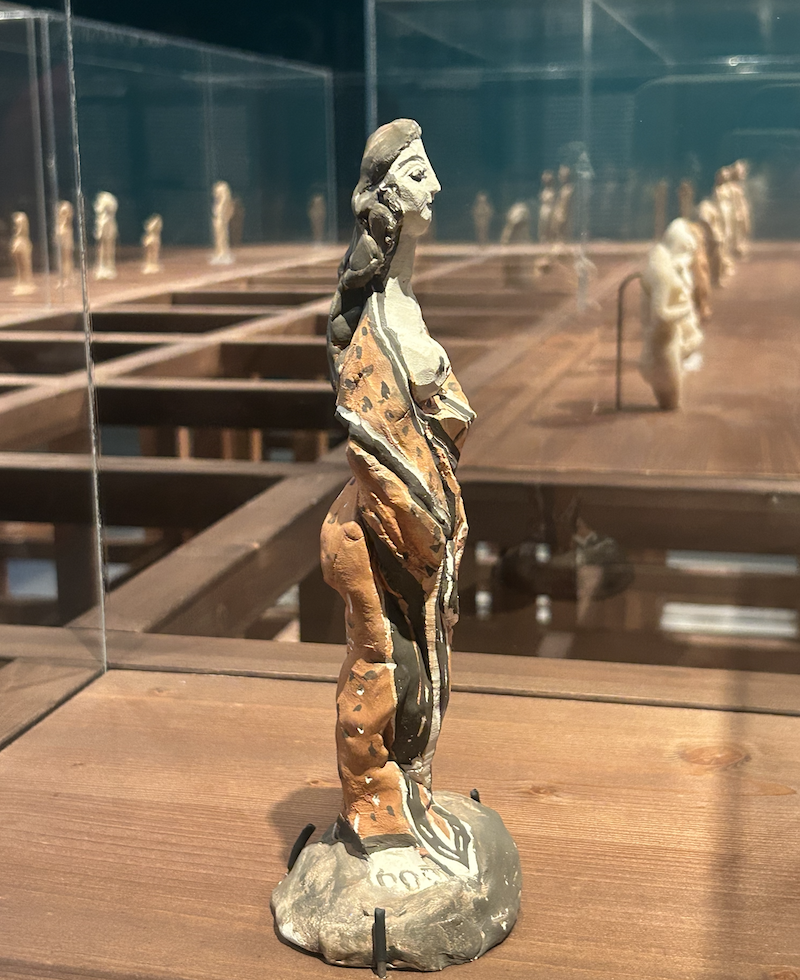
The parallels are particularly striking in Picasso’s ceramic vessels and sculptural forms. Ancient Cypriot pottery is populated by human and animal hybrids, sea creatures, stylised figures and playful transformations of the natural world. Picasso similarly blurred the boundaries between human, animal and object, creating works in which a face might emerge from a vessel or a creature become part of a sculptural composition.
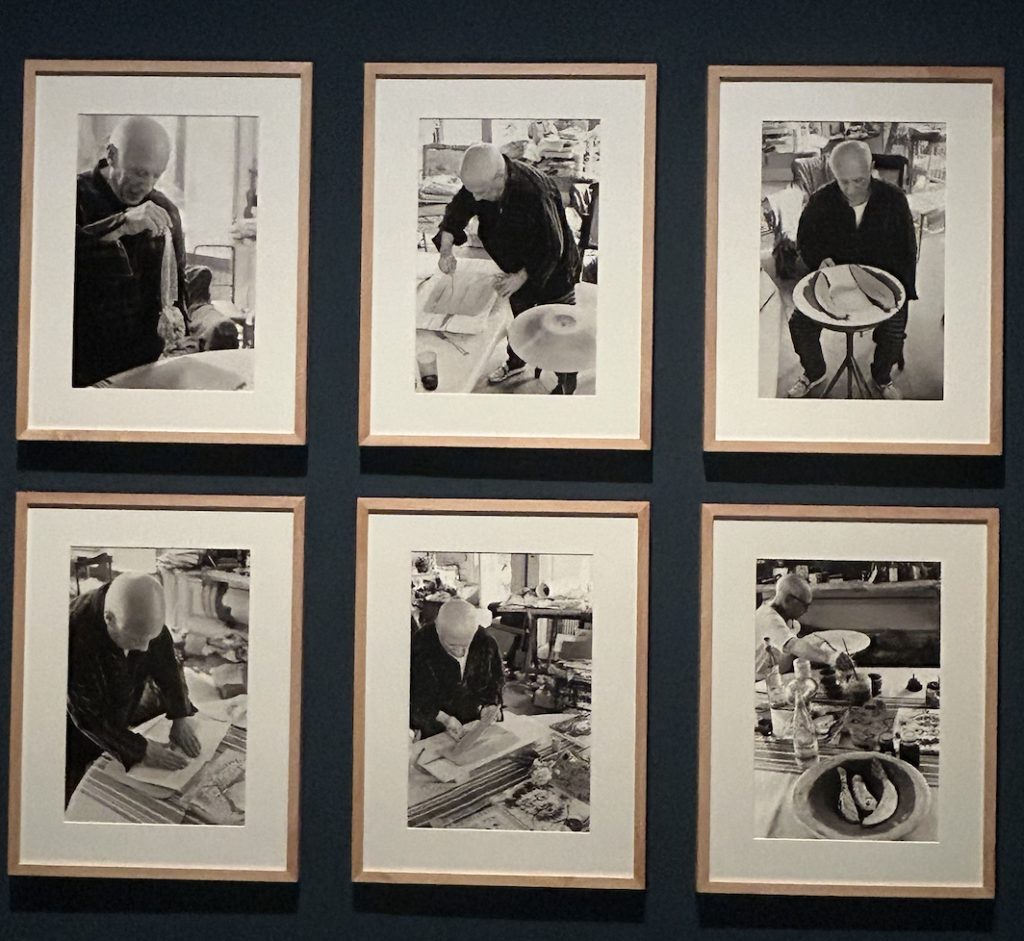
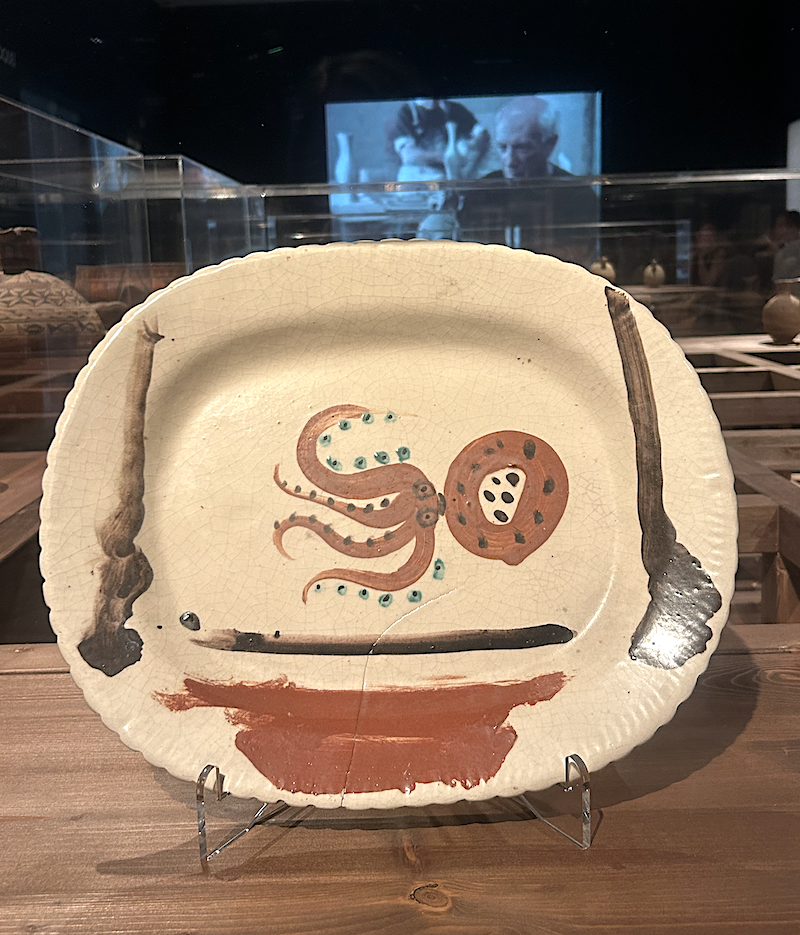
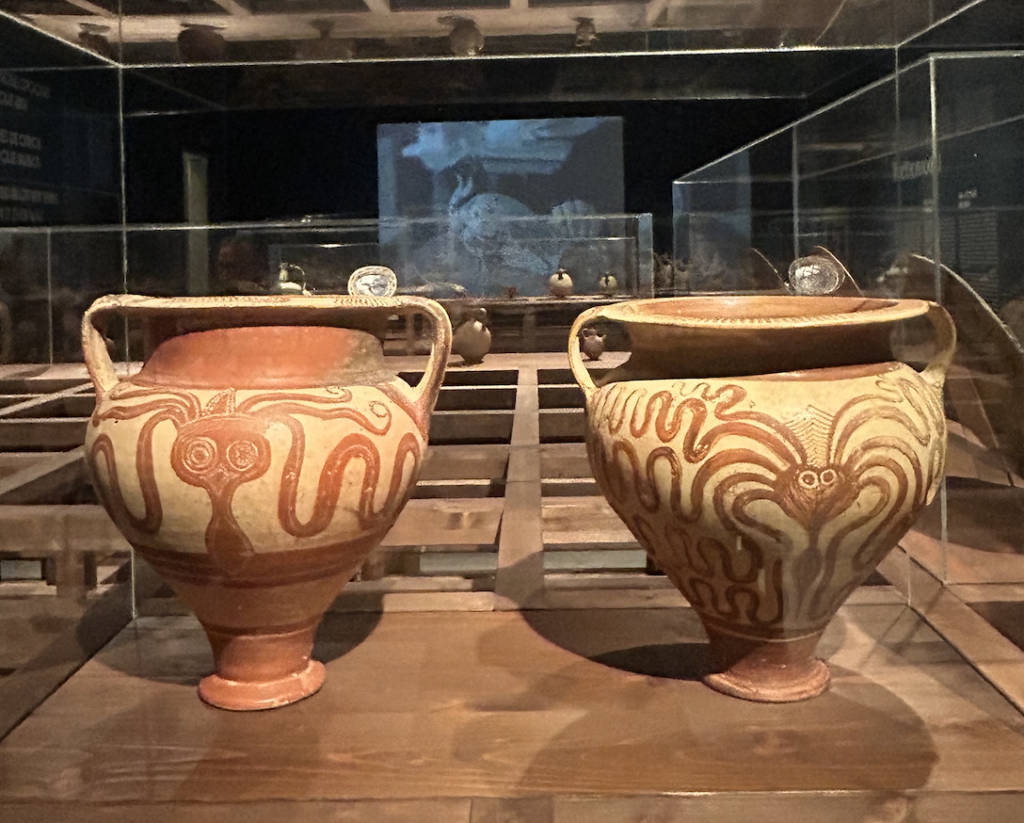
The Octopus and other marine forms, for example, evoke the importance of the Mediterranean as both subject and cultural network. Picasso’s engagement with ceramics was never simply about transferring images onto clay. He treated the material itself as a space for invention, allowing vessels to become heads, animals, faces and fantastical characters. In this context, the ancient Cypriot objects provide an illuminating genealogy for his playful approach to sculpture.
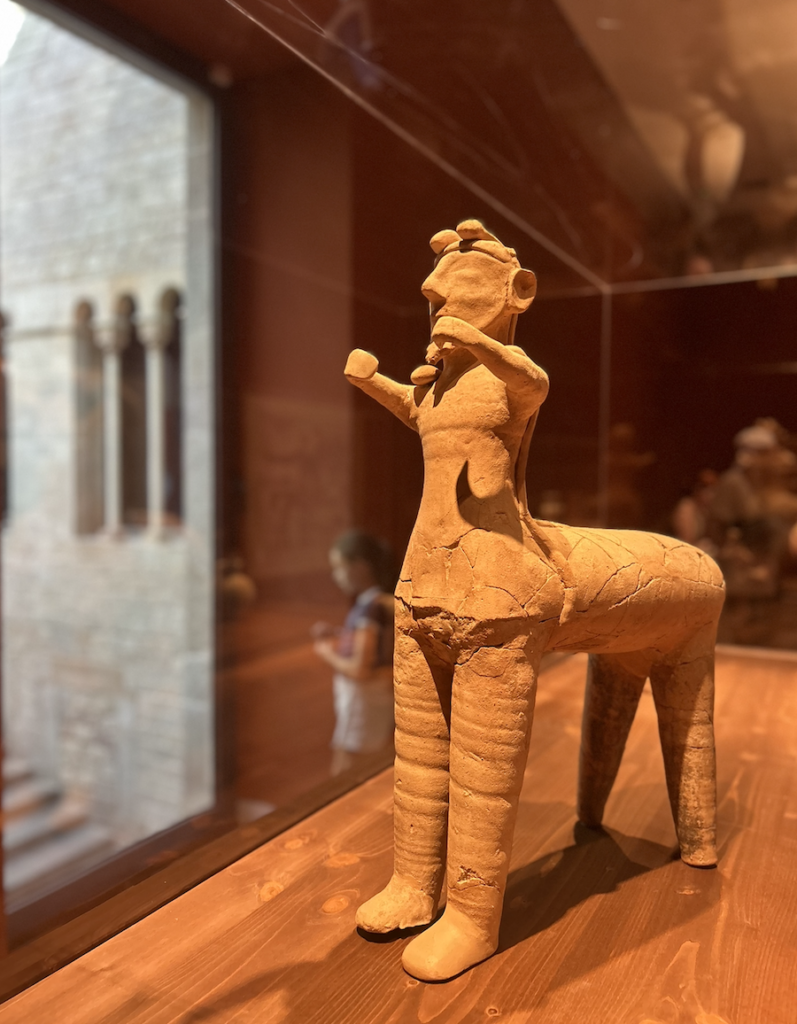
What emerges through the stylish curation of ‘Picasso Cyprus’ is less a story of direct imitation than one of creative recognition. Picasso saw in ancient Mediterranean art an imaginative freedom that resonated with his own rejection of conventional representation. The hybridisation of human and animal forms, the distortion of anatomy and the fusion of function and sculpture all anticipate aspects of his own ceramic practice.” Lee Sharrock, Culturalee Editor
The exhibition is particularly effective because it avoids the familiar chronological narrative of Picasso’s career, Cubism and modernism. Instead, it asks us to consider Picasso through the prism of Mediterranean antiquity. This shift in perspective makes his ceramic practice feel newly radical, demonstrating how profoundly he absorbed, transformed and reinvented visual ideas from cultures separated from him by centuries.
There is also a broader cultural proposition at work. The juxtaposition of ancient Cypriot artefacts with Picasso’s ceramics suggests that artistic history is not a sequence of isolated periods, but a continuous process of exchange, reinterpretation and transformation. Antiquity and modernity are not opposing poles; they exist in conversation.
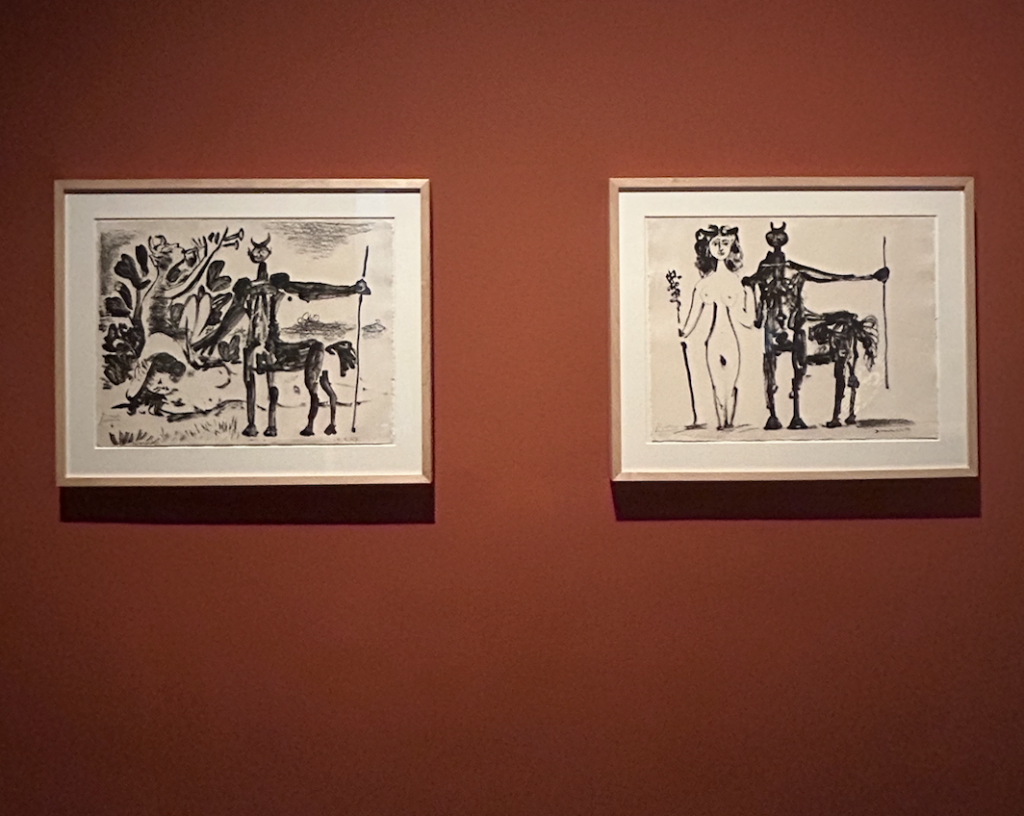
Picasso Cyprus ultimately demonstrates how the ancient Mediterranean could become a fertile source of modern invention. By placing Picasso’s playful human-animal forms, sea creatures and sculptural ceramics alongside their ancient Cypriot counterparts, the exhibition reveals an artist less interested in simply looking backwards than in discovering new possibilities within the past.
At its best, the exhibition makes antiquity feel alive, not as a fixed archaeological record, but as a dynamic visual language capable of being rediscovered, disrupted and reinvented. Picasso may never have set foot in Cyprus, but through its ceramics and ancient imagery, the island became part of his imaginative Mediterranean.
Review by Lee Sharrock, Culturalee Editor & Art Critic
Picasso Cyprus: Encounters with the Ceramics of the Mediterranean is at the Museu Picasso in Barcelona until 27 September, 2026. Find more information here.
All Images Museu Picasso Barcelona, August 2026 © Culturalee