

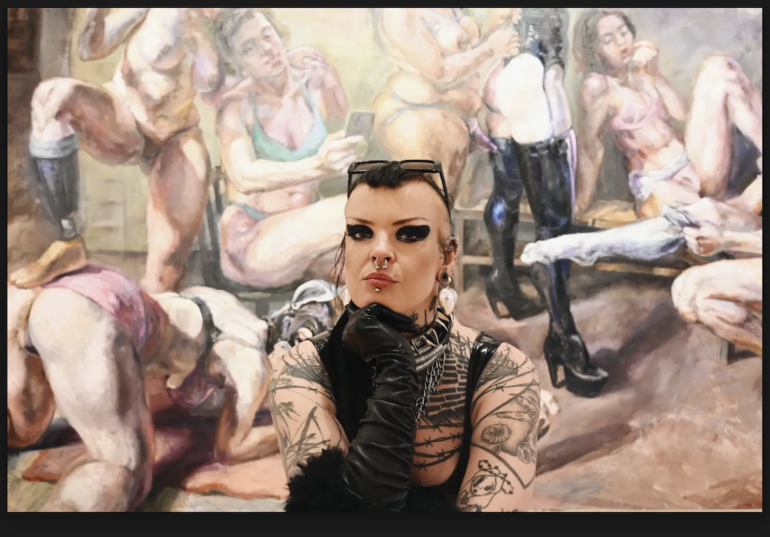
Sierra Merda speaks to Culturalee Editor and Women in Art Prize Judge Lee Sharrock about winning the Women in Art Prize 2026 Overseas Artist Prize for VVITCH, reclaiming the female figure from the male gaze, and transforming punk rebellion, art history and personal experience into powerful paintings of survival, resilience and self-possession.
Lithuanian-born, London-trained and now based in New York, artist Sierra Merda has developed a distinctive practice that brings the technical discipline of classical figurative painting into collision with feminist punk, DIY culture and contemporary ideas of identity and representation. Her award-winning painting VVITCH – recognised with the Women in Art Prize 2026 Overseas Artist Prize – reclaims the traditionally celebrated female figure, challenging inherited ideas of beauty, sexuality and power.
For Merda, the painting is part of a wider interrogation of who gets to occupy the monumental space of art history. Her women, femme and queer figures are not passive objects of the gaze but subjects with agency, presence and power. Drawing on everything from Old Master painting and classical beauty to punk, feminism, street imagery and DIY culture, she uses the authority of traditional figurative painting to give marginalised bodies space and scale.
In this Culturalee interview, Merda discusses the significance of her Women in Art Prize win, the making of VVITCH, her challenge to the male gaze, and the evolution of her work from anger and rebellion towards a celebration of survival and triumph. She also reflects on her journey from Lithuania and more than a decade in London to New York, and how community, feminist punk culture and classical painting continue to shape her artistic mythology.
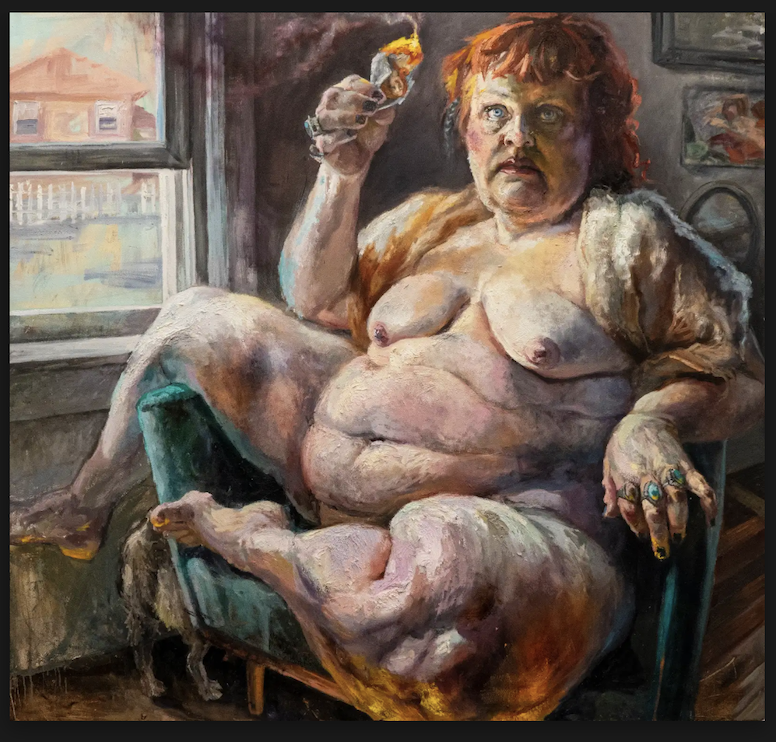
Congratulations on winning the Women in Art Prize 2026 Overseas Artist Prize for VVITCH. How did it feel to receive this recognition, and what does the award mean to you at this stage of your career? What would you like audiences to take away from VVITCH and the ideas that underpin the painting?
Winning the Women in Art Prize feels incredibly meaningful, especially because VVITCH is a painting that represents a lot of what I have been trying to do with my work for years. To have it recognised internationally, in London, where I spent over a decade of my early career, feels particularly full-circle. I have always been interested in the tension between beauty, power, sexuality and representation, and in questioning who gets to occupy the space of the traditionally celebrated figure.
VVITCH comes from that interest. I am drawn to the history of figurative painting and to the visual language of classical beauty, but I also want to disrupt the assumptions that have traditionally come with it. The painting is about the power of looking and being looked at, and about reclaiming the figure from the expectations that have historically been placed on women and other bodies outside the narrow ideals of traditional representation. The title and witch imagery also connect to the long history of women being labelled threatening, excessive or dangerous when they exist outside what society considers acceptable. My witch sets these tabloids on fire and reclaims the space by burning a clipping of Bortichelli’s Venus together with the stereotypical ideas of beauty..
For me, the painting is ultimately about power and self-possession. I want the figure to be seen as powerful rather than simply available to be looked at. I also want to make work where people who have historically been excluded from these visual traditions can recognise themselves as worthy of being monumental, beautiful and seen.
At this stage in my career, the award is both an honour and an affirmation that these ideas can reach beyond my own experience. The biggest reward for me would be if someone encounters the work and feels represented, challenged, or even just a little less alone. If a painting can change the way one person sees themselves or another person, I think that is one of the most meaningful things art can do.
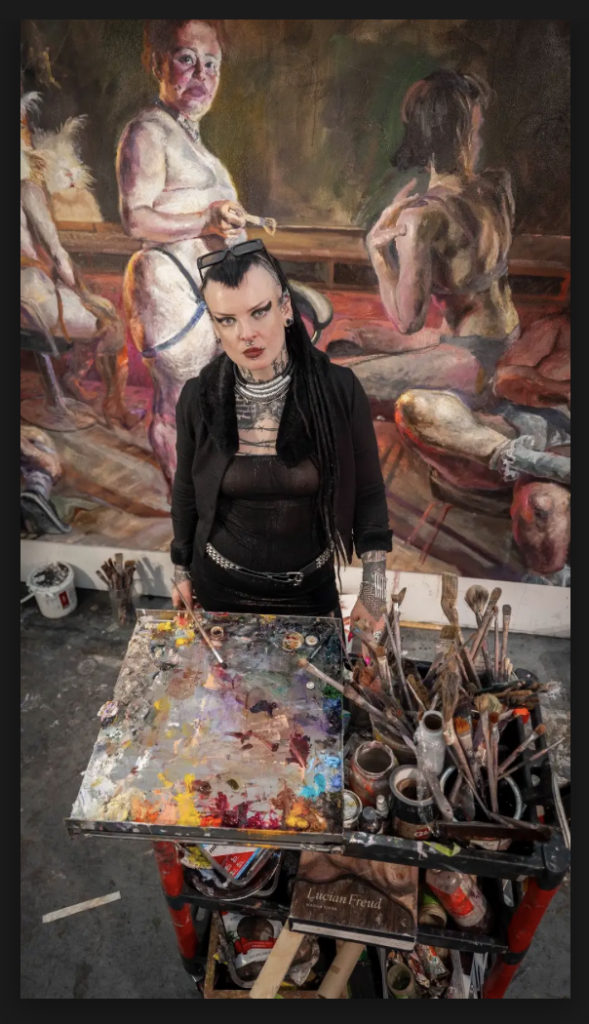
Your practice reclaims and reframes representations of women through a female perspective, challenging the historically dominant male gaze in art history. How do you approach the portrait as a space of reclamation, and how do you subvert traditional ideas of beauty, femininity and the female subject through your paintings?
For me, reclamation does not mean rejecting beauty. I am actually very interested in beauty, but in beauty that has been earned, constructed and claimed rather than inherited or passively assigned. I work with the visual language of classical figurative painting because it carries so much cultural weight, but I want to put different bodies, identities and experiences into that space and allow them to occupy it on their own terms.
The portrait becomes a space of reclamation because the subject is not simply there to be looked at. I want my figures to have agency and presence. They can be sexual, sensual, vulnerable, confrontational or powerful without having to perform those qualities for a viewer. I am interested in the point where the act of looking changes direction, where the subject becomes conscious of the gaze and starts to return it.
I also deliberately play with the contradiction and subversion between traditional ideas of femininity and the realities of contemporary life. My figures can have the surface qualities associated with classical beauty, while the imagery, attitude and context disrupt what we expect that beauty to mean. I use elements from popular culture, street imagery, punk, feminism and DIY culture alongside the language of Old Master painting. That collision allows me to take a visual tradition that has historically objectified women and use its own authority to give those women space, scale and power.
Ultimately, I want the women, fem and queer bodies in my paintings to exist as powerful subjects rather than symbols or objects. They do not need permission to be beautiful, sexual, angry, excessive, strange or powerful. They can simply occupy the space – not something we are told to do from a young age.
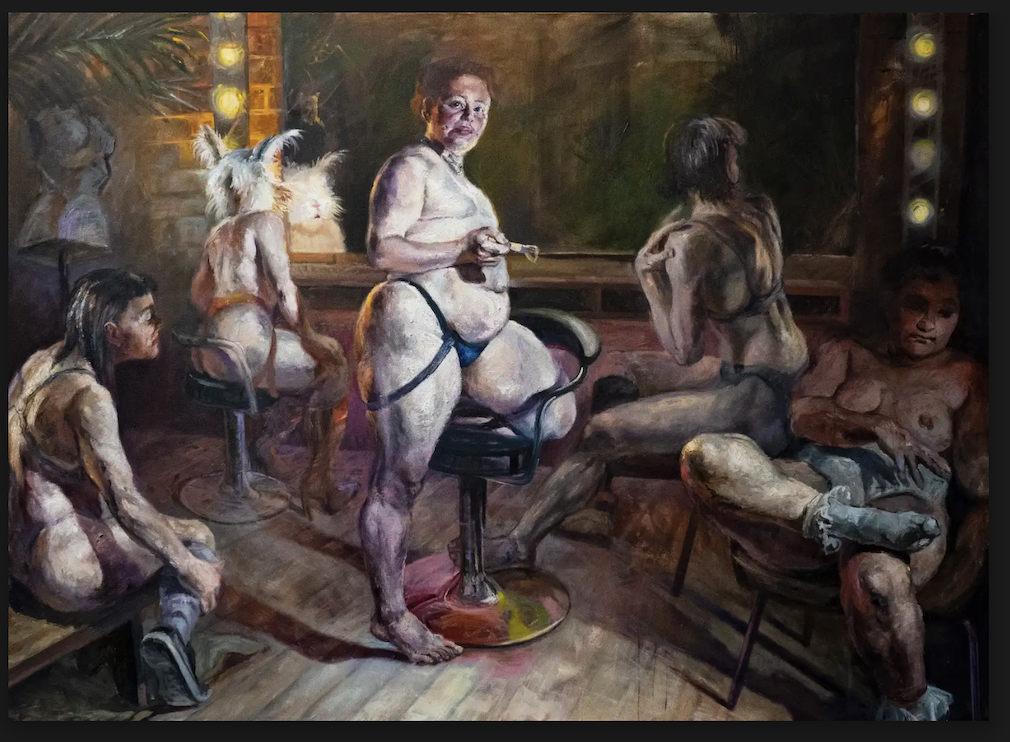
You have described your work as moving from anger and rebellion towards a celebration of survival, resilience and triumph, and your art has a punk vibe combined with brilliant technical ability and a knowledge of art history. How has this combination of rebellion and resilience shaped the way you paint people who have traditionally been marginalised or considered outside conventional ideals of beauty, and how do you balance the vulnerability, pain and resistance that coexist within your subjects?
I think that combination comes from the fact that rebellion has always been part of my life, not just part of my aesthetic. Punk, feminism and DIY culture taught me that you do not have to wait for permission to make something, take up space or define yourself, that you can make anything you want from nothing you have. At the same time, my training in classical figurative painting taught me the visual language and technical discipline behind the traditions I was pushing against. I like that tension. I can use the tools and language of a tradition that has historically been reserved for male artists and turn them towards people who have been pushed outside of it, or whose bodies have been excluded or objectified within it.
That has become particularly important in the way I paint women, femme and queer bodies, and people who do not fit conventional ideals of beauty. I am not interested in painting marginalised people simply to represent their experience or suffering… There is vulnerability and pain in my work, but there is also defiance, sexuality, humour, beauty and power. Survival itself can be beautiful, and I want my subjects to feel like people who have lived through something rather than passive representations of what has happened to them. At the end of the day, each of my paintings is a surrogate for my own experiences and feelings that I have fought through and lived through.
I think that is also why my work has shifted from anger and rebellion towards something that feels more like celebration. The anger is still there, but I am less interested in simply pointing at what is wrong. I want to celebrate the fact that we are still here, that we have survived, that we can take the things that were used to diminish us and turn them into sources of power against mainstream society and the expectations that many of us are brought up with. This road is hard and it is not an easy one to live. Therefore, I believe that empowering art has its own magic. No government is going to stand behind us. All we have is each other.
Technically, I try not to separate beauty from that resistance. I can spend an enormous amount of time rendering a face, a hand or a body because I want the figure to have the same level of care and attention historically given to the subjects considered worthy of great painting. For me, that is part of the reclamation. The scale, skill and seriousness of the painting are themselves a statement: these bodies, these stories and these lives are worthy of being monumental. And in my biggest dreams, they would be hanging in museums next to all those white-girl paintings, showing them the middle finger.
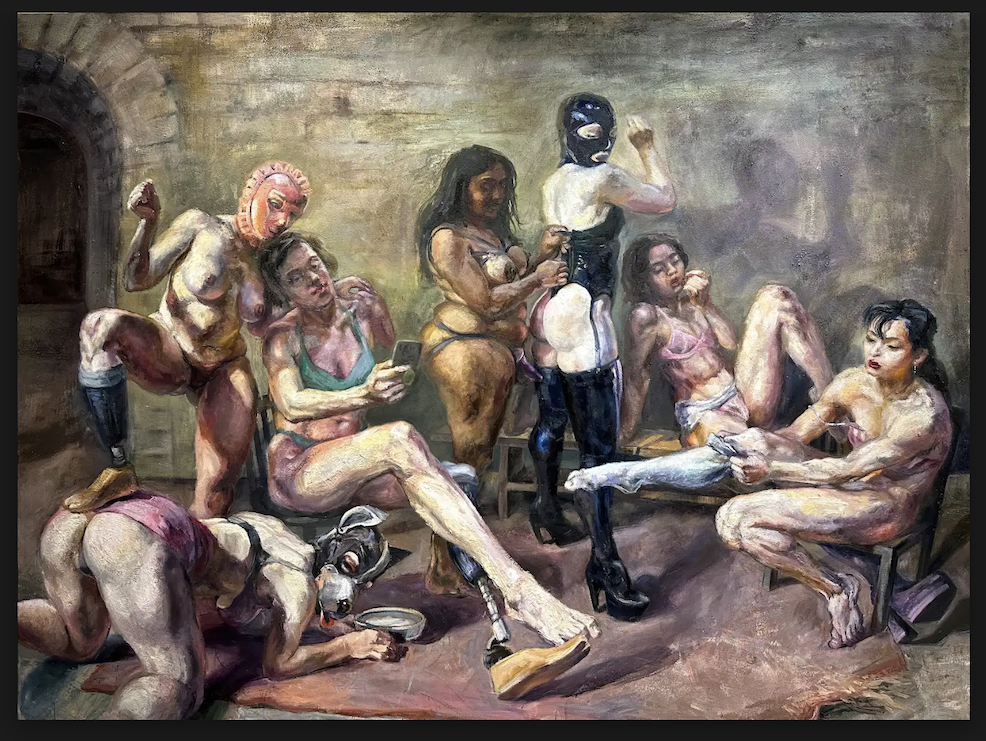
You were born in Lithuania, developed your artistic practice in London, studied for your MFA in Painting at the New York Academy of Art, and have since exhibited across the US, Europe and the UK to considerable acclaim. How have these different cultural and artistic environments shaped your identity as an artist, and what has it meant to bring a European perspective into the New York art world while also maintaining connections with the feminist punk and DIY scenes that have informed your practice?
Being born in Lithuania, developing my practice in London and then moving to New York have all shaped me in very different ways. Lithuania gave me my starting point and deep love for academic drawing and anatomy, an introduction to European cultural history, but London is where I really learned how to fight for myself, my community and for other people.
I lived in squats in London for over a decade, and I was never willing to accept the traditional lifestyle order of work – buy – sleep – repeat. Living outside of that system taught me how strong we can be when we organise ourselves and show up for each other. When you have very little, you quickly learn that community is not an abstract idea. It is practical. It is people helping each other survive and do things with their lives they want to do, that are outside of the box. That carried into the different artist collectives, projects, exhibitions and curatorial initiatives I became involved in. I realised that artists often cannot rely on governments or institutions to come and save us, so we have to create our own structures and support each other. If one of us becomes stronger, we all become stronger. Women in Arts is the best example of that.
That experience gave me a resilience that still carries me through the difficult and uncertain parts of being an artist. I never quite know what next month will look like, financially or professionally, but I do not have the same fear of uncertainty that I might have had otherwise. I have already lived without security and learned that I can survive it. Fear can be incredibly disabling, and once you stop allowing it to control you, you become capable of doing things that you otherwise would never dare to do.
Moving to New York was another kind of cultural shock. One of the things that struck me most, almost immediately, was how married everyone seemed to be. Coming from Britain, I had sometimes felt that certain feminist battles had already been fought, or at least that the conversation had moved somewhere else. In New York, I became much more conscious of how many of those expectations around relationships, femininity, success and the roles we are supposed to occupy are still very much alive. For the first time, I could really feel what all them Riot Grrrl’s that I listened to when I was in teens were singing about. It made me realise that some of the things I had assumed were universally understood were actually very culturally specific.
I think that may be part of why my own work has evolved since coming here. Earlier work was much more aggressive and sarcastic, very much a “fuck you” to the systems and expectations I was pushing against. I still have that anger, but I have become more interested in alchemical and archetypal subjects, in transformation, survival and the possibility of turning something difficult into something powerful. The rebellion has become less about shouting at the world and more about creating my own mythology within it.
Bringing a European perspective into New York has therefore not meant trying to preserve some fixed European identity. I am not sure how I identify anyways, as my living history has been a crash course across the continents. To me, it has meant bringing all these experiences with me: the history of European painting, the fearless DIY and feminist punk culture I grew up artistically around in London, the knowledge that community is power, and the belief that artists have the power to build their own structures when existing ones fail them or seem unfair. New York has challenged and expanded all of that. I think the result is a practice that is rooted in art history but still fundamentally punk in its attitude: I know the rules, I know where they came from, and I am going to use that knowledge to make something of my own and throw the rest away.
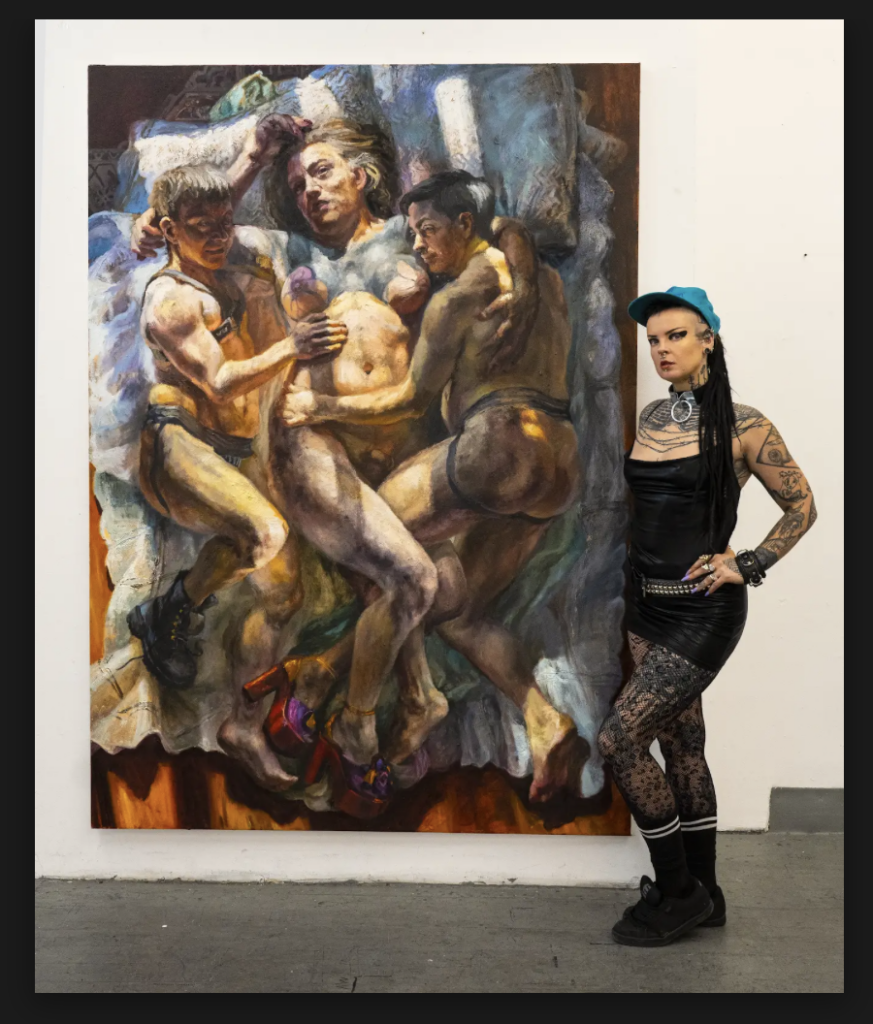
What exhibitions do you have come up next?
At the moment, I have just finished my Fellowship at the New York Academy of Art and the Chubb Fellows Exhibition in NYC, and I am in the process of moving into my new studio in Brooklyn. I am also going to be showing at the Women in Arts Prize Awards Exhibition in Chelmsford (UK).
My next priority is really the studio. I want to settle into the new space, spend some time staring at the canvas and see what starts to emerge, whether that means beginning a new series or continuing to develop the body of work I have been building. This year has been incredibly exhibition and event-heavy, so for the next six months or so I may deliberately take a little time away from the exhibition circuit and disappear into the studio, unless, ofcourse something comes through that I can not say no to.
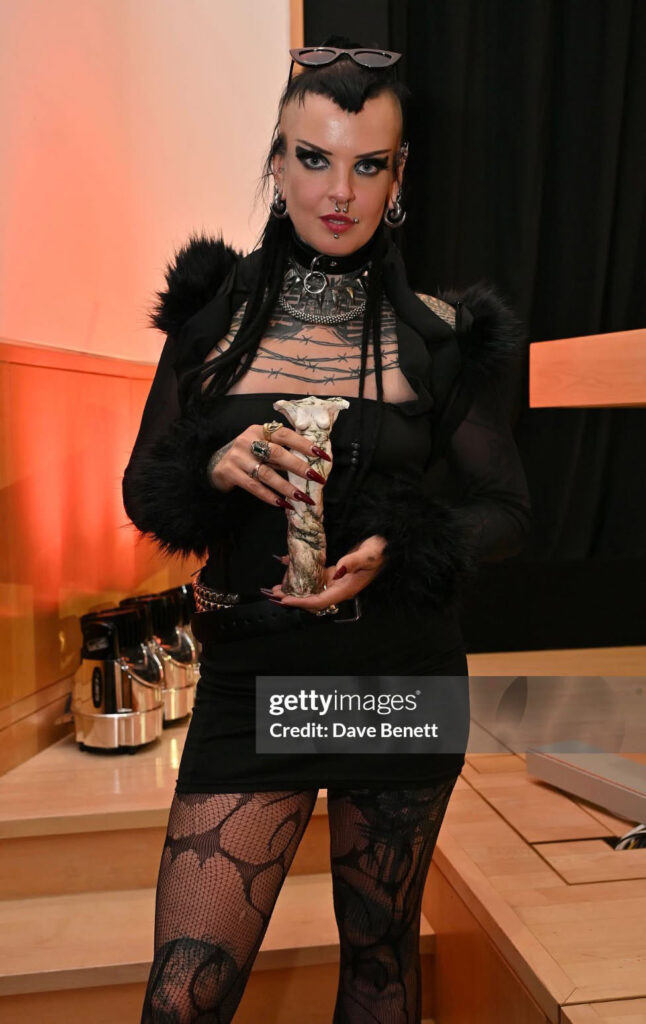
For me, the painting is ultimately about power and self-possession. I want the figure to be seen as powerful rather than simply available to be looked at. I also want to make work where people who have historically been excluded from these visual traditions can recognise themselves as worthy of being monumental, beautiful and seen.” Sierra Merda