


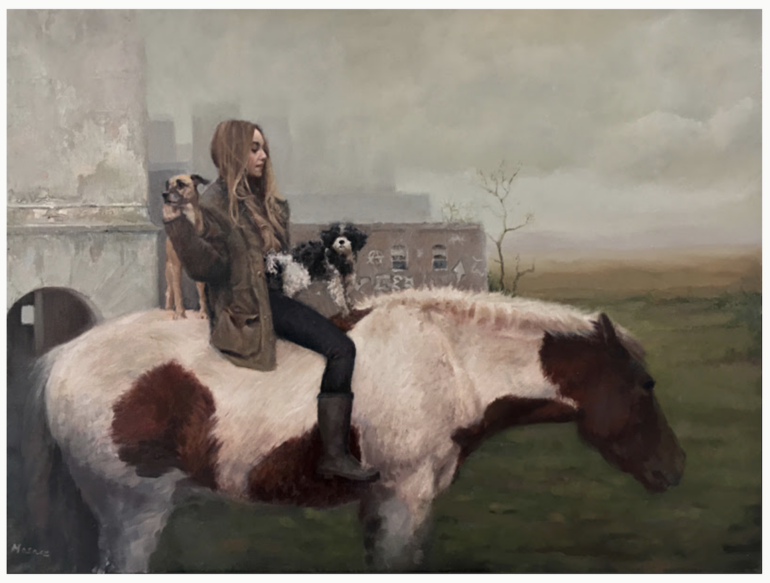
Women in Art Prize winner and BP Portrait Award winning artist Helen Masacz’s solo exhibition, Anima – Occupying Space, at Zebra One Gallery in Hampstead explores female identity, resilience and the power of women claiming their space. On view until 5 November 2026, the exhibition brings together striking portraits and symbolic still-life paintings that challenge traditional representations of women, exploring the transition from patriarchal archetypes to complex, autonomous individuals.
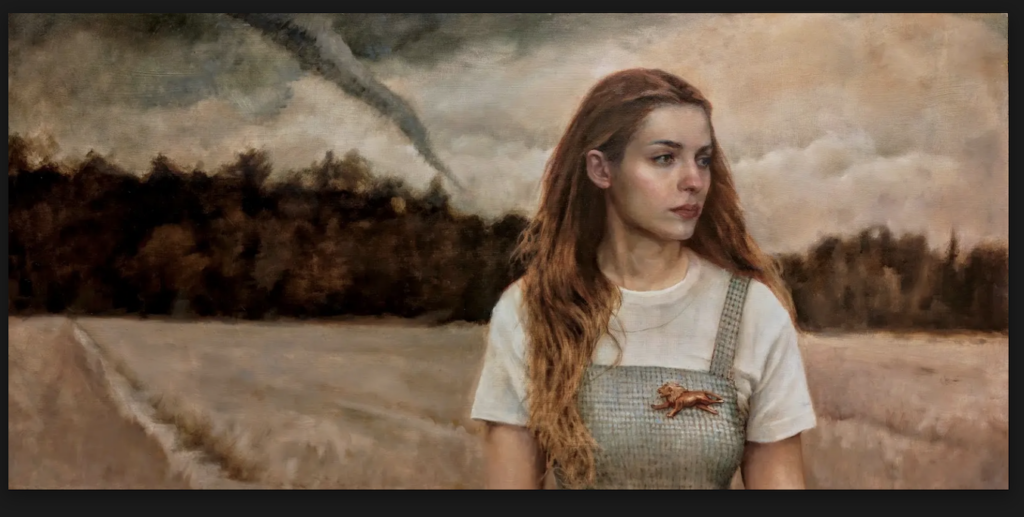
Currently on view at Zebra One Gallery in Hampstead until 5 November 2026, Anima – Occupying Space presents a compelling exploration of women’s experiences through the paintings of UK-based artist Helen Masacz. Featuring portraits of figures including Athena, Rhea, Dorothy and La Loba, alongside beautifully observed paintings of dried roses, the exhibition considers strength, endurance and the refusal to disappear.
Drawing on mythology, symbolism and psychological depth, Masacz challenges the conventions through which women have historically been represented in art. Her subjects occupy the pictorial space with a powerful sense of individuality, resisting the limitations of familiar female archetypes to assert their own identities. The exhibition celebrates independence and the female voice while reflecting on the historical exclusion of women artists and the continuing need for equal opportunities within the art world.
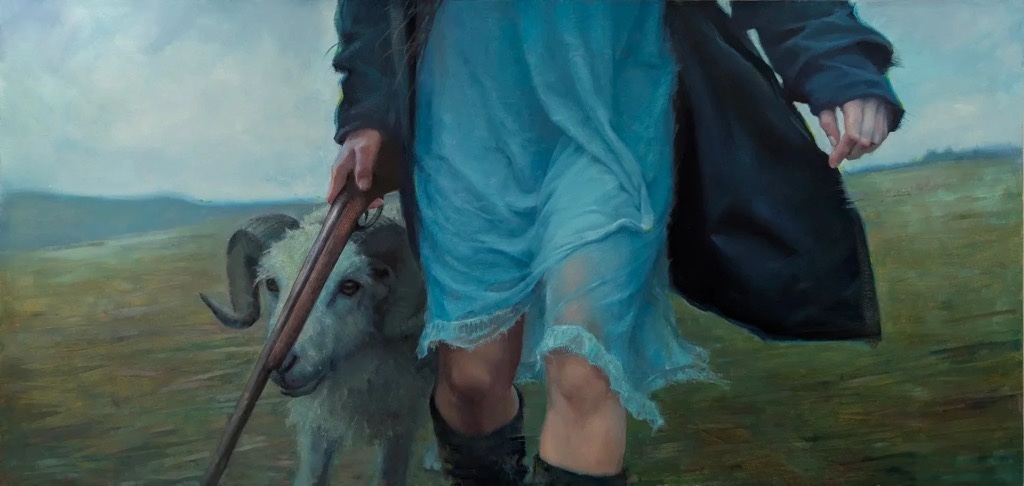
At the heart of Anima – Occupying Space is Masacz’s engagement with the social theories of Helen Rosenau and the tension between established historical representations of women and the expression of individual identity.
By adopting traditional compositional structures and drawing on mythological allegories, Masacz deliberately enters a visual language historically shaped by patriarchal values. Her paintings initially evoke the idea of the ‘Type’: the symbolic or idealised female figure through which women have frequently been represented in art history. Yet these figures resist remaining confined to such categories. Through their psychological interiority and distinct presence, they emerge as autonomous personalities rather than passive subjects.
This transition from archetype to individual forms the conceptual foundation of the exhibition. Masacz’s women are not simply representations of mythological figures or familiar cultural identities; they become complex subjects whose presence demands attention. Their strength lies not only in their visual authority but also in their refusal to be reduced to predetermined roles.
The exhibition’s title, Anima – Occupying Space, reinforces this central proposition. To occupy space is both a physical and a symbolic act: a declaration of visibility, agency and the right to be seen. Masacz’s paintings consider what it means for women to claim that space in a culture where their contributions have too often been marginalised or overlooked.
Mythology, Symbolism and the Language of Resistance
The exhibition’s portraits of Athena, Rhea, Dorothy and La Loba introduce a range of female identities that draw on mythology, storytelling and cultural symbolism. These figures provide a framework through which Masacz examines resilience, independence and the enduring power of women to shape their own narratives.
Rather than treating these references as fixed historical or mythological types, Masacz uses them as starting points for a more personal investigation of female experience. Her approach invites viewers to consider the relationship between collective cultural narratives and individual identity, questioning how inherited representations of women can be reinterpreted and reclaimed.
Alongside the portraits, Masacz’s paintings of dried roses introduce a quieter but equally evocative meditation on endurance and transformation. Traditionally associated with beauty, romance and femininity, the rose takes on a different resonance in its dried state. Its continued presence suggests the persistence of beauty beyond conventional ideas of perfection, while its altered form evokes the passage of time, survival and the traces left by experience.
Together, the portraits and still-life works create a visual dialogue between strength and vulnerability, permanence and change. They suggest that resilience is not simply a matter of withstanding adversity, but also of retaining individuality in the face of expectations imposed from outside.
Challenging the Historical Exclusion of Women Artists
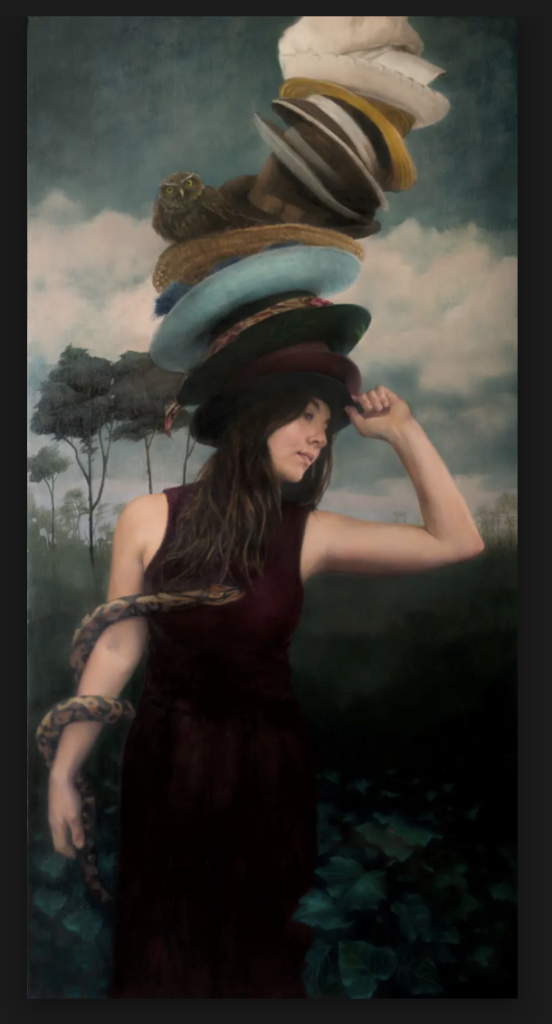
Beyond its exploration of female identity, Anima – Occupying Space addresses the broader structures that have shaped women’s participation in the art world. Masacz’s practice considers an alternative lineage of female creativity, one built on women’s labour, persistence and strategic defiance in the face of historical exclusion.
Her engagement with established artistic traditions is therefore both an aesthetic and a critical gesture. By working within recognisable compositional conventions while giving her subjects psychological depth and autonomy, Masacz reconsiders the visual language through which women have been represented and understood.
The exhibition also raises questions about the contemporary art industry’s responsibility to address persistent inequalities. Celebrating women as subjects of paintings is only one part of the conversation; ensuring that women artists have equal opportunities to exhibit, develop their practices and participate in the cultural economy remains equally important.
This emphasis gives the exhibition a contemporary relevance beyond its individual paintings. Masacz’s work connects the history of female representation with the continuing struggle for visibility and professional recognition, making the act of occupying space a statement about both artistic freedom and institutional change.
Helen Masacz: An Established Painting Practice
Helen Masacz graduated with a BA (Hons) in Fine Art before undertaking further studies at a London atelier school. Her paintings have been exhibited at the National Portrait Gallery in 2004 and 2011, and she has received the Arts Club Award from the Royal Society of Portrait Painters.
In 2025, Masacz was a winner of the Women in Art Prize, receiving the Riverstone Living Prize. The award included the opportunity to present this solo exhibition at Zebra One Gallery, bringing her work to a wider audience through a focused presentation of her recent practice.
Her paintings are held in private and public collections, including Mansfield College, University of Oxford. This combination of exhibition experience, institutional recognition and a sustained engagement with figurative painting provides the context for her current exploration of female identity and representation.
With Anima – Occupying Space, Masacz brings these interests into focus through a body of work that combines traditional painting structures with a contemporary examination of gender, autonomy and visibility. Her subjects inhabit the space of the canvas with conviction, inviting viewers to reconsider the assumptions embedded in historical representations of women.
Ultimately, the exhibition proposes that occupying space is more than an assertion of presence: it is an act of self-definition. By moving beyond inherited archetypes towards the complexity of individual personality, Masacz celebrates women’s capacity to resist prescribed identities and claim their place in both art and society.
Helen Masacz: Anima – Occupying Space
Venue: Zebra One Gallery, Hampstead, London
Dates: 22 October – 5 November 2026
Find more information about Helen Masacz here.