

A jewel in the crown of an exhibition: small but perfectly formed, Jan van Eyck: The Portraits is an extraordinary opportunity to encounter the pioneering artist’s portraits together for the first time. At its heart is the mesmerising Arnolfini Portrait, a masterpiece whose mysteries and meticulous detail continue to captivate almost 600 years after it was painted.” Lee Sharrock, Culturalee Editor
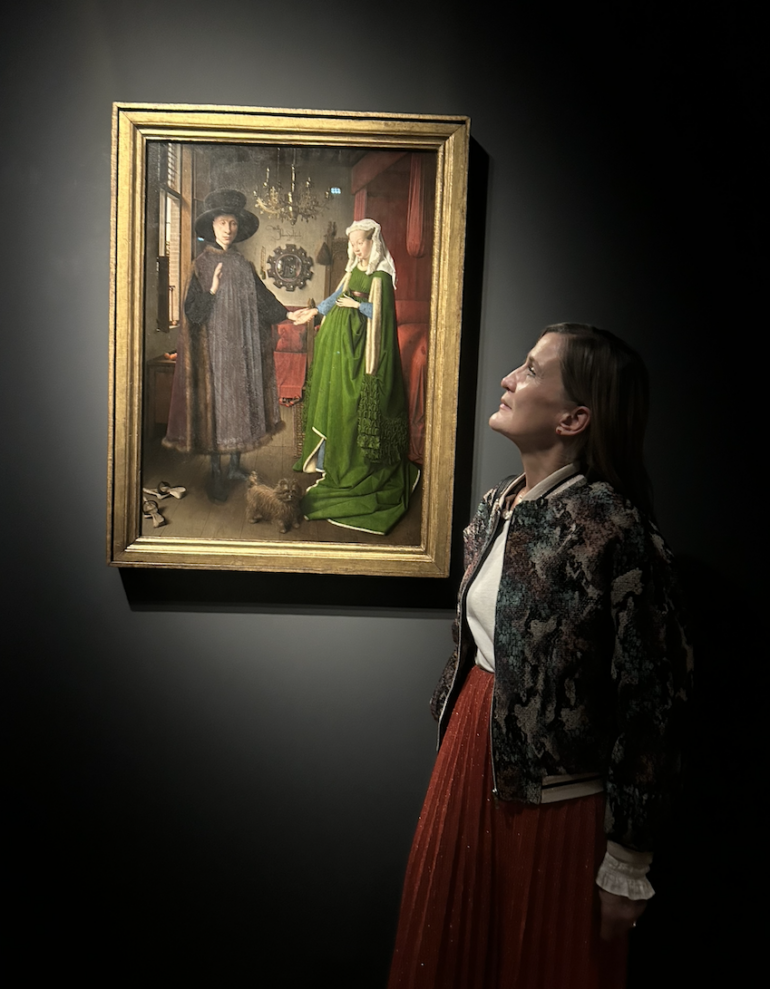
There are rare moments in the art world when the opportunity to stand face to face with a much-loved masterpiece feels particularly special. For me, the preview of Jan van Eyck: The Portraits at the National Gallery was one of those occasions. Getting up close with one of my favourite paintings, The Arnolfini Portrait (1434), was a genuine privilege. Surrounded by centuries of mythology, speculation and art-historical intrigue, the painting is even more extraordinary in the flesh.
Small but perfectly formed, this beautifully curated exhibition brings together all nine surviving painted portraits by the Netherlandish master, alongside his only surviving drawing, offering an unprecedented opportunity to appreciate the extraordinary scope of his achievement. It is a landmark moment for the National Gallery and for anyone interested in the evolution of European portraiture.
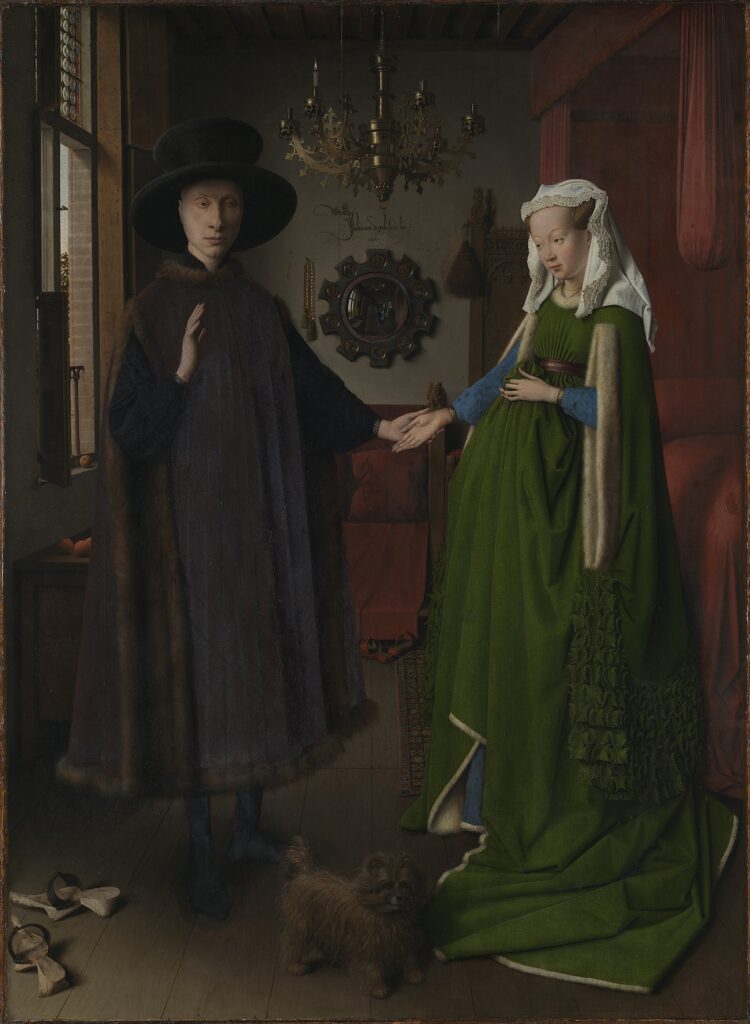
The undisputed jewel in the crown is The Arnolfini Portrait. Mesmerising in its precision and seemingly inexhaustible in its detail, it is a painting I could happily spend hours contemplating. From the luminous skin tones and sumptuous drapery to the intricate jewellery, furnishings and the famous convex mirror reflecting the room and its occupants, every element demonstrates van Eyck’s astonishing command of oil painting. The mirror itself is a marvel of technical ingenuity, depiciting tiny reflected figures opening up an entirely different perspective on the scene. The painting invites endless questions: who exactly were the sitters, what was the significance of the objects surrounding them, and what is the artist telling us through this meticulously constructed domestic interior? Its enduring appeal lies partly in the fact that it refuses to surrender all its secrets.
I haven’t been quite so captivated by a painting since encountering Vermeer’s Girl with a Pearl Earring at the Rijksmuseum’s landmark Vermeer exhibition in Amsterdam in 2023. Like Vermeer, van Eyck possesses an extraordinary ability to make a painted image feel almost impossibly alive. There is an immediacy to his portraits that transcends their historical context, creating an intimate connection between the viewer and the individual depicted. The National Gallery exhibition looks set to become a similarly compelling crowd-pleaser.
Beyond the spectacle of seeing these paintings together, the exhibition offers a fascinating insight into van Eyck’s contribution to the development of portraiture. Working in the early 15th century, he helped establish a new visual language in which the individual sitter, rather than an idealised representation of status or power, became the central focus. His portraits capture not simply the appearance of his subjects but their individuality: bloodshot eyes, stubble, unruly hair and subtle expressions that suggest complex lives beyond the picture frame. These are people who look back at us with an extraordinary sense of presence. What is so unexpected is how vibrant and alive the portraits are, with dazzling paint pigments and sumptuous drapery that pack a punch centuries after they were painted.
© The National Gallery, London
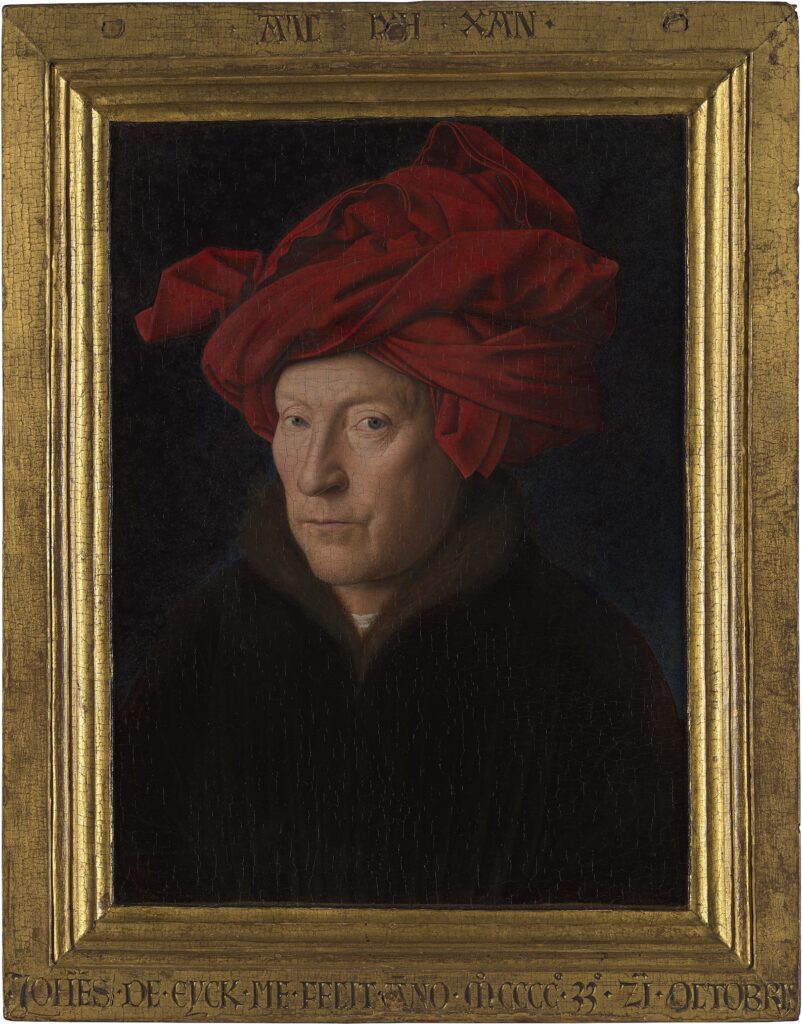
One of the exhibition’s most exciting reunions pairs The Arnolfini Portrait with Portrait of a Man (Giovanni Arnolfini?) (c.1435–38), on loan from Berlin’s Gemäldegalerie. The possibility that van Eyck portrayed the same individual twice is particularly intriguing, suggesting a personal relationship between artist and sitter that was unusual for the period.
Equally compelling is the pairing of his Portrait of a Man (Self Portrait?) (1433), from the National Gallery’s own collection, with Portrait of Margaret van Eyck (1439), depicting the artist’s wife. Margaret’s portrait is especially significant as one of the earliest dated, identifiable portraits of a woman outside the aristocracy, reflecting a moment when portraiture was beginning to move beyond dynastic and political representation to embrace a broader spectrum of society.
Another highlight is the exceptional loan of van Eyck’s Portrait of an Elderly Man (c.1438), a silverpoint and gold point drawing from Dresden’s Kupferstich-Kabinett. Reunited with the painted portrait it inspired, this remarkable work offers a rare glimpse into the artist’s creative process. Its intricate network of strokes, delicate tonal modelling and precise annotations reveal the extraordinary care with which van Eyck studied his sitters. As the only surviving preparatory drawing securely associated with a Netherlandish painting of this period, it is an invaluable document in the history of portraiture.
The exhibition also explores van Eyck’s fascination with illusion and materiality. His ability to recreate the appearance of precious metals, polished stone and other surfaces through paint was as remarkable as his rendering of human faces. His portraits were often painted on both sides, with elaborate frames and reverses designed to imitate luxurious materials. Several works will be displayed in the round, allowing visitors to appreciate these less familiar details and understand how the paintings were originally intended to be handled, examined and experienced at close quarters.
Van Eyck’s confidence in his own abilities is evident in his inscriptions and distinctive motto, Als ich kan (“As well as I can”), which appears on several works. At a time when many artists remained anonymous craftsmen, he proudly signed and dated his paintings, asserting an artistic identity that reflected the changing status of painters during the Renaissance.
Appointed court painter to Philip the Good, Duke of Burgundy, in 1425, van Eyck enjoyed a position of considerable prestige. His responsibilities extended beyond painting, and he undertook diplomatic missions on the duke’s behalf, including a journey to Portugal in 1428–29 to paint the future Duchess Isabella. His reputation travelled across Europe during his lifetime, and his influence on subsequent generations of artists was profound.
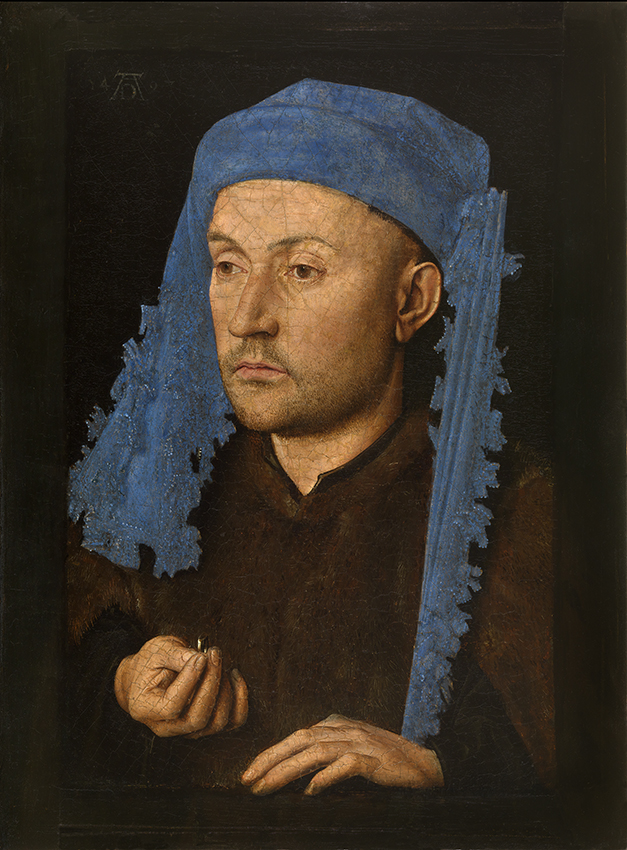
19.1 × 13.2 cm (excluding additions)Brukenthal National Museum, Sibiu, Romania
© Brukenthal National Museum, Sibiu, Romania.
Curated by Emma Capron, the National Gallery’s Curator of Early Netherlandish and German Paintings, Jan van Eyck: The Portraits is a masterclass in looking closely. It brings together exceptional loans, fresh research and extraordinary works of art to illuminate an artist whose technical brilliance transformed the possibilities of painting.
There are blockbuster exhibitions that impress through sheer scale, and then there are those that achieve something altogether more intimate. This is firmly the latter. With its carefully considered selection and remarkable reunions, the exhibition rewards close attention rather than spectacle. Above all, it reminds us that the greatest paintings never stop revealing themselves. Nearly six centuries after van Eyck painted The Arnolfini Portrait, its mysteries remain as compelling as ever.
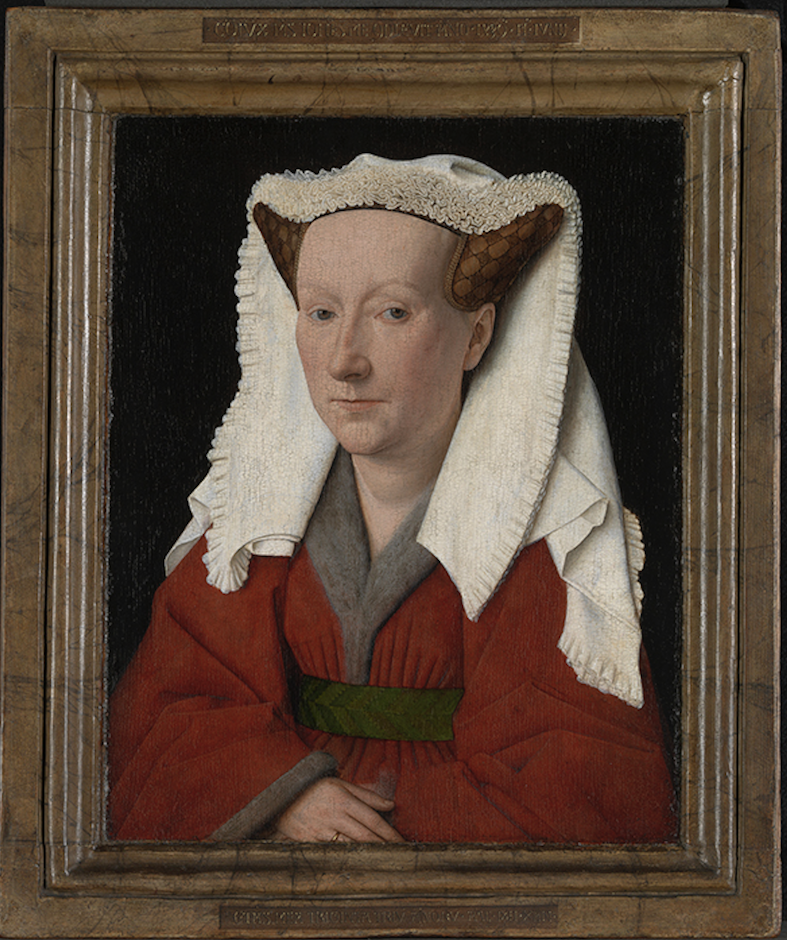
Musea Brugge – Groeningemuseum, Bruges (Inv. OOOOGRO 0162.I)
© Musea Brugge. Photo: The National Gallery, London
Van Eyck is one of the pillars of the National Gallery’s collection and a foundational figure in the European history of art. The portraits reflect a remarkable sensitivity to his sitters and an astounding technical virtuosity in their execution . This will be an extraordinary opportunity to see them all gathered together in one place.”National Gallery Director, Sir Gabriele Finaldi
Jan van Eyck: The Portraits
The National Gallery, London
21 November 2026 – 11 April 2027
For more information, visit nahttps://www.nationalgallery.org.uk