

Working between Taiwan and London, Pei‑Yi Tsai has developed a quietly arresting painterly language centred on fragmentation, concealment, and the instability of identity. Her solo exhibition [Insert] at SLQS Gallery, curated with sensitivity and intellectual precision by Senem Cagla Bilgin‑Keys, presents a compelling meditation on queer subjectivity, displacement, and psychological interiority.
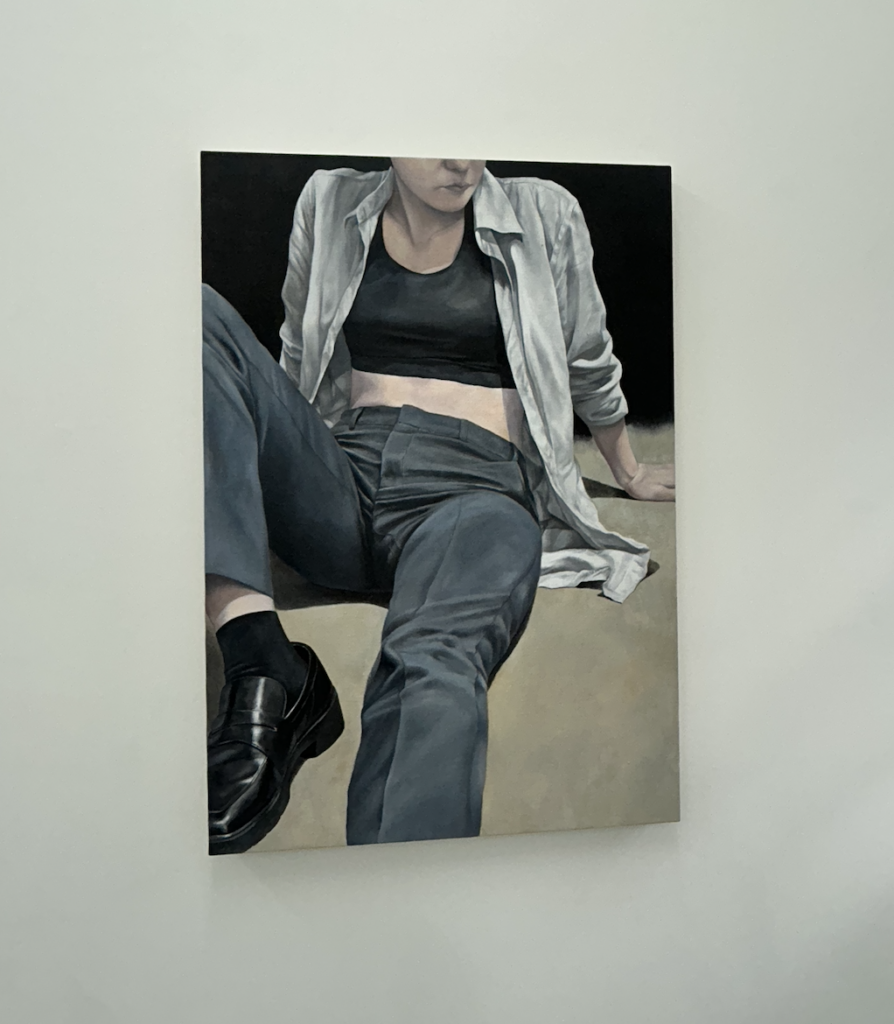
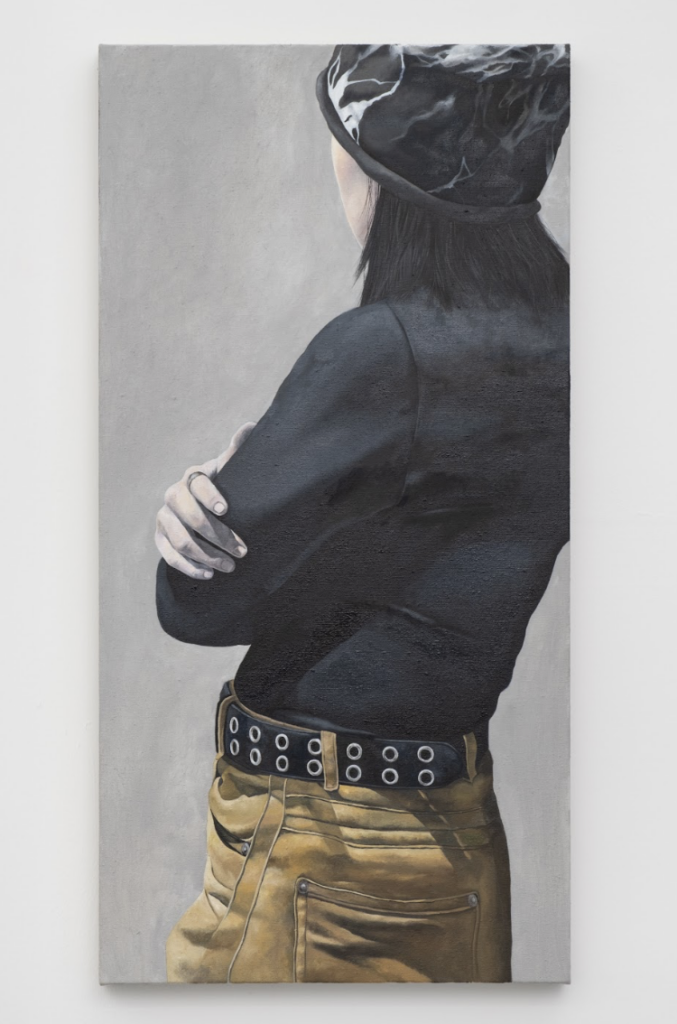
Tsai’s paintings resist the conventions of portraiture. Faces are cropped, bodies dissolve into shadow, and gestures remain unresolved, as though the figures themselves are caught between visibility and erasure. Rather than offering coherent narratives or fixed identities, the works embrace ambiguity as both a formal strategy and a lived condition. In Tsai’s hands, fragmentation becomes a means of articulating the pressures of social expectation, cultural displacement, and the fluidity of queer experience.
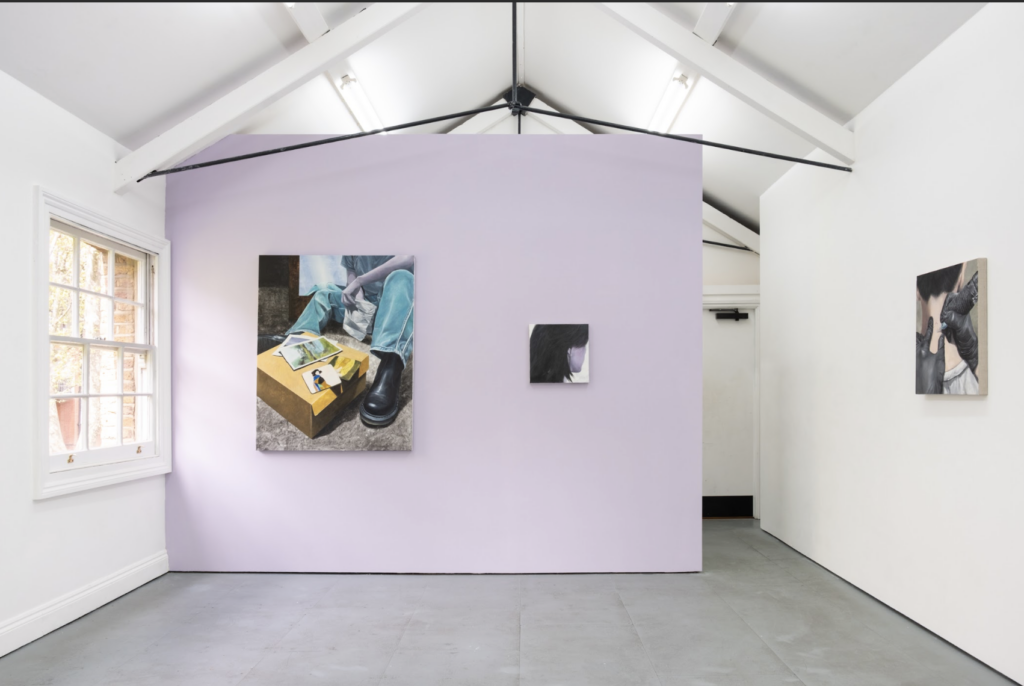
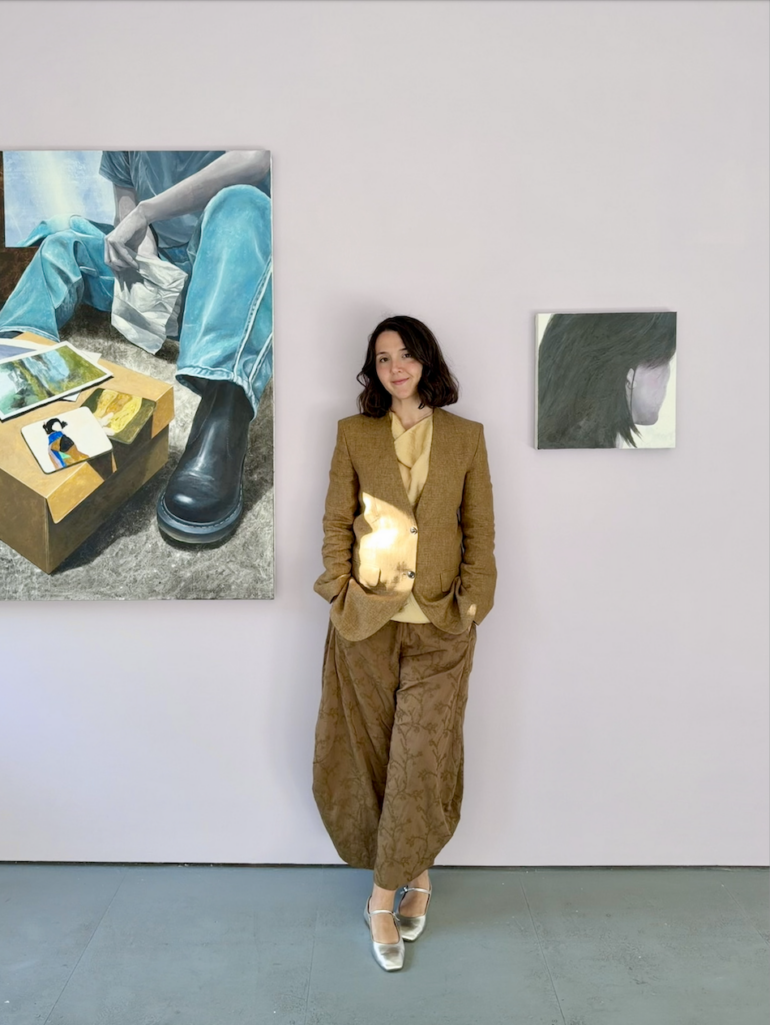
The exhibition opens with two of Tsai’s earlier works, which both feature figures with distinctly purple-toned skin, introducing an atmosphere that feels psychologically charged rather than naturalistic. One large-scale canvas depicts the lower half of a standing figure in jeans and heavy black boots, an arm extending into the composition while clutching a crumpled piece of paper. Nearby, images associated with Taiwan and Japan rest atop a shoebox on the floor, quietly suggesting layered questions of identity, migration, and cultural allegiance. Tsai demonstrates remarkable technical control here: light glances convincingly off polished leather, while the creases of paper are rendered with acute observational sensitivity.
Tsai’s draughtsmanship is especially striking. There is a precision reminiscent of Jean‑Auguste‑Dominique Ingres in the clarity of contour and anatomical control, yet Tsai’s line also carries traces of Taiwanese visual traditions. Fine black contours and intricate detailing evoke something almost calligraphic, allowing her Taiwanese heritage to subtly permeate the paintings without reducing them to cultural signifiers.
The second early work presents only a partial profile: black hair tucked behind an ear, a silver hoop earring catching the light, and the curve of a cheek and chin emerging from darkness. The refusal to fully reveal the sitter becomes central to the exhibition’s emotional register. Tsai consistently withholds complete access to her subjects, compelling viewers to confront the limitations of visibility itself.
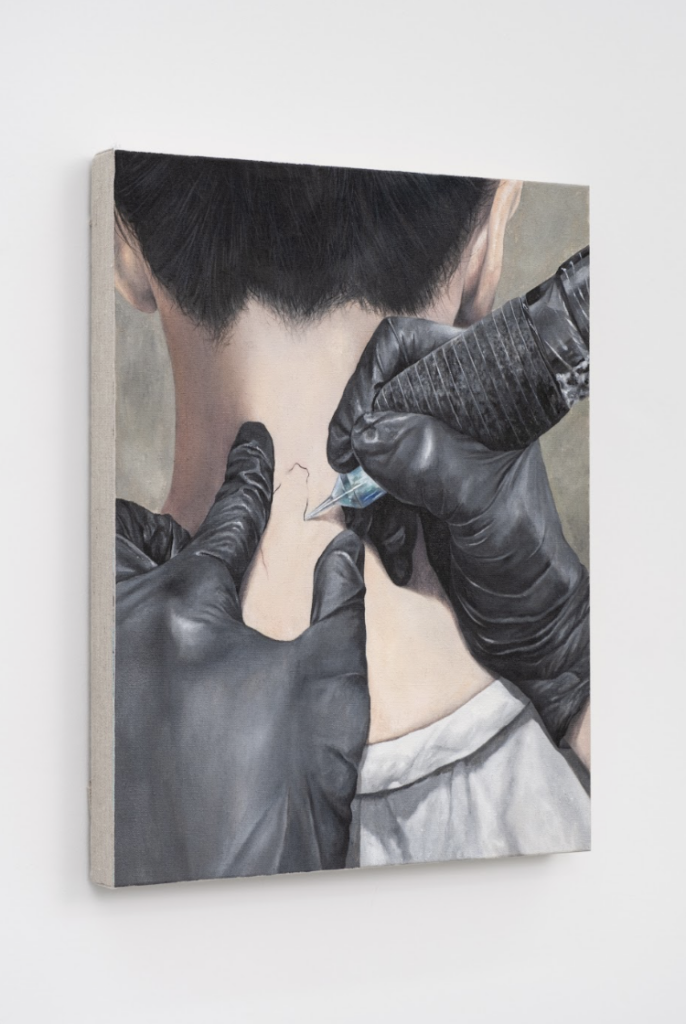
A notable shift occurs in the works made when she moved to the UK, and the purple skin tones in her paintings were replaced by a more naturalistic flesh. In one particularly affecting painting, tattooed gloved hands inscribe a map of Taiwan onto the back of a neck. The work functions simultaneously as portrait and political metaphor, transforming the body into a site upon which histories of migration, belonging, and national identity are literally marked.
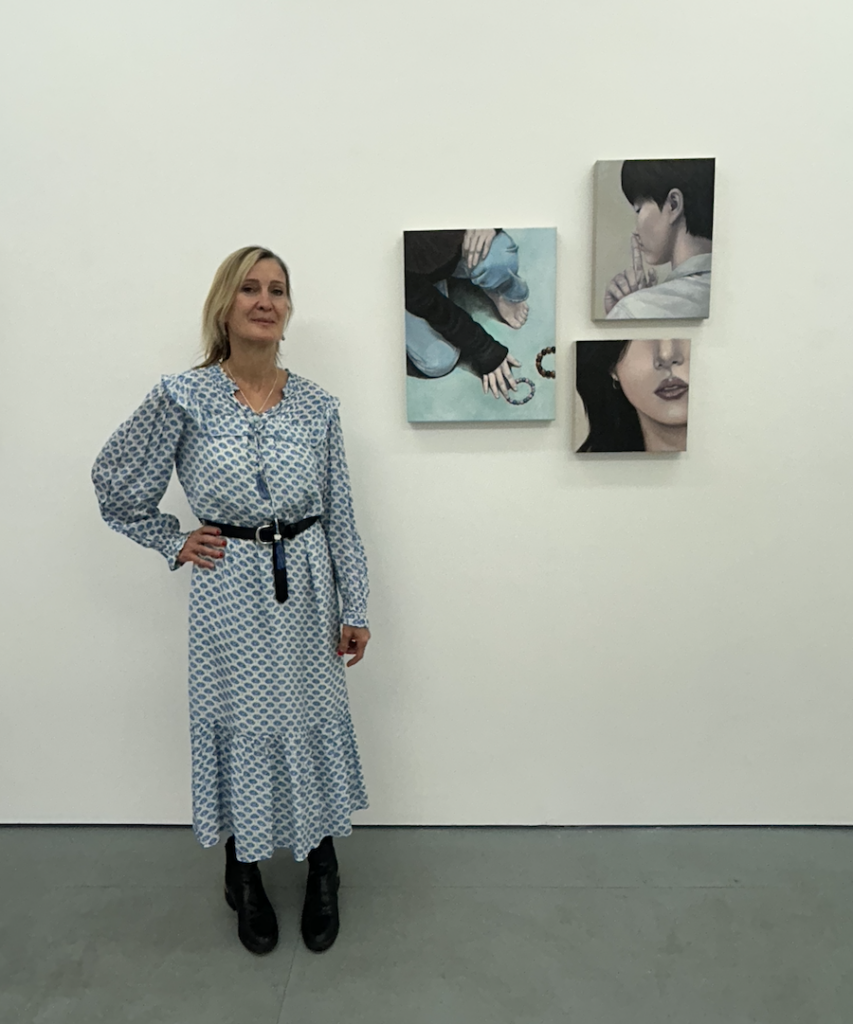
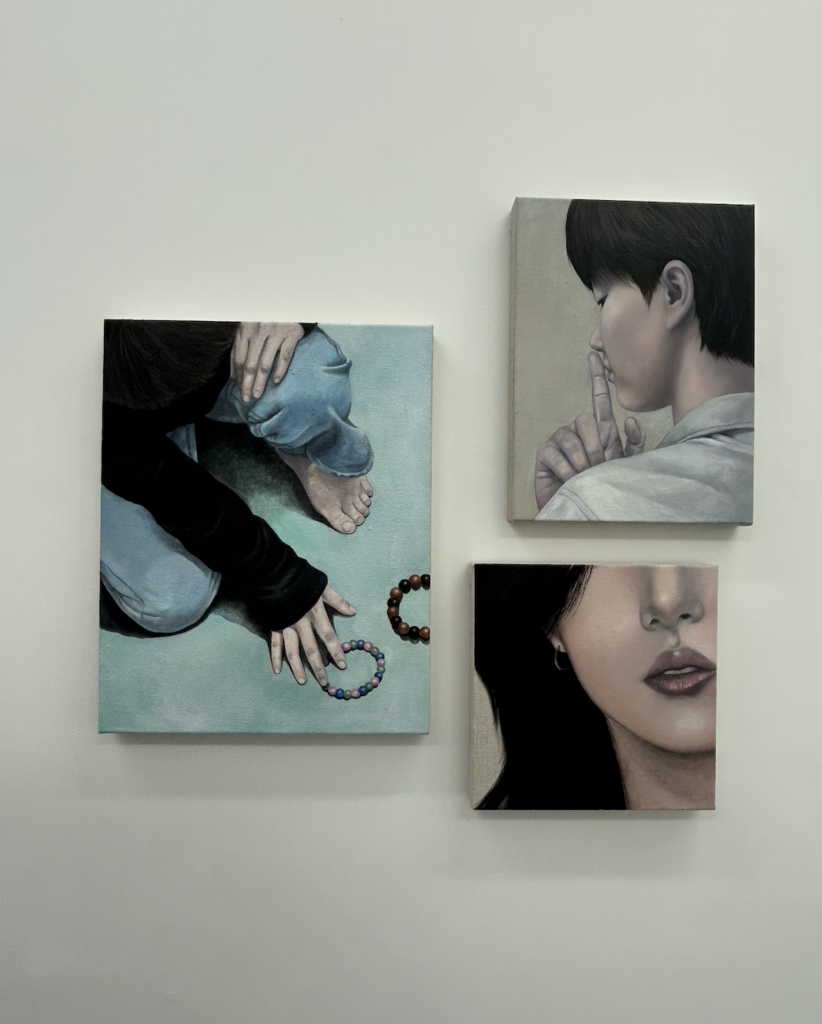
Bilgin-Keys’s curatorial approach is especially effective in the exhibition’s central grouping, where three paintings are arranged in a silent yet emotionally charged dialogue. In one, a kneeling figure reaches toward beaded bracelets on the floor, objects associated with the artist’s parents and a metaphorical form of protection given to her by her mother, reflecting an emotional and cultural notion. Adjacent to this, another figure presses a finger to their lips in a gesture of enforced silence, alluding to the secrecy and self-censorship often imposed upon queer identities. Together, the works articulate the emotional burden of concealment without lapsing into sentimentality.
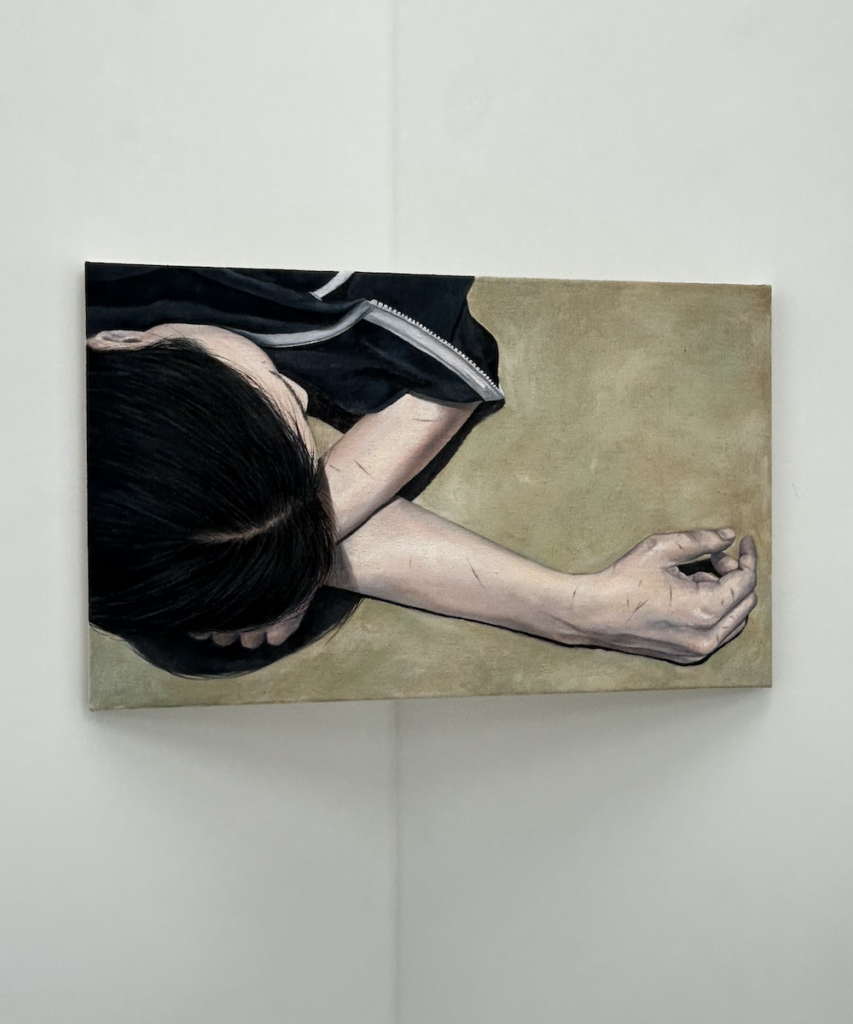
The exhibition’s most devastating moment arrives in a painting depicting an outstretched arm marked by self-harm scars. Tsai handles the subject with restraint, avoiding spectacle in favour of quiet psychological weight. Nearby, a portrait of a figure with downcast, grief-stricken eyes extends this atmosphere of sorrow and emotional isolation.
Yet [Insert] ultimately resists despair. Bilgin-Keys ensures the exhibition closes on a more open and contemplative note. In the final painting, a figure in a black jumper and hat stands with folded arms, turned away from the viewer toward the light and trees visible beyond a window. The work retains Tsai’s characteristic ambiguity, but it also introduces the possibility of release, reflection, and future transformation.
Bilgin-Keys has remarked that the strength of Tsai’s work lies in “the tension between what is revealed and what is withheld,” and this exhibition succeeds precisely because it never seeks easy resolution. Instead, Tsai constructs a visual language in which identity remains contingent, fractured, and emotionally charged. Through exquisitely rendered surfaces and psychologically complex compositions, [Insert] positions the body as a site where private memory and broader cultural histories converge. The result is a deeply affecting exhibition that confirms Pei-Yi Tsai as an important emerging voice in contemporary figurative painting.
Review by Culturalee Editor Lee Sharrock.
Pei-Yi Tsai [Insert] is at SLQS Gallery in London until 23 May, 2026. Find more information here.