

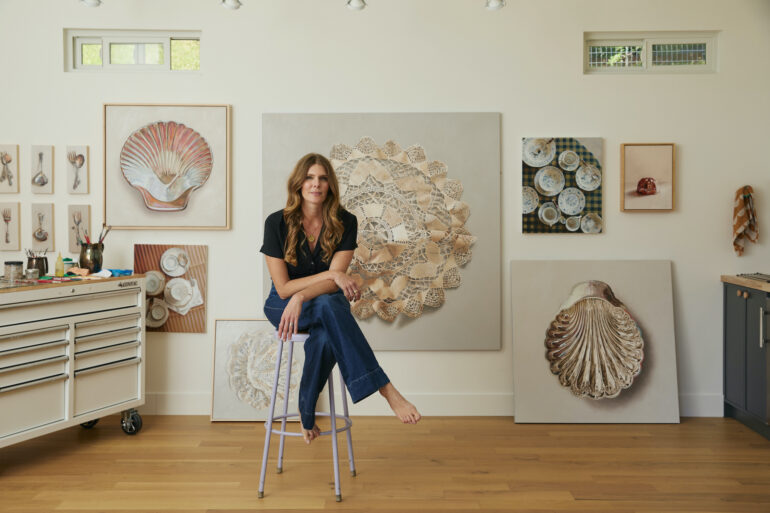
In an exclusive interview with Culturalee, artist Leslie Lewis Sigler reflects on her evocative still-life paintings, where heirloom silverware, crumpled doilies and carefully arranged tablescapes become quiet vessels for memory, family history and human connection.
Drawing inspiration from objects “passed down” through generations, Sigler explores the emotional resonance embedded within domestic life, transforming tarnished utensils and worn textiles into portraits of collective experience, anticipation and belonging. We spoke to Leslie about the themes of domesticity, heirlooms and inheritance running through her exquisite hyperreal still life paintings, which recall Dutch Old Masters and Delicacy, her recent exhibition with artist Alice De Vliegher at Galerie Mokum in Amsterdam and upcoming show in her Homecoming at Commerce Gallery in her native Texas.
Your paintings often center on heirloom objects: silver, copper, and domestic wares that carry traces of use and history. What draws you to these materials specifically?
I do tend to paint bygone things, or things that have been around and passed down. Things that I feel hold stories and have a history even if I’m forced to imagine it. I find myself drawn to these objects because, in our era defined by fast moving lives and short attention spans, they hold a slower, more grounded sense of home that I still long for even as a grown adult.
Your subjects feel like they’ve been discovered in media res: doilies half folded, utensils piled onto top of one another, place settings arranged but devoid of anything edible. Is this meant to impart a sense of ambiguity or tension for what has happened or what is to come?
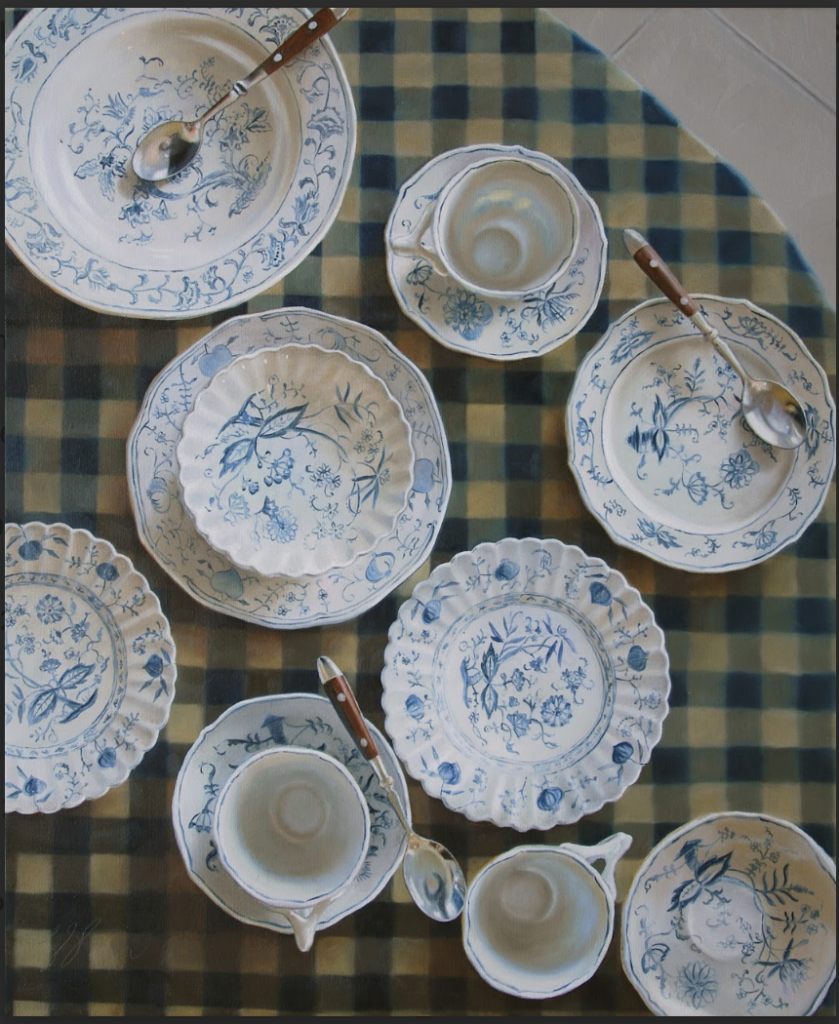
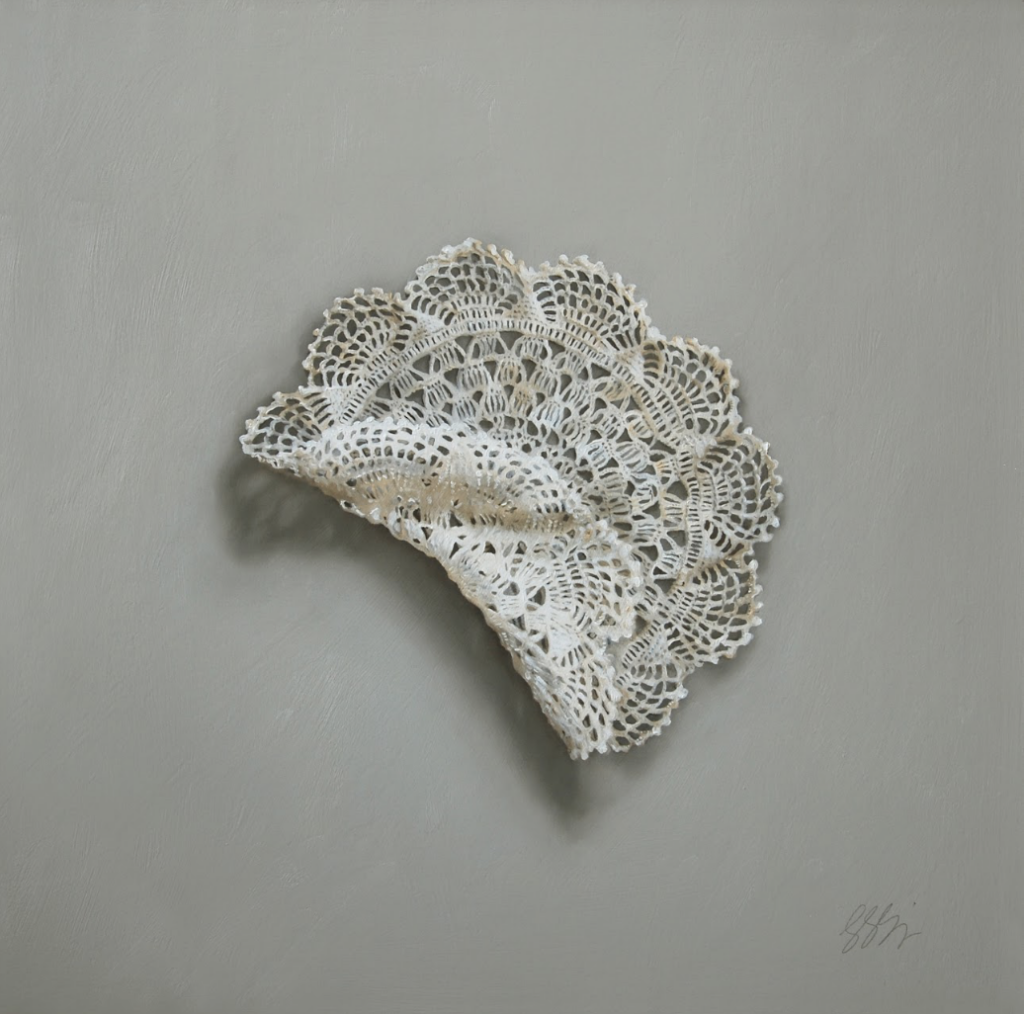
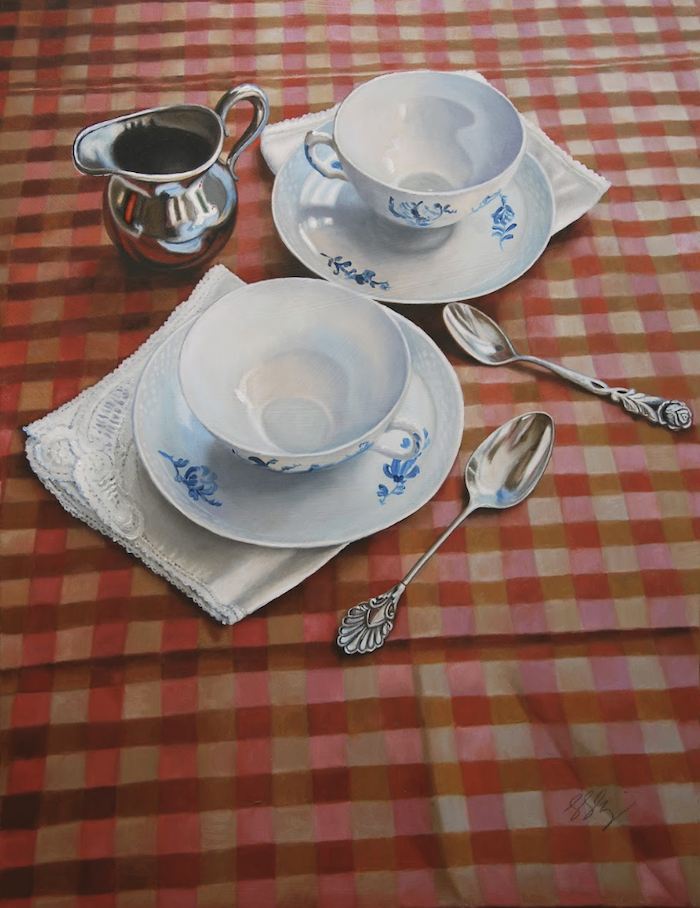
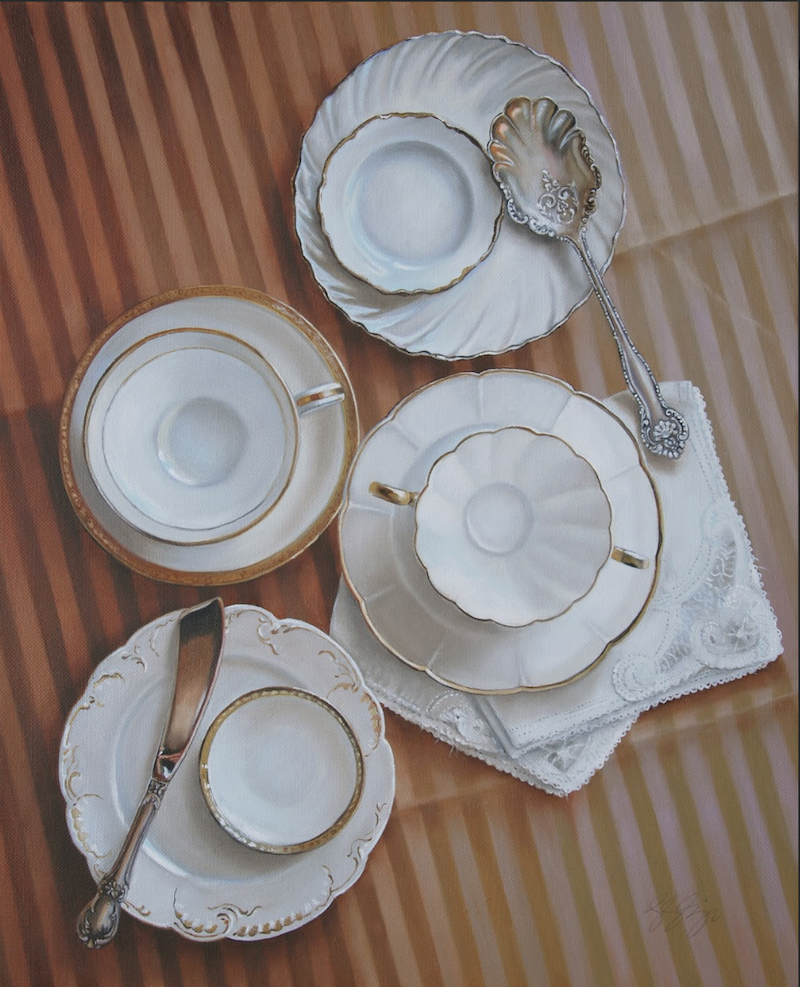
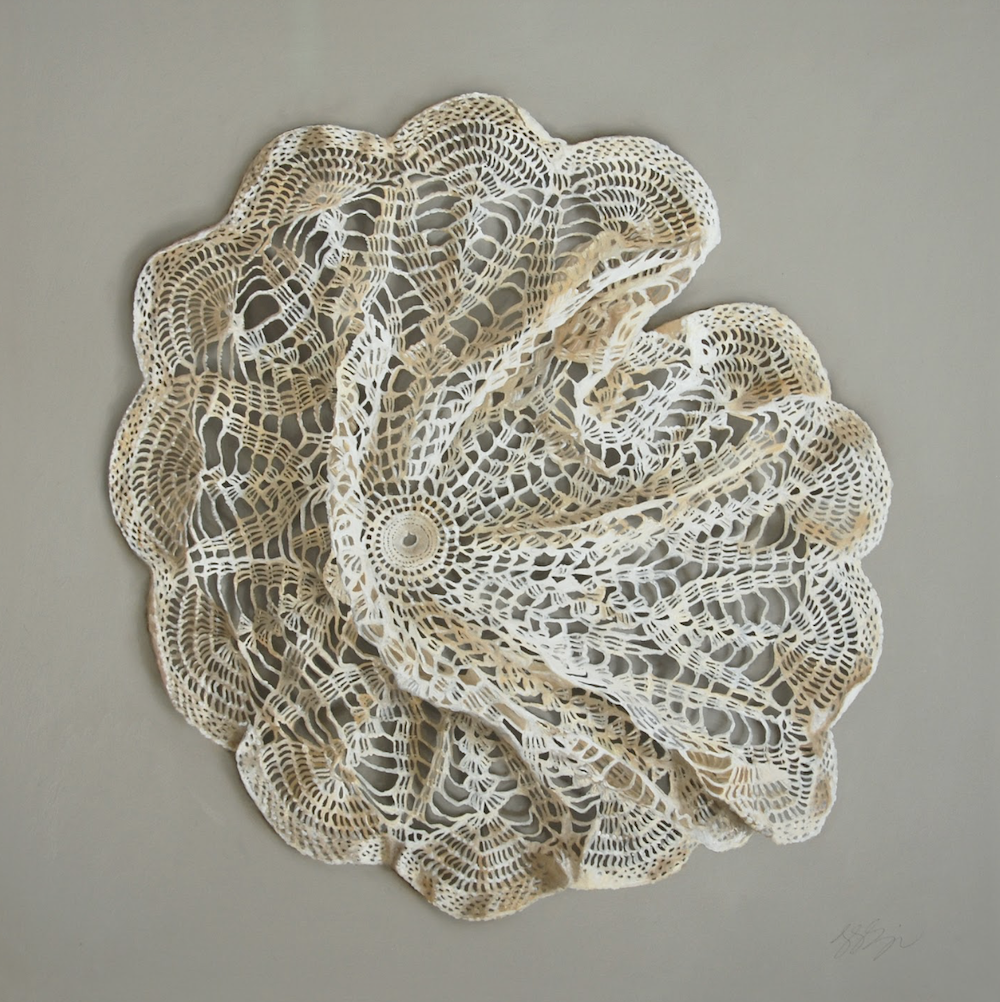
The doilies are a more recent subject. They are displayed imperfectly beautiful but also crumpled and stained, never fully composed. They represent mothers and motherhood and the challenge of being both inherently wonderful and also tired, busy, and trying to stay lovely but never having it totally together. Ambiguity is a good word. The tension in the tablescapes is about the anticipation—good or bad—of preparing for a gathering. There is that feeling of happy anticipation that grows when you’re preparing, setting out your tableware, talking about your expected guests. And then enjoying the magic of a diverse cast of characters. I show them still, at rest, in a kind of meditative way because the painting isn’t about specific humans but our collective experience.
Do you think the objects you depict are inherently charged with emotion, or does that evolve during your process?
The silverware has inherent designs and patina that hints a bit at individual traits like characters in a story. When I study them closely they almost become human archetypes. I approach them as though I’m composing a portrait. I’m trying to interpret their character, and I’m also adding some emotion, or suggestion, in the way I arrange them. Also, their functional role is about the human connection found in gathering around a table. So I wonder about the gatherings and family members they have witnessed. Beneath the unique designs of the silver and the emotions in the arrangements, I see these objects as carrying embedded stories: family dynamics, quiet tensions, and the unspoken roles that shaped a household. They are static objects, but the art is elevating our human experience of connecting.
You recently had an exhibition alongside artist Alice De Vliegher titled Delicacy at Galerie Mokum in Amsterdam. What do you think changes with your work being in conversation with another artist?
My paintings of silver—with their many reflections—can seem like a mirror reflecting some colorful elements of the nearby art. So that’s a fun conversation. With Delicacy, the counterpart is Alice De Vliegher’s cakes and pastries, which are also related to anticipation, eating, and sharing with friends. We named the show Delicacy because my work depicts delicate things, and hers depicts edible delicacies. Yet neither of us treats the subject as unapproachable or precious to where they are off limits. I think her work helps highlight the honored position of the silver, the specialness, since her special desserts sit behind glass and create desire. Looking at the work in the gallery made me think about polishing silver for Thanksgiving Dinner, a special occasion.
You have an upcoming exhibition titled Homecoming at Commerce Gallery in Lockhart, Texas. You’re originally from Texas, so what is it like to return there now?
The objects in my show were things that were present in the background when I was growing up in Texas. But it’s only now that I’m a grown adult and a parent that I’ve only discovered or attributed a deep meaning to all these things, the silver and the doilies. So visiting Texas makes me appreciate the origin of the experiences, and bringing my artwork there feels like a full circle.
Will the work in this exhibition differ from your previous still lifes in terms of subject matter or emotional tone?
Prior to this show, the doilies were just emerging, but there will be more in this one. I’ll be playing with scale, painting larger scales. The subjects will be familiar, but some new scale.
Light plays a central role in your compositions, especially in the way it reflects and distorts across metallic surfaces. What interests you about these reflections, both visually and conceptually?
They reflect the life around them, and we also see their abstract curves and effects on the light. I compose the reflections just as much as I compose the item. Colors, lights, and the nearby objects or people reflected can be elements in the story I’m depicting. There are some self-portraits mixed in. In life, all of us exist within an environment and we are influenced by it.
There’s also an interesting tension between preservation and transformation. These objects endure, yet their surfaces shift with time and use. How do you think painting participates in that cycle?
Over time, I’ve come to see the worn finishes, intricate designs, and accumulated marks as a kind of language, one that speaks to belonging, differences, and the way we hold space for each other. The paintings touch on both at once: the inherent and also the pain of experience, of wear. As portraits, I’m capturing a moment in their history, and commenting on their past. I want to capture everything spoken.
In both your Amsterdam exhibition and the upcoming show in Lockhart, ideas of place and context seem especially present. How does geography, whether cultural, personal, or historical, shape the way you think about these objects?
I think about geography in terms of connection. I like to imagine where they were first used, how, and by whom. I consider all the subsequent lives they may have had through generations and geographies and how they’ve come into my possession. These points in time form a lineage. In some of my paintings there is a clear context like a patterned tablecloth, and in others the surroundings are an abstract reflection in the metal surface of the object.
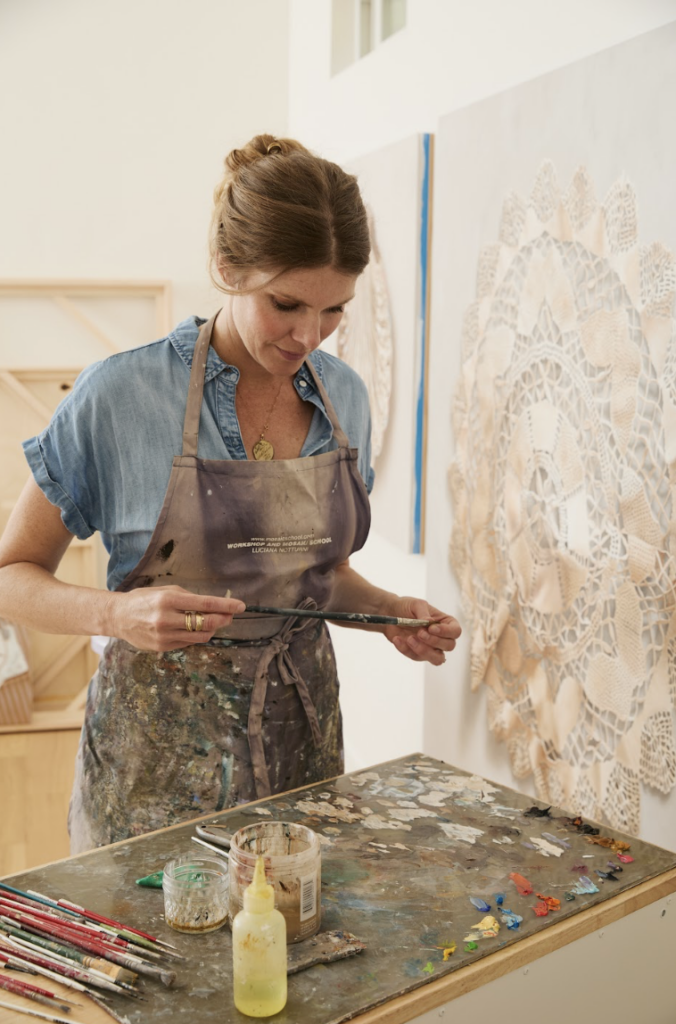
I find that each painting informs the next. I’m curious to continue exploring the relationships between disparate, once-beloved objects through my tablescape compositions and how they converse with each other.” Leslie Lewis Sigler
Follow Leslie Lewis Sigler here.