
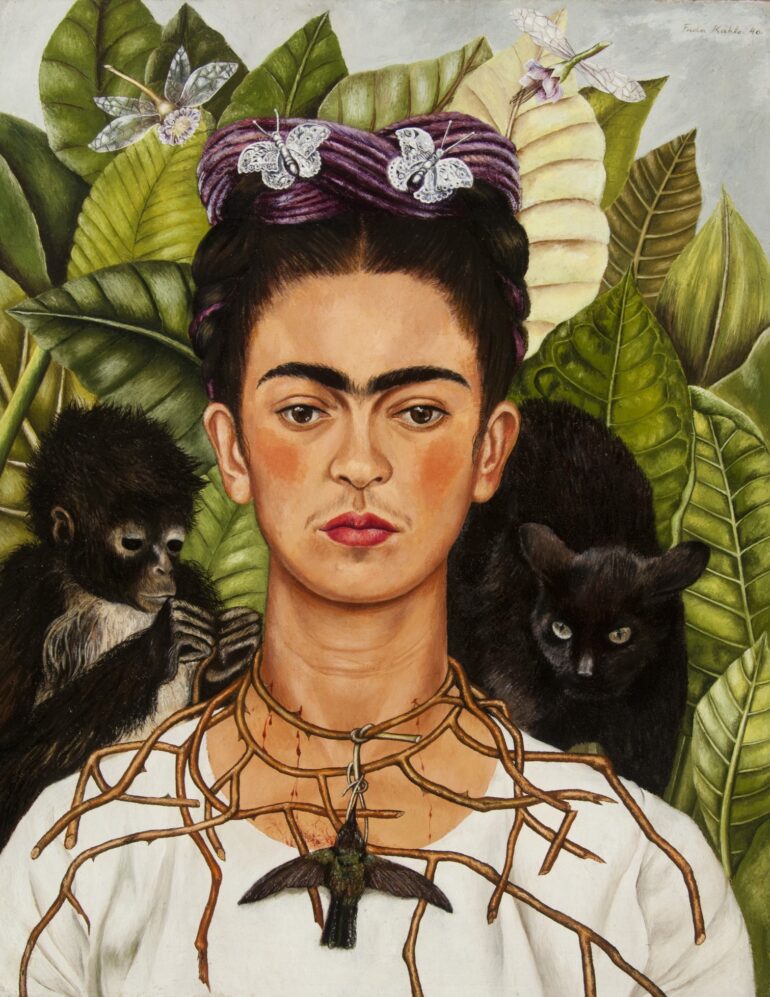
No artist apart from perhaps Andy Warhol has generated such an enduring cult of personality as Frida Kahlo. Her image of the unibrow, crimson lips, floral headdresses and Tehuana dresses, has become one of the most recognisable visual brands in modern culture, reproduced endlessly on tote bags, keyrings, T-shirts and even tequila bottles.
Yet behind the merchandising phenomenon lies an artist of extraordinary originality and resilience. Frida Kahlo was not simply a style icon but a pioneering painter who transformed physical suffering, political conviction and emotional turmoil into a body of work unlike any other. Tate Modern’s blockbuster exhibition, Frida: The Making of an Icon, sets out to examine how Kahlo became a global symbol. At its best, it offers an intimate encounter with her remarkable paintings but at its weakest, it risks becoming complicit in the very cult of commodification it seeks to analyse.
Developed in collaboration with the Museum of Fine Arts, Houston, the exhibition brings together more than thirty paintings, drawings and personal objects, alongside photographs and works by artists influenced by Kahlo. The opening galleries are magnificent. They focus on the construction of Kahlo’s artistic and personal identity, revealing how carefully she fashioned her image while simultaneously forging an entirely original visual language.
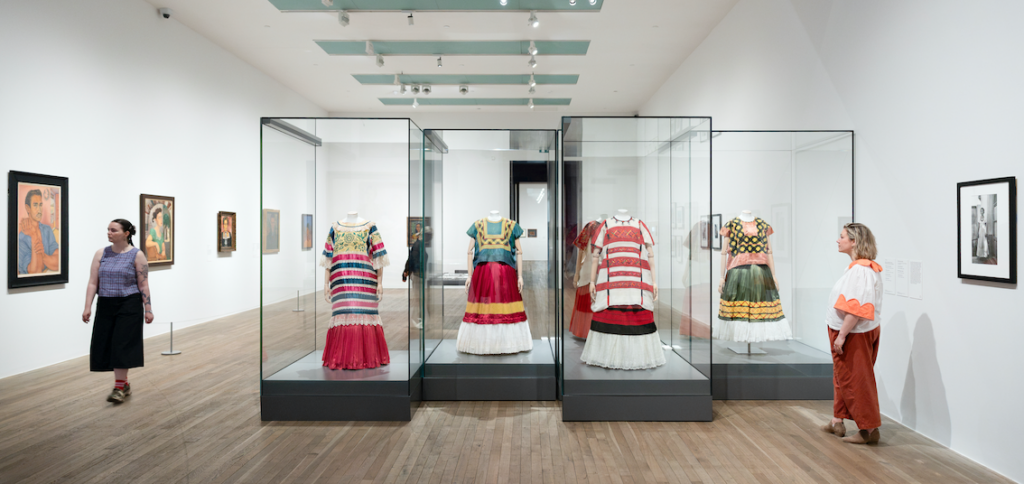
Frida The Making of an Icon installation view. Photo © Tate (Larina Annora Fernandes)
The exhibition begins with her early self-portraits, including Self-Portrait (With Velvet Dress) (1926) and Self-Portrait with Loose Hair (1948), displayed alongside examples of her distinctive Tehuana clothing. These rooms vividly demonstrate how Kahlo made her Mexican heritage central to both her art and her public persona.
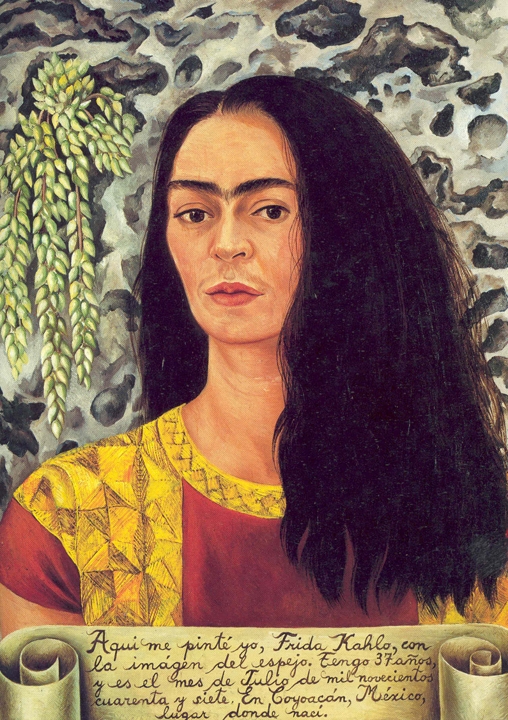
Frida Kahlo – Self-Portrait with Loose Hair
Her biography remains inseparable from her work. Following a devastating bus accident at eighteen, Kahlo endured chronic pain, multiple operations and periods of prolonged immobility. Confined to bed, she began painting self-portraits using a mirror suspended above her. Her body became both subject and canvas: a plaster corset, displayed in the exhibition, bears painted symbols including a hammer and sickle and references to motherhood and loss.
Kahlo channelled her trauma into paintings of startling emotional intensity. Like later artists such as Louise Bourgeois and Tracey Emin, she transformed private suffering into universal narratives of pain, identity and desire.
The exhibition’s greatest strength lies in the opportunity to spend time with some of Kahlo’s most extraordinary works. Among the highlights is The Frame (1938), the first twentieth-century work by a Mexican artist acquired by the French national collection after André Breton famously described Kahlo as “a self-made Surrealist” – a label she herself rejected.
Even more powerful is Memory (The Heart) (1937), perhaps the emotional centre of the exhibition. In the painting, a gigantic bleeding heart lies at Kahlo’s feet while fragments of clothing and identity surround her. The image reads as a devastating meditation on heartbreak, bodily trauma and fractured selfhood.
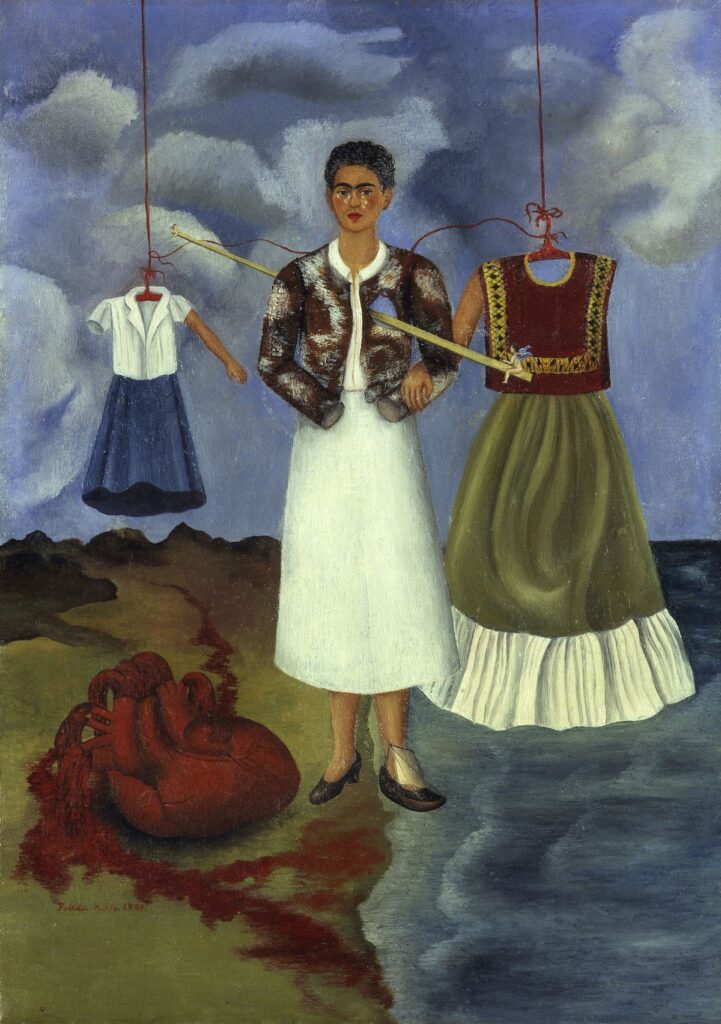
Other standout works include Self-Portrait with Monkeys (1938), Diego and Frida (1929) and Girl with a Death Mask (1938). Their meticulous brushwork and layered symbolism reveal an artist who fused Mexican folk traditions, religious iconography and dream imagery into a wholly personal mythology.
The early galleries are enriched by photographs of Kahlo by figures including Nickolas Muray and Julien Levy. Muray’s vibrant colour portraits capture the carefully constructed public persona we recognise today, while Levy’s intimate photographs reveal a more vulnerable and playful side to the artist.
Paintings by fellow members of the Mexican Renaissance, including Diego Rivera and María Izquierdo, provide useful context, demonstrating the artistic environment from which Kahlo emerged. A charming film of Kahlo and Rivera together offers a glimpse of the affection and complexity that defined one of art history’s most famous relationships.
Had the exhibition ended there, it would have been exceptional. Instead, the latter half becomes increasingly crowded with responses to Kahlo’s legacy. Some of these works are compelling, particularly pieces by Kiki Smith and Judy Chicago, whose explorations of female experience, bodily trauma and motherhood resonate deeply with Kahlo’s concerns without simply imitating her.
Elsewhere, however, the exhibition loses focus. Works by artists influenced by Kahlo sit alongside photographs, film posters and contemporary appropriations of her image. The inclusion of promotional material from the 2002 biopic starring Salma Hayek feels particularly out of place in what is ostensibly an exhibition about one of the twentieth century’s greatest painters.
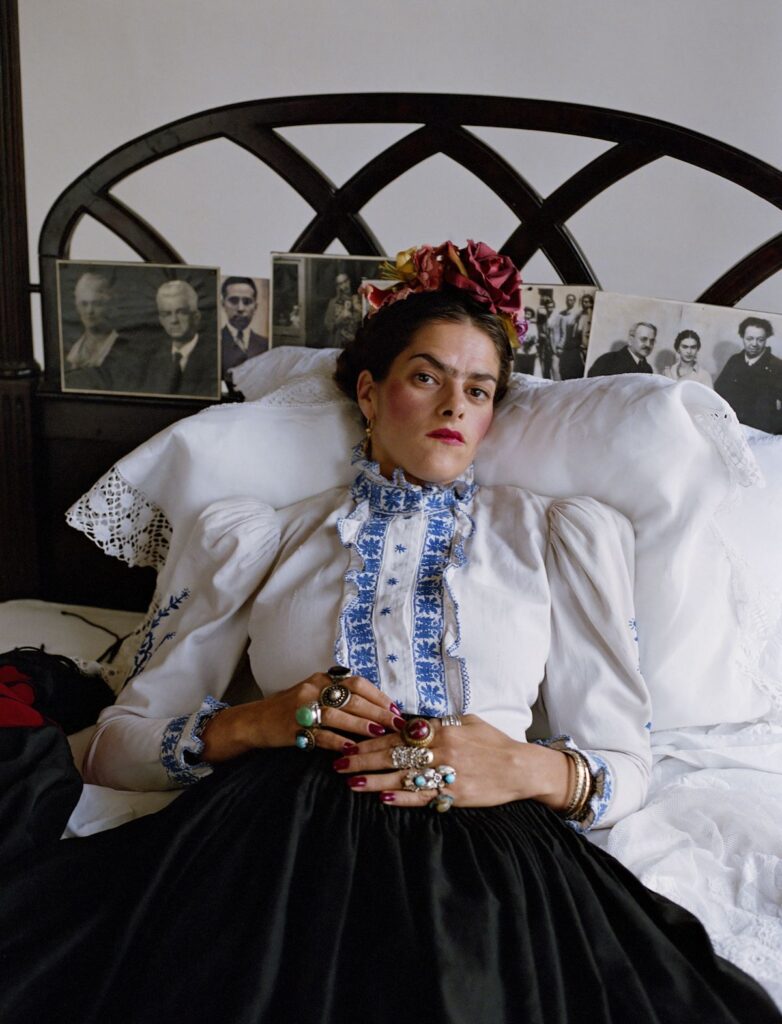
Mary McCartney – Being Frida London.
The final gallery, titled Fridamania, is perhaps the exhibition’s most contentious. More than 200 pieces of merchandise – candles, socks, T-shirts, dolls and liquor bottles – are displayed as evidence of Kahlo’s transformation into a global brand. The room is undoubtedly fascinating as a sociological study, but it also feels oddly uncritical. Its proximity to the Tate gift shop, stocked with yet more Kahlo merchandise, only heightens the sense of contradiction. The exhibition seems to suggest that icon status is inseparable from mass reproduction and commercial success. But this interpretation overlooks the true source of Kahlo’s enduring appeal: the paintings themselves.
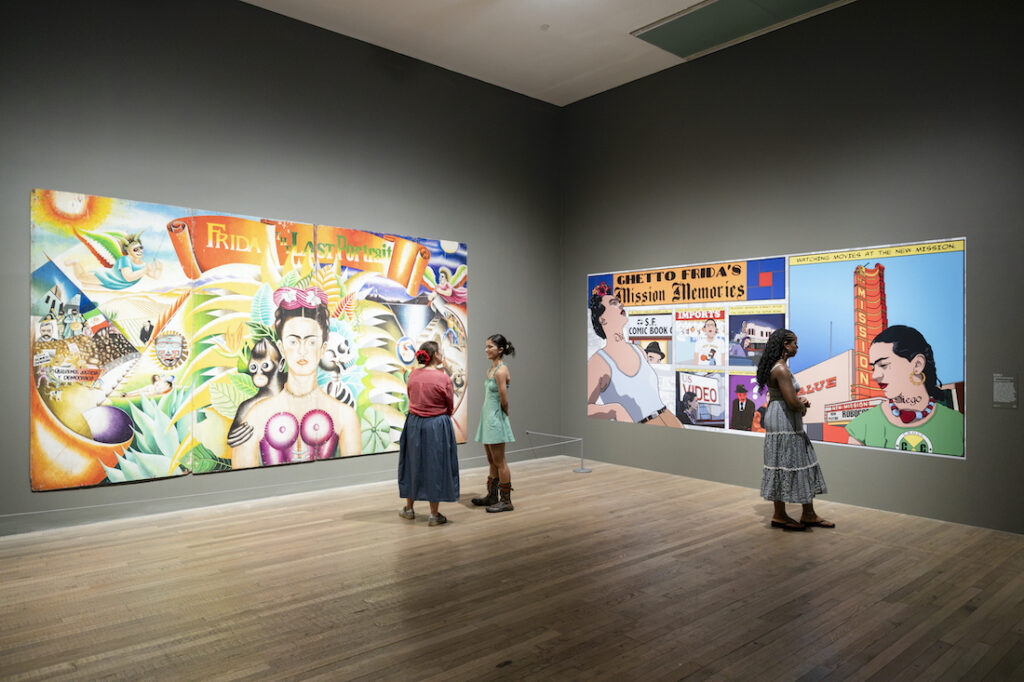
Frida The Making of an Icon installation view. Photo © Tate (Larina Annora Fernandes)
People don’t want to see the exhibition purely to buy Kahlo merch in the gift shopt: they are fascinated by her because her prodigious talent as an artist, her personal life story of overcoming adversity and her enigmatic persona. Kahlo was a pioneering female artist who addressed disability, gender, sexuality and identity decades before these subjects entered mainstream cultural discourse. Her paintings transform deeply personal experiences into images of astonishing emotional and symbolic power.
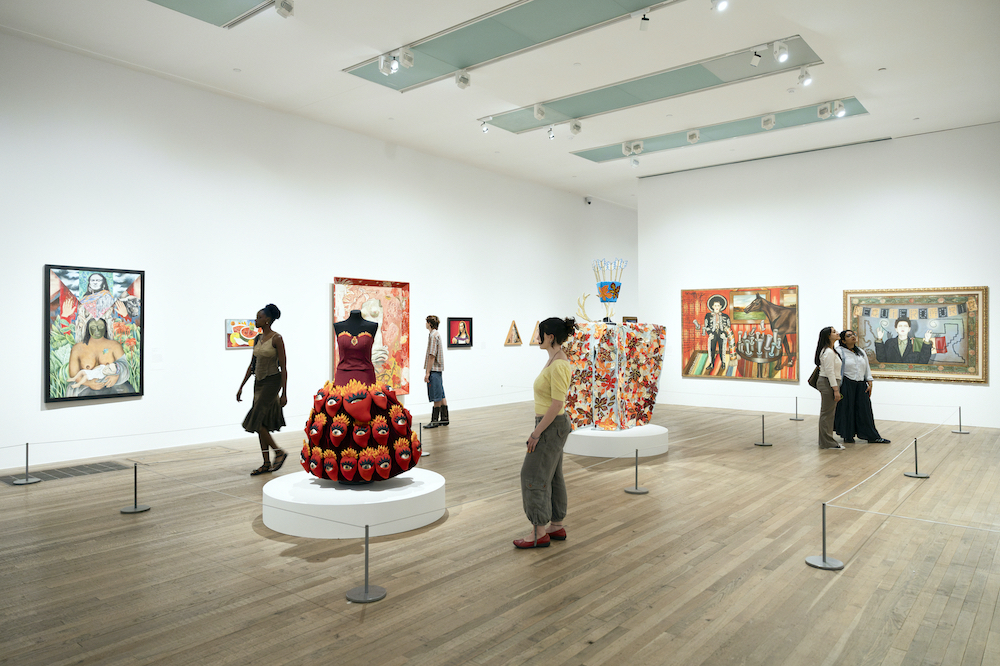
Frida The Making of an Icon installation view. Photo © Tate (Larina Annora Fernandes)
The exhibition has reportedly become one of the fastest-selling in Tate’s history, with more than 140,000 tickets sold before opening. Yet its greatest achievement lies not in demonstrating the scale of “Fridamania” but in reminding us of the singular brilliance of the artist behind the myth.
A more tightly edited exhibition, one that adopted a “less is more” curatorial approach (similar to the tightly curated Vermeer blockbuster at the Rikjsmuseum), would have allowed Kahlo’s paintings greater space to breathe. The masterpieces gathered here are more than enough to explain why she became an icon.
Still, despite its curatorial excesses, Frida: The Making of an Icon remains an extraordinary opportunity to encounter the work of one of modern art’s most compelling figures. Spend time with the paintings, the photographs and the intimate objects that reveal Kahlo’s life and artistic process, and the reasons for her enduring influence become abundantly clear. There has been an endless parade of imitators, but there was only one Frida Kahlo.