

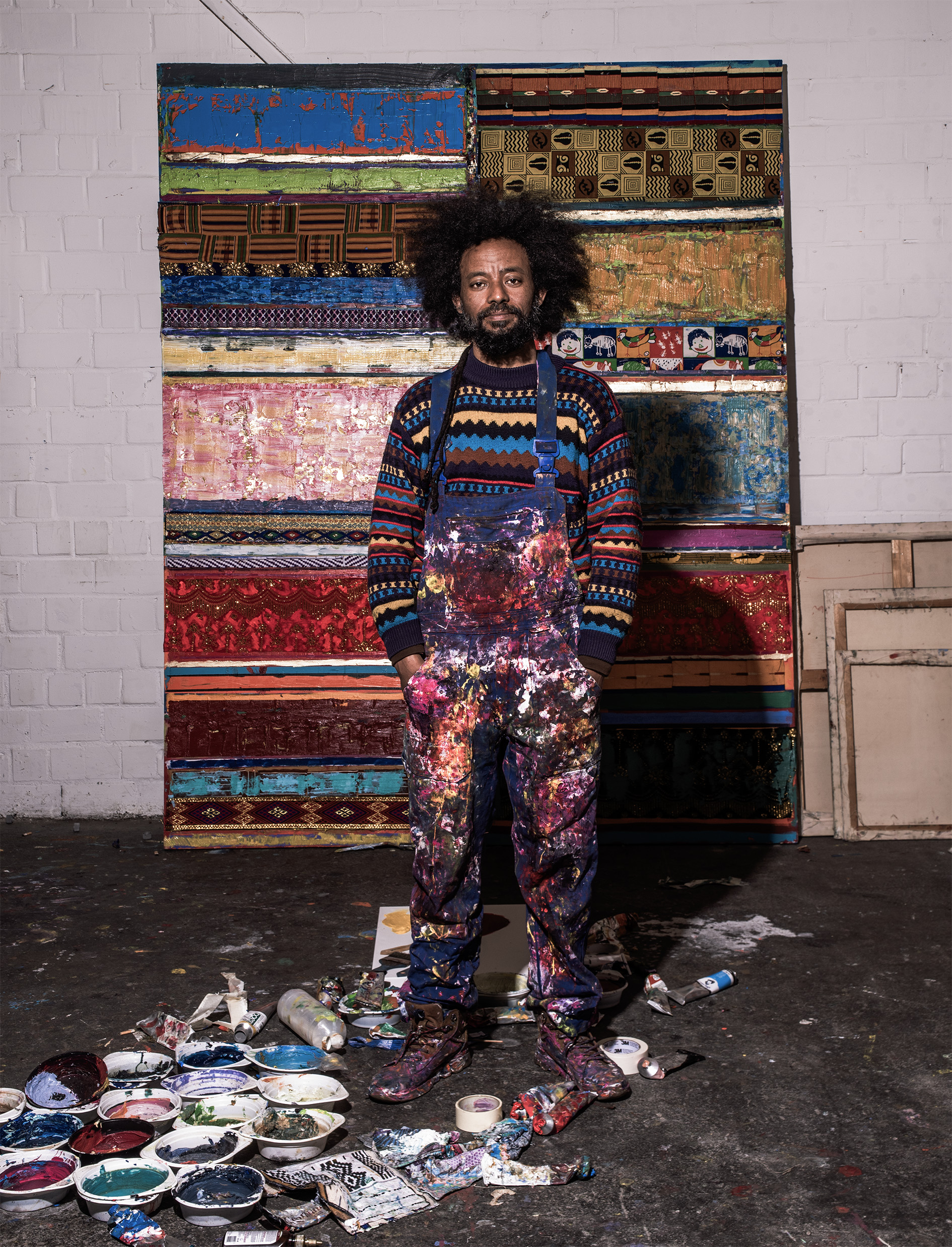
At the 61st International Art Exhibition of La Biennale di Venezia, the Ethiopia Pavilion returns with a powerful new presentation, Shapes of Silence, a major exhibition by Addis Ababa–born artist Tegene Kunbi. Curated by Abebaw Ayalew and commissioned by Demitu Hambisa Bonsa, the show marks Ethiopia’s second appearance at the prestigious global art platform, following its 2024 debut. Hosted at Palazzo Bollani in Venice, the exhibition runs from 9th May to 22nd November, 2026, positioning Ethiopia at the forefront of contemporary cultural dialogue.
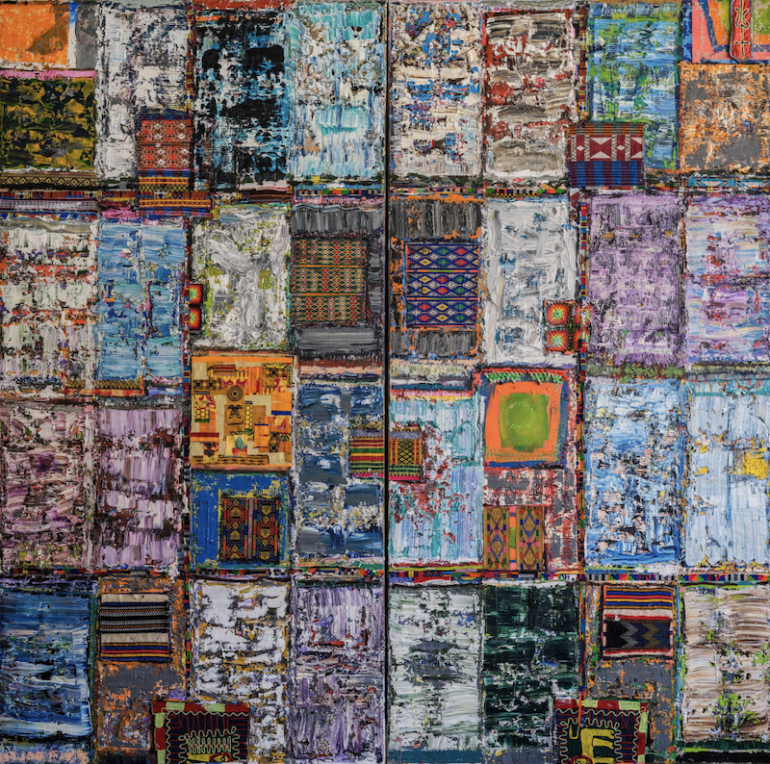
Bringing together three decades of Kunbi’s artistic exploration, Shapes of Silence examines silence as a deeply social and political condition. Through layered paintings that merge textiles, abstraction, and assemblage, Kunbi transforms material into narrative—challenging hierarchies of voice, visibility, and power while foregrounding Ethiopia’s rich cultural histories within a global contemporary art context.
Silence as a social practice in Ethiopia often draws its justification from the country’s rich folkloric traditions. Within these traditions, silence holds an ambivalent and paradoxical status, praised as a virtue while simultaneously regarded as a potential misdeed.
The proverb “Silence is gold” frames advised silence as a sign of wisdom and restraint, yet this valuation is tempered by caution. Other expressions warn that “He who does not name his illness finds no cure” or that “By not speaking, one risks exclusion from opportunity”.
Silence thus emerges not as a mere absence, but as a space of restraint, tension, and ethical negotiation. This space is also deeply political, as the right to speak and to interpret is unevenly distributed along entrenched social and political binaries—male over female, center over periphery, sacred over ordinary. Those positioned on the latter side are denied discursive authority, making silence a contested political condition.
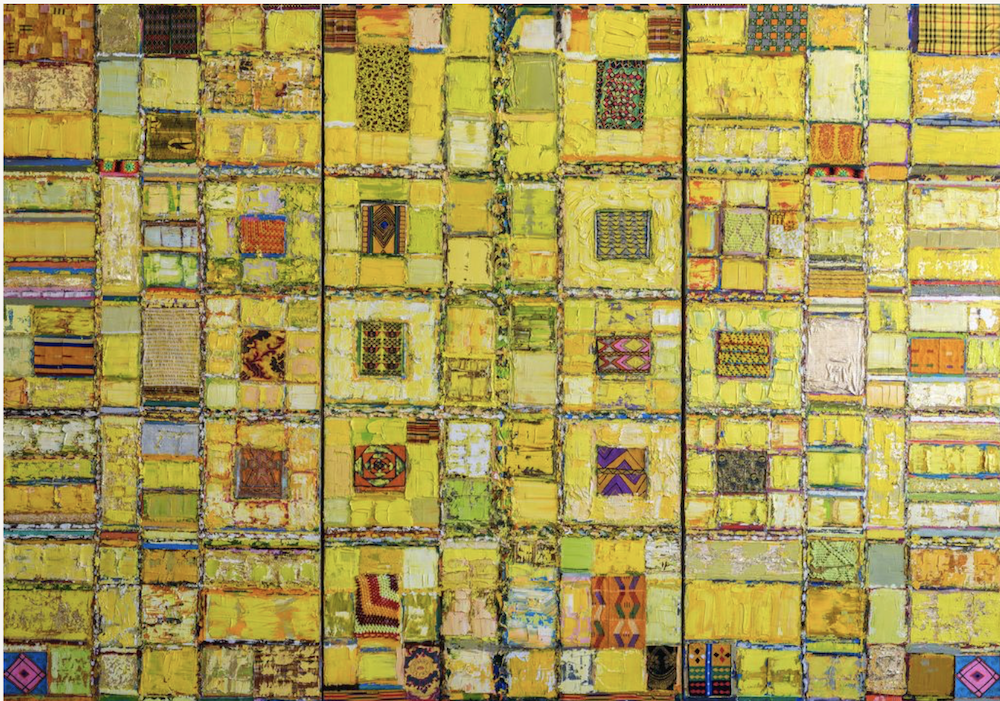
In Tegene Kunbi’s work, the political enters through material choice: his practice invites these asymmetries into the pictorial field. His paintings bring together textiles of starkly contrasting provenance and significance, hand-knitted fabrics made by his mother alongside industrial textiles produced for African markets; sacred garments used in religious contexts alongside utilitarian materials designed for mattresses. Drawing on Ethiopia’s cultural diversity, once described by Carlo Conti Rossini as a “museum of peoples”, Kunbi also incorporates weaving traditions from different regions, where clothing and costume have historically marked cultural and political autonomy, forcing these distinct practices into a shared visual field. Each material carries specific histories of labor, belief, and political positioning. When assembled on the pictorial surface, these categories fracture, and painting becomes a site where socially and culturally segregated materials are compelled into proximity and renegotiation.
These questions of silence as a hierarchical and political condition extend to exhibition practice itself. In exhibition spaces, artworks are routinely framed by explanatory texts, labels, captions, and curatorial narratives that claim interpretive authority. Language speaks for the artwork, while the visual and multimodal are rendered silent, reinforcing a hierarchy in which written language becomes the primary site of meaning-making.
Against this backdrop, Kunbi approaches painting as a platform where such regimes of silence are both enacted and unsettled. His works refuse the conception of painting as a passive or purely visual medium; instead, painting functions as a layered archive of labor, memory, and history, operating in a minor key in which silence takes material form and meaning emerges through duration, proximity, and material presence rather than explanation.
The exhibition is also made possible with the support of Primo Marella Gallery, an art gallery based in Milan and Lugano that represents the artist.
The Ethiopia Pavilion will be inaugurated during the preview days of the 61st International Art Exhibition – La Biennale di Venezia (May 6, 7 and 8, 2026). It will be open to the public from Saturday, May 9 to Sunday, November 22, 2026.
The Ethiopia Pavilion is at Palazzo Bollani, Castello 3647, Venice from 9th May to 22nd November, 2026. Find more information here.