


From immersive wellness gardens to Japanese tranquillity and art-filled landscapes, these are the standout spaces not to miss at Chelsea this year.
The world’s most celebrated horticultural event has once again transformed the grounds of Royal Hospital Chelsea into a breathtaking showcase of innovation, artistry and storytelling. At the 2026 edition of the RHS Chelsea Flower Show 2026, designers are using gardens not only to delight the senses, but also to spark conversations around health, sustainability, community and creativity.
From Darren Hawkes’ powerful Lady Garden Foundation Silent No More Garden, raising awareness of gynaecological cancers, to Kazuyuki Ishihara’s contemplative Japanese-inspired Tokonoma Garden – Sanumaya no Niwa, this year’s highlights reflect the evolving role of gardens as places of connection, reflection and cultural exchange. Elsewhere, immersive installations from the Saatchi Gallery and a sculpture-filled sanctuary for Tate Britain blur the lines between landscape design and contemporary art.
Here, Culturalee selects six standout gardens to experience at RHS Chelsea Flower Show 2026 — each offering a unique perspective on how nature can inspire, heal and bring people together.
Culturalee’s highlights to see amongst the many stunning gardens on view at RHS Chelsea Flower Show 2026 include; Lady Garden Foundation Silent No More garden; Trussell’s Together Garden; Tokonoma Garden – Sanumaya no Niwa; The RHS and The King’s Foundation Curious Garden; Tate Britain Garden and the Saatchi Gallery garden.
Lady Garden Foundation Silent No More Garden by Darren Hawkes
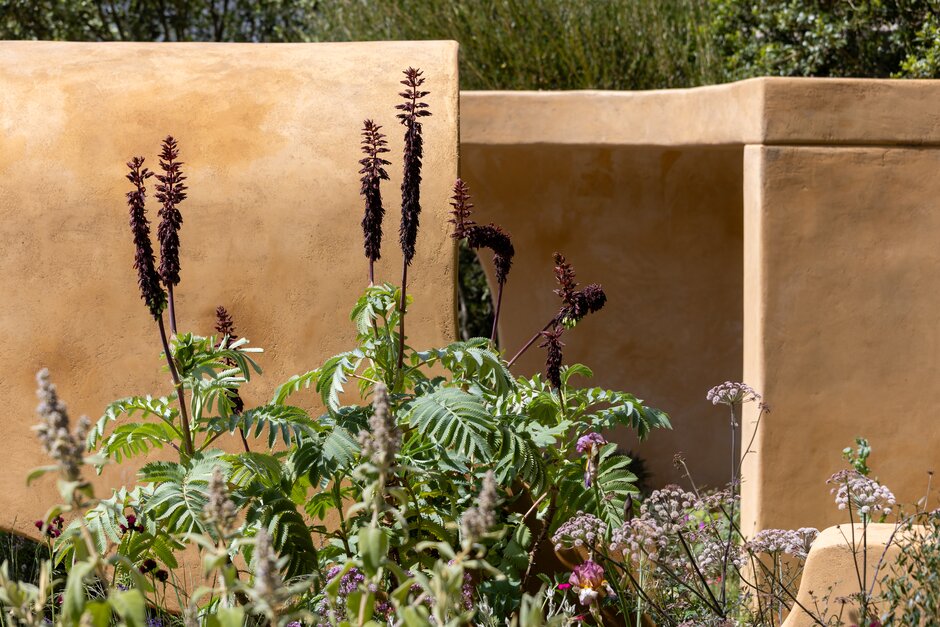
The Lady Garden Foundation Silent No More garden aims to raise awareness of, and ignite conversation about, the five gynaecological cancers to save lives. Designed by Darren Hawkes, an award-winning garden designer and founder of a Cornwall-based studio creating landscapes across the UK, the Silent No Moregarden has been awarded a Gold medal.
The garden is designed to captivate, spark curiosity and open up uninhibited conversations about gynaecological health. It aims to break down stigma and enable conversation by creating both intimate and more open spaces for people to talk.
As a husband, father, and son to important women in my life, I want to help expand awareness amongst men and women, break taboos and shatter the silence to help save the lives of women in future generations” Darren Hawkes
Surrounded by beautiful planting, the centre of the garden is fully immersive. Taking inspiration from the Basque artist Eduardo Chillida, the central structure echoes the artists ceramic sculptures, providing a safe and enveloping space where sunlight and shade change throughout the day. A winding path leads visitors through richly planted borders, where shifting colours envelop five sculptures, each representing one of the five gynaecological cancers. From a central pool, water flows gently through deep rills, guiding the journey onward, into intimate nooks with secluded seating, then widens into a communal space for open and honest conversations.
The planting transitions from soft greys, pinks and blues to bold, vibrant tones that are reflective of the Lady’s Garden Foundation’s bold, fearless spirit.
Read more here.
Trussell’s Together Garden by Rob Hardy
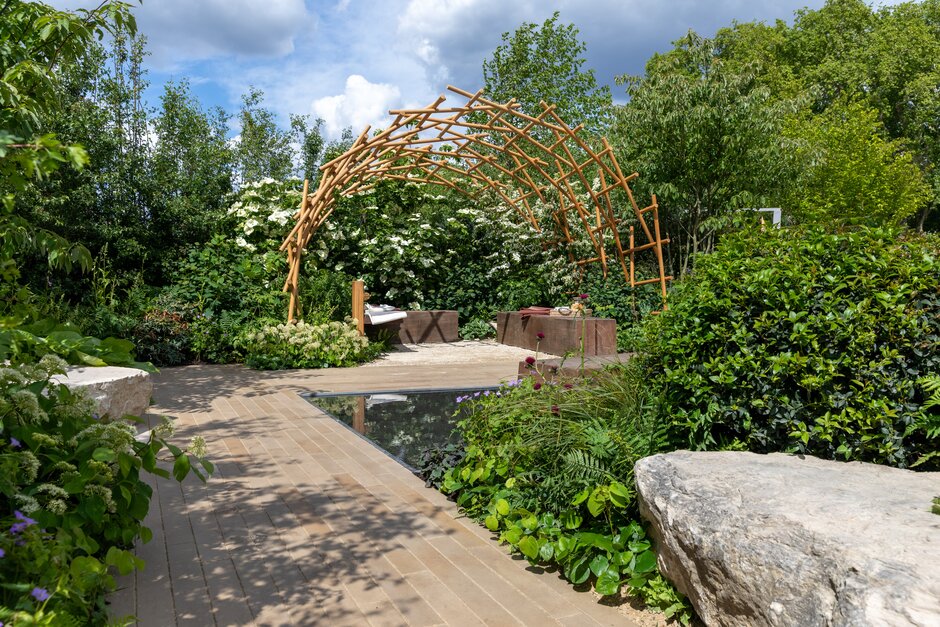
Best Construction for a Small Garden was awarded to the Trussell’s Together Garden designed by Rob Hardy & Co and built by Peter Gregory Landscapes.
This garden is inspired by the way food banks, and the communities that support them, come together to help those on the lowest incomes. It’s a powerful reminder that when each of us plays our part, we can end hunger together. The theme of togetherness is woven throughout the garden’s design: intersecting paths, a shared seating area, and a reciprocal frame structure made from individual timbers interlaced for strength and stability. These elements represent how communities can hold each other up and come together to create a stronger whole.
At the heart of the garden, a water feature offers a quiet space for reflection and connection. It can be drained to reveal additional seating, unlocking the potential for more people to gather and share the space.
The planting scheme celebrates diversity and collaboration. Combinations of bright, energetic plants bring momentum and vibrancy, while softer woodland-edge species introduce calm and balance. Together, they reinforce that sense of togetherness and show what’s possible when we all play our part to end hunger.
The garden is being relocated to Strabane Foodbank, part of the Trussell community in Northern Ireland.
Read more here.
Tokonoma Garden – Sanumaya no Niwa by Kazuyuki Ishihara & Paul Noritaka Tange
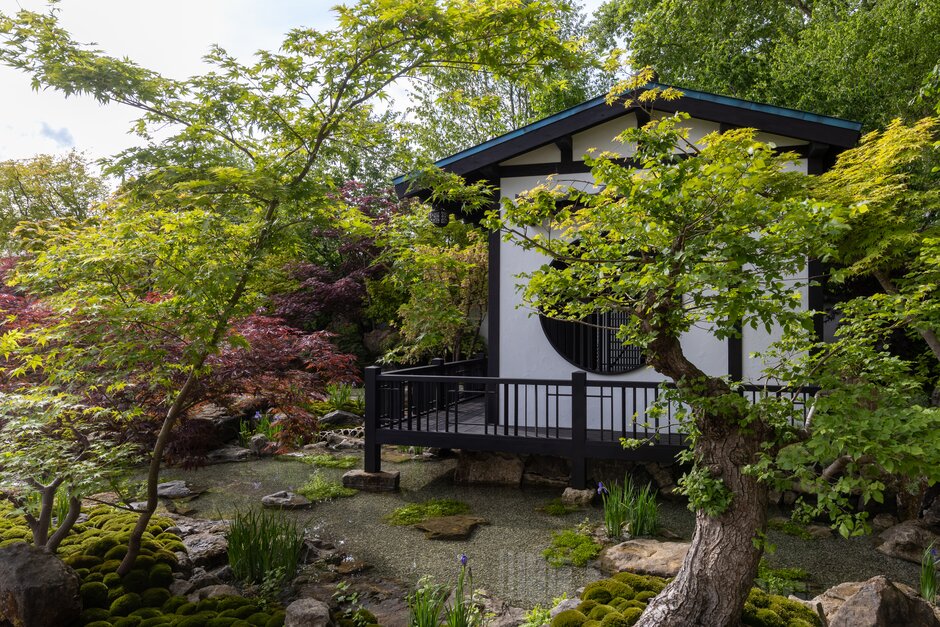
Silver Gilt medal winning Tokonoma Garden – Sanumaya no Niwa is designed by Kazuyuki Ishihara and Paul Noritaka Tange, and built by Daikanyama Kadan.
Sanumaya no Niwa revives the tradition of viewing a beautiful landscape from the tokonoma, a raised alcove once central to Japanese family life. While visitors cannot enter the room itself, they will experience the tranquil view from outside, where stone, moss, water, and seasonal plants create a contemplative scene.
The theme is harmony and connection, inspired by the designer’s childhood memories of the Sanumaya drapery store, where his large family gathered. In the past, the tokonoma served as a place where family meals, conversations, and hospitality unfolded while enjoying views of the garden beyond. Today, such rooms are rare, and the designer seeks to reimagine this cultural tradition for modern times. The garden embodies both personal memory and universal values of family togetherness and community, offering visitors a space to pause, reflect, and appreciate the beauty of nature.
The garden includes a traditional stone lantern, which conveys a sense of weight and permanence. An unusual feature is the garden gate, crafted with distinctive form and artistry. As visitors pass through it, the gate heightens their sense of anticipation for the special world ahead – the unfolding garden scenery and the architectural features that await beyond.
The planting follows a subtle colour scheme inspired by traditional Japanese aesthetics. Shades of green from moss and foliage form the foundation, with delicate contrasts in leaf tones. Seasonal highlights include the purple and blue hues of irises, adding elegance and depth. Overall, the scheme remains restrained, reflecting harmony and tranquillity.
Chelsea is the ultimate stage to share the culture of Japanese gardens with the world, offering invaluable opportunities to connect with visitors, media, and fellow designers. This year, I decided to take part to present a new proposal – the Tokonoma Garden, inspired by the historic ‘Sanumaya Kimono Shop,’ reinterpreting a traditional space for the modern age.” Kazuyuki Ishihara
Read more here.
The RHS and The King’s Foundation Curious Garden by Frances Tophill
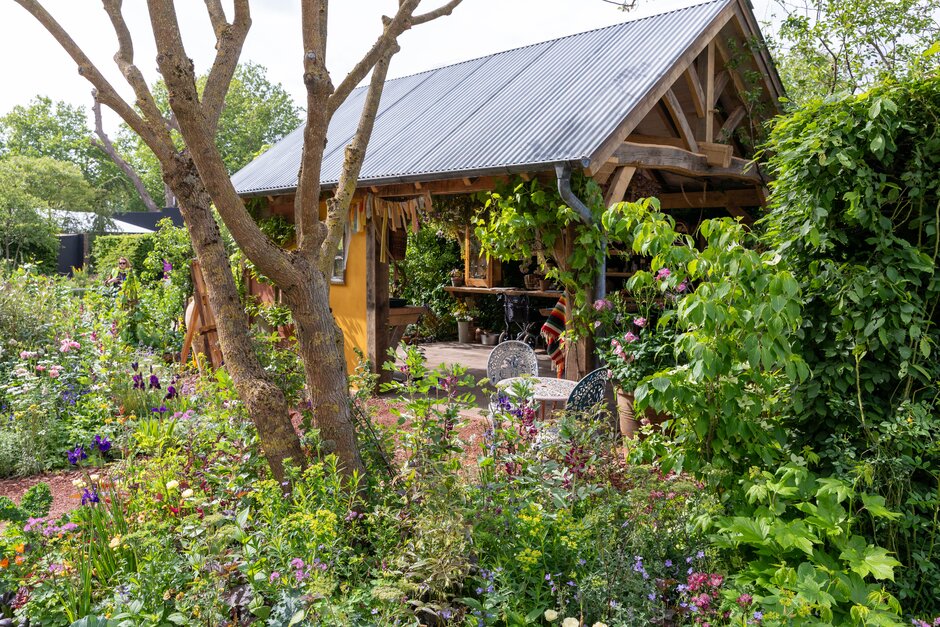
The King’s Foundation Curious Garden, designed by Frances Tophill and built by Jake Catling, explores and celebrates the diverse nature of plants and all the ways they enrich our lives and our industries. The garden aims to spark curiosity and inspire a new generation of both gardeners, who grow for health, happiness and the environment, and to encourage people into careers working with plants, the environment and rural crafts. It celebrates the work and skills of trainees learning their crafts, from gardening to millinery and woodwork, and is a garden that evokes a sense of art and creativity.
At the heart of the garden is an oak framed building, which represents a museum of garden curiosities. The fabrics and cordage are woven from plants, the dyes and pigments are created from plants. It demonstrates how to grow plants and experiment with different propagation techniques. There will be studies of plants, as well as tables and shelves displaying ferments, pickles, jams, books, sketch pads, balms, infusions, oils etc. Beams are adorned with hanging dried flowers, and seed heads will need to be large enough to excite curious visitors during the show, so that they can appreciate the breadth of plant potential in our everyday lives.
The building also demonstrates important environmental actions such as water saving, with a water butt and compost ideas on display, to show the varied nature of garden spaces and to tell the story of the “curious gardener”
The Tate Britain Garden by Tom Stuart-Smith
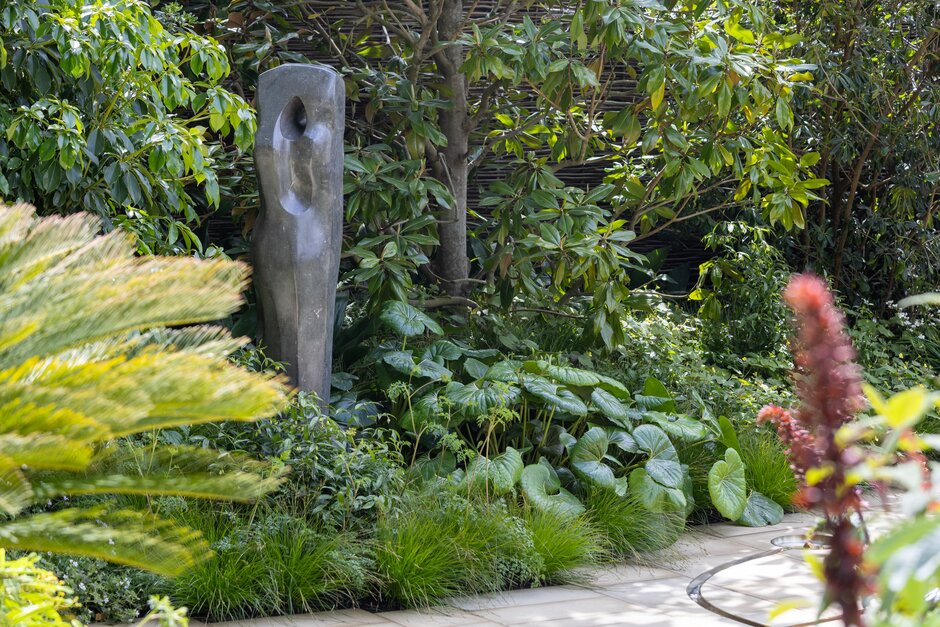
Tate Britain’s Gold medal winning garden was designed by Tom Stuart-Smith and built by Crocus. Inspired by East Asian woodlands and resilient, drought-tolerant species, the planting reflects Tate’s sustainability commitments and uses long-lasting plants which increase biodiversity. A gently curving path made from garden stone reclaimed from the existing Tate Britain Garden leads to a circular seating area, crafted from repurposed materials. Surrounded by vibrant, biodiverse planting, the space invites conversation and connection, reimagining museum gardens as creative, social spaces.
A tranquil water feature, based on microscopic images of fungal structures, flows through a path of bronze dishes with illuminated rills, encouraging sensory engagement and wellbeing. Sitting at the heart of the garden is Barbara Hepworth’s Bicentric Form 1949, marking the first time a work of art from the national collection has been installed at RHS Chelsea Flower Show.
After the Show, Bicentric Form will join other world-class sculptures by modern and contemporary British artists from Tate’s collection being installed outside Tate Britain as part of the Clore Garden, a new green space for London made possible by the Clore Duffield Foundation and with support from The Julia Rausing Trust.
Read more here.
Saatchi Gallery Garden by Lucy Gregory & Naomi Ferrett-Cohen
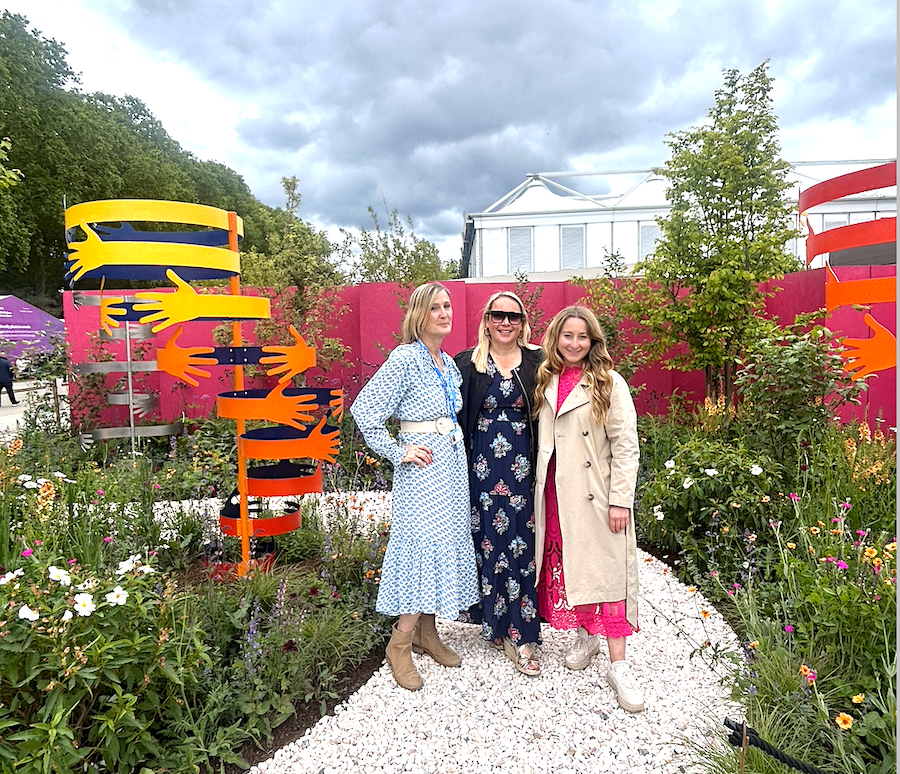
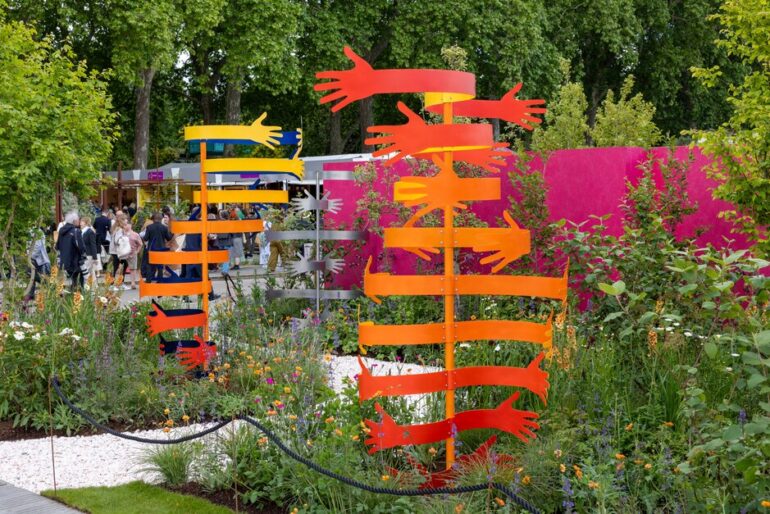
Saatchi Gallery’s sixth garden for RHS Chelsea Flower Show brings together contemporary art, thoughtful planting, and public participation with kinetic artist Lucy Gregory, garden designer Naomi Ferrett-Cohen, and supporter ING. The garden celebrates the simple pleasure of gathering together outdoors such as in a park or meadow, and the positive effect nature can have on us.
Guests are invited to venture down the garden path into a surreal environment of interactive, anthropomorphic tree-like structures that hug the space. As visitors push the sculptures into motion, they trigger a joyful, spiralling dance that gradually settles into a playful, slapstick wobble as momentum slows.
Inspired by mechanical toys, Victorian automatons and early animation devices, she constructs large-scale figurative ‘kinetic collages’, where abstracted ‘cutouts’ or black and white imagery are mounted on engineered steel frames. Gregory’s practice upends the traditional ‘look, don’t touch’ mentality, instead encouraging play and curiosity through interaction with the artworks. The viewer becomes the engine, activator and performer, intertwined with the work itself, as they bring the sculptures to life through participation and touch.
Read more here.
RHS Chelsea Flower Show is at Royal Hospital Chelsea until 23 May. Find more information here.