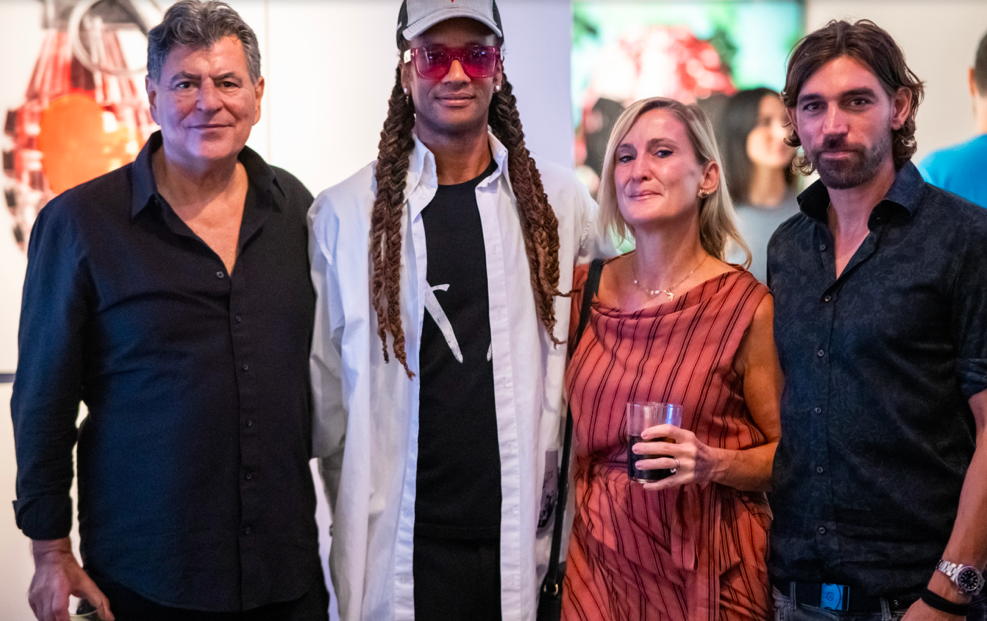


Design Week Lagos launches its global expansion and 2026 tour with All Roads Lead to Lagos, a landmark presentation at SaloneSatellite during Milan Design Week, spotlighting a new generation of African designers redefining contemporary design through craftsmanship, innovation, and cultural storytelling. SaloneSatellite, the jewel in the crown of the Salone del Mobile.Milano, will take place from 21 to 26 April 2026.
Featuring seven emerging talents across furniture, lighting, and experimental design, the showcase positions Lagos as a rising global design capital while expanding African design’s presence across Milan, Paris, and London ahead of the flagship festival in October 2026.
Titled All Roads Lead to Lagos, the initiative introduces a new generation of African designers working across furniture, lighting and experimental object design. The presentation brings together emerging talents from the Design Week Lagos Design and Innovation Exhibition and Talent Development Programs, showcasing works that engage culture, material intelligence, and contemporary form.
Seven new generation African designers will be featured in All Roads Lead to Lagos: Richard A. Aina, Olaoluwa AJ Durotoye, Nicole Adaora Enwonwu, Myles Igwebuike, Athanasius Johnson, Odema Acacia Saleh and Joan Eric Udorie.
This global activation extends beyond Milan, with additional engagements planned for Paris Design Week and London Design Festival, before culminating in the flagship Design Week Lagos festival at the National Theatre, Lagos in October 2026.
A Platform for Design, Production, and Market Access
Founded as Africa’s leading platform for design and creative industry development, Design Week Lagos has built a reputation for connecting designers to real opportunities across production, distribution, and global visibility.
Design Week Lagos was founded in 2029 by Titi Ogufere, a Nigerian interior architect, founder of the Africa Design Network, and a leading voice in the global design industry. Ogufere is the 21st President of the International Federation of Interior Architects/Designers (IFI) and has played a pivotal role in positioning African design within international discourse.
Through Design Week Lagos, she has built one of Africa’s most significant platforms for design, connecting emerging talent to global opportunities across exhibitions, trade, and cultural programming. Her work focuses on bridging design, manufacturing, and enterprise, with a strong emphasis on developing Africa’s creative economy.
Through its core programs the Design and Innovation Exhibition, Made by Design Show, and the National Design and Innovation Competition the platform supports designers from concept to execution, and from execution to market. This approach reflects a broader ambition: to move design beyond aesthetics and position it as a driver of economic growth.
A New Generation of Designers
Design today exists at a critical intersection between the handmade and the engineered, between memory and innovation, and between local narratives and global relevance. The 2026 edition of SaloneSatellite, under the theme Reimagining Matters: Skilled Craftsmanship + Innovation, calls for a renewed understanding of craftsmanship as a driving force in contemporary design.
At Design Week Lagos, this intersection is foundational. Design Week Lagos’s presentation at SaloneSatellite forms part of a broader global initiative, All Roads Lead to Lagos, a series of international engagements leading to the annual festival in Lagos in October 2026. This presentation is both a preview and a declaration, positioning Lagos as an emerging center for design thinking, production, and global exchange.
The seven designers presented in Milan have been selected for their ability to bridge skilled craftsmanship with innovation, demonstrating how material intelligence, cultural knowledge, and technical exploration can coexist within contemporary practice. The innovative, exceptional work of these designers reflects a shift in contemporary African design.
About the featured designers:
Athanasius Johnson explores structural balance through the Àpò Collection, translating
architectural principles into functional objects.
Nicole Adaora Enwonwu presents the Anyanwụ Collection, where light becomes a medium
for memory and atmosphere.
Odema Acacia Saleh reinterprets everyday cultural objects through the Ofi’Aje Collection,
transforming familiar forms into sculptural lighting.
Richard A. Aina’s Ìsépọ̀ Series bridges craft and engineering through a refined architectural
language.
Joan Eric Udorie’s Bantu Stool exists between art and function, drawing from braided
geometries and vernacular forms.
Olaoluwa AJ Durotoye’s AKANNI KLR Collection translates West African percussion into a
high fidelity audio system.
Myles Igwebuike’s Ọche Chair challenges conventional ergonomics through a precise
structural approach.
Together, these designers represent a generation working at the intersection of heritage and innovation, redefining the language of African design for a global audience.
For a long time, African design has existed within fragmented systems rich in creativity but limited in access to production and global markets. This initiative is about building those bridges connecting designers to industry, and positioning African design within global conversations not as participants, but as contributors shaping the future.”
Titi Ogufere, Founder of Design Week Lagos

The Design Week Lagos 2026 Global Tour
The global tour will culminate in Design Week Lagos 2026, taking place from 18 to 26 October 2026 at the National Theatre, Lagos. As the platform continues to expand its international presence, Design Week Lagos is positioning itself not only as a cultural event, but as a system linking education, production, and market access across the African design ecosystem.
About the Design Week Lagos Presentation at SaloneSatellite 2026
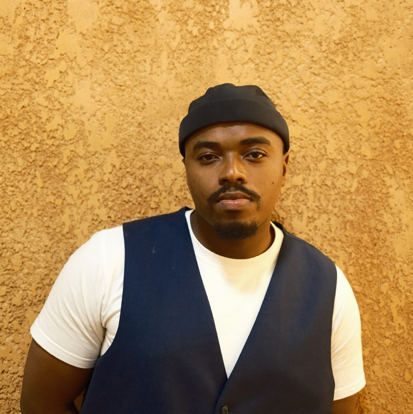
Athanasius Johnson
The Apo Collection
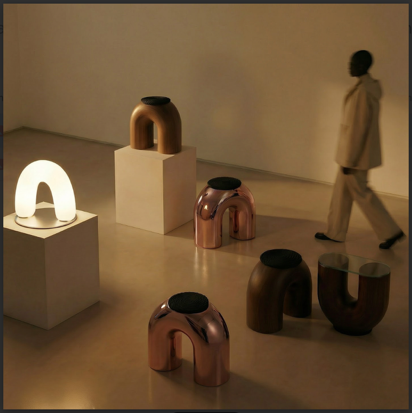
Support and strength, the lamp draws from the architectural logic of the arch, structural form carrying weight through balance rather than force. In the Apo Collection, the arch is a social metaphor: a shape that stands because its parts rely on one another. The Apo Lamp, here the glass arch becomes a symbol of community, two grounded points connected by a shared curve, distributing load and light evenly. The form suggests that stability is achieved collectively, not individually. By translating this architectural principle into light, the lamp reinforces the Apo ethos: design as an expression of interdependence, where strength emerges from connection and support is both physical and communal.
The Apo Stools U-shaped form is a direct physical interpretation of Ajose. The stool stands firmly on two legs, yet it is the curve between them that gives it strength and identity. In this way, the object suggests that balance comes from relationship, not singularity. Its geometry echoes the bridging arc above, turning connection into structure. What holds weight and supports the body is not a closed form, but an open one—a form that implies space, invitation, and inclusion.
Nicole Adaora Enwonu
The Anyanwu (Eye of the Sun) Collection


Anyanwu was born from a feeling before it was ever a form. It began as an emotion I live inside of, a constant state of warmth, nostalgia, movement, and gratitude for being alive. A kind of inner glow. This sensation first took shape as a drawing, an abstract woman dancing. She is not performing. She is responding. Her movement comes from within, from a fullness that overflows into motion. The lamp is designed so that light passes through an amber colored glass, casting a warm, glowing atmosphere that mirrors how I see the world, as if everything is viewed through a sunlit lens. Anyanwu means the sun in Igbo, and this piece is titled Anyanwụ, Eye of the Sun. The name speaks to perception, to seeing life through warmth and light rather than distance or detachment. It is about viewing existence through gratitude, intensity, and reverence.
The title also carries a deeply personal resonance. My grandfather, Ben Enwonwu, created a sculpture titled Anyanwụ, depicting a woman emerging upward, filled with vitality and light. When I later looked at the woman I had drawn, the one that initiated this entire project, I was struck by the resemblance. It is an object shaped by emotion, memory, ancestry, and movement. It exists to create an atmosphere, a quiet, glowing reminder that life, in all its beauty and pain, is worth feeling fully.
Odema Acaia Saleh
Ofi’Aje Collection

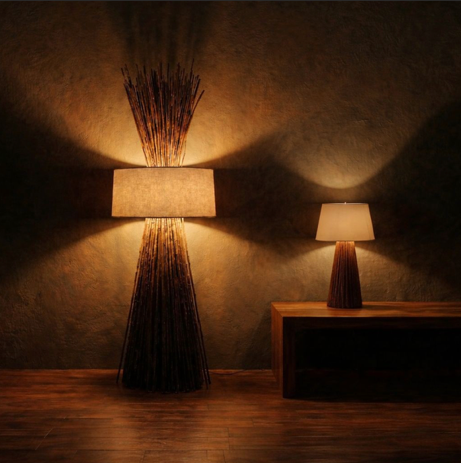
Ofi’Aje, meaning ‘shining light’ in Idoma – my native language, is a table lamp that celebrates Nigerian culture by drawing from native essentials. The lamp’s form echoes the silhouette of the traditional African broom. The broom is composed of wooden sticks, bound together with a band – an object both familiar and deeply symbolic. Within many homes, the broom signifies order, care and continuity, while the home itself represents safety, security and sanctuary. By integrating the symbolic significance of the broom with the illuminating qualities of light, Ofi’Aje was developed that translates everyday cultural heritage into a contemporary design language. The Ofi’Aje collection features a Floor Lamp at 1500 mm. As much as it provides ambient lighting, it attempts to make a spatial statement. It creates a sculptural presence, referencing a bundled silhouette of a broom which, with its collective strength transforms a domestic object into an emblematic form. The Ofi’Aje table lamp is to behave more as an object within the
composition of furniture than the room’s vertical space, like the floor lamp. Standing at 500 mm, this variation acts as a mini, but functional sculpture with its striking silhouette. Best suited in a warm, rustic space, the mini Ofi’Aje echoes these motifs.
Richard A. Aina
The Isepo Series

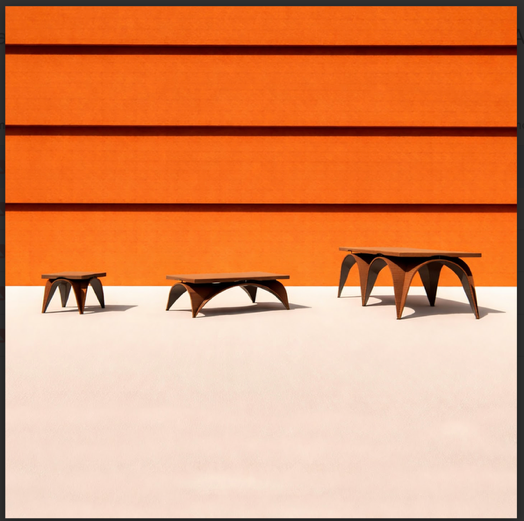
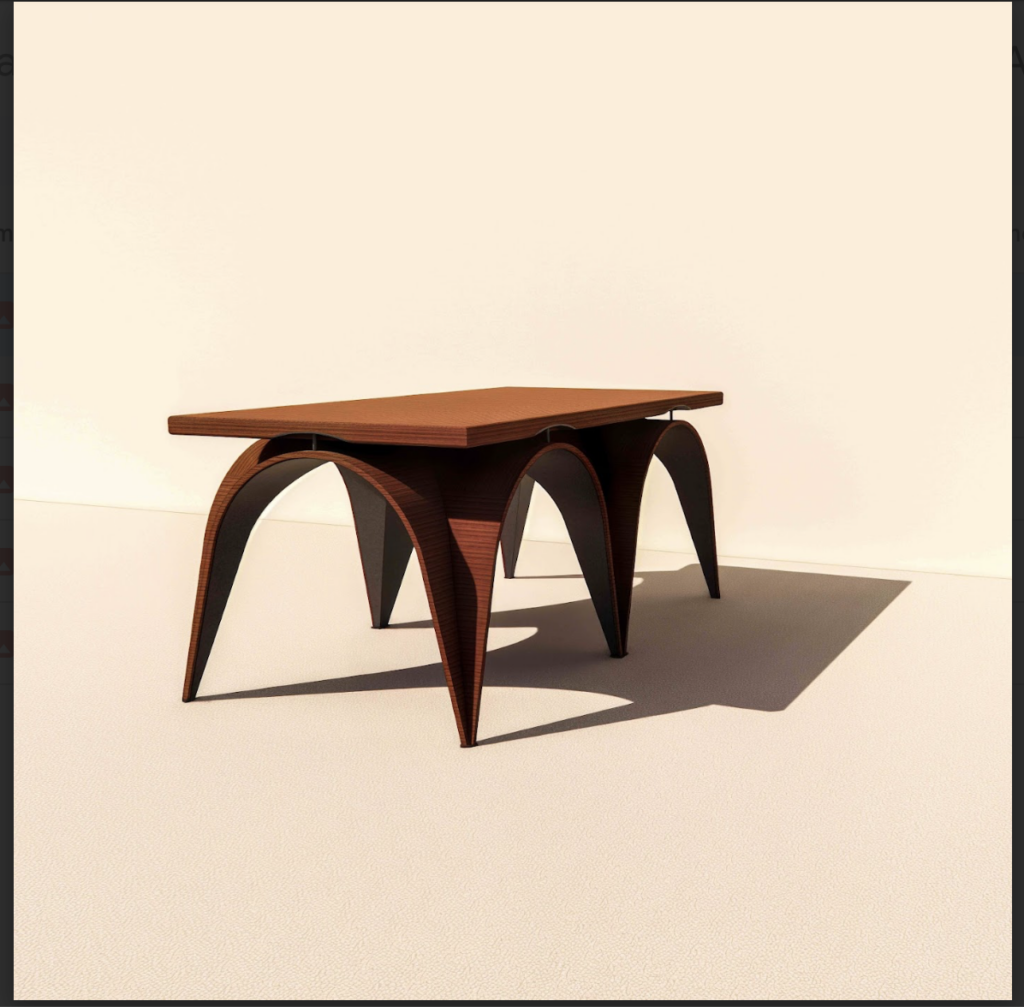
The ÌSÉPÒ Series extends I-JŌKŌ’s catalogue beyond the AKỌKỌ Collection, introducing a family of furniture defined by lightness, structural clarity, and cultural continuity. Drawing from the sculptural language of European and Hausan miinaret architectural vaults and the Makonde stool of Tanzania, traditionally imbued with symbolism and communal presence, the series reinterprets African heritage through modern minimalism. Each piece is anchored by four inward-tapered legs that converge into a vaulted understructure, creating a stance that feels both grounded and uplifted. A manifested definition of the word ÌSÉPÒ from curves that come together and exist in relation to one another. The seat and tabletop elements are delicately suspended above the frame by exposed steel pins, generating a subtle sense of levitation. This deliberate contrast between mass and lightness, craft and engineering, reflects a central Afrorevivalist principle: tradition is not static, but capable of structural reinvention. Comprising the ÌSÉPÒ chair, stool, low table, and dining table, the series is not merely functional furniture, but a contemporary translation of African spatial intelligence— designed to inhabit both domestic and institutional settings with quiet authority.
Olaoluwa M. Durotoye
The AKANNI KLR Collection

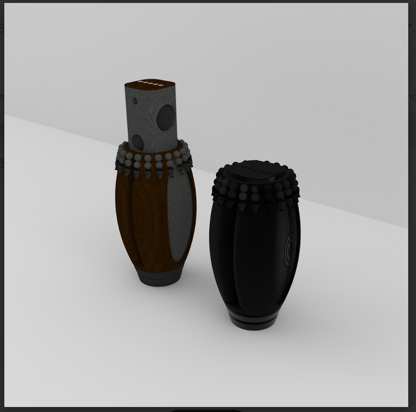
The AKANNI KLR is a percussion focused atmospheric design system rooted in cultural resonance. Its simple ubiquitous design is an observation of native music explored through form, investigating rhythm, repetition, percussive depth acting as natural stimulants of intense emotional reception, and translating this phenomenon into a high-fidelity listening object for the home. Its acoustically intentional design utilizes 6 independent drivers and amps, each dedicated to a percussive frequency range. By isolating acoustic responsibilities, the system preserves clarity, prevents frequency masking, and allows each rhythmic element – bass, mid-percussion, and high-frequency accents – to occupy its own spatial and sonic focal point. Its engineering seeks to replicate the authenticity and physicality of native West African percussion through contemporary, high-fidelity audio systems. As an instrument of cultural translation, bringing the energy and emotional depth of African music into the home listening experience.
Joan Eric-Udorie
Bantu Stool

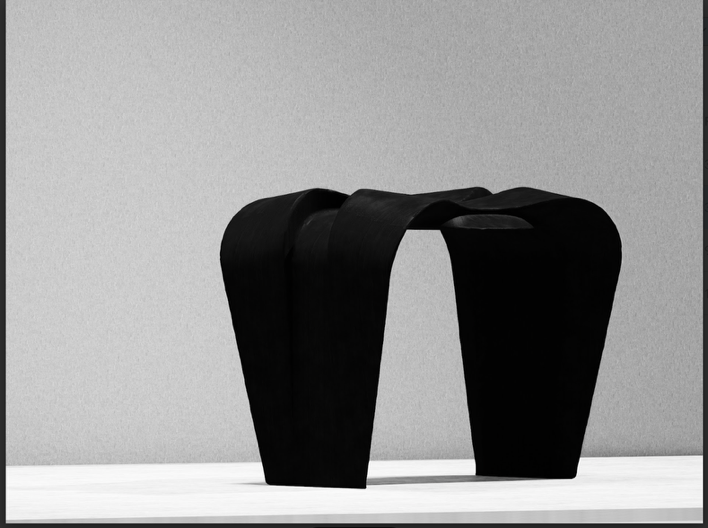
Bantu is a collectible stool that fuses brushed metal and rich wood into a sculptural object of balance and flow. Inspired by African vernacular architecture and the braided geometry of cornrows, its form captures rhythm, continuity, and cultural memory. Rather than quoting tradition directly, Bantu abstracts woven and carved motifs into fluid, dynamic curves – a gesture that feels grown rather than built. The seamless dialogue of the warm ebonised wood creates both tension and harmony, while its hovering, weightless silhouette blurs the line between furniture and art. Bantu embodies a future-facing African aesthetic: rooted in heritage, yet visionary and iconic.
Myles Igwebuike
Oche Chair

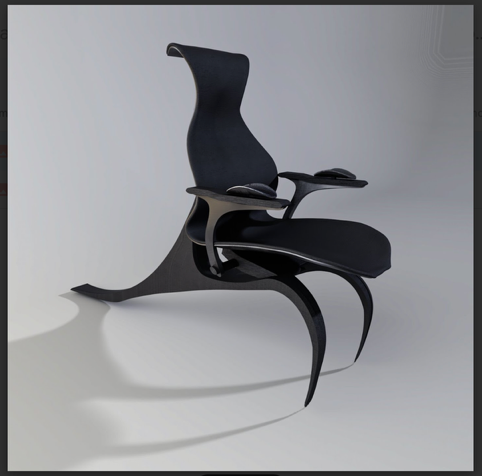
Ọche is a high-performance structural assembly that integrates precision-milled timber with a high-tension metal chassis. This is a technical interrogation of the seated posture, utilizing an industrial tectonic approach to challenge the standardized, grid-locked geometry of conventional furniture.
The profile is a study in material intelligence, translating the sinuous, skeletal logic of West African vernacular forms into a precise, engineered silhouette. Rather than facilitating passive comfort, the design enforces a proactive somatic alignment—a radical ergonomic rooted in indigenous technological epistemologies. It is a refined, skeletal shell that recalibrates the interface between the body and the object, positioning heritage as the structural logic for a global, contemporary reality.