


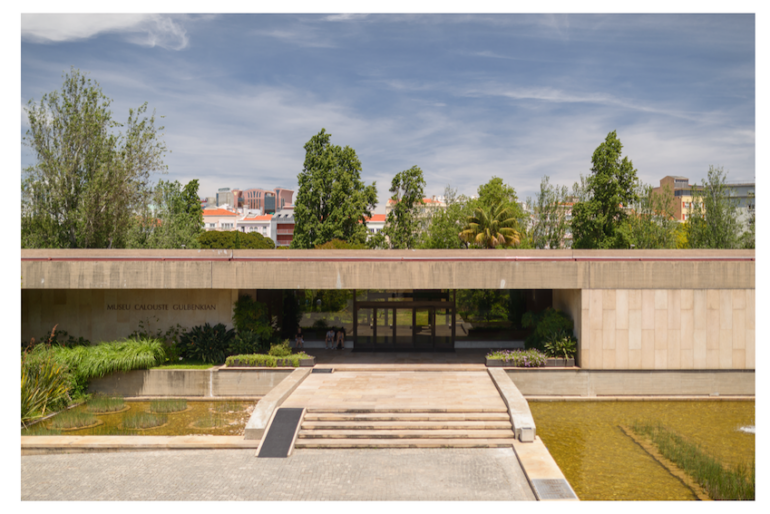
The Calouste Gulbenkian Museum in Lisbon reopened on 18 July 2026 following an ambitious 18-month restoration that has revived one of Europe’s finest modernist museums. Coinciding with the Calouste Gulbenkian Foundation’s 70th anniversary, the landmark renovation restores the museum to its original 1969 vision while extensive conservation work breathes new life into one of the world’s most important private art collections.
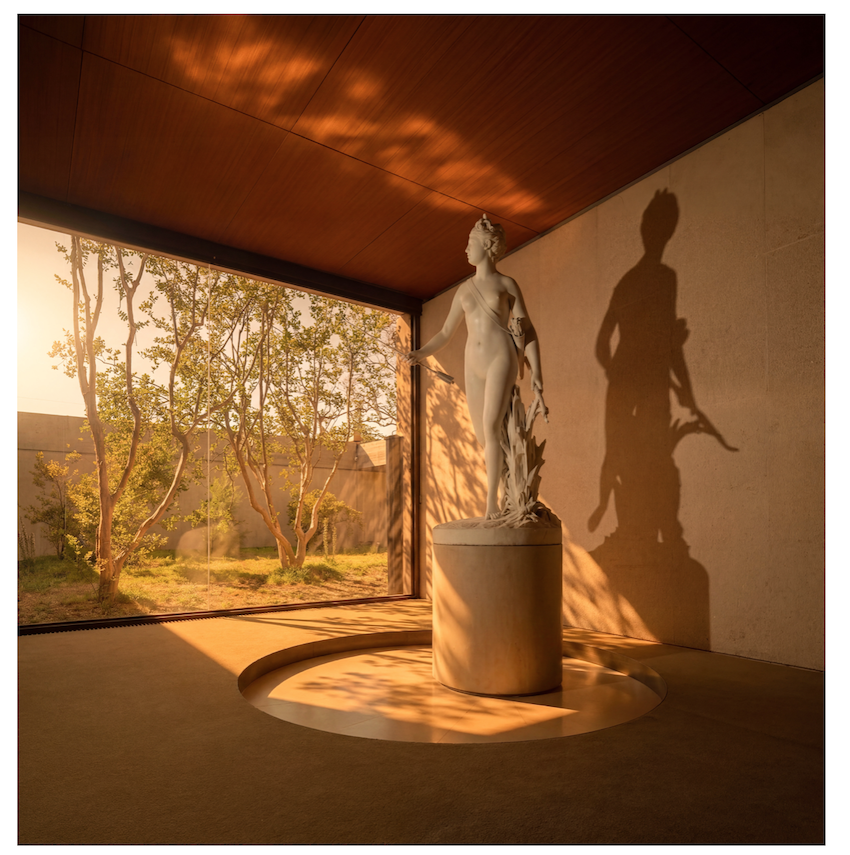
Originally designed by the architects Ruy Jervis d’Athouguia, Pedro Cid and Alberto Pessoa, the Calouste Gulbenkian Museum is a modernist articulation of the intimate and intertwined relationship between art, architecture, and nature. Since its opening in 1969, the museum underwent several changes which saw original details removed or reworked. Instead, the 2026 renovation of the Calouste Gulbenkian Museum re prioritises the balance of arcadia and architecture that made the museum so revered. Informed by the mid century modern ethos that created the museum, renovation works by Frédéric Ladonne and Teresa Nunes da Ponte will see sensitive modernisation in the form of upgrading technical infrastructure such as lighting, ventilation and protective displays. Original materials throughout the museum, including silk, wood, bronze, glass and carpeting, have been restored, recovering the warmth and craftsmanship that marked its 1969 opening, whilst the recovery of altered or lost display arrangements brings the spatial flow of the past back to life.
Calouste Sarkis Gulbenkian (1896-1955), the Istanbul-born philanthropist and collector of Armenian origin who assembled the collection according to this belief that “only the best is good enough for me,” envisaged his life’s work housed together under one roof, and designed for the transformation of ordinary lives through art. Founded by Gulbenkian’s legacy, the Calouste Gulbenkian Museum was the physical realisation of his vision, and was designed by a team of national and international experts including architects Ruy Jervis d’Athouguia, Pedro Cid and Alberto Pessoa, with consultants such as French museologist Georges-Henri Rivière and Italian architect Franco Albini. Since its opening in 1969, the museum has become an international reference for contemporary museum design and museography, as well as a landmark of the Portuguese Modern movement. It is now the home for over 6,000 objects spanning Egyptian antiquities, Islamic art, Chinese porcelain, European Old Masters, ceramics and jewellery, marking Gulbenkian’s life’s work as one of the great encyclopaedic collections of the twentieth century.
“This renovation is not about reinventing or expanding the Gulbenkian but rather rediscovering it. By
returning to the architects’ original 1969 vision, we have restored the intimate relationship between the
collection, architecture, and the gardens, which has always defined the museum, a strikingly contemporary
idea reflecting the global outlook of Calouste Gulbenkian, 130 years after his birth,” explains Xavier
Francesco Salomon, Director of the Calouste Gulbenkian Museum
Nestled within the lush grounds of Lisbon’s Gulbenkian Foundation – a multi-disciplinary campus
comprised of iconic 1960’s buildings immersed in an 18-acre woodland – the building sits in a garden
designed by Gonçalo Ribeiro Telles and António Viana Barreto. The 2026 renovation treats the balance
between the arcadian bliss of the Gulbenkian Garden and the monumental structure of the Calouste
Gulbenkian Museum as its founding principle, with most curtains, shades and blinds removed from the
courtyard-facing floor-to-ceiling windows that separate the garden and the museum, and replaced with
light-filtering films, allowing for the verdant landscaping to become more connected to the gallery spaces,
whilst simultaneously protecting the collection from the sun’s glare.
“By stripping down the later additions from the 1980s and early 2000s, we are restoring the museum’s
original relationship with light and material. Our team worked on returning the museum to the ideas that
made it so exceptional in the first place,” say Frédéric Ladonne and Teresa Nunes da Ponte
Dialogue with Nature
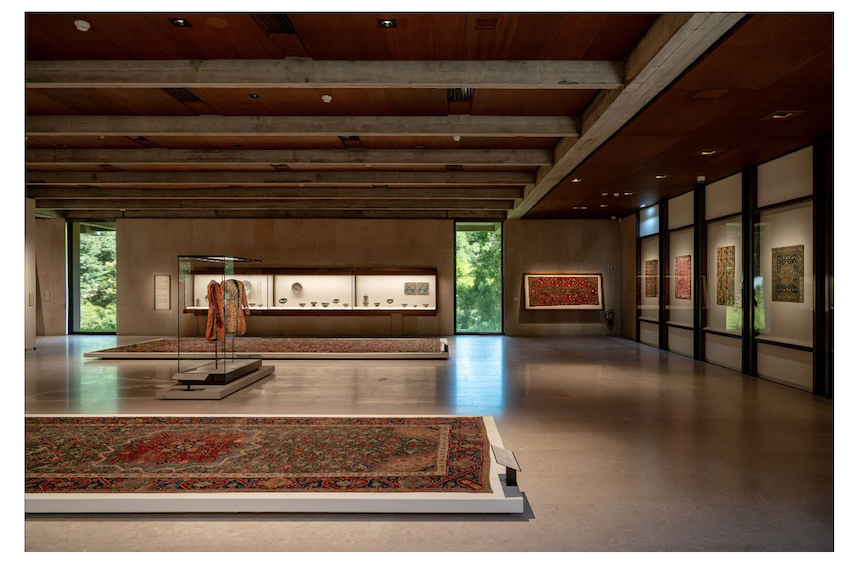
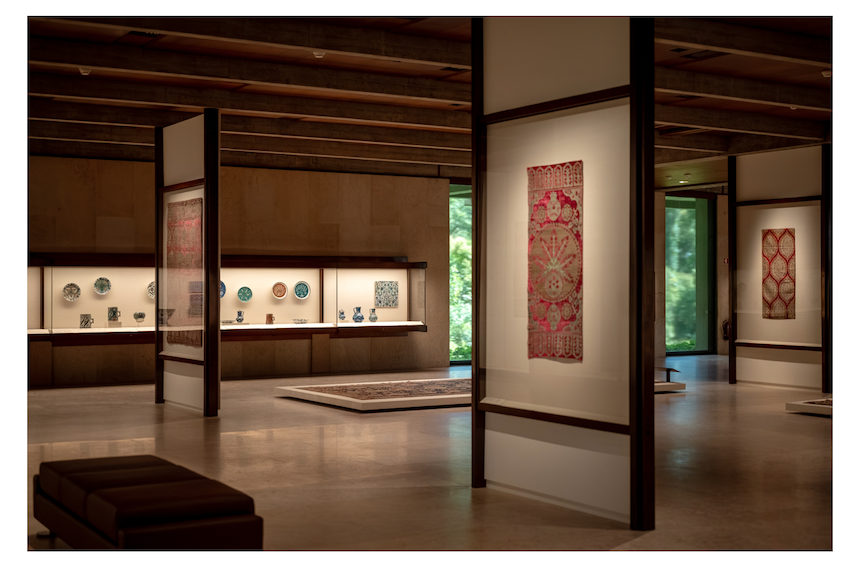
One of the greatest ambitions of the renovation project was to restore the dialogue between the galleries and the surrounding gardens, re-establishing harmony between architecture, the Collection, and the landscape. In collaboration with landscape architects, the galleries’ openness to interior courtyards and surrounding vegetation was reaffirmed, a key factor in controlling natural light and shading the exhibition spaces. The team carefully studied the placement of trees and their behavior throughout the seasons to ensure subtle filtration of sunlight and restore the delicate balance between architecture and landscape. In the Armenia and Islamic World Gallery, larger window openings reinforce the dialogue between tiles and carpets—with their floral and vegetal motifs—and the flora of the surrounding garden. In the Mosque Lamps section, blinds that had partially obstructed views of the courtyard were removed and replaced with protective light filtering films, re-establishing visual connections with the garden while meeting conservation requirements
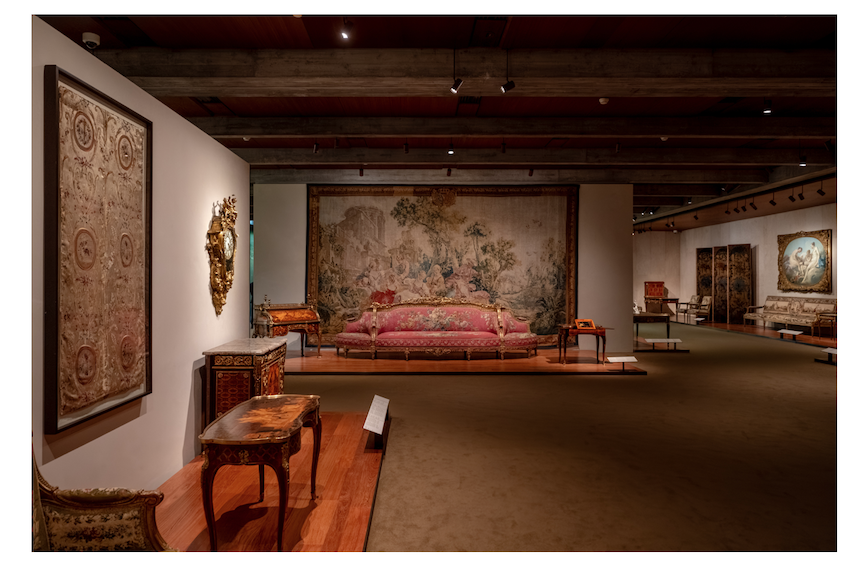
Another significant intervention took place in the transition area between the China and Japan Gallery
and the European Galleries, where the original slatted wooden structure – once replaced by an opaque
wall – has been reinstated through a metal-and-wood screen. This solution restores a sense of lightness
and revives the interplay of visual perspectives, allowing visitors glimpses of major masterpieces such as
Rembrandt’s Old Man with a Stick and Pallas Athena, and Rubens’ Portrait of Helena Fourment.
The renovation also reinstated the original green carpeting in areas where it had originally existed,
particularly in the European Galleries, restoring the visual continuity between interior spaces and the
surrounding garden. Silk wall coverings have likewise returned, reviving the elegance and spirit of the
original rooms
Subtle Changes
The sole new addition to the museum is a dedicated numismatics cabinet, created from a previously
unused service space adjacent to the Graeco-Roman gallery. It presents the largest display of
Gulbenkian’s ancient coin collection since the museum opened, including Greek coins, Roman medals,
and the Aboukir gold Medallions, The intimate scale of the room allows for a closer contemplation of the
coins and medals. Other changes concern the monumental Assyrian bas-relief, formerly located between
the Mesopotamia, Greece and Rome Gallery and the Armenia and Islamic World Gallery. It now
occupies a more central position within the Mesopotamian section. Conservation treatments removed
layers of discolored wax, revealing the original alabaster surface.
Several works have also returned from storage to the galleries, including Japanese prints, gold boxes,
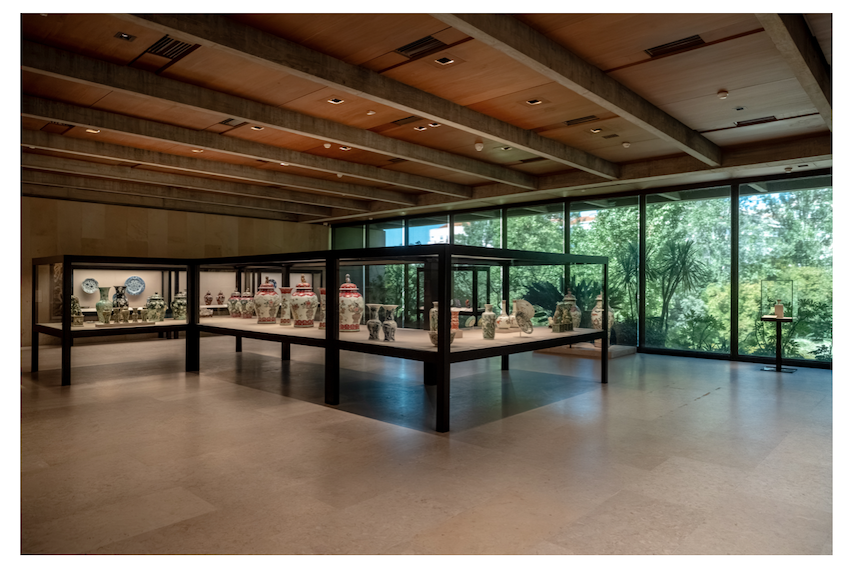
medals, sculptures, and the Venetian parasol, now once again displayed. Other restoration works include the iconic Z-shaped display case for Chinese porcelain. Faithfully reproduced according to the original design, it incorporates modern improvements such as anti-reflective glass. Similarly, the Mamluk mosque lamps (c. 14th century) have returned to individual display cases equipped with anti-reflective glass, after having spent more than two decades grouped together in a single large showcase. This arrangement allows each piece to be appreciated individually and in greater detail.
The Lalique Room
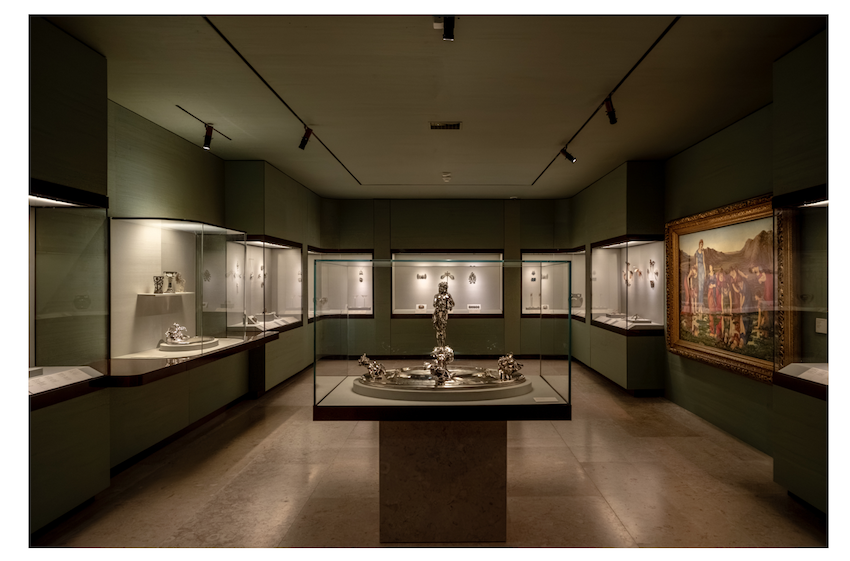
The Lalique Room, home to the largest collection of jewelry and decorative objects by the renowned French jeweller and glassmaker outside France, represents the principal exception to the overall restoration approach. The space has been reinterpreted in a contemporary manner, incorporating paintings by Edward Burne-Jones and John Singer Sargent to establish a dialogue between René Lalique’s works and the broader artistic context of the period.
The sensuality and curvilinear vocabulary historically associated with the room have been preserved through redesigned curved-glass display cases inspired by the original exhibition solutions. The green tones that once again cover the walls also evoke the room’s initial appearance. Each showcase is devoted to one of Lalique’s favored materials – horn, glass, enamel, and ivory – and presents creations in which that material takes center stage
Find more information here.