

Review by Culturalee editor Lee Sharrock
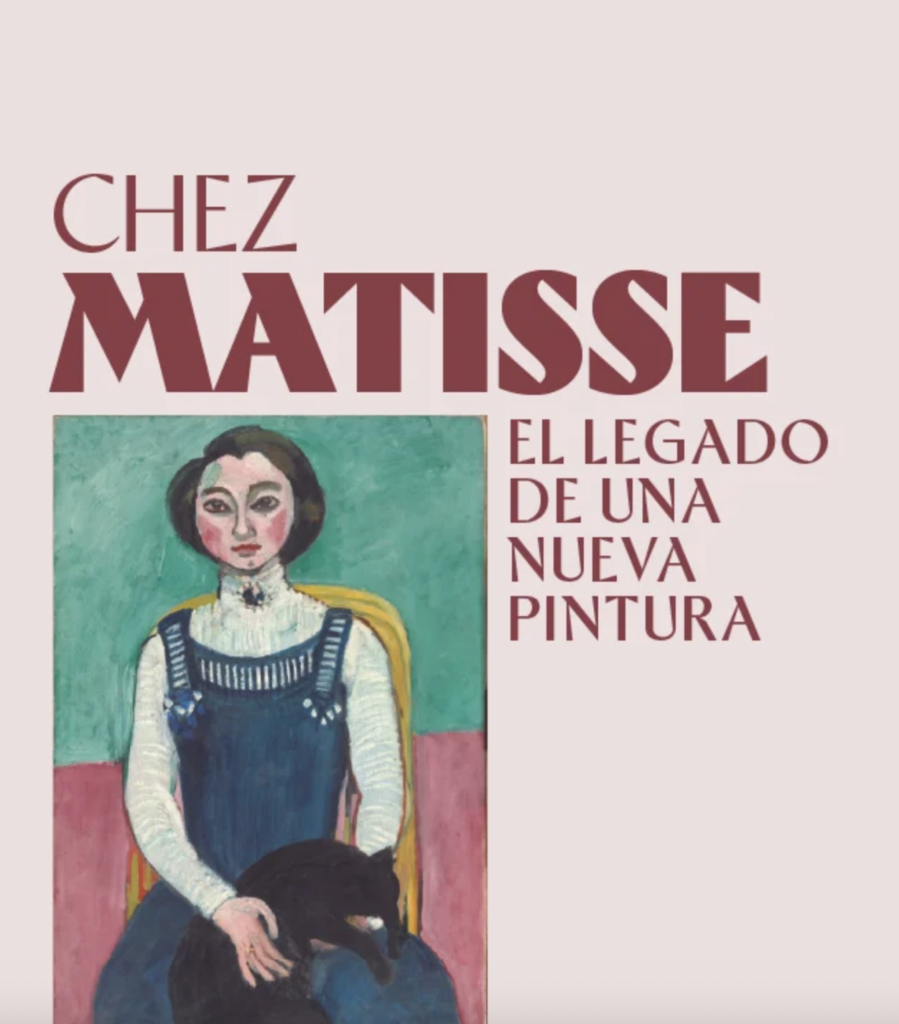
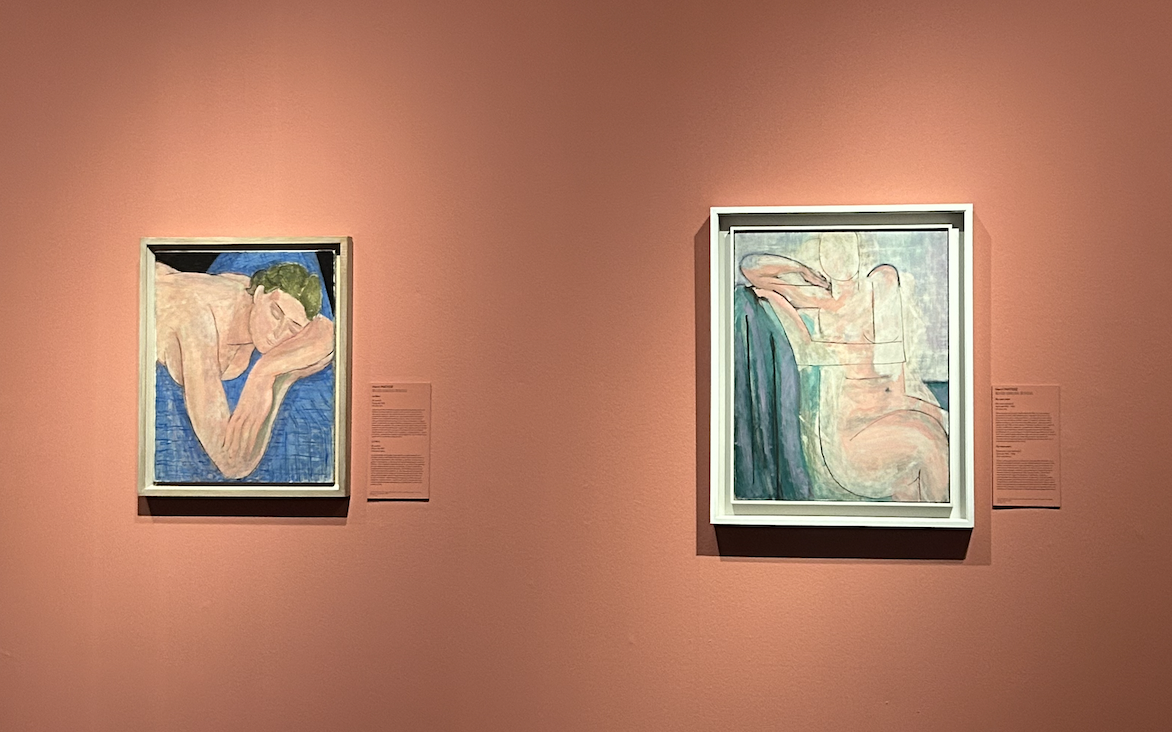
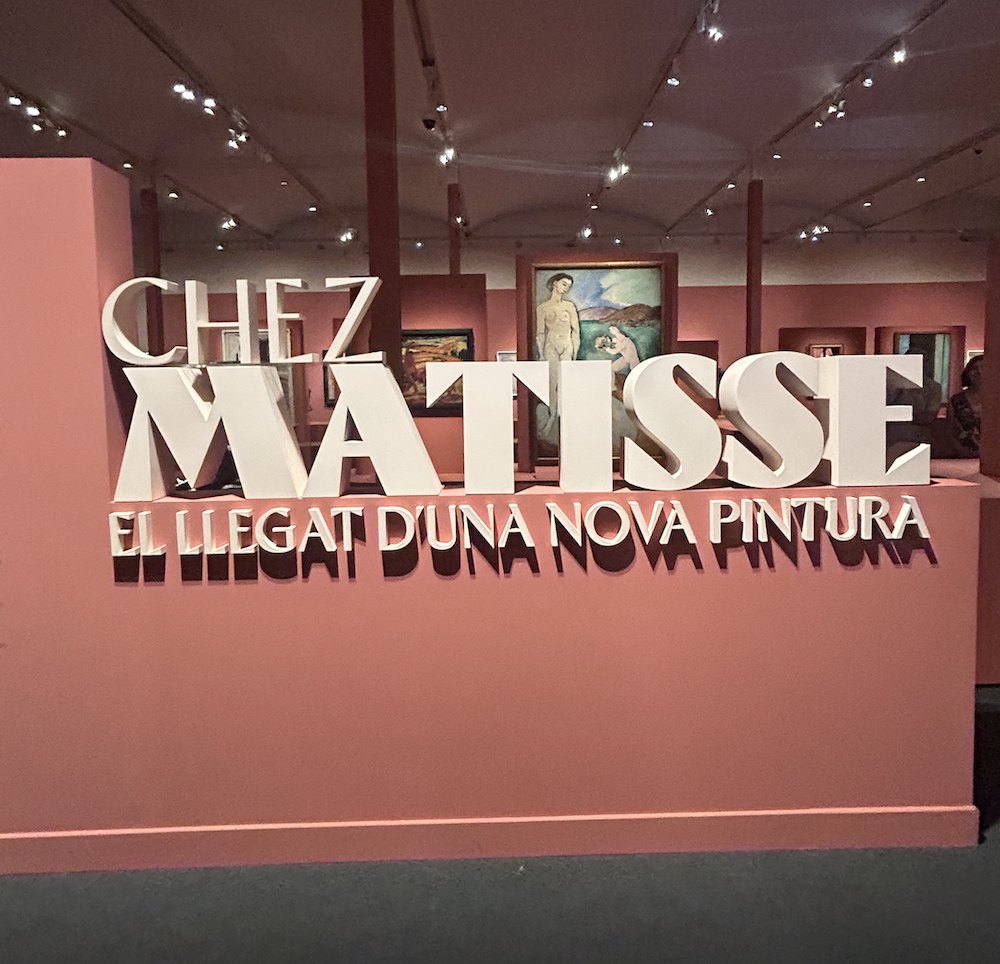
At CaixaForum Barcelona, Chez Matisse: The Legacy of a New Approach to Painting offers a compelling reassessment of Henri Matisse (1869–1954), one of the most revolutionary and innovative French artists of the modern era. Bringing together 46 works by Matisse alongside 49 works by artists who responded to, challenged or extended his ideas, the exhibition made a persuasive case for his enduring place at the heart of twentieth-century art.
Organised through the collaboration between the”la Caixa” Foundation and the Centre Pompidou in Paris, the exhibition brought together paintings, sculptures, works on paper and later cut-outs in a rich network of artistic conversations. Rather than presenting Matisse as an isolated genius, Chez Matisse revealed him as a catalyst: an artist whose ideas travelled across generations, national borders and artistic movements.
That is the particular strength of the exhibition. Matisse appears not simply as a master of colour, but as an artist who repeatedly questioned what painting could be.
The Revolutionary Matisse
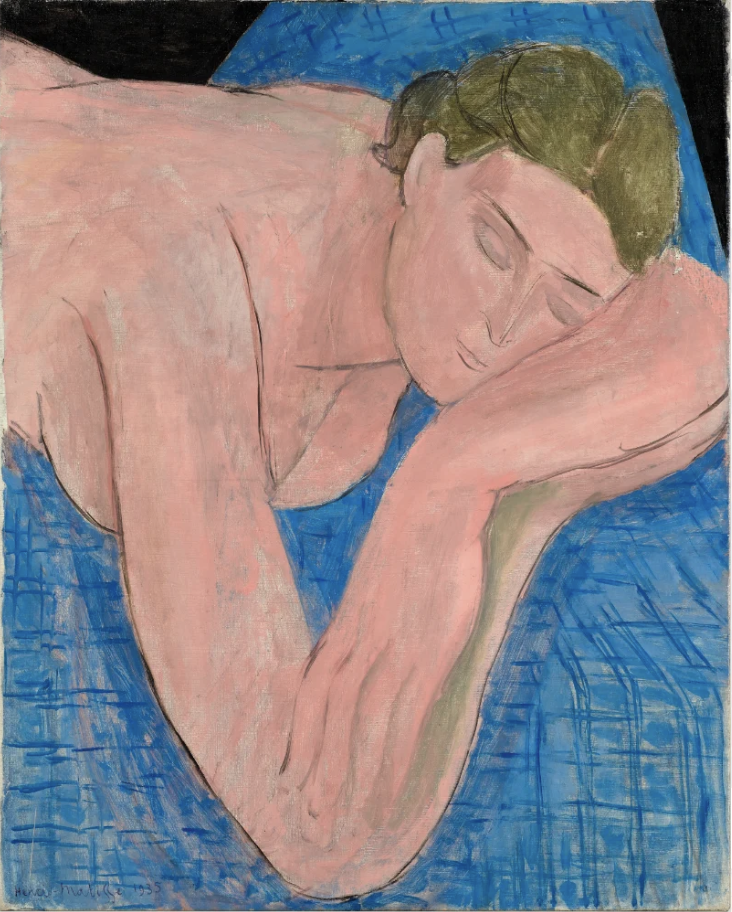
Matisse emerged from the artistic ferment that followed Impressionism and absorbed the lessons of Post-Impressionism, particularly from Cézanne, Van Gogh and Gauguin, while also engaging with Neo-Impressionism. Yet he rapidly moved beyond those influences. His revolutionary use of colour and his rejection of conventional pictorial space helped establish Fauvism, the first major avant-garde movement of the twentieth century.
Matisse was its principal leader and, together with André Derain, one of the artists who most radically transformed the possibilities of colour. When the Fauves exhibited at the Salon d’Automne in 1905, their intensely coloured, energetically painted canvases challenged conventional ideas of representation. The very name Fauvism – derived from fauves, or “wild beasts” – captured the shock of their approach.
What makes Matisse extraordinary, however, is that Fauvism was only the beginning. Unlike many of his fellow Fauves, he continued to develop the language he had helped invent, continually searching for new relationships between colour, line, form, space and sensation. As the exhibition demonstrates, his career was not a linear progression from one style to another, but an extraordinary process of experimentation.
Chez Matisse takes its title from precisely this sense of artistic hospitality. Matisse’s work became a kind of creative home, a place where artists could arrive, encounter new possibilities and depart in a different direction.
From Colour to Pictorial Space
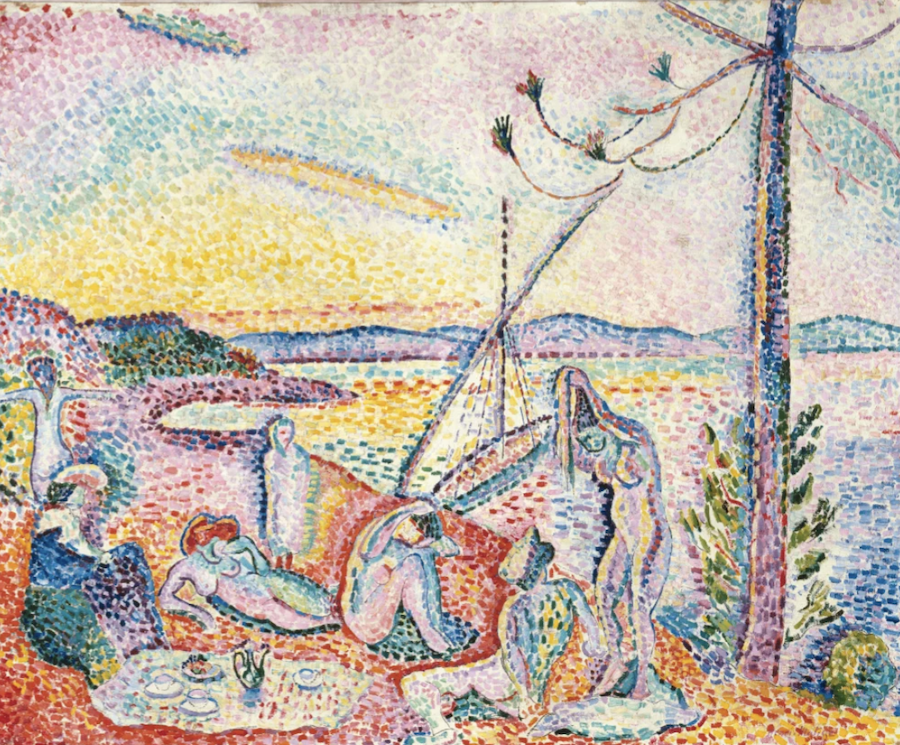
The exhibition begins with Matisse’s early work around 1900, when his painting was still rooted in the lessons of Gustave Moreau and the achievements of nineteenth-century modernism. The transformation is already visible in works such as Luxe, calme et volupté (1904), where the fragmentation of light and the rhythm of complementary colours point towards the revolution that was about to come. Matisse’s encounter with the brilliant Mediterranean light of southern France proved decisive, leading him towards an increasingly liberated palette.
The landscapes of Saint-Tropez and Collioure become crucial moments in this story. In dialogue with works by Albert Marquet, André Derain, Maurice de Vlaminck, Georges Braque and Robert and Sonia Delaunay, Matisse’s colours appear to explode beyond the limits of natural description.
This is one of the exhibition’s most satisfying achievements: colour is treated not merely as a characteristic of Matisse’s style but as an independent artistic force. Colour constructs space, establishes rhythm, generates emotion and, increasingly, becomes the subject itself.
The following sections deepen this argument. Matisse’s engagement with non-Western art and so-called “primitive” art encouraged him to challenge established European conventions of beauty and representation. His sculptures are placed in dialogue with works such as Jacques Lipchitz’s L’Enlèvement d’Europe, while paintings by Ernst Ludwig Kirchner, Emil Nolde, Mikhail Larionov and Natalia Goncharova reveal the international resonance of this new primitivism.
The exhibition therefore places Matisse within a much wider avant-garde conversation. His influence was particularly powerful among the German Expressionists and Russian Neo-Primitivists, whose own experiments with colour, folk imagery and emotional intensity developed along parallel paths.
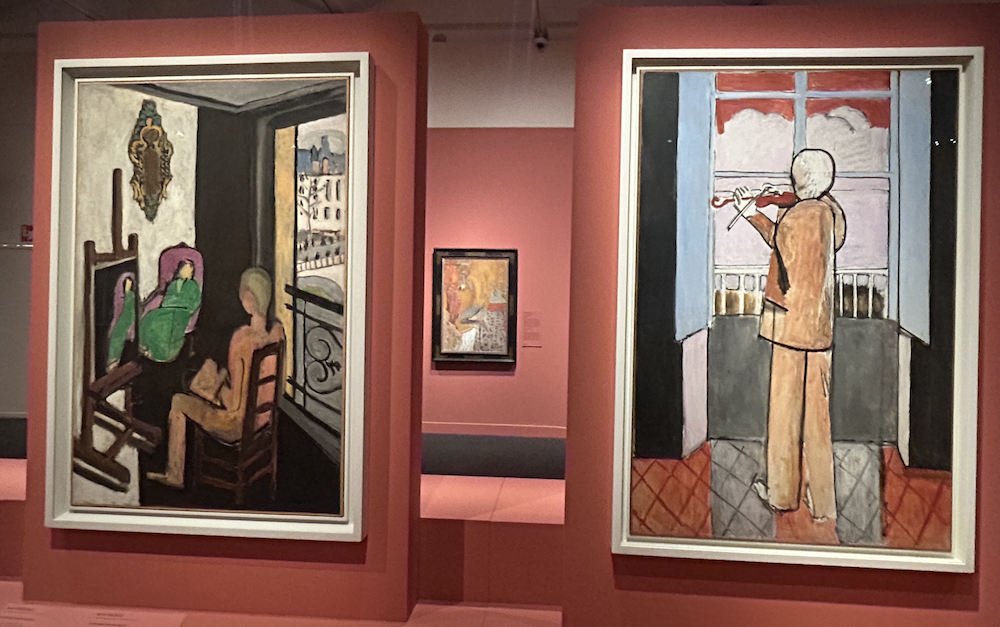
The First World War brought another transformation. Matisse’s palette darkened, while doors and windows became recurring motifs and architectural thresholds suggest both intimacy and uncertainty.
Portraiture also became a means of psychological exploration. In portraits such as those of Greta Prozor and Auguste Pellerin, the sitter is not simply recorded but enveloped in an atmosphere of colour and space. Matisse sought what might be called an empathic encounter between artist and model: a way of capturing not only appearance but presence.
This is where Chez Matisse becomes particularly illuminating. The exhibition resists the temptation to reduce Matisse to the familiar clichés of decorative beauty and Mediterranean pleasure. There is darkness, anxiety and introspection in his work, particularly during the years surrounding the First World War.
His unfinished Porte-fenêtre à Collioure of 1914 is especially revealing. Its intense planes of colour and radical treatment of the window anticipate a more abstract understanding of painting. The work suggests Matisse standing at the threshold between representation and abstraction.
The South and the Liberation of the Figure
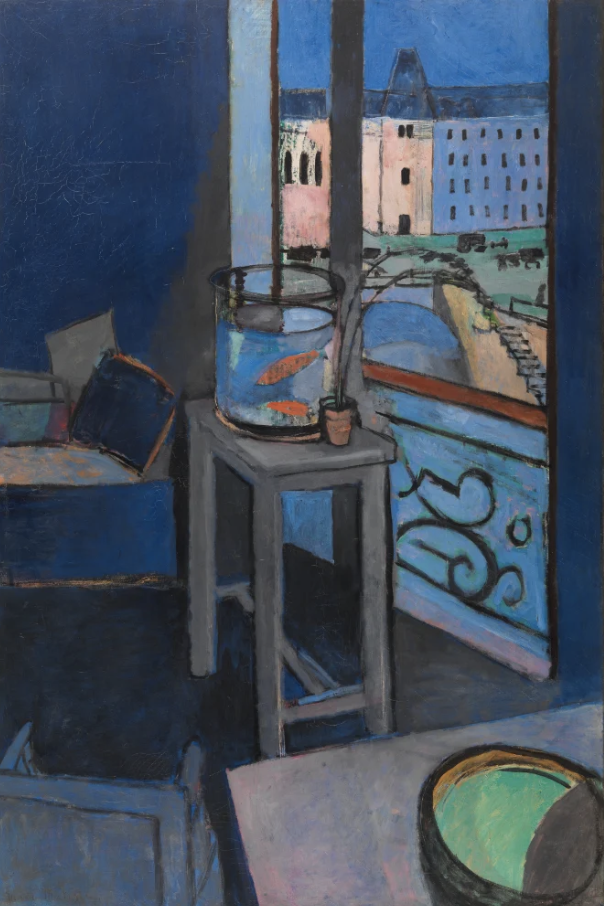
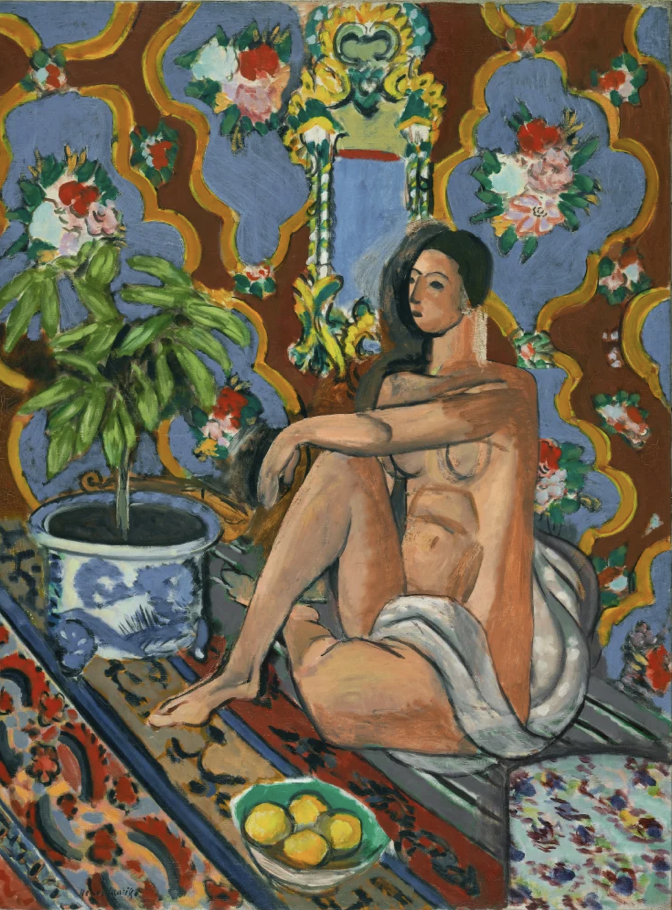
Matisse’s move to Nice in 1917 opened another extraordinary chapter. The Mediterranean became both a physical environment and an artistic idea. Interiors, mirrors, patterned fabrics, plants and female figures offered him a laboratory in which to explore the relationship between the human body and pictorial space.
The decorative qualities of these works should not be mistaken for simplicity. Matisse was engaged in a sophisticated investigation of how a painting could balance figure, ornament, pattern, line and colour without allowing any single element to dominate.
The influence of Spain and North Africa is also apparent, particularly in his treatment of the mantilla-clad woman. The comparison with Natalia Goncharova is especially productive: both artists transformed cultural imagery into a modern visual language.
Matisse, Picasso and the Question of Influence
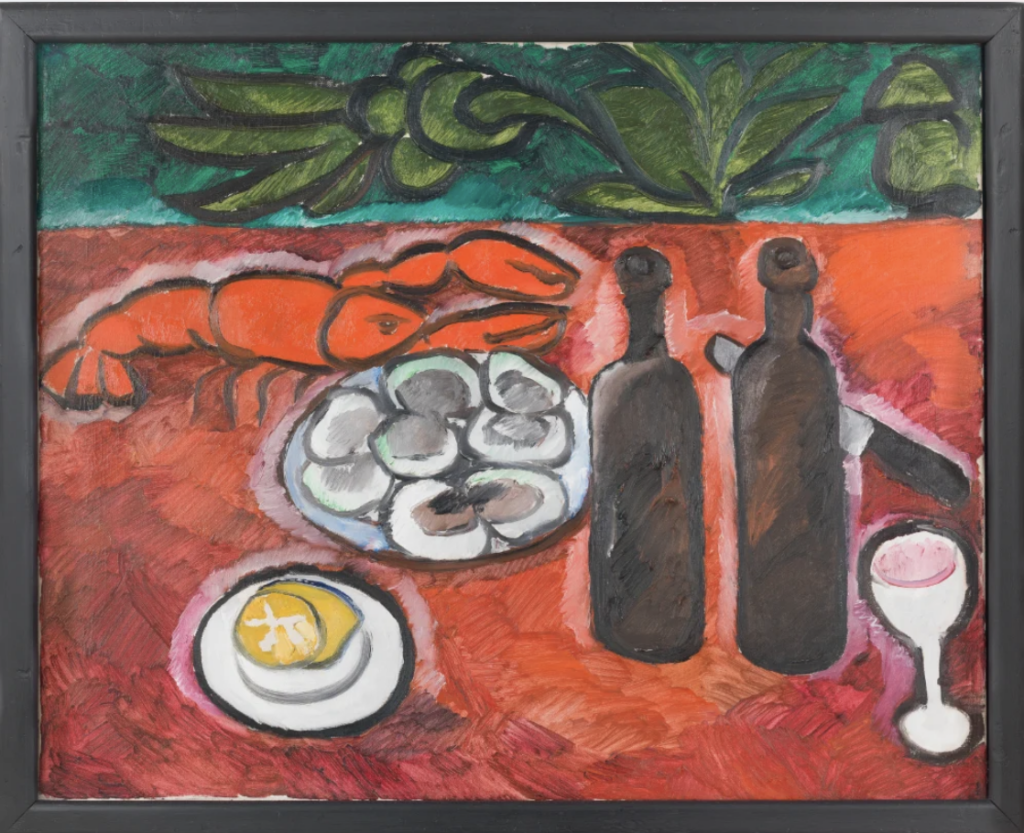
One of the exhibition’s most engaging encounters is the dialogue between Matisse, Pierre Bonnard, Françoise Gilot and Pablo Picasso. Matisse and Picasso are often presented as opposing giants of modern art, yet their relationship was far more complex. They admired, challenged and learned from one another. Picasso pursued fragmentation and reinvention through Cubism and its aftermath, while Matisse continued to refine the relationship between colour, line and space.
The inclusion of Françoise Gilot is particularly welcome. Her work demonstrates that Matisse’s influence was not simply transmitted through the canonical male artists of twentieth-century modernism. Gilot’s sensitivity to objects, domestic space and the expressive possibilities of colour opens another dimension of the Matisse legacy.
This broader perspective is one of the exhibition’s most valuable contributions. Sonia Delaunay, Natalia Goncharova, Gilot, Baya, Anna-Eva Bergman and Zoulikha Bouabdellah expand the story beyond a conventional genealogy of male modernists. Their presence raises questions about decorative art, femininity, abstraction and the boundaries of painting itself.
Cutting into Colour
The final chapters of Matisse’s career demonstrate just how misleading it would be to regard him as an artist who reached his peak in the Fauve years.
In the late 1930s and 1940s, his experiments with gouache-painted paper eventually led to the revolutionary cut-outs. With Jazz in 1947, the technique became an autonomous artistic language. Matisse no longer applied colour to a surface in the traditional sense: he cut directly into colour, transforming painted paper into shapes of extraordinary clarity and vitality.
The apparent simplicity of these works conceals a lifetime of artistic investigation. The cut-outs represent the culmination of Matisse’s lifelong attempt to reconcile line and colour, figure and space, painting and drawing. They also demonstrate his extraordinary ability to reinvent himself late in life.
His collaboration with Le Corbusier on the Chapel of the Rosary in Vence further demonstrates the breadth of his vision. Painting, architecture, stained glass, ceramics and design become part of the same creative vocabulary.
By this point, Matisse’s influence extends into American abstraction, post-war European art and beyond. Artists such as Barnett Newman recognised in him a way of thinking about colour that could move beyond representation altogether.
A Legacy Still in Motion
The exhibition’s final achievement is to show that Matisse’s legacy did not end with his death in 1954. His influence continues to reverberate through contemporary art, from the formal experiments of Daniel Buren to the exuberant decorative language of the Algerian artist Baya. This is why Chez Matisse succeeds as more than a retrospective. It is a portrait of an artistic ecosystem.
Matisse understood that modern art was not simply about rejecting the past. It was about absorbing it, questioning it and transforming it. He could draw upon Cézanne and the Post-Impressionists, engage with Fauvism, respond to Cubism, explore non-Western visual traditions, rethink the decorative and ultimately move towards abstraction — without ever losing the fundamental conviction that art should remain connected to sensation and lived experience.
Pierre Schneider’s observation that Matisse needed “to touch the ground before taking flight” captures something essential about this extraordinary career. His art is simultaneously grounded and liberating: attentive to the physical world yet constantly seeking to transcend its conventions.
Chez Matisse ultimately confirms why Matisse occupies such a commanding position in modern art history. He was not simply the principal leader of Fauvism or one of France’s great Post-Impressionist-influenced modern painters. He was an artist who repeatedly reinvented the language of painting itself.
From the incandescent colours of Collioure to the radical simplicity of the late cut-outs, Matisse transformed colour into structure, decoration into modernism and simplicity into an achievement of immense sophistication.
At CaixaForum Madrid, Chez Matisse makes that legacy feel remarkably alive. More than seven decades after his death, Matisse remains what the exhibition’s title so aptly suggests: a place to visit, a point of reference, and a creative home from which generations of artists continue to take flight.