


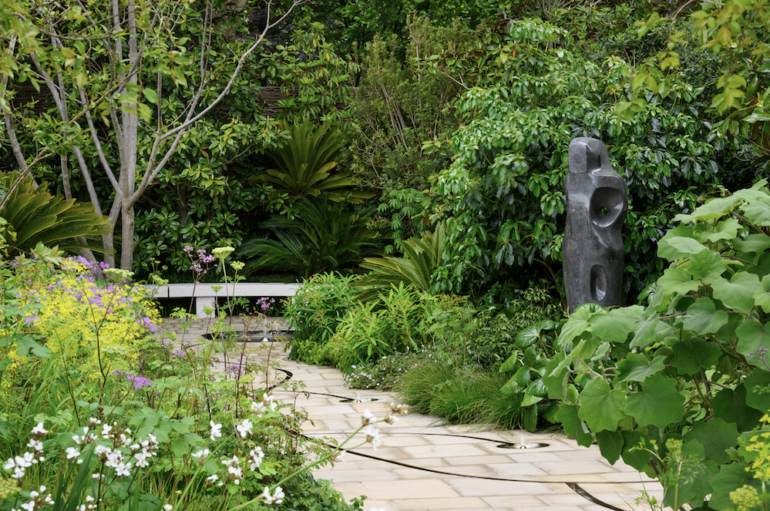
Tate’s first ever show garden at RHS Chelsea Flower Show has been awarded gold. A focal point of The Tate Britain Garden – designed by nine-time RHS Chelsea gold medal winner Tom Stuart-Smith – is Dame Barbara Hepworth’s Bicentric Form 1949. This is the first time a work of art from the national collection has been exhibited within a garden at the RHS Chelsea Flower Show.
The Tate Britain Garden presents a bold new vision for how art, nature and community interact, and highlights the role of museums in providing public spaces where contemplation and relaxation go hand in hand with creativity and learning. The garden is generously funded by the Clore Duffield Foundation and Project Giving Back, the grant-giving charity that funds gardens for good causes at RHS Chelsea Flower Show.
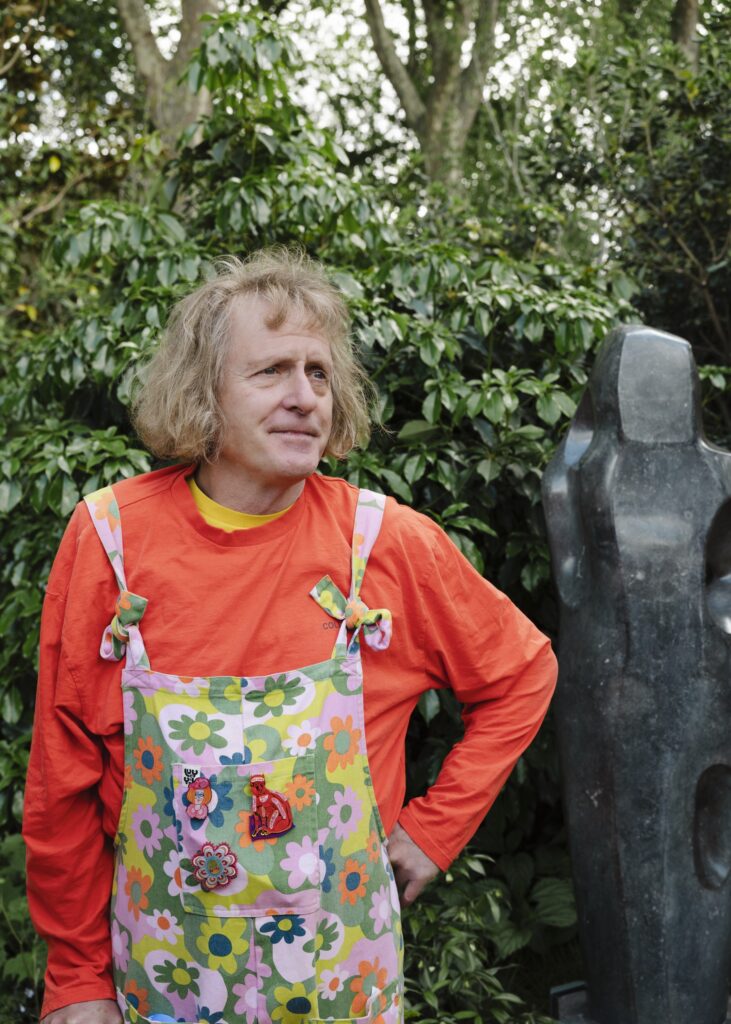
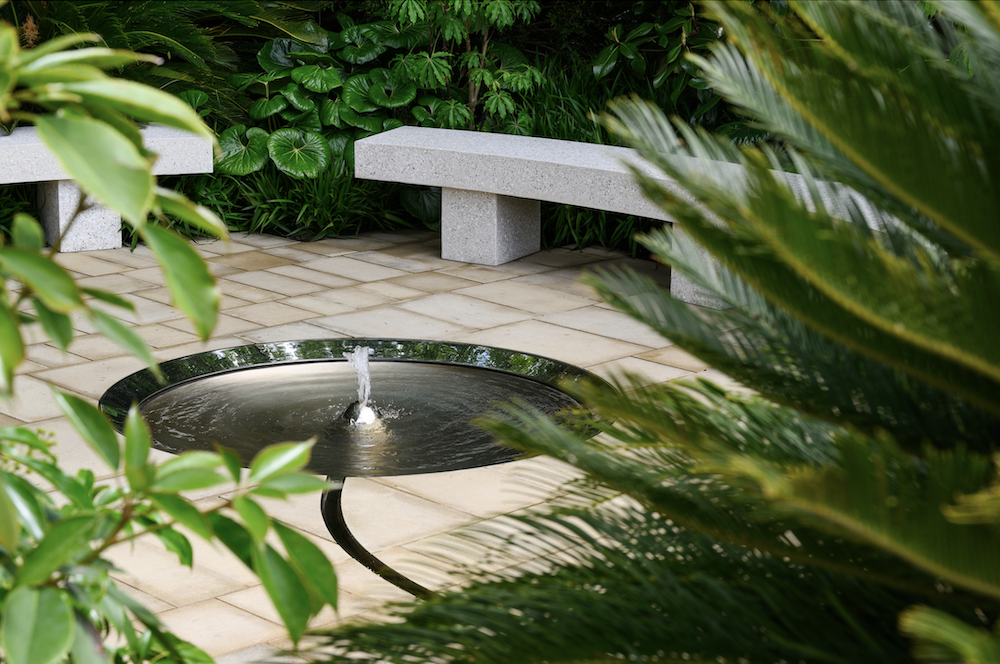
On press day children from a local school were invited to the Tate Britain garden, and took part in an art workshop with Sir Grayson Perry. A central area of the garden features semi-circular benches positioned around a water feature, creating a peaceful space for contemplation or interaction with the garden. The bench was made from reused materials including paving from Tate Britain and locally sourced cockleshells from the Thames Estuary. This introduction of a learning circle provides an environment for friends, families, community groups and schools where they can connect within nature. The Chelsea Show Garden will be reconceived for the Clore Garden at Tate Britain, and will be expanded as an outdoor learning space for a class of thirty school children.
Guests at the preview of The Tate Britain Garden included Mayor of London Saqiq Khan, garden designer Tom Stuart-Smith and former Tate director Maria Balshaw.
A restful space inspired by Tate’s significant art collection, The Tate Britain Garden at the RHS Chelsea Flower Show 2026 offers a taster of the forthcoming Clore Garden at Tate Britain, also designed by Stuart-Smith. A new green space for London due to open at Tate Britain next year, it has been made possible by generous funding from the Clore Duffield Foundation and with support from the Julia Rausing Trust. The designs for the gardens have been inspired by Victor Pasmore’s The Green Earth 1979-80 in Tate’s Collection.
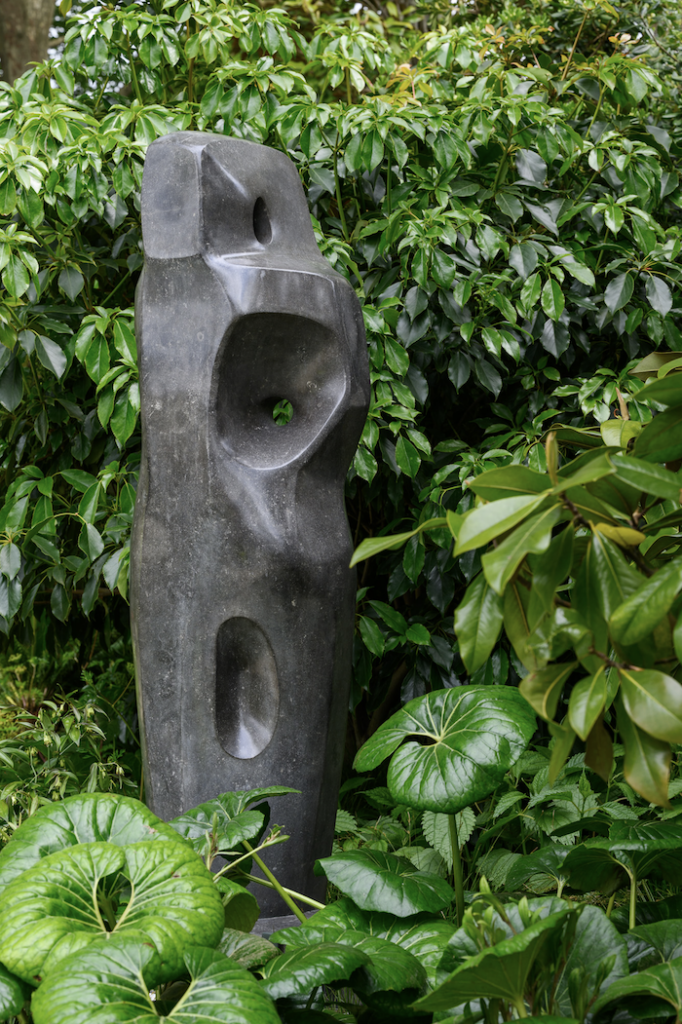
Dame Barbara Hepworth’s Bicentric Form is a significant limestone sculpture by one of Britain’s most admired modern artists, the sculpture was the first Hepworth work to be acquired by Tate, beginning a life-long relationship between artist and gallery, who now care for Hepworth’s studio and garden in St Ives. After the Show, Bicentric Formwill join other world-class sculptures by modern and contemporary British artists from Tate’s Collection on display in the Clore Garden, offering the public the chance to discover these works outside the gallery in a fresh context.
The Tate Britain Garden at the RHS Chelsea Flower Show also brings to life some of the key design elements that visitors can look forward to enjoying in the Clore Garden. Existing stone from the Millbank site has been cut and repurposed as paving, forming a gently sloping, curved path through vibrant, biodiverse planting. Inlaid within the path is a shining golden water channel, its soothing sounds bringing tranquillity to this haven of art and nature. The rill and bowls are 3D printed with designs inspired by mycorrhizal fungi, which aids decomposition in a garden, and whose presence is a sign of biodiversity and garden health.
Taking cues from East Asian woodlands and resilient drought-tolerant plants adapted to warmer climates, the planting is informed by Tate’s commitment to championing sustainable practices; making choices which increase biodiversity in our urban environments, whilst looking to the future of Tate Britain’s Millbank site. Previewing plant species that will be seen in the Clore Garden, The Tate Britain Garden showcases planting that thrives in central London’s now virtually frost-free environment and rising temperatures, such as Mediterranean fig trees and foliage like Schefflera shweliensis, native to the Eastern Himalayas. Shade at the RHS Chelsea Flower Show is provided by trees including Lagerstroemia ‘Natchez’, while Cycas revoluta (Japanese sago palm) gives shape and texture to the garden.
Designed to create year-round interest, the planting will ensure seasonal visitors to Tate Britain always find something in bloom, including species that fruit and flower at different times – Melia azedarach (Persian lilacs) in late spring to Magnolia grandiflora (evergreen magnolias) in early autumn. Visitors to the Show can see bursts of yellow from Roldana petasitis (velvet groundsel), contrasting with the glossy greens of Farfugium japonicum (leopard plant) and the burgundy of a Melianthus major flower (great honey flower).
After the show, the garden will be transferred to Tate Britain on Millbank and incorporated into the wider Clore Garden project, due to open in 2027.
From 15 June 2026, visitors to Tate Britain can see Living Gardens, a year-long free display which will bring together works from the Tate Collection to reflect on gardens as sites of inspiration, experimentation and refuge for artists through the 20th century, from Ethel Sands to Derek Jarman.
Visitors will come to the RHS Chelsea Flower Show this week to see the latest and best in horticultural design, so it is wonderful to be able to offer garden lovers a taste of the exciting new Clore Garden at Tate Britain. We are delighted to mark this special occasion with the display of one of our best-loved sculptures from the nation’s collection of British art and to share this early evocation of such a unique and bold reimagining of museum space.”
Alex Farquharson, Director of Tate Britain
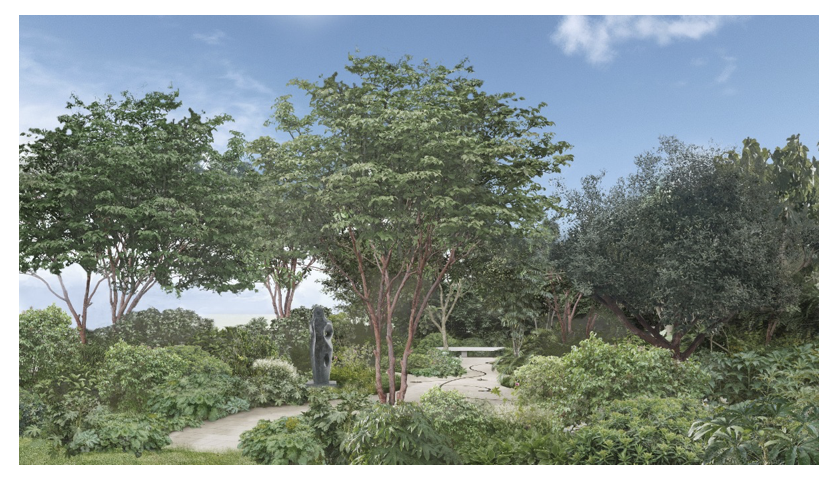
It is exciting to be able to make a garden at the RHS Chelsea Flower Show incorporating such a significant work by one of this country’s most remarkable artists of the last 100 years. Hepworth was very progressive in showing her work in a garden context and we are using very bold textures and forms as a counterpoint to the dark, smooth stone of the sculpture. I think she would approve.”
Tom Stuart-Smith, Landscape Architect and designer of The Tate Britain Garden and Clore Garden
The RHS Chelsea Flower Show planting list includes Ficus carica, Lagerstroemia indica ‘Natchez’, Magnolia grandiflora and Melia azedarach trees.
The Tate Britain Garden at the 2026 RHS Chelsea Flower Show is located on Main Avenue at site 324. Find more information here.